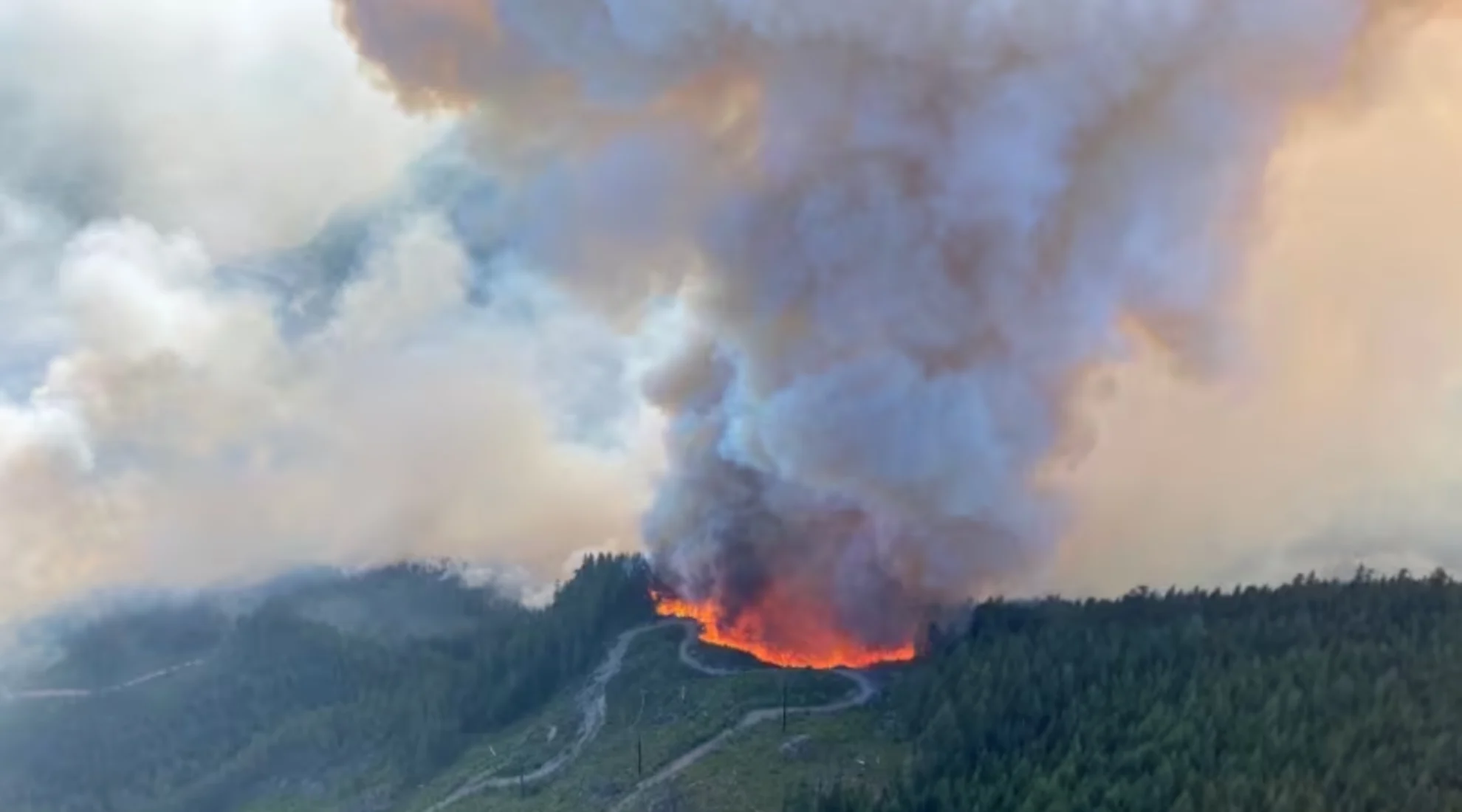
Smoky skies bulletins issued, warning of poor air quality across B.C.

Visit The Weather Network's wildfire hub to keep up with the latest on the active start to wildfire season across Canada.
Environment Canada has issued special weather statements on poor air quality across multiple regions of B.C. due to wildfire smoke and fine particulate matter on Wednesday.
A smoky skies bulletin from the B.C. government covers the Fort Nelson region in northeast B.C., the Kinbasket area on the B.C.-Alberta border in the east, and Inland Vancouver Island.
ALSO READ: Uncontainable wildfires continue to ravage Canada with no end in sight
That's where five of B.C.'s fires of note — those that are particularly concerning or pose a risk to public safety — are burning. Those include the large Donnie Creek fire in northeast B.C., the Cameron Bluffs fire near Port Alberni on Vancouver Island, and two fires south of Dawson Creek.
Closer to the South Coast, Metro Vancouver has issued an air quality advisory covering the eastern parts of the regional district — including Coquitlam, Surrey and Langley — as well as the Central and Eastern Fraser Valley.
"Two out-of-control wildfires burning near Harrison Lake are producing considerable smoke that is contributing to degraded air quality and hazy conditions," reads the advisory.
"Hot and sunny weather in combination with local emissions and wildfire smoke has resulted in elevated levels of ground-level ozone."
RELATED: Mental health toll can linger long after wildfire evacuees return home
One of those fires, the Chehalis River fire, is burning over six square kilometres and is considered another fire of note.
The air quality advisory recommends residents postpone outdoor activity due to high concentrations of ground-level ozone and fine particulate matter.
More than 80 wildfires are currently burning across the province as of 4 p.m. Wednesday, and 29 are considered out of control.
Armel Castellan, a warning preparedness meteorologist with Environment and Climate Change Canada, said it's unlikely that Metro Vancouver would see the extreme levels of wildfire smoke being seen in the eastern U.S. and Canada.
He says a small amount of rain would fall on the region around Friday, before temperatures rebound to around 10 C above seasonal averages starting next week.
WATCH: Stress due to wildfires can be relieved if towns take up doctor's challenge
Thumbnail image courtesy of the B.C. Wildfire Service via CBC News.
This article was originally published for CBC News.