Facing The Beast: Fort McMurray wildfire upends lives as it grows

Through fire and ash: We continue the journey of the Fort McMurray wildfire evacuation process in May 2016. We speak with those who experienced the frightening escape from the fire, and with our team, who was on scene as the flames grew bigger.
The Weather Network's three-part documentary explores the beginnings of the devastating May 2016 Fort McMurray, Alta., wildfire, the explosive nature of its growth and destruction, and its aftermath. It features stories from residents, meteorologists and other people who were caught in the fury.
In the second of the three-part documentary on the event, we take a look at the expansion of the wildfire, with accounts from those who witnessed 'The Beast', and when plans were put in place for residents to return.
As the wildfire raged on in Fort McMurray through the first few days of May, the story grew publicly on the worldwide stage from media organizations outside of Canada.
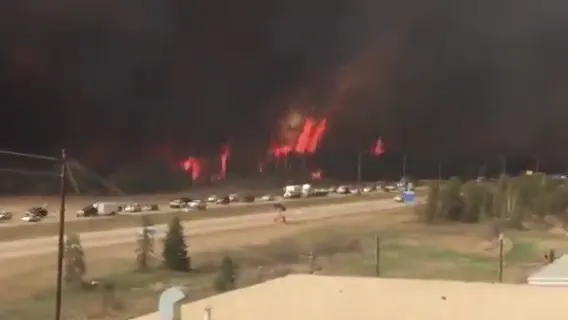
Fort McMurray, Alta., wildfire in May 2016. (Zach Warren/Submitted to The Weather Network)
On the night of May 3, once the evacuation order was issued, some of the evacuees camped out along the highway in their vehicles as a result of empty gas tanks.
Witnesses recount the flames and scenery
Rochelle Young, a Fort McMurray resident who grew up in the community, has experienced numerous wildfires while living there. She began seeing the plume of wildfire smoke on May 1, followed by falling ashes in the backyard on May 2.
"We had ashes falling...the sky was just orange. And that was, I think, when we first started seeing the plume," said Young.
At that point, Young said she was "pretty scared."
“I think that kind of got me a little bit alarmed,” said Young. “And that day, it was really quite hot. But I know that wind definitely picked up through the day, and that's when I think the panic started to rise."
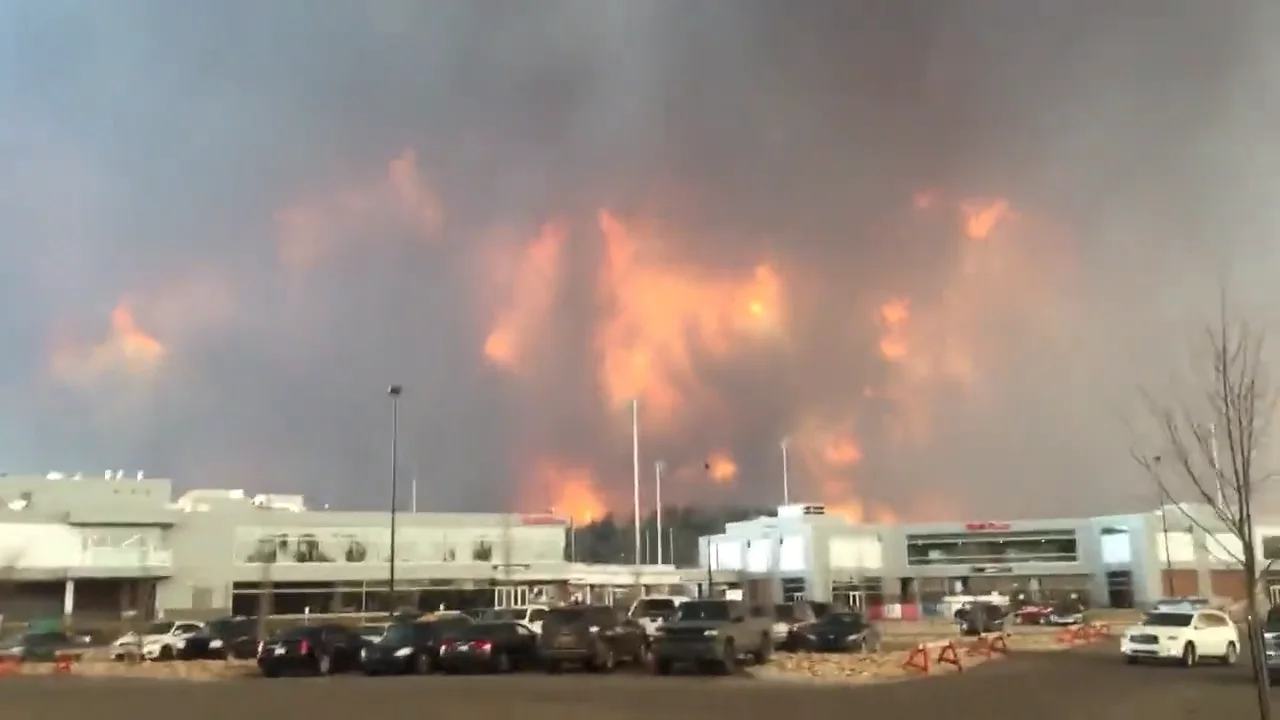
Fort McMurray, Alta., wildfire in May 2016. (Kayla/Submitted to The Weather Network)
“When we were leaving the city, we had the choice of going north or south. But because I had a high-risk pregnancy, we thought it'd be safer to go north, up to the oilsands sites where they have medical personnel," said Young.
On the day of the evacuation, Fort McMurray resident Amy Gillis felt like there was a brief moment of relief, she said, as she still went to work and her two children were at school.
But it didn't take long for things to change. Gillis recalls having that "apocalypse feeling again" as she then saw numerous fire trucks and police directing traffic on her way out of the city.
"There was a lot of burning happening downtown at the time, so I didn't want [my children] to see that. So, I threw a blanket over their heads because I was like, 'this is too much trauma.' Everything is happening so fast," said Gillis.
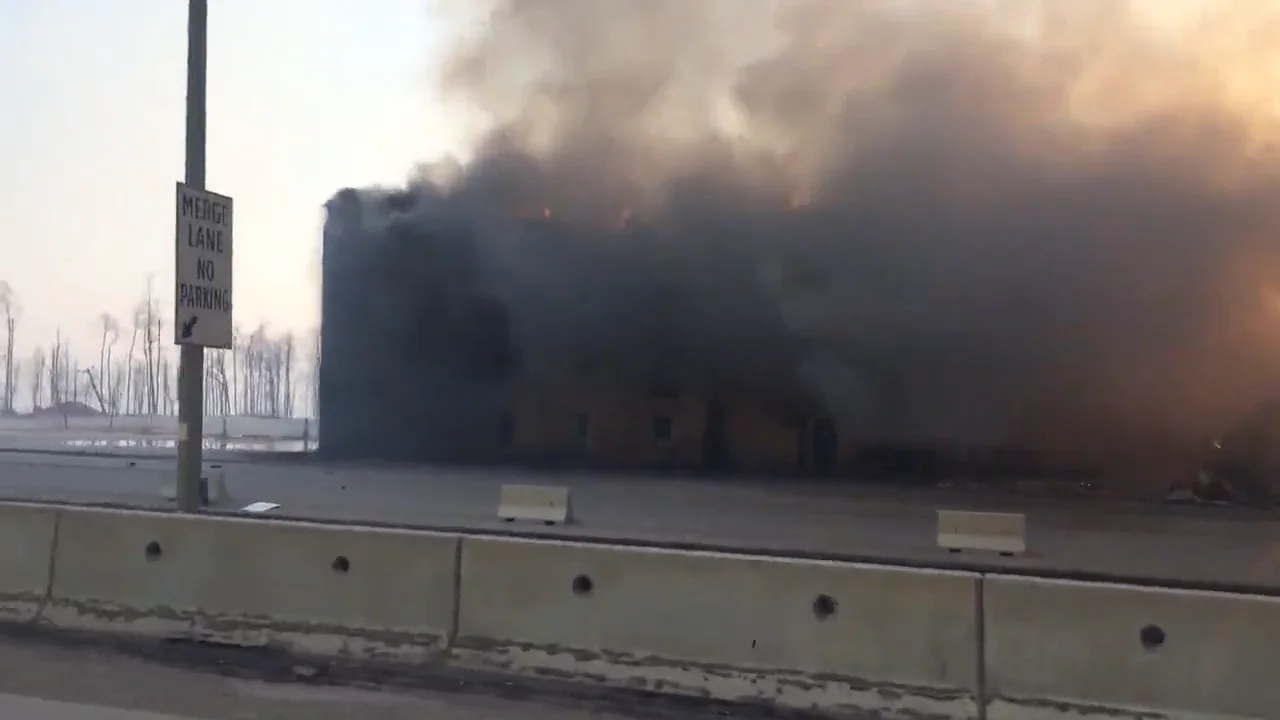
Fort McMurray, Alta., wildfire in May 2016. (Jamie/X//Submitted to The Weather Network)
"We were coming to the bottom of Confederation [Way], and we were like, 'OK, we have to make a decision.' Everyone was saying, 'go north.' The radio was saying, 'go north to the camps to evacuate that way.'"
'Convoy of Hope' begins, and succeeds
By May 5, people who fled the community to work camps north of the city found themselves trapped. While most in the remote camps were being rescued, anywhere from 17,000 to 25,000 people remained at the oilsands facilities closer to Fort McMurray.
The situation was dangerous as the only exit to freedom was to go through the fire, which had expanded to 229,000 hectares on May 10 after the two main blazes merged.
On May 16, all oilsands workers had evacuated the camps north of town.
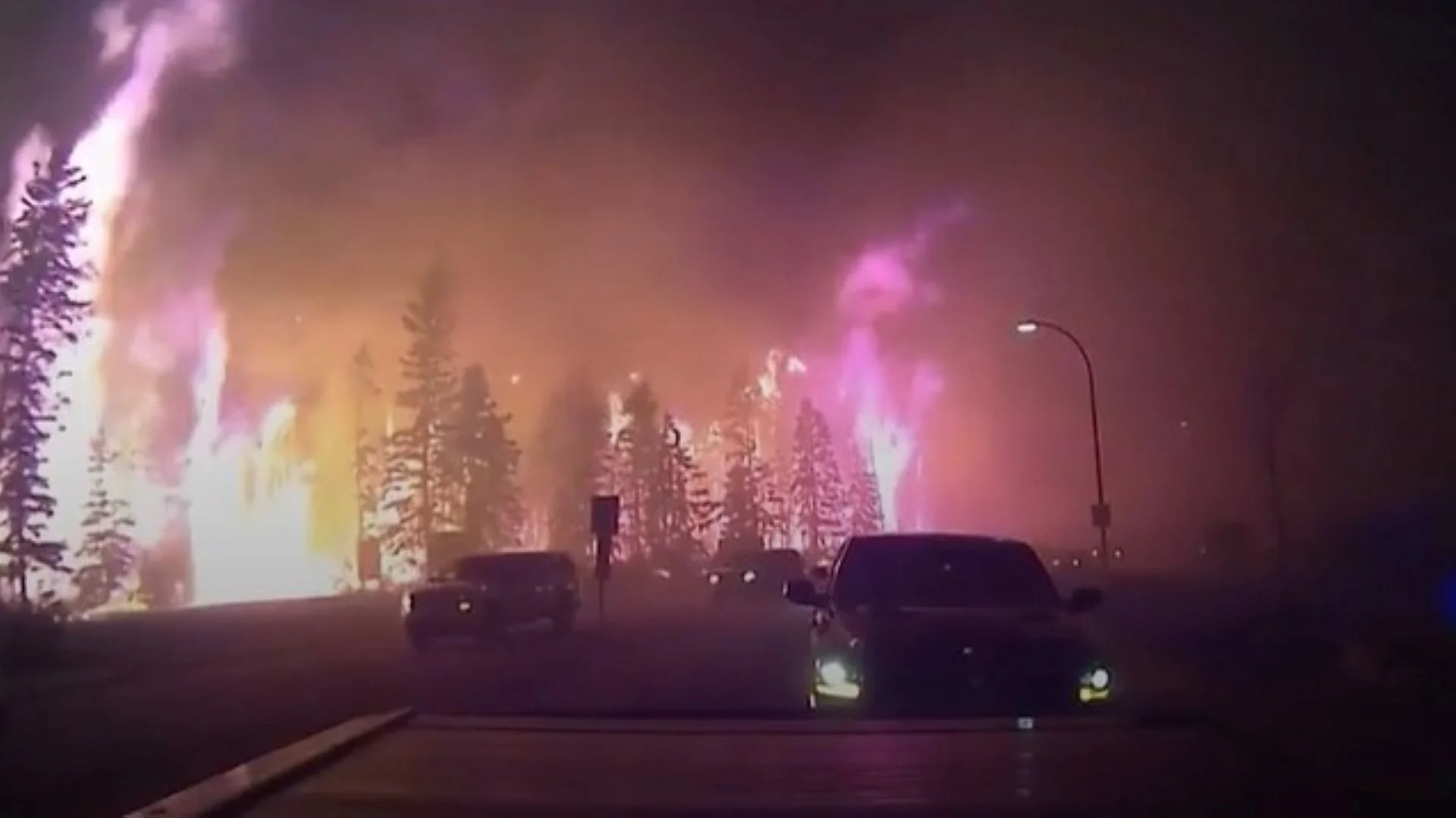
Fort McMurray, Alta., wildfire in May 2016. (Michel Chamberland/Submitted to The Weather Network)
It was then the Royal Canadian Mounted Police (RCMP) and the provincial government came to a difficult decision on the safety of people in the camps, and whether they should stay put or not.
At approximately 6 a.m. on May 6, the RCMP gave the seal of approval to launch the ground convoy in what became known as the “Convoy of Hope."
The situation earned the nickname for its high-stakes ground operation that took place, mainly on the Friday (May 6).
The convoy's success is often attributed to how calm the residents were, especially given the magnitude of the wildfire. Despite the terror of driving through active flames and thick, black smoke, there were no major accidents or panic-induced pileups.
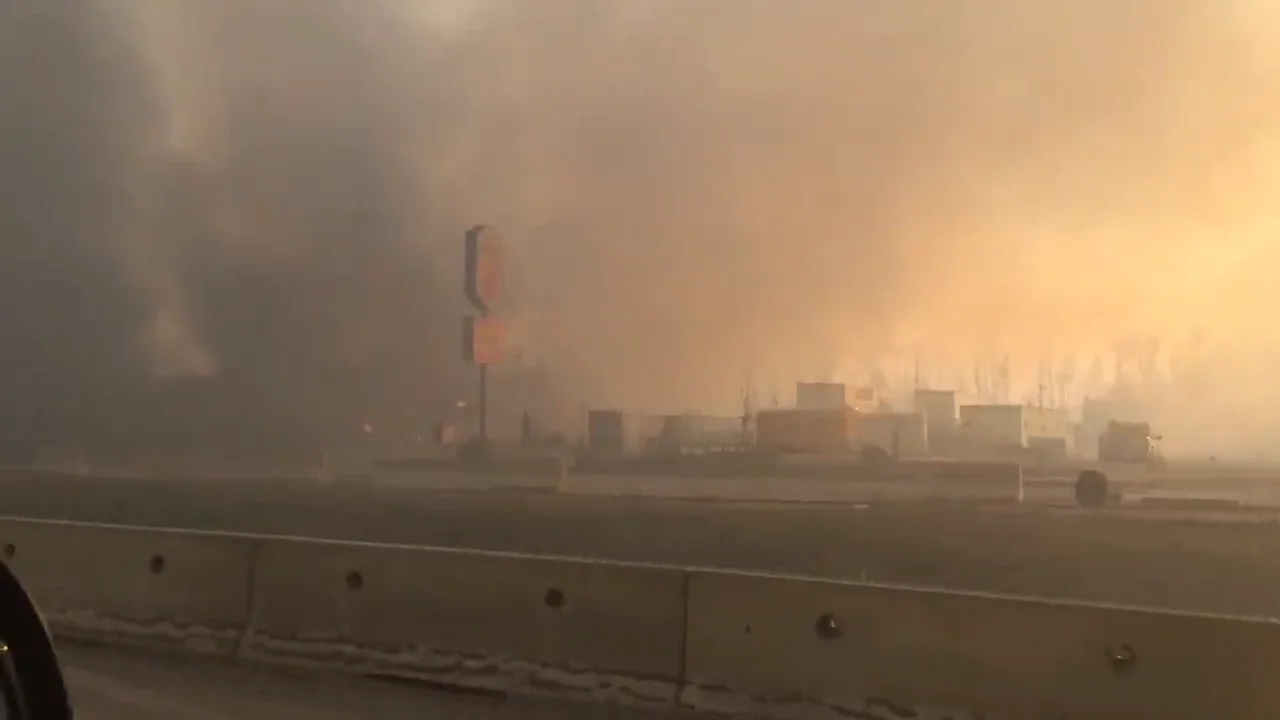
Fort McMurray, Alta., wildfire in May 2016. (Jamie/X//Submitted to The Weather Network)
"It was eerily surreal. There was nothing but charred ashes, leftover foundation vehicles everywhere. It was like driving through a war zone," said Marisa Heath, an evacuee who drove in the convoy with her husband and 10 pets.
As the fire bloomed, so did the response from neighbour communities
Once reached, vehicles that cleared the south-end of the city were able to drive safely toward Edmonton, several-hundred kilometres away, where reception centres were established at Northlands Coliseum.
With how quickly the fire was worsening, it didn't take long for surrounding communities to chip in with help for their neighbour in need.
Residents of nearby communities filled trucks with water bottles and cans, and drove along the highway to distribute them among those who had run out and were stranded.
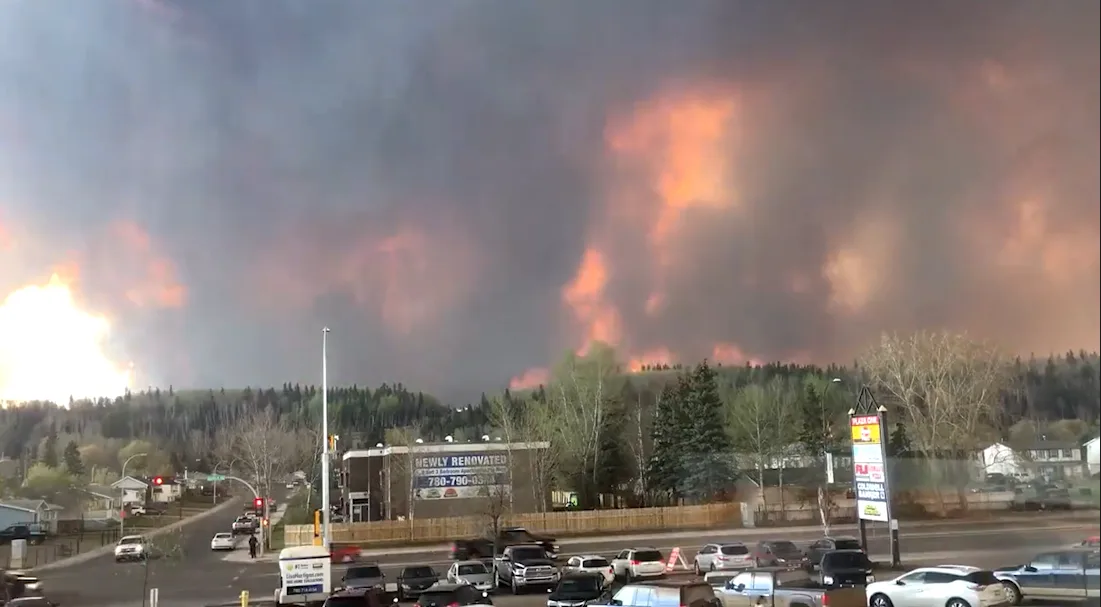
Fort McMurray, Alta., wildfire in May 2016. (Ryan Jefferies/Submitted to The Weather Network)
Reception Centres opened in Edmonton and in camps north of the city. Camp workers and community members gave their rooms to accommodate families, and food and water was distributed to any in need.
On May 16 and 17, the wildfire moved north again, prompting the evacuation of multiple oilsands camps that had already begun to restart. An explosion in the community destroyed more homes.
Eventually, a re-entry plan was put into place
When May 18 rolled around, the Alberta government temporarily announced a phased re-entry of residents into Fort McMurray between June 1 and 15, if a set of key conditions were met:
The wildfire no longer poses a threat and hazardous areas can be secured. Local government can be re-established.
Essential services such as emergency services, transportation, utilities and essential businesses can be re-established, as well as the infrastructure that supports these services.
On June 1, the plan to bring residents home kicked into effect, gradually letting them return over the coming weeks. It wasn’t until October 2016 that the residents of 470 homes in Fort McMurray were finally home.
Stay tuned to The Weather Network for the release of the final instalment of the Fort McMurray wildfire documentary on Saturday, May 9.