10 years later: First days of Fort McMurray’s historic ‘Beast’ wildfire

On May 1, 2016, the Fort McMurray, Alta., wildfire, which will eventually turn into 'The Beast,' awakens. We take a deep dive into the timeline of how quickly the fire was spotted and the rapid consumption of the Alberta town
The Weather Network's three-part documentary explores the beginnings of the devastating 2016 Fort McMurray, Alta., wildfire, the explosive nature of its growth and destruction, and its aftermath. It features stories from residents, meteorologists and other people who were caught in the fury.
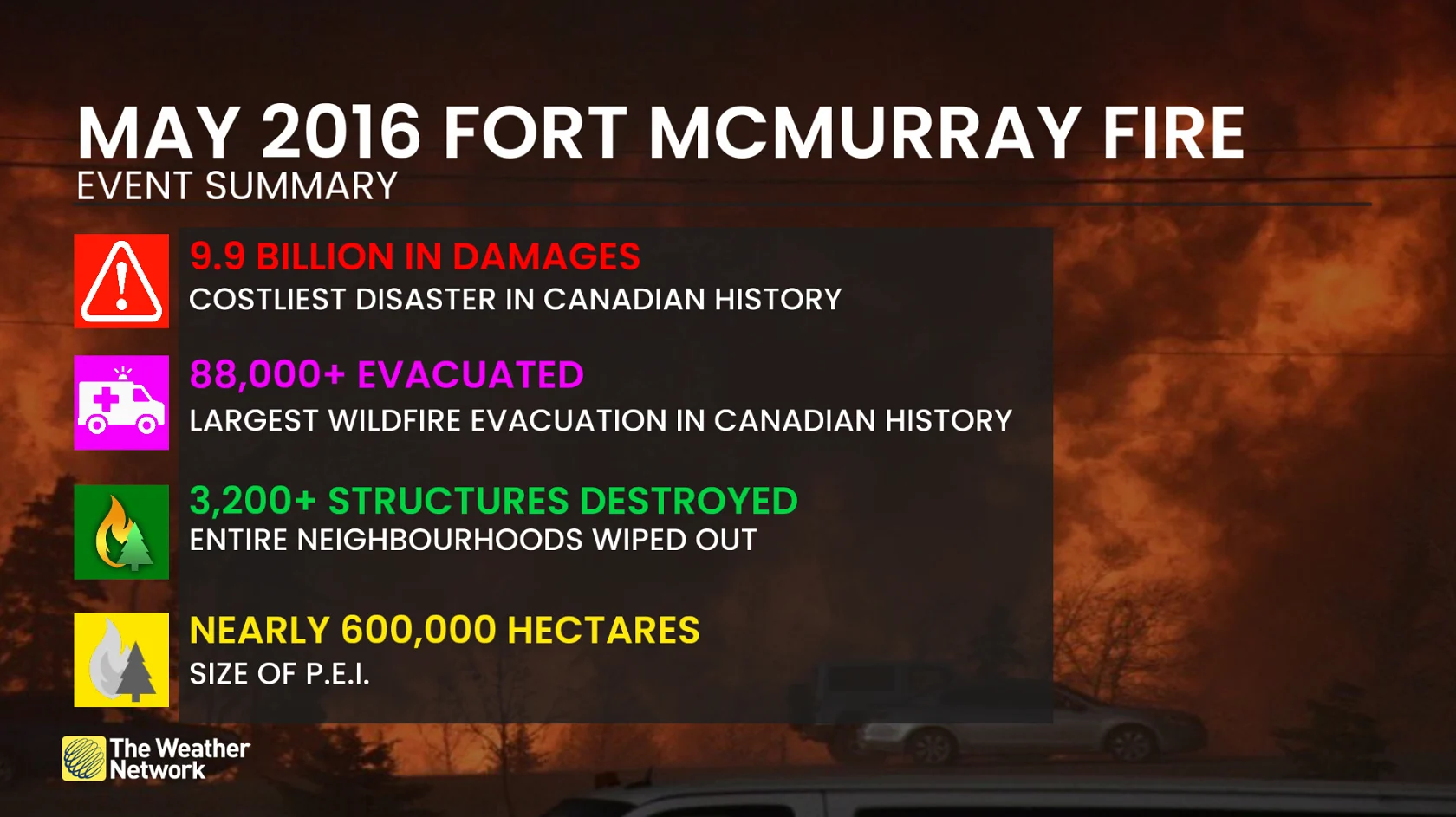
May 2016 will forever be etched in the minds of folks in Fort McMurray, Alta., as the community dealt with the costliest disaster in Canadian history.
Ten years later, memories of the historic, destructive wildfire, known to many as "The Beast," quickly come to the surface. When all was said and done, the blaze burned approximately 590,000 hectares (about 1.5 million acres) before officials were able to mark it as under control in July.
In the first of the three-part documentary on the event, we take a look at how it got started and its terrifying acceleration in the early days of May 2016.
How 'The Beast' was awakened
Conditions before the start of the wildfire were aligning for such favourable development.
The weather forecast on April 30 had indicated an Omega block, which allows for a large ridge of high pressure to build over the region with two smaller troughs flanking it on either end, was going to establish itself over Alberta.
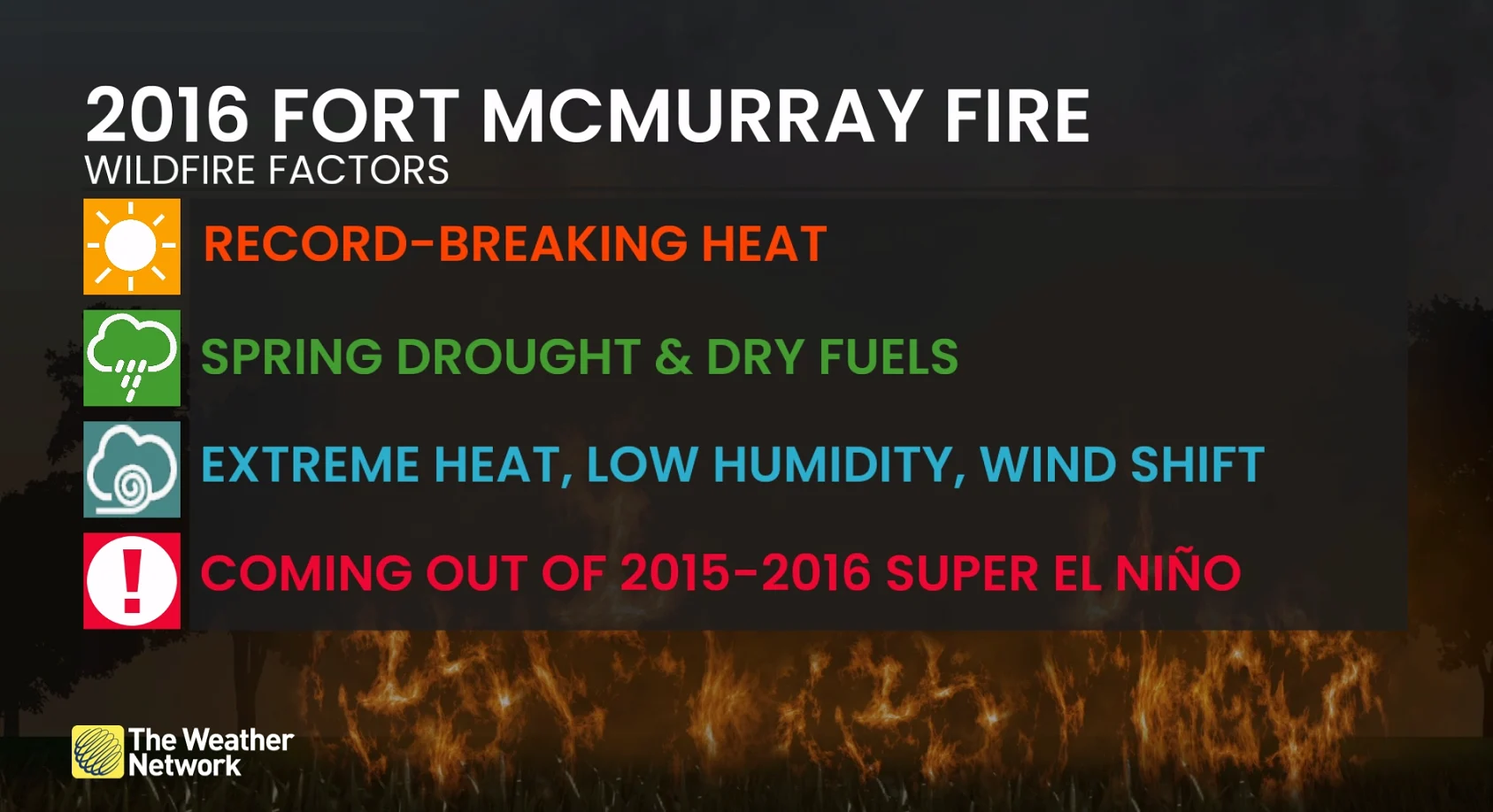
According to Tyler Hamilton, a meteorologist at The Weather Network, a significant heat wave was building across northern Alberta at the time, elevating the wildfire threat to the high to extreme level.
On May 1, the fire was first reported by a helicopter forestry crew in a remote area not far from Fort McMurray.
"But the size, scope and the movement of this wildfire, how it [essentially] tore into the community like a runway, once those winds shifted direction through the afternoon of May 3, conditions really deteriorated and took a turn for the worst," recalls Hamilton.
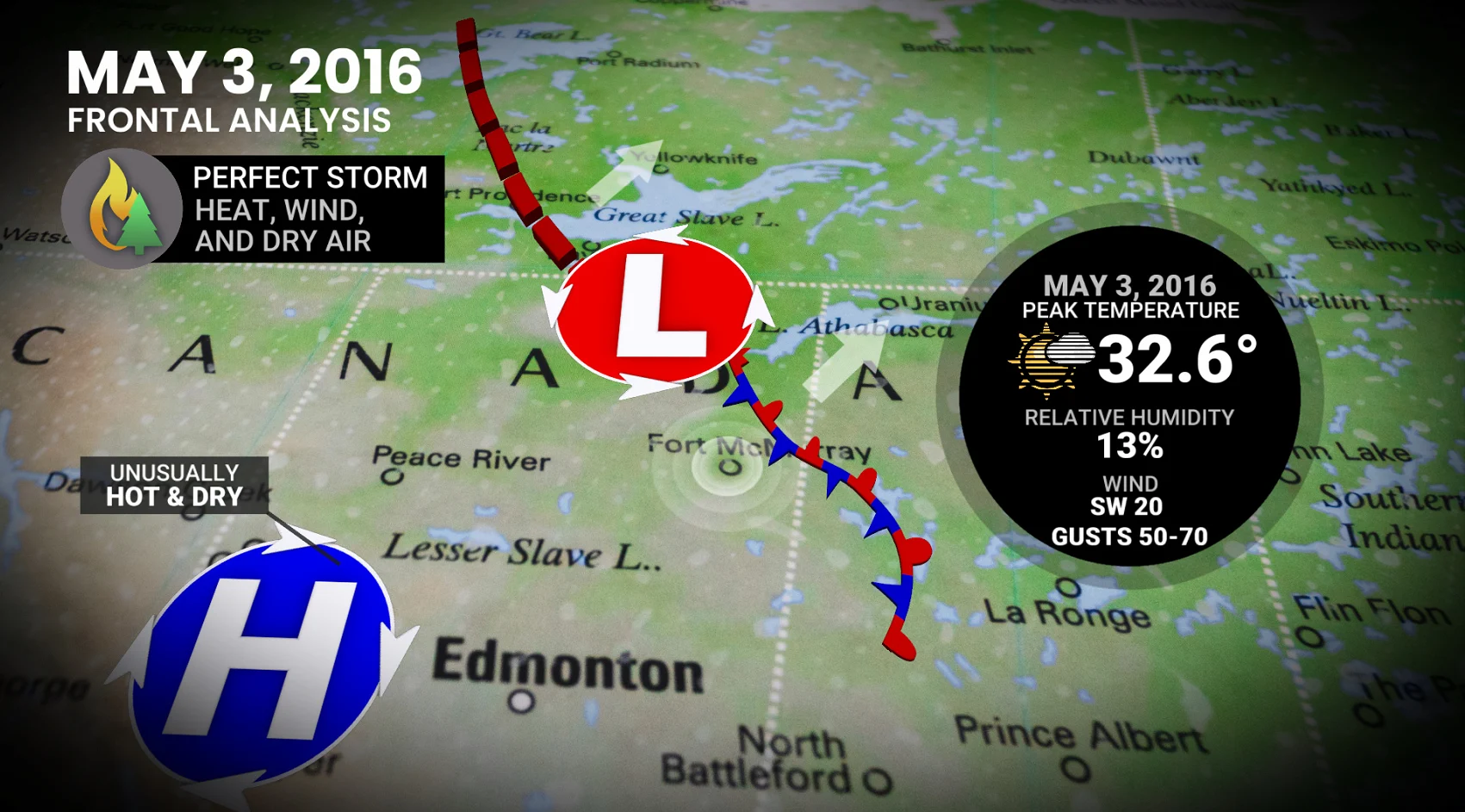
He noted the daytime high in Fort McMurray reached 32.6 C on May 3--the warmest it has ever been in the community that early in the month. The temperature went up noticeably from the 27 C recorded on the day before.
"Seeing the stories spread around the globe, you knew it was getting international headlines, and it was a bit of a weather roller-coaster," said Hamilton. "The May 2 conditions actually improved. The winds were light [and] we weren't seeing substantial wildfire growth."
At that stage, Hamilton estimated the wildfire to be anywhere from 500 to 700 hectares in size, allowing for some evacuation orders to get rescinded.
But on May 3, the temperature spiked to 32.6 C with a relative humidity of 12 per cent, Hamilton said, allowing for the fire to grow again.
"[That] is bone dry, really creating kindling, that fuel source that were dead leaves [or] those needles on the ground, creating a super volatile weather condition. Then a front passed, allowing strong winds out of the southwest to push that fire into the community," said Hamilton.
Progression of the wildfire
The precise timeline of the Fort McMurray wildfire has the hallmarks of a "sleeping dragon," coming to life quickly and spreading with terrifying speed. What started out as a small, two-hectare plume of smoke, rapidly escalated to a citywide catastrophe in just 48 hours.
On May 1 at 4 p.m., a helicopter patrol spots a fire about seven kilometres southwest of the city. It is only two hectares in size, but is burning in a region left bone-dry by a record-breaking spring.
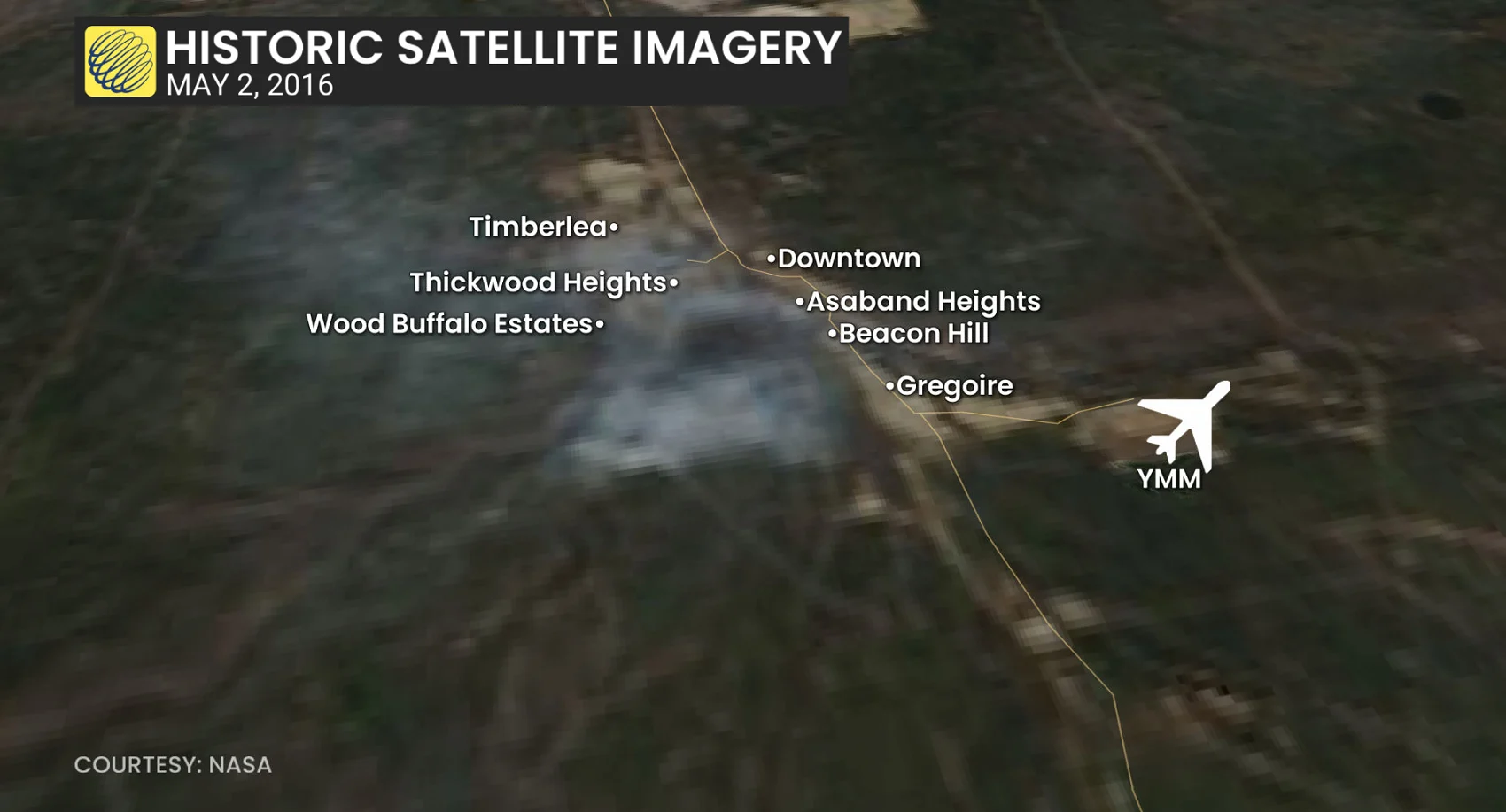
May 2, 2016 wildfire satellite imagery of Fort McMurray, Alta. (NASA)
May 1 (nighttime): A local state of emergency is declared for some southern neighbourhoods.
May 2: The fire seems to remain sluggish in growth. While it jumped to 2,600 hectares in size, it was moving away from the city. Evacuation orders for some neighbourhoods are actually downgraded to voluntary notices. Residents felt a brief, false sense of relief.
Once the evacuations started, they were slow at first but residents did their best to evacuate in an orderly manner.
May 3 at 6:49 p.m.: The entire city of Fort McMurray (88,000 people) is placed under a mandatory evacuation order. It is the largest in Alberta’s history.
May 4: The fire begins creating its own weather, including lightning and pyrocumulonimbus. The provincial state of emergency is declared. Roughly 1,600 structures are already confirmed destroyed.
The country watched in horror as residents fled, captured in images that looked like an escape from hell.
WATCH: The Beast: Revisiting Fort McMurray 10 years after the wildfire
Stay tuned to The Weather Network for the release of the next instalment of the Fort McMurray wildfire documentary on Wednesday, May 6.