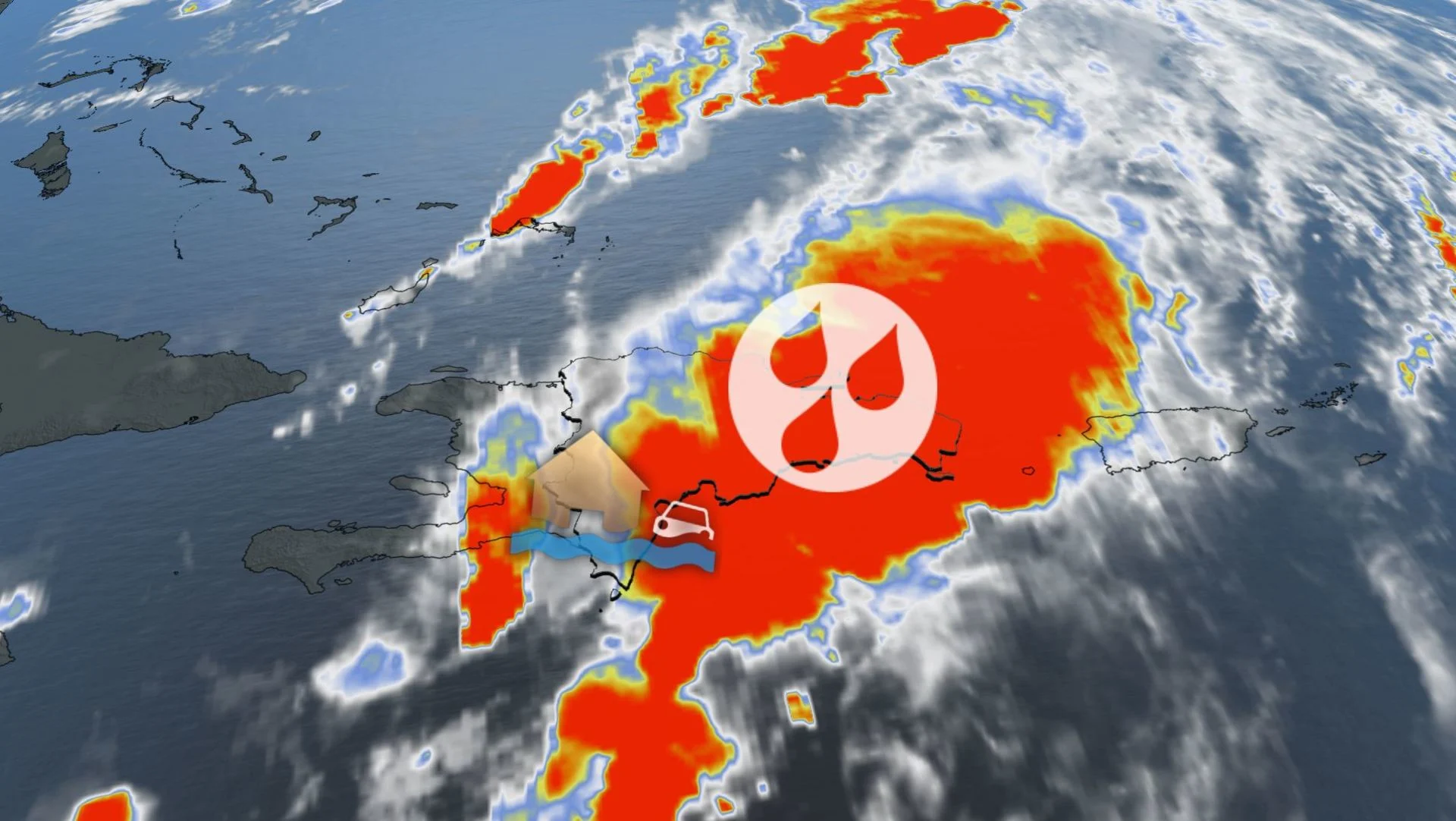
5,000 km plume of tropical air fuels weather bomb, deadly floods

Dozens of people died in the Dominican Republic this weekend as terrible floods swept the nation’s capital
Fall is a season of intense storms that span entire hemispheres, and the system that affected Eastern Canada this weekend is a testament to the global nature of these sprawling cyclones.
An intense plume of tropical moisture stretching more than 5,000 km from the equator to Newfoundland fuelled both the Canadian weather bomb and tragic flooding across parts of the Caribbean.
Dozens of people died this weekend in the Dominican Republic after torrential rains led to widespread flooding in the country’s capital.
DON'T MISS: ‘Weather bombs’ are explosive storms that create ferocious conditions
A sprawling low-pressure system that developed over the western Atlantic Ocean on Friday dragged a plume of moisture straight out of the equatorial tropics, eventually reaching more than 5,000 km from the lower latitudes deep into the heart of Newfoundland and Labrador.
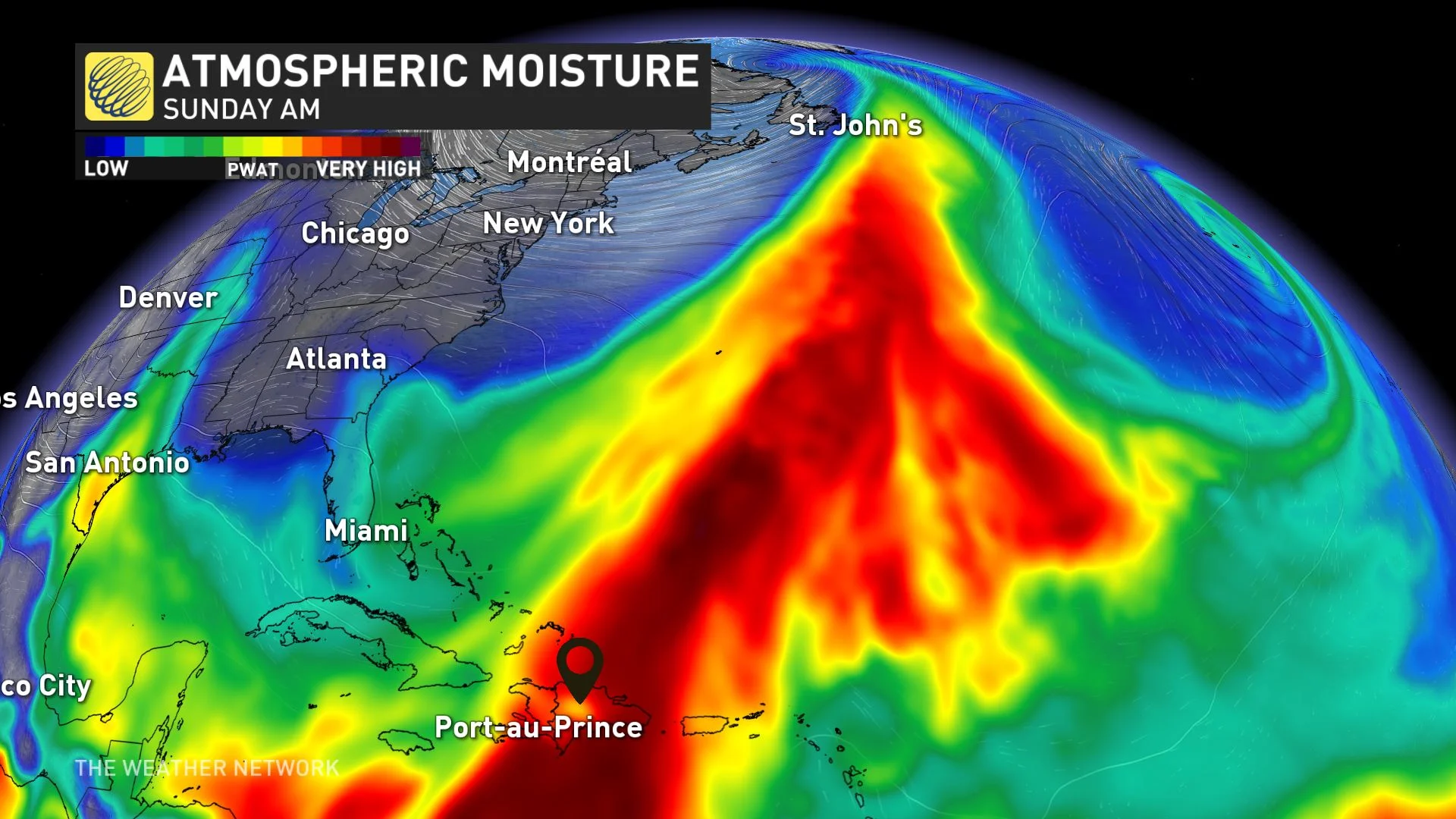
This low-pressure system turned into a weather bomb that brought high winds and torrential rains to much of Atlantic Canada over the weekend. A weather bomb is a low-pressure system that sees its minimum central pressure decrease by at least 24 millibars in 24 hours. This rapid strengthening generates stronger winds and heavier precipitation along the storm’s path.
Atlantic Canada’s weather bomb wasn’t the only storm in town.
Caribbean disturbance fuels catastrophic flooding
We also saw a tropical disturbance form over the western Caribbean last week, right around where you’d expect to see tropical development this late in the year. Forecasters with the U.S. National Hurricane Center (NHC) dubbed the disturbance a “potential tropical cyclone” in anticipation that it may have strengthened into Tropical Storm Vince.
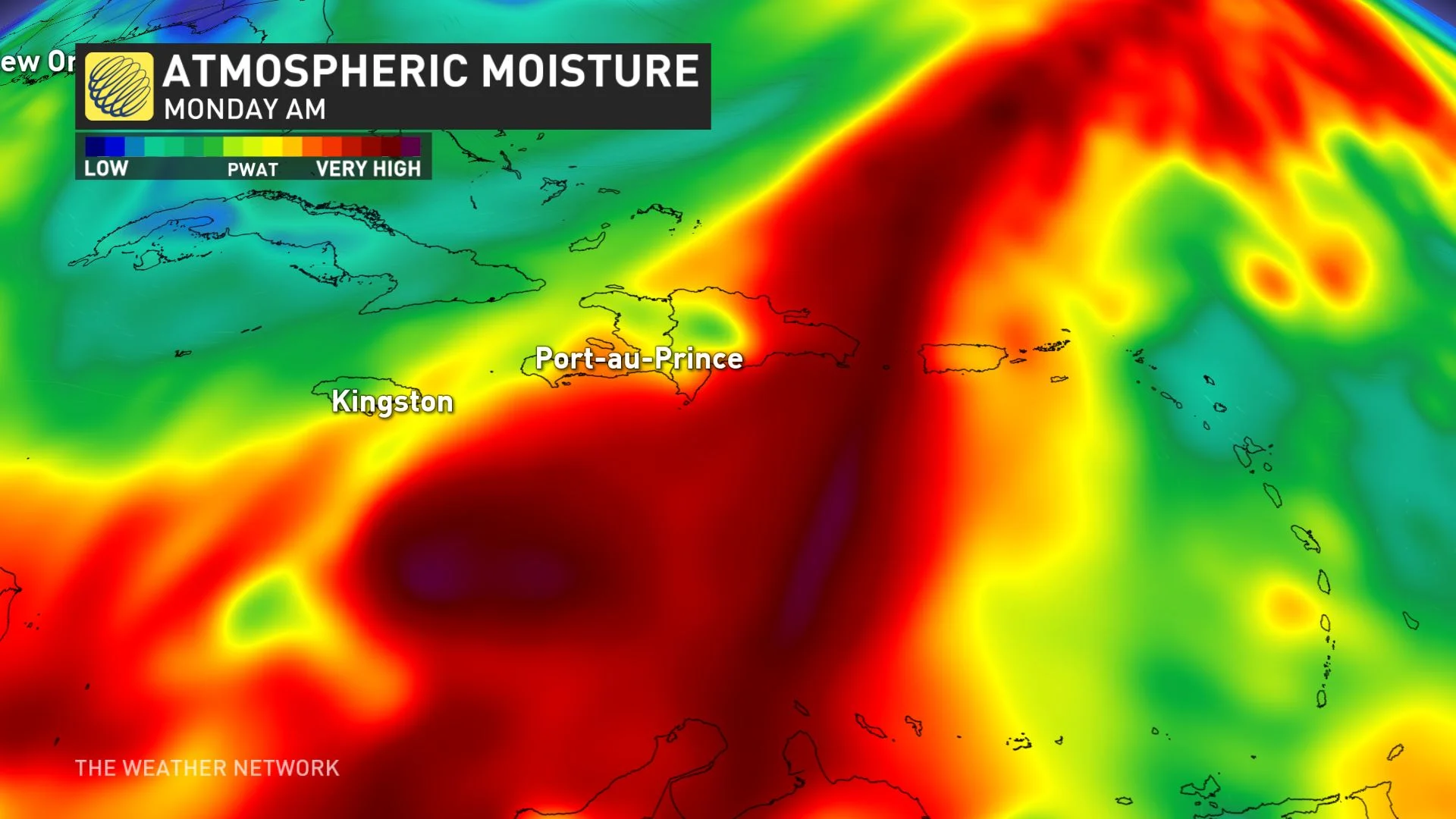
Ultimately, the same jet stream that sparked Atlantic Canada’s rowdy storm also shredded the Caribbean disturbance apart, preventing it from developing any further. But a tropical disturbance doesn’t need to organize into a named system in order to cause widespread damage.
MUST SEE: Taylor Swift fan succumbs to sweltering heat ahead of Brazil show
The tropical disturbance generated deep thunderstorms over Hispaniola on Saturday. Those storms, fuelled by southerly winds racing up the island’s jagged terrain, tapped into the same plume of tropical moisture aloft that stretched all the way to Canada.
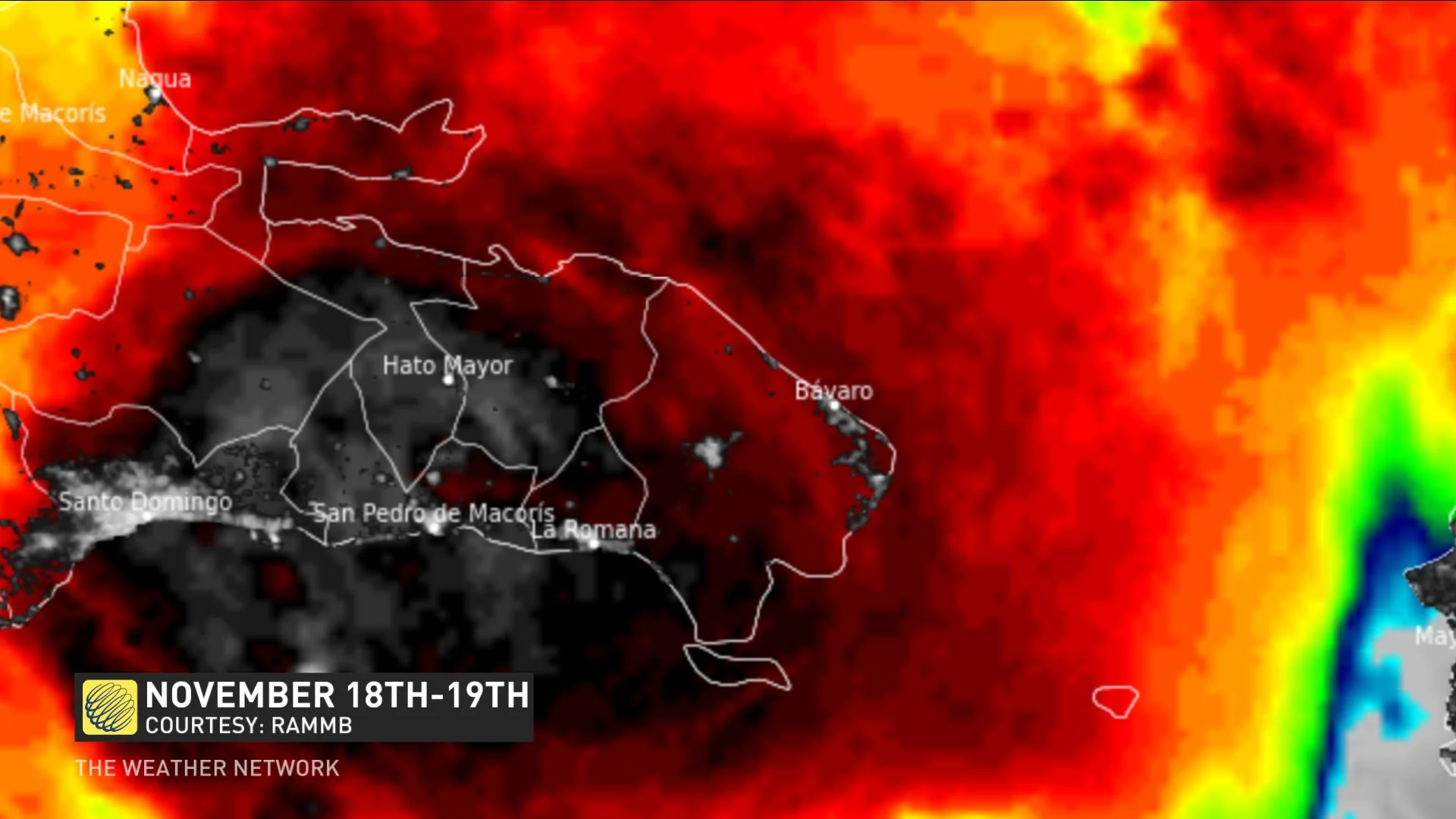
The heaviest thunderstorms bubbled over the Dominican Republic, where the rain fell so hard and so fast that runoff turned streets into raging rivers. Multiple videos from the region showed metres-deep floodwaters gushing through residential areas, carrying away vehicles with ease and tearing apart anything in the torrent’s path.
More than 20 people died as a result of the floods, Reuters reported on Sunday, with thousands more requiring rescue from the high waters and ensuing damage. Nine people died in Santo Domingo as rising waters caused a concrete barrier near a tunnel to fail and collapse into traffic.
With files from Reuters.