Wildfire smoke threatens air quality across B.C.'s South Coast

Wildfire smoke is forecast to flow toward B.C.'s South Coast this week, bringing poor air quality to Vancouver
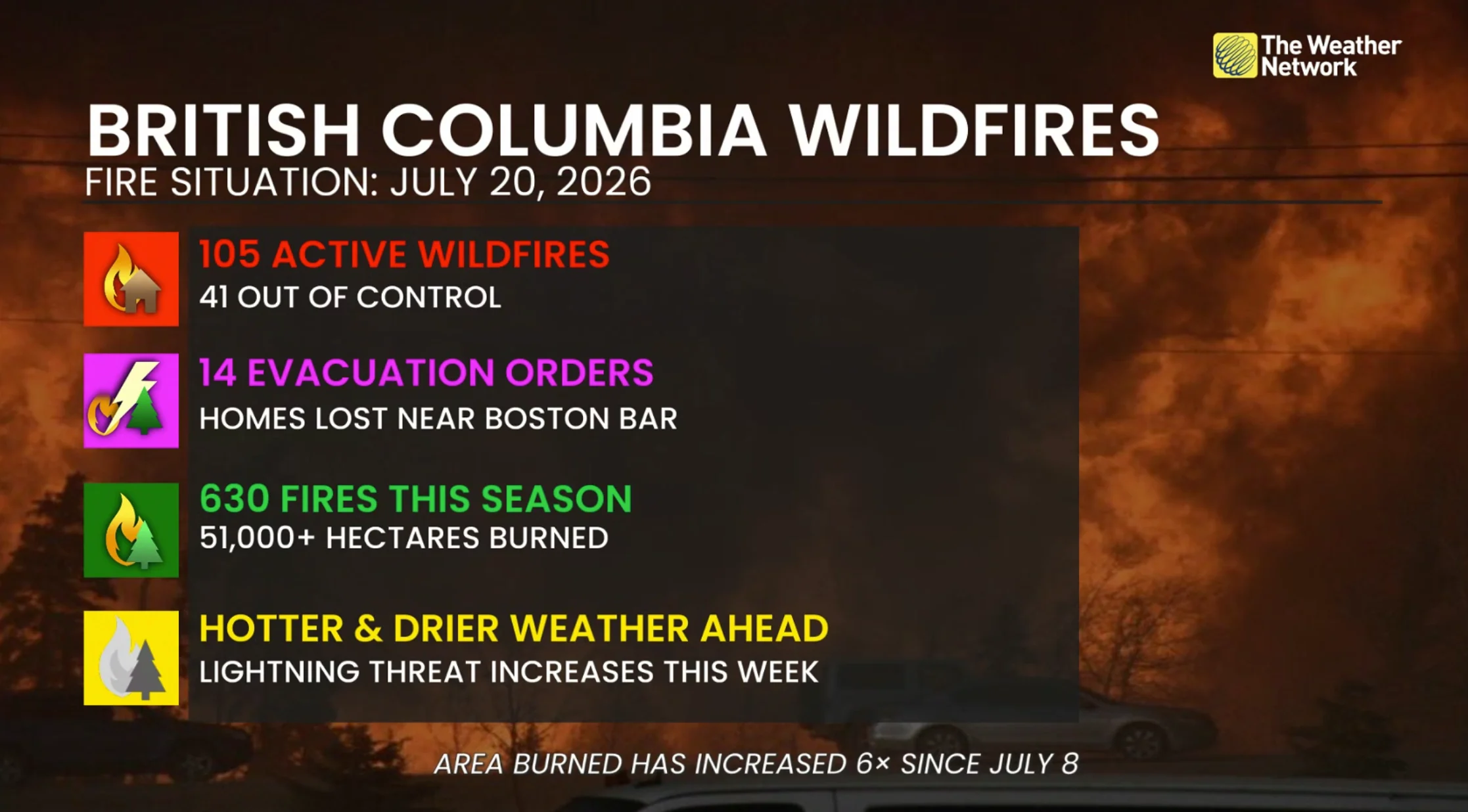
British Columbia continues to battle wildfires across the province, with currently more than 100 active fires. Now, much of the South Coast is seeing a significant reduction in air quality thanks to an unlucky shift in winds.
DON'T MISS: The Weather Network's hub for all wildfire information in Canada
The persistent drought conditions are making the situation worse, with the lack of moisture allowing wildfires to expand at a steady rate, with the Ainsley Creek wildfire that was discovered on July 4, expanding to more than 17,000 hectares of land.
Since July 8, there has been a five-fold increase in the amount of land burned in B.C.
Increasing temperatures and limited precipitation focused in the north of the province will continue to reduce moisture levels and increase the potential for new wildfires. Rain is expected to wrap around, just missing most of the current wildfires and leaving most of southern B.C. dry.
Wildfire smoke, poor air quality moves into Vancouver area through Monday
Blowing wildfire smoke is set to bring hazardous air quality to many southern B.C. residents, just as current wildfires are doing to Ontario.
Air quality warnings were already in place for parts of Okanagan on Sunday, but the warning area is expected to expand as high pressure over the Interior and a weak trough along the coast shifts the air flow toward the coast. This will essentially funnel the smoke through the Fraser River channel and into the Vancouver area.
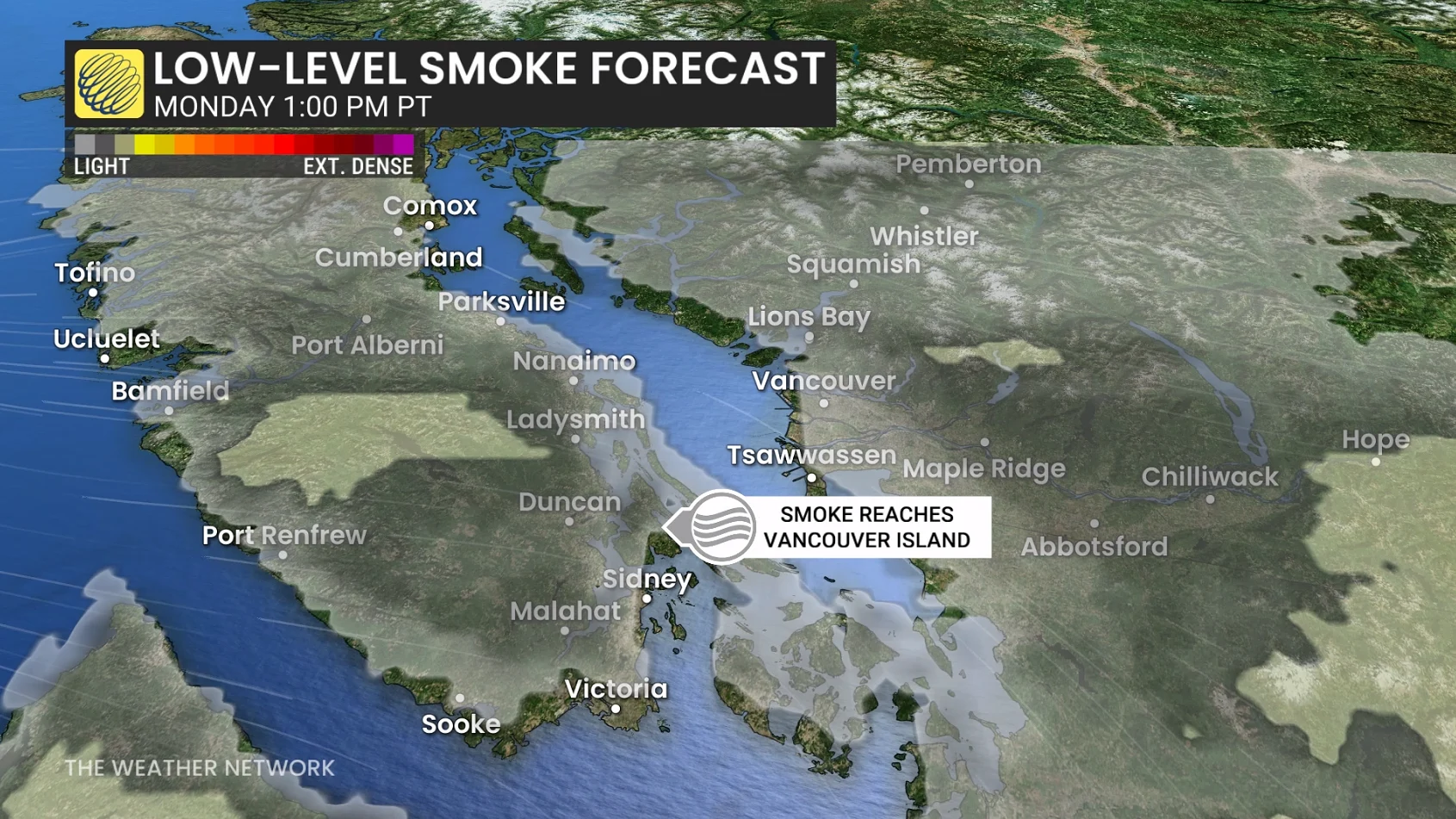
Folks along the South Coast will likely see conditions deteriorate on Monday as the smoke aloft mixes down to the surface, especially across Vancouver Island's higher terrains, as well as in Metro Vancouver.
Air quality could jump to the 'moderate risk' category through the day, but that will all depend on how much smoke concentrates at street level.
SEE ALSO: Poor air quality due to wildfire smoke can pose unique risks to your pet
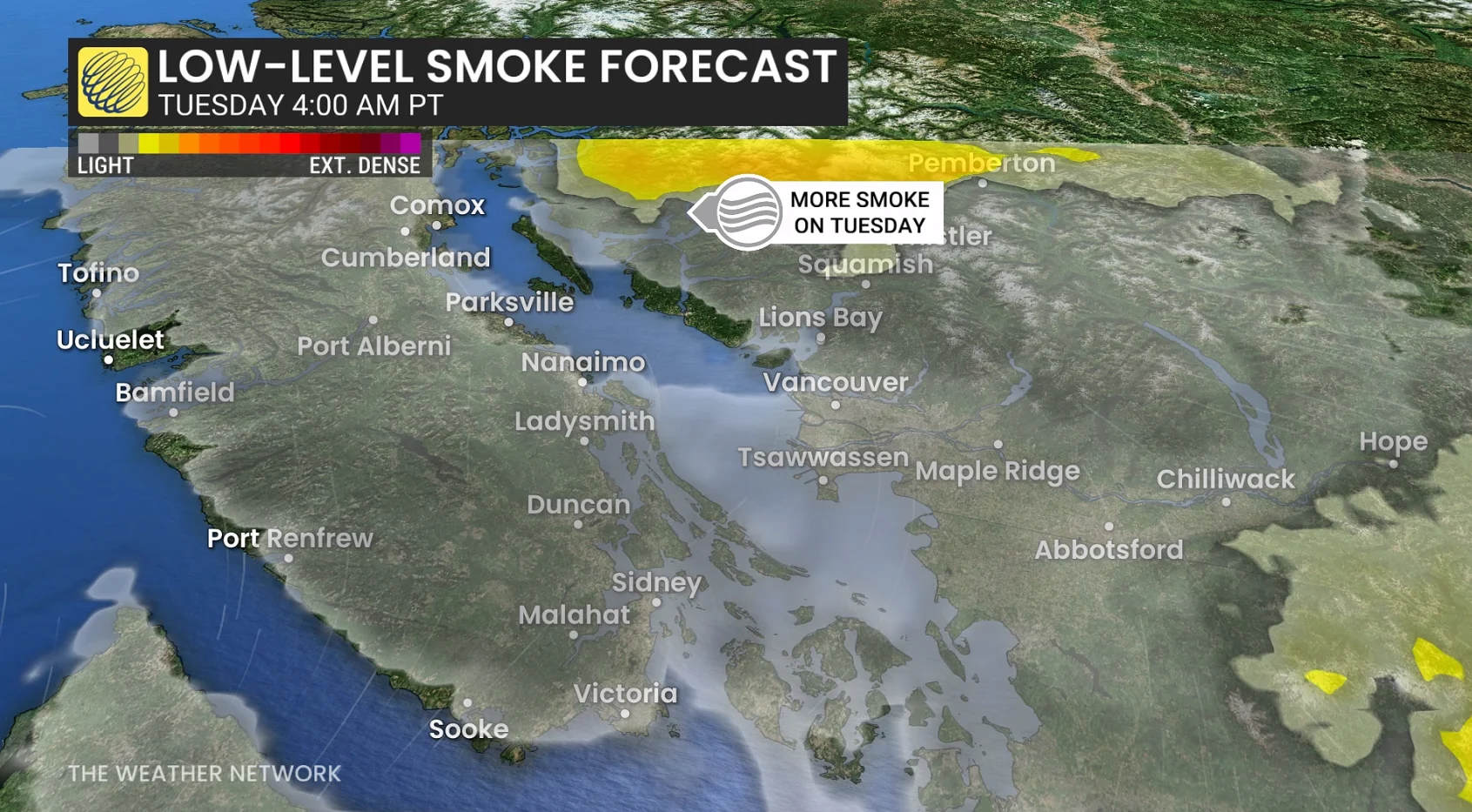
By Tuesday, we could also see more smoke from wildfires burning in the United States flow north into southern B.C., prolonging the poor air quality.
It is recommended to modify your outdoor plans as air quality worsens, and those who have an increased risk, such as those susceptible to respiratory illnesses, should try to stay inside. Also seek to monitor your local district fire centre to know if or when you’ll need to evacuate as needed.
Stay with The Weather Network for all the latest on conditions across British Columbia