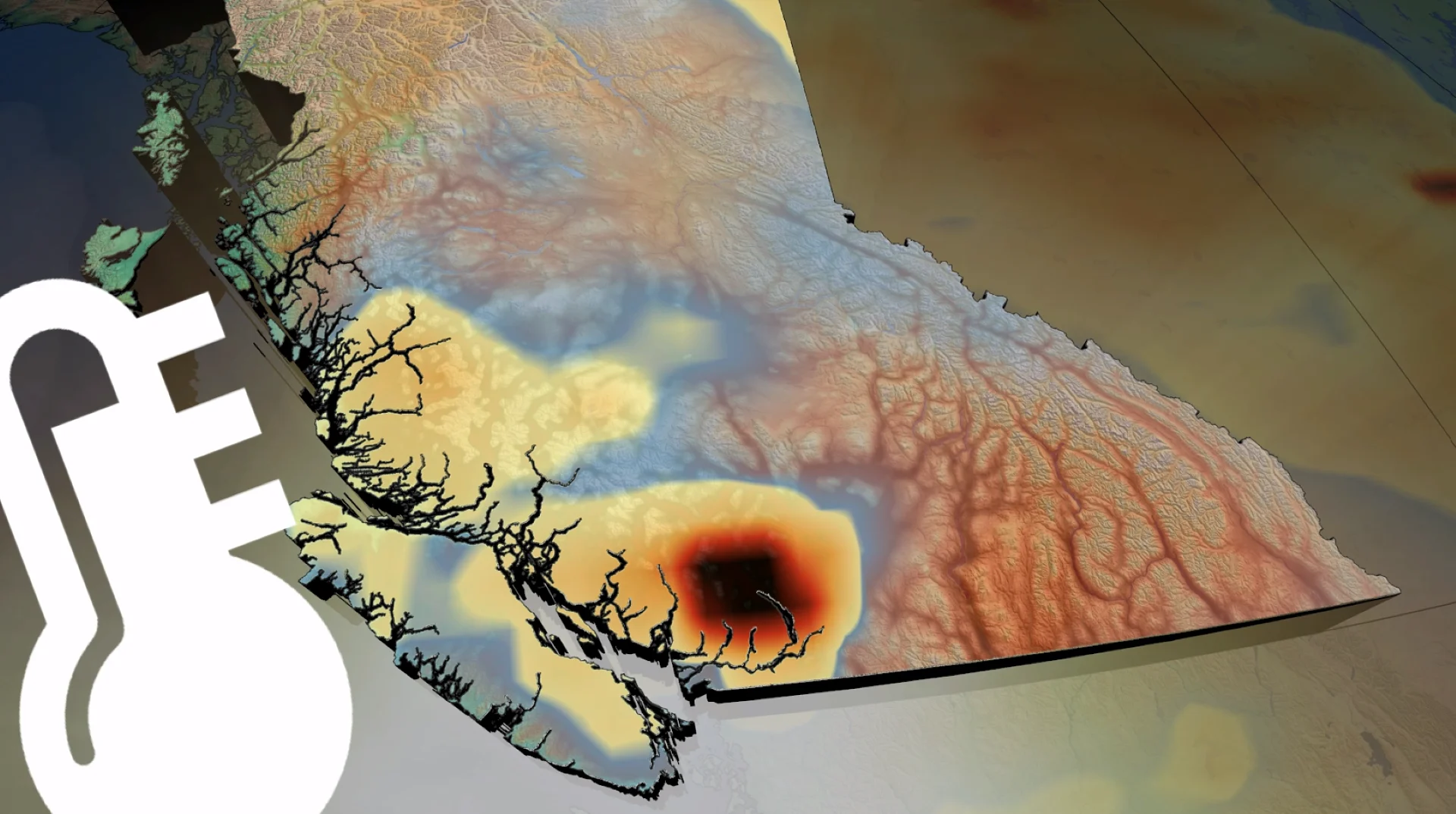
Degraded air quality from wildfire smoke poses a health risk in B.C.

Wildfire smoke will continue to flow across B.C.'s South Coast on Tuesday, impacting air quality in Lower Mainland communities
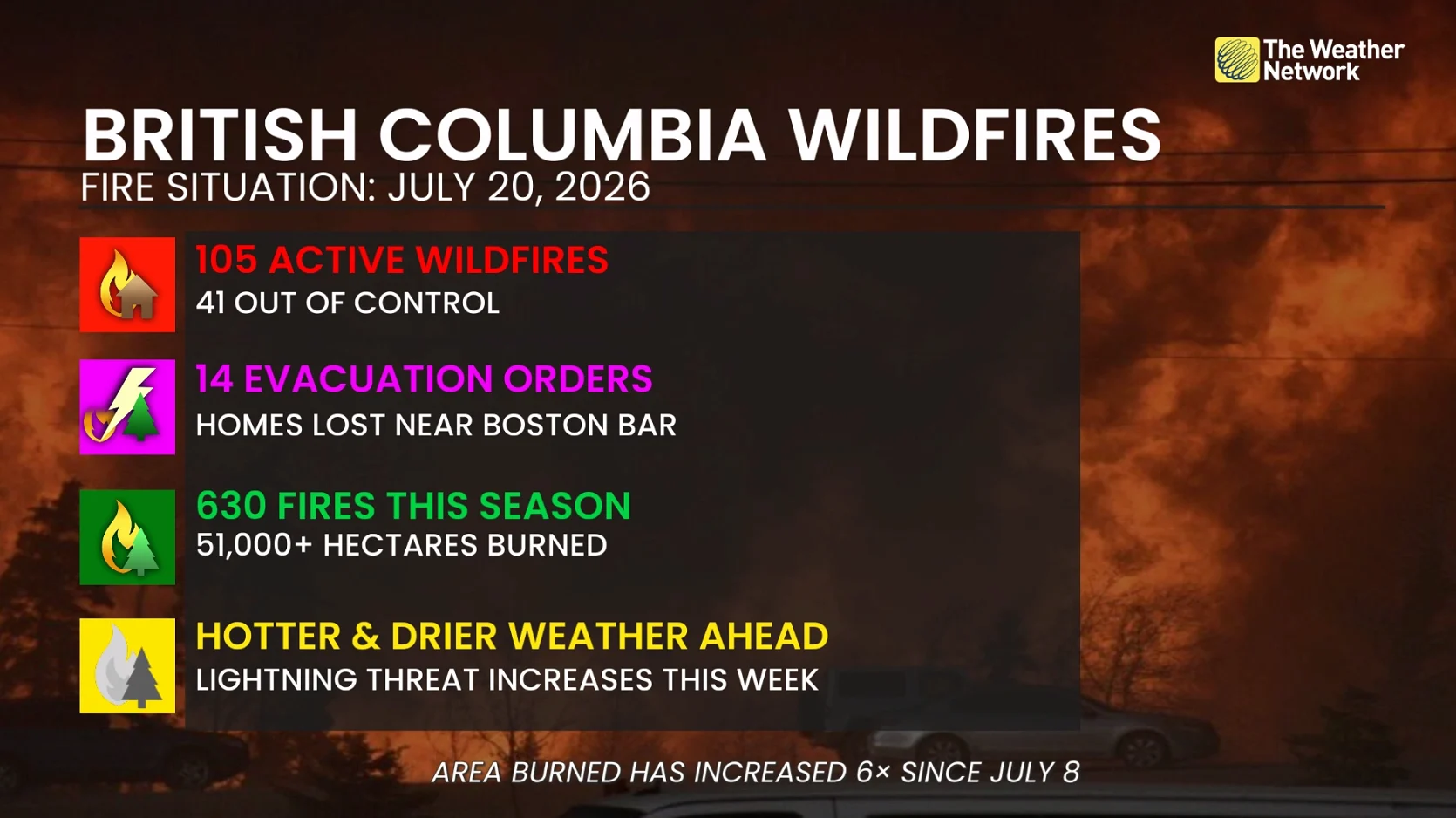
British Columbia continues to battle wildfires across the province, with currently just under 100 active fires. Now, much of the South Coast is seeing a significant reduction in air quality thanks to an unlucky shift in winds.
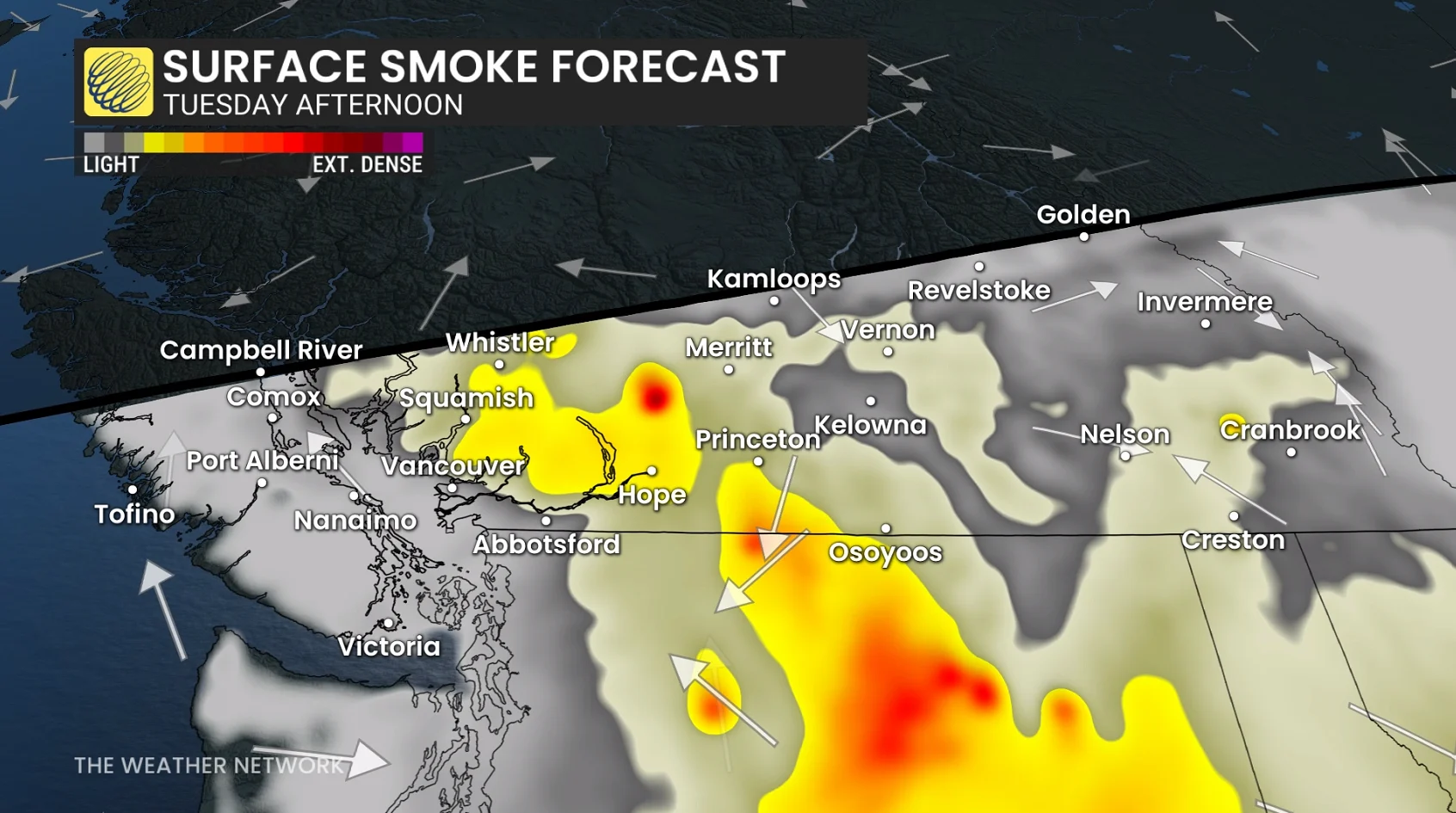
As of Monday evening, smoke particles were detected in the Whistler region, central Vancouver Island, and portions of the Lower Mainland and Fraser Valley--near Chilliwack, Agassiz and Hope.
DON'T MISS: The Weather Network's hub for all wildfire information in Canada
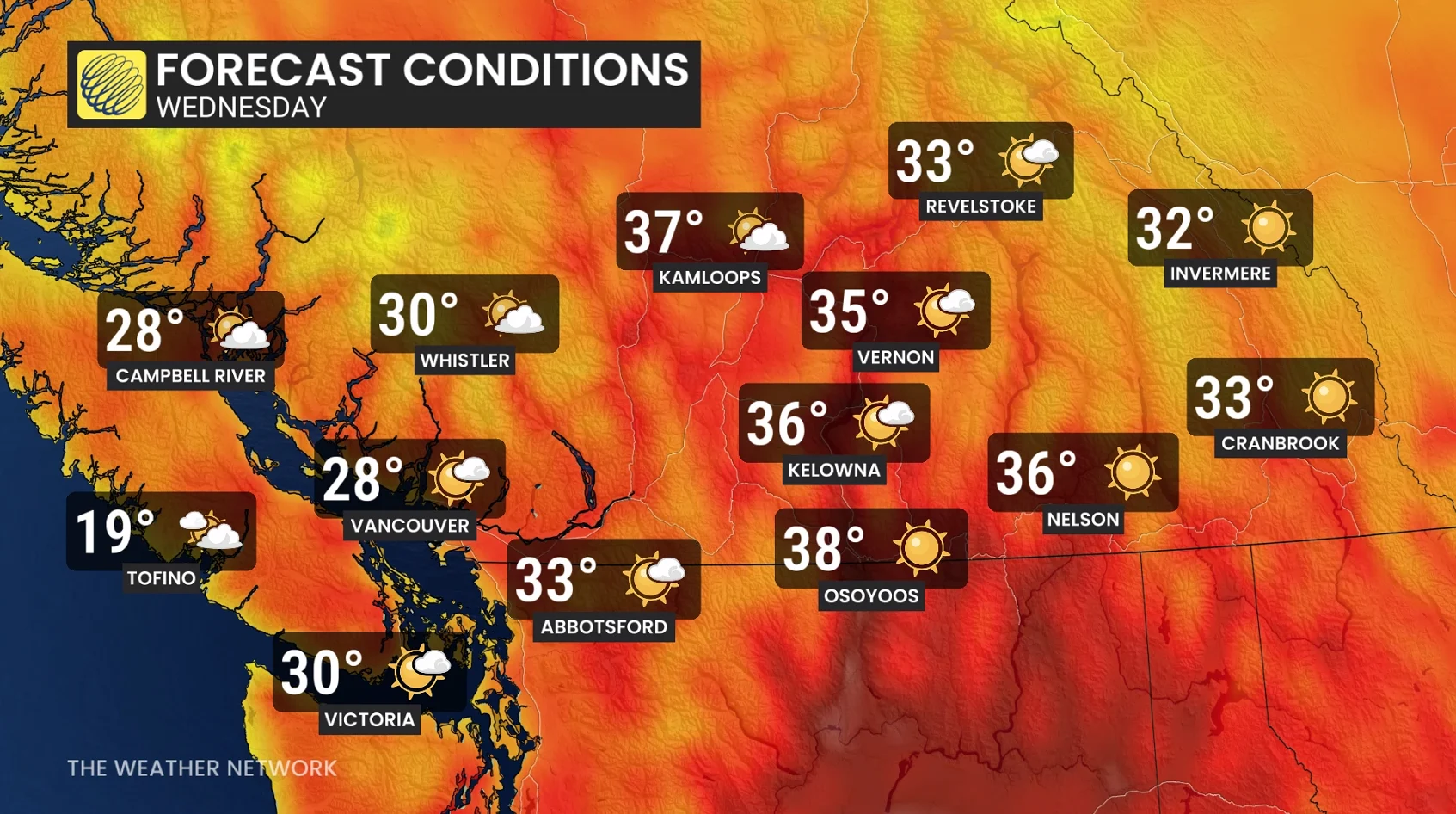
On top of that, temperatures will be on the rise with an upper ridge building in. Heat warnings have been issued.
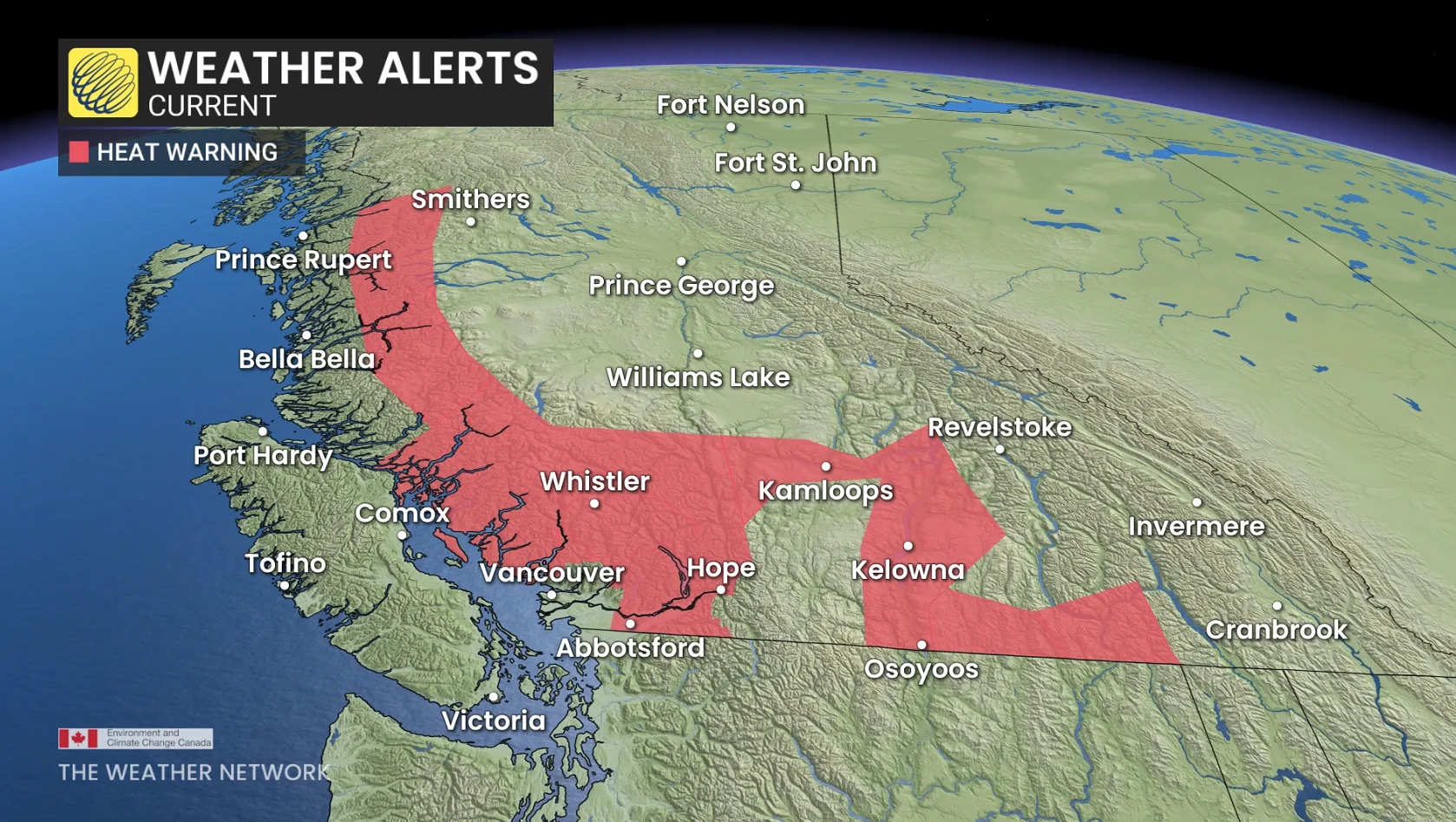
Temperatures will reach the mid-to-upper 30s for the Okanagan Valley, possibly near 40 C for a few of the traditionally hotter locations--especially on Thursday. The South Coast region will reach the mid-20s to lower 30s through Thursday, and then trend cooler Friday.
Wildfire smoke, poor air quality continues Tuesday with heat set to move in
Blowing wildfire smoke will continue to bring hazardous air quality to many southern B.C. residents on Tuesday, just as current wildfires are doing to Ontario.
On Tuesday, a light, northeast flow will continue to blow smoke into the Fraser Valley, the Sea to Sky corridor, and along the Sunshine Coast, due to wildfire activity near Boston Bar and northwest of Ashcroft.
SEE ALSO: Poor air quality due to wildfire smoke can pose unique risks to your pet
Fire conditions will continue to get more severe as a heat wave settles in across the region. Peak highs this week will hit the upper 30s in the Interior, to near the 30-degree mark along the coast away from the water.
Similar to the trough last Thursday, another round of lightning is possible later this week when an upper trough displaces the ridge.
It is too early to talk about specific risk areas, but regions along the South Coast and throughout the Interior are at risk of thunderstorm activity, which could lead to additional wildfire ignitions.
It is recommended to modify your outdoor plans as air quality worsens, and those who have an increased risk, such as those susceptible to respiratory illnesses, should try to stay inside. Also seek to monitor your local district fire centre to know if or when you’ll need to evacuate as needed.
Stay with The Weather Network for all the latest on conditions across British Columbia