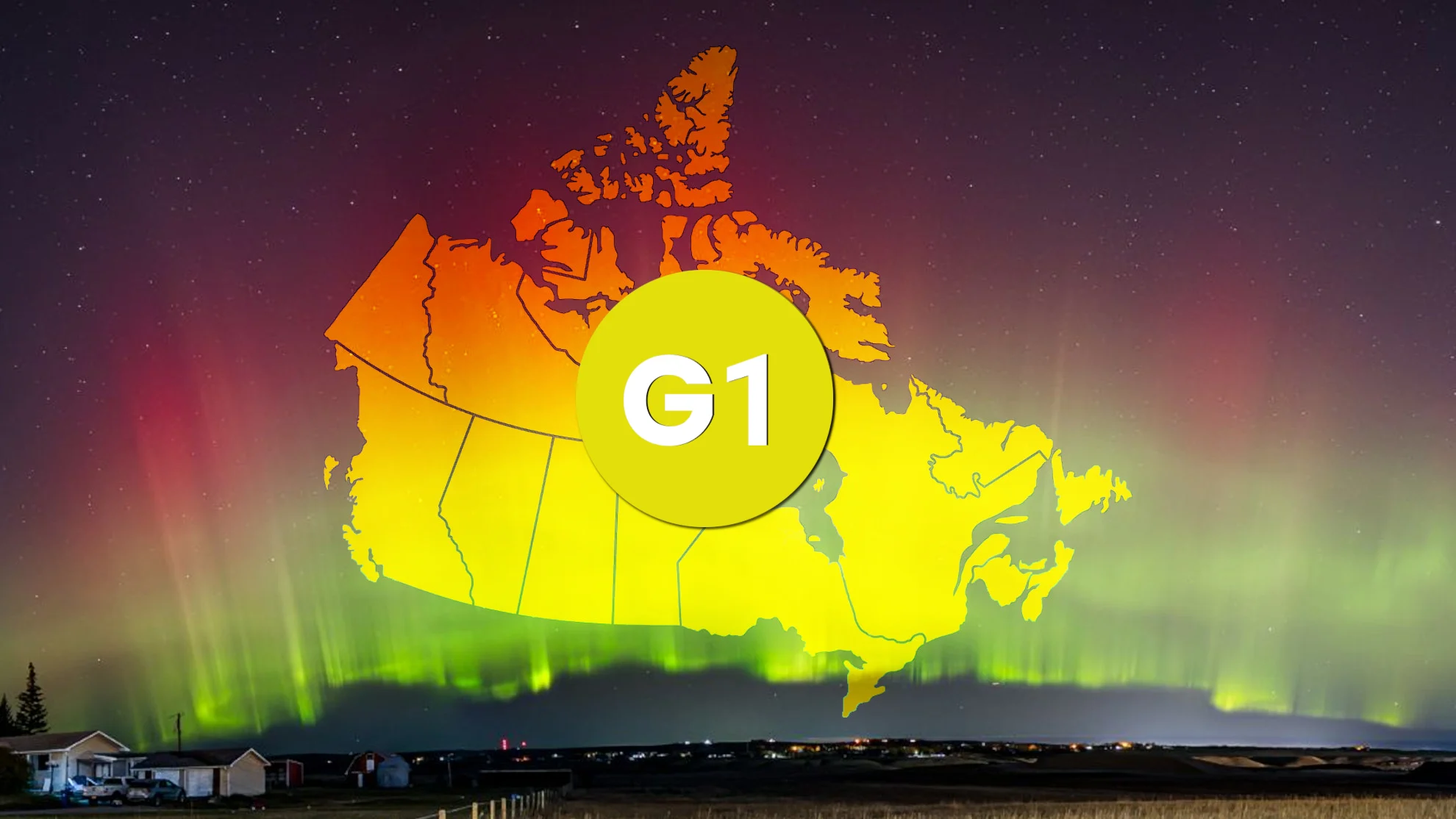
Northern lights alert! Auroras may spark over Canada tonight due to solar wind

Check your forecast for clear skies tonight!
A blustery stream of the solar wind is sweeping past Earth, and the night sky in parts of Canada could light up with auroras as a result.
Over the past few days, space weather forecasters have been watching an immense coronal hole on the Sun rotate towards Earth. Coronal holes are regions of the solar atmosphere which have become exposed directly to space by the orientation of the magnetic fields permeating the Sun's surface.
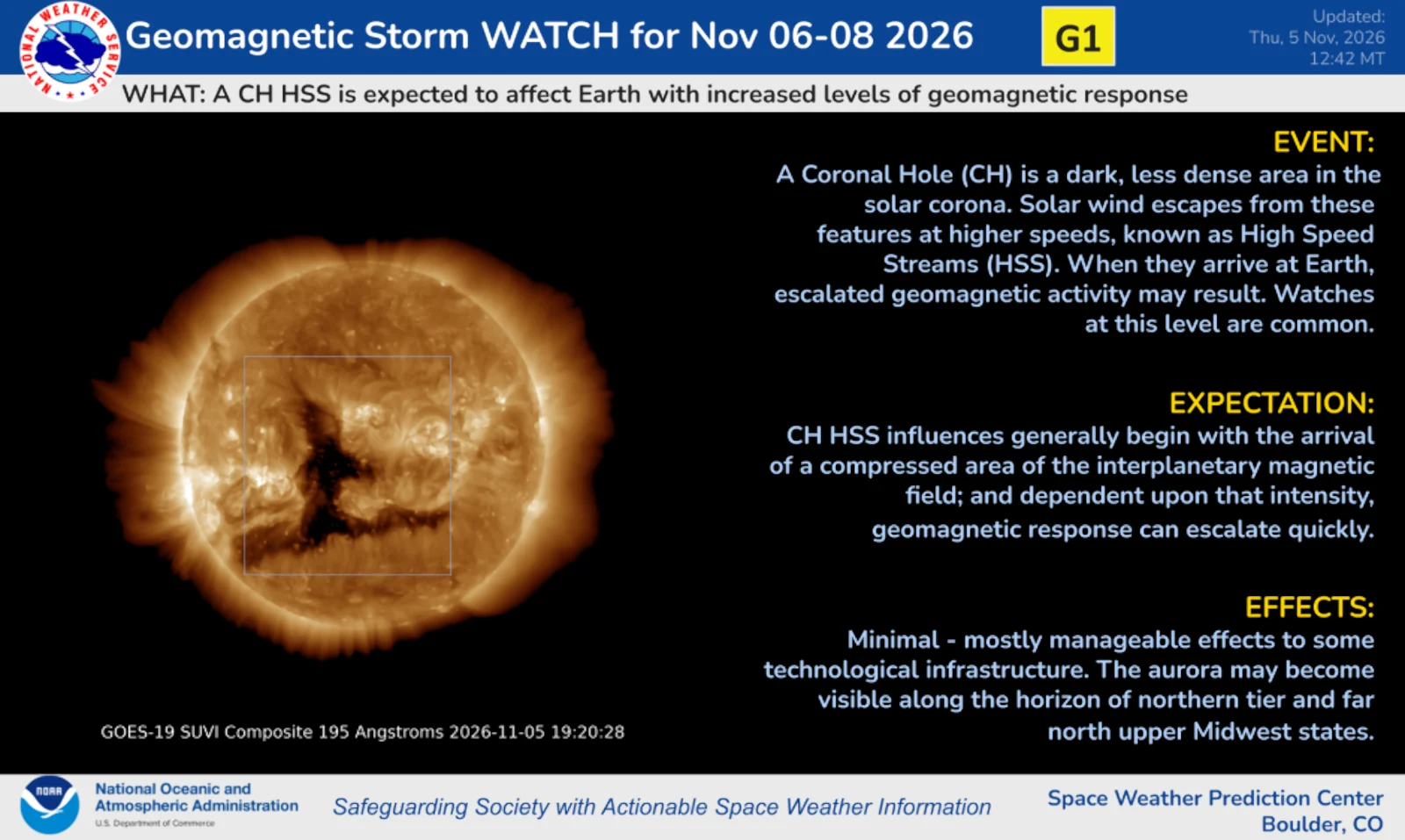
A G1 geomagnetic storm watch has been issued for the night of November 6, 2026. (NOAA SWPC)
DON'T MISS: Have you seen Earthshine? Over the next week is the best time to spot it!
Streaming out of this coronal hole are fast, energetic solar particles that are cutting a swath through the normally sedate flow of the solar wind, known as a coronal hole high speed stream (CH HSS).
On Thursday, this CH HSS became 'geoeffective', meaning that Earth is now immersed in its blustery flow, which often causes the planet's magnetic field to react, potentially sparking geomagnetic storms.
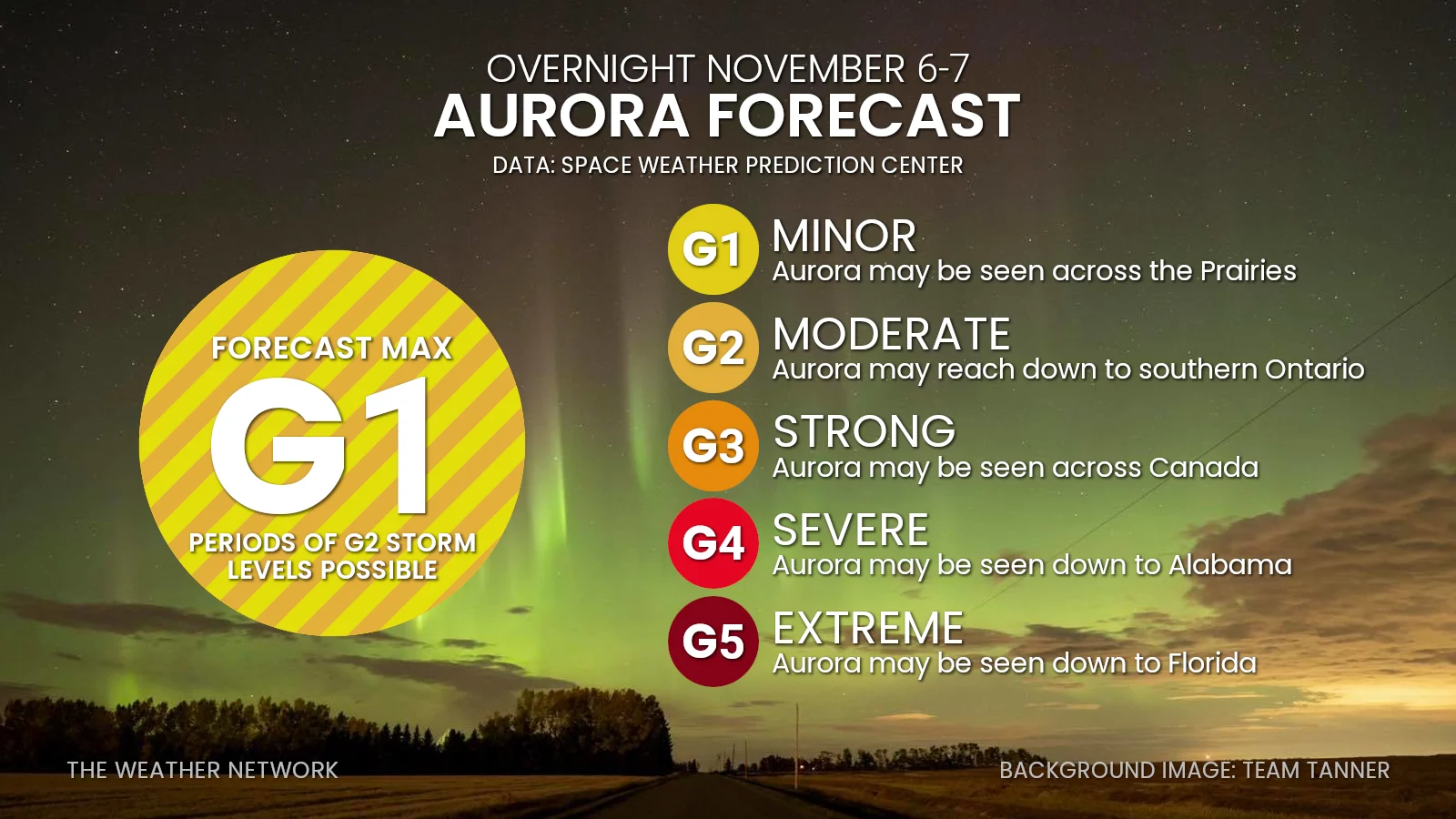
As of Friday morning, NOAA's Space Weather Prediction Center has issued a G1 (minor) geomagnetic storm watch for tonight.
READ MORE: Watch Mars and Jupiter 'slow dance' in the sky throughout November
The SWPC forecast also suggests that there is the potential for short periods of G2 (moderate) activity, as well.
According to SWPC, the timing for this activity is expected from sunset through around 10 p.m. EST on Friday, November 6. That favours the eastern half of Canada for any aurora displays that may appear. However, Northern Lights displays from G1 geomagnetic storms tend to remain well to the north, across Labrador, northern Quebec, and northern Ontario.
During geomagnetic storms, there is also the potential we could see 'substorm' activity.
NOAA SWPC measures geomagnetic storms in three-hour blocks of time. If geomagnetic activity does not stay above a certain threshold for the entire 3 hours, SWPC does not register storm activity during that time.
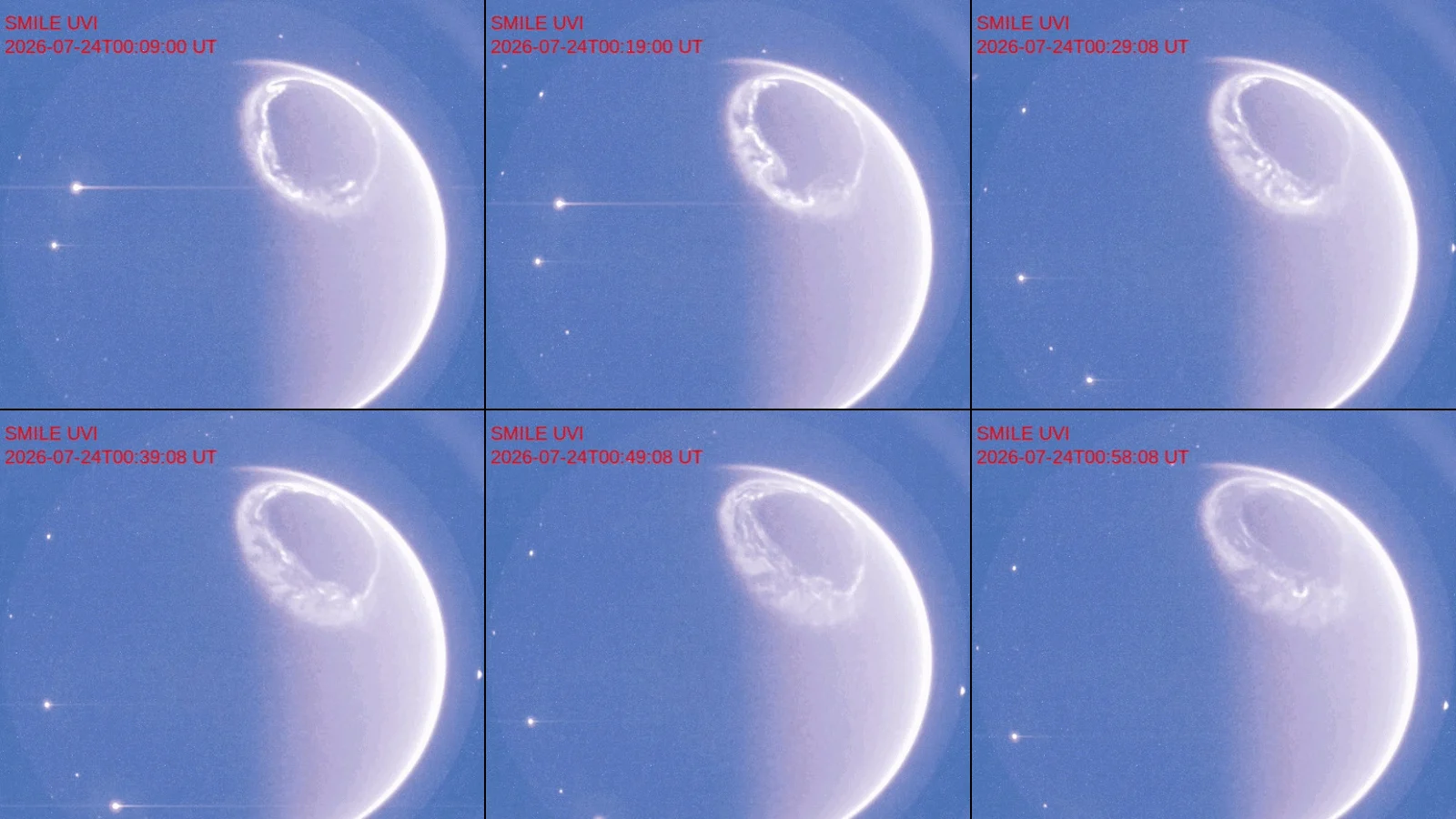
The European-Chinese SMILE mission took its first ultraviolet images of Earth's auroras on August 24, 2026, capturing an auroral substorm in progress, over about 50 minutes of time. (ESA & CAS/Smile/UVI)
MORE FROM SPACE: Mars Perseverance rover sets new record for farthest off-world driving distance
However, substorms are pulses of increased aurora brightness and southerly extent, which can still dazzle us the same as any Northern Lights display during a geomagnetic storm.
The only difference is that their duration is typically measured in minutes, or maybe up to an hour or two, but not long enough to register as a storm on NOAA's scale.