Mars Perseverance rover sets new record for farthest off-world driving distance

Perseverance's ability to 'think while driving' has allowed it to travel farther, faster, leading to a new distance record in record time as well!
Over the weekend, NASA's Perseverance rover set a new off-world milestone, as it broke all previous records for farthest distance ever travelled on another planetary body in our solar system.
Since 1970, humans have sent nine different robotic rovers to trundle around on other celestial bodies — four to the Moon and five to Mars.
The three smallest, including NASA's Sojourner Mars rover and China's Yutu and Yutu 2 lunar rovers, barely drove a distance of 100 metres in total, each, before their missions ended. Meanwhile, Lunokhod 1 and 2, sent by the Soviets to the Moon in the early 1970s, made it significantly farther. Lunokhod 1 drove over 10 kilometres, and Lunokhod 2 set a record in 1973 that held for decades, with a total distance of 39 kilometres.
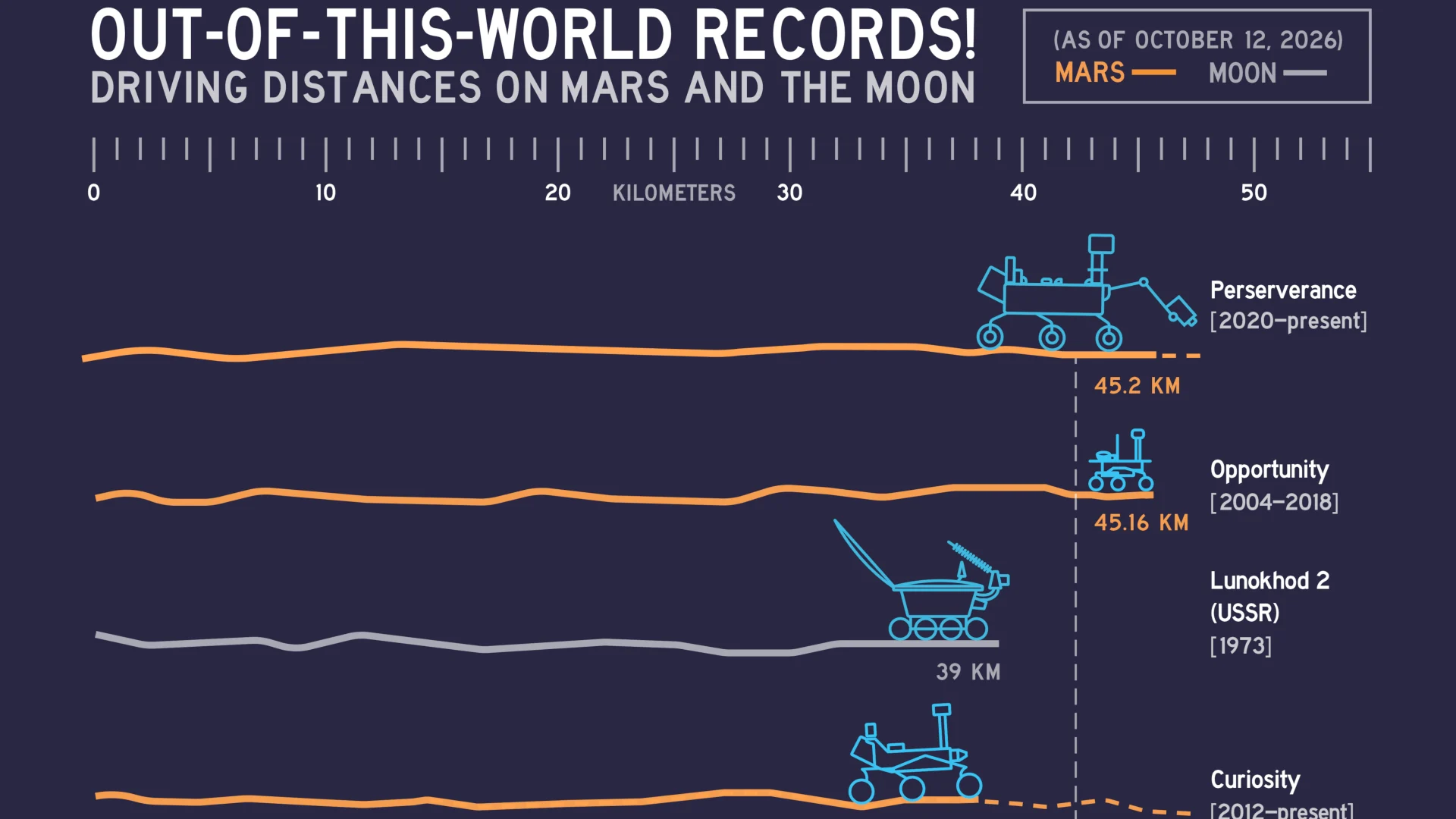
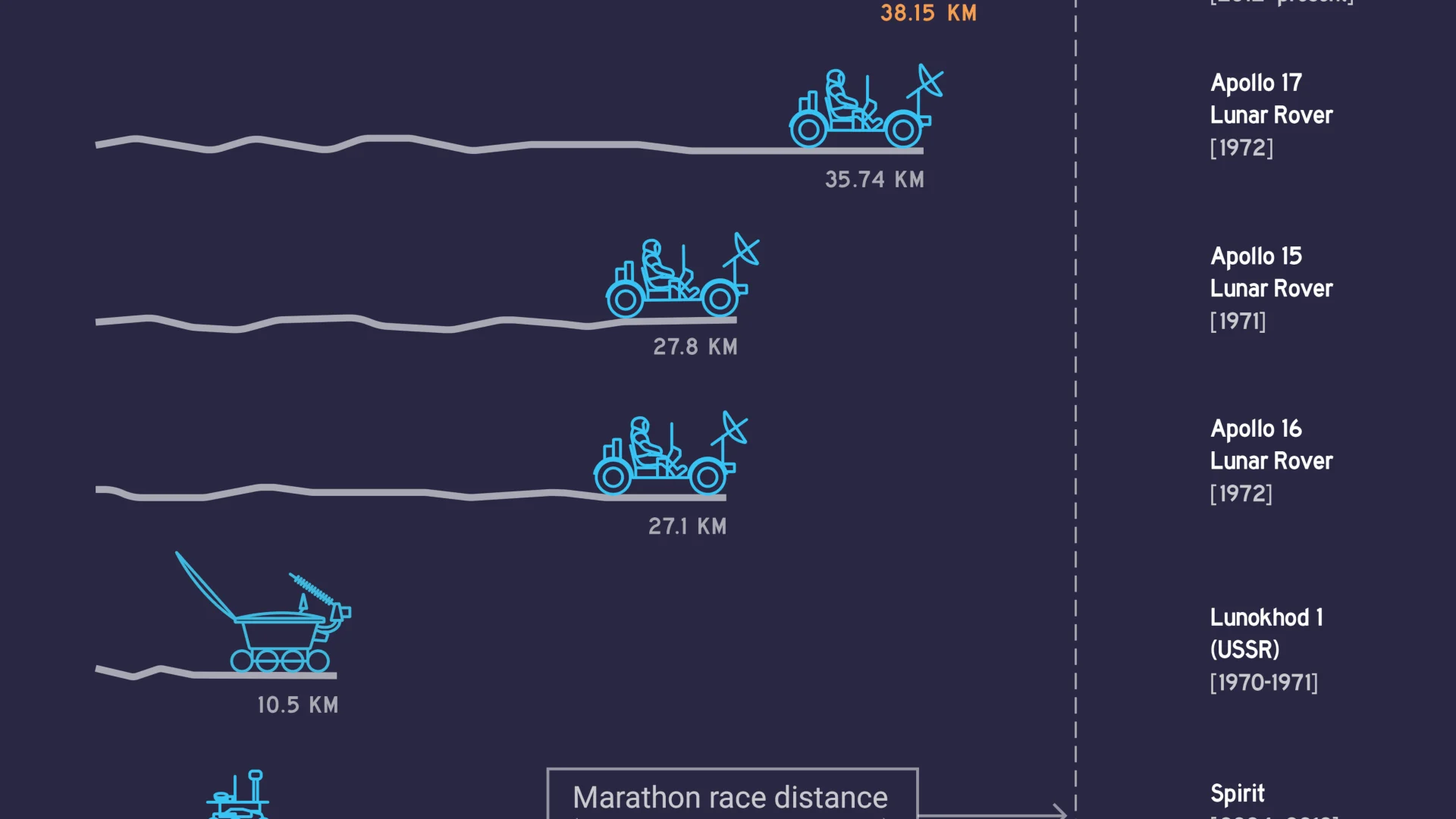
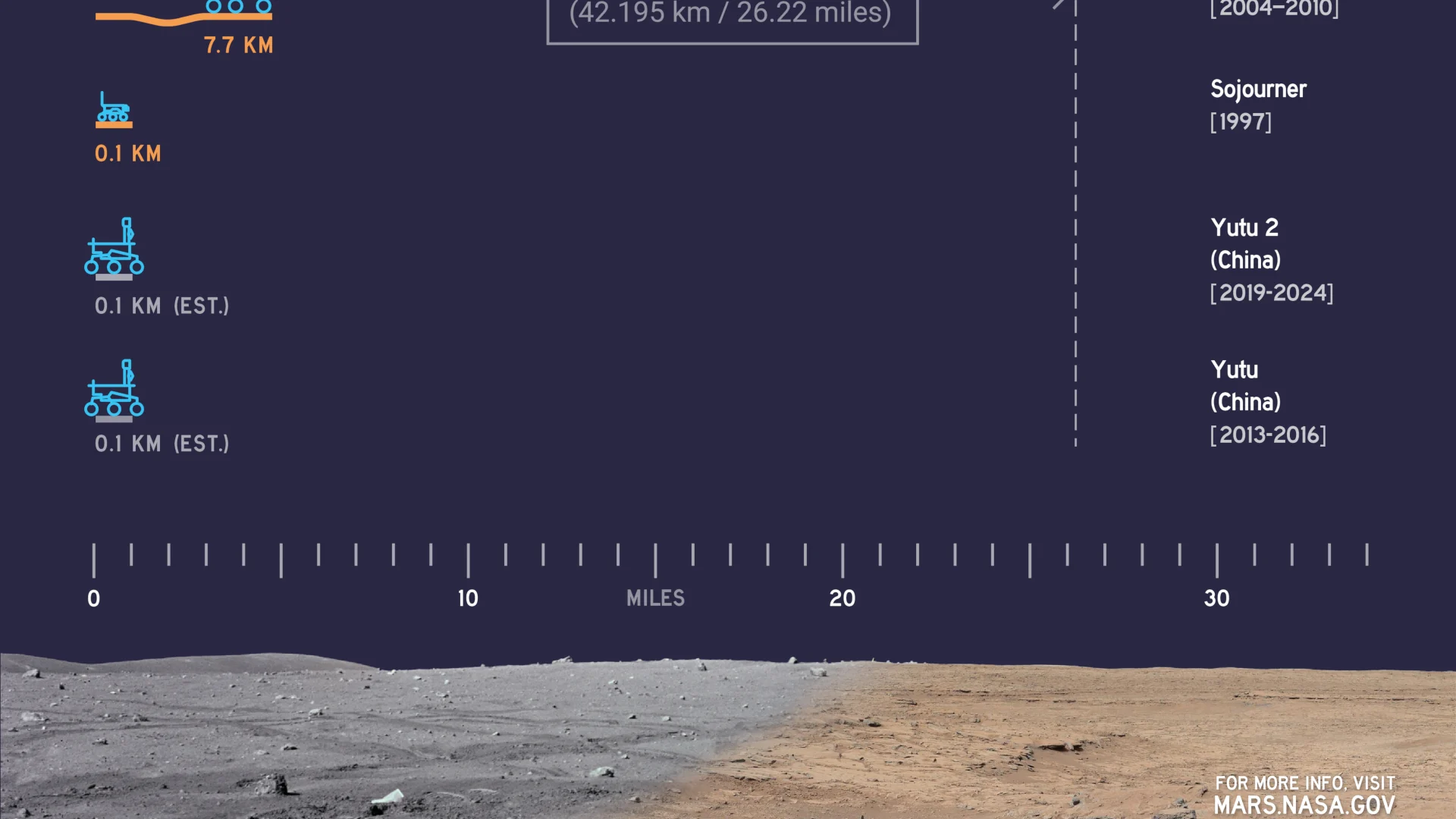
This infographic illustrates the distances driven by various rovers on the surface of the Moon and Mars — 3 human-driven and 9 robotic. Each distance is the final mission distance, or in the cases of Perseverance and Curiosity, their distances driven as of Oct. 11, 2026. (NASA/JPL-Caltech)
NASA's Opportunity rover finally broke that record, in 2014, after 10 years on the Martian surface. While its twin, Spirit, ended its mission roughly 4 years earlier after travelling 7.7 kilometres, Opportunity passed Lunokhod 2's milestone and then reached a total distance driven of 45.16 km by the time its batteries died in 2018.
READ MORE: Opportunity lost — NASA officially ends Mars rover mission
Even with NASA's Curiosity rover now two months into its 15th year of exploring Gale Crater, and with Perseverance investigating Jezero Crater since early 2021, Opportunity's achievement still held as the record to beat until October 10, 2026.
On October 11, the 2,006th Martian day of Perseverance's mission, the rover's odometer recorded a total distance of 45.22 km, not only breaking Opportunity's record, but also achieving it in roughly half the time!
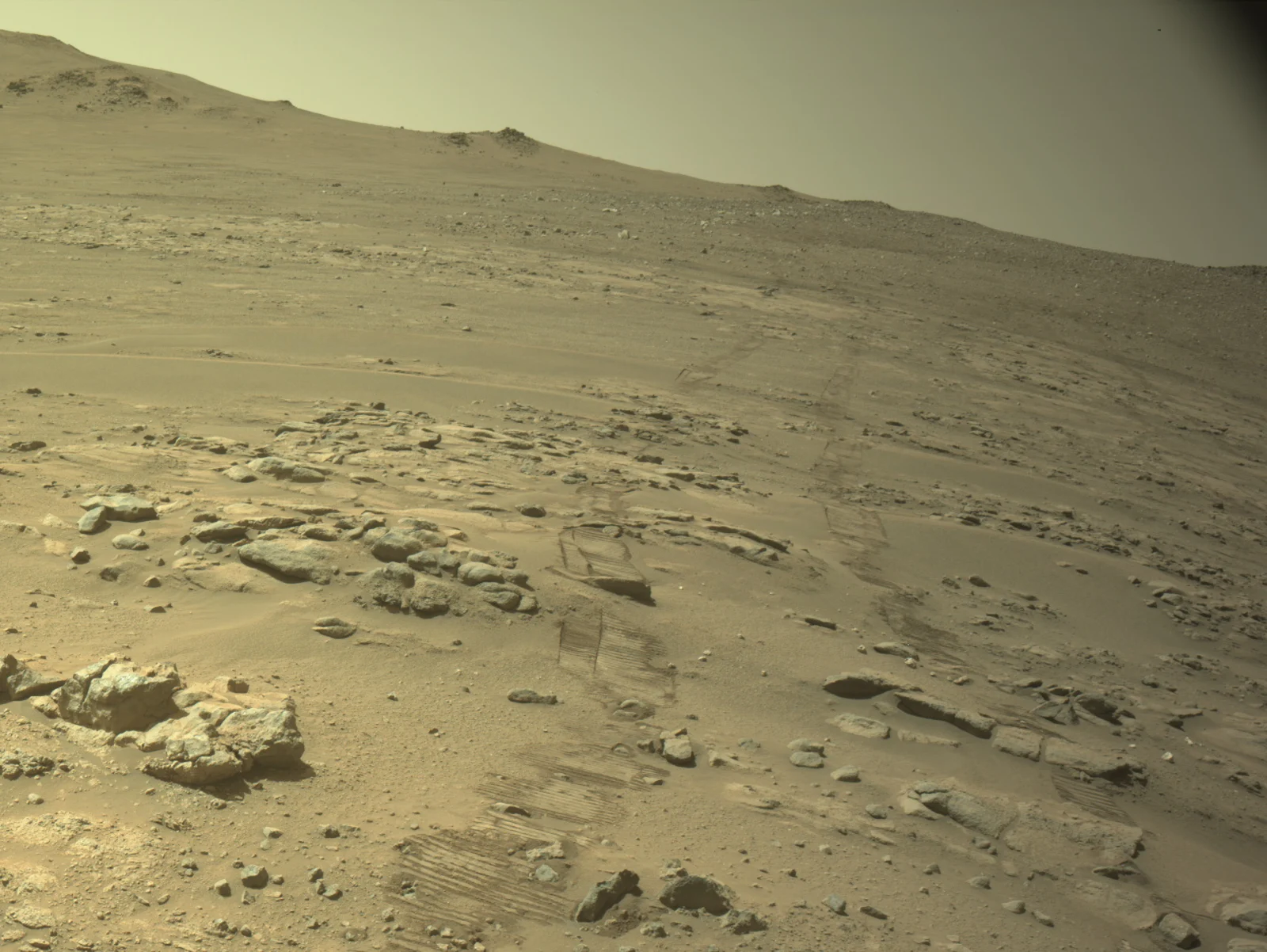
One of Perseverance's navigational cameras (NavCams) captured the tracks the rover left behind as it drove the final distance to break Opportunity's distance record. (NASA/JPL-Caltech)
Thinking while driving
NASA says that most of the credit for this new record lies with the rover itself.
Most other rovers have been controlled directly by scientists and engineers on Earth. This was done by a team carefully examining imagery sent back by the rover, who then decided on the safest route to its next target. The next day, detailed movement-by-movement instructions were sent to the rover, which it followed to the letter.
However, due to a system known as AutoNav, Perseverance can automatically examine images from its own cameras, even while it is driving, to make its own decisions on the safest route to its next destination.
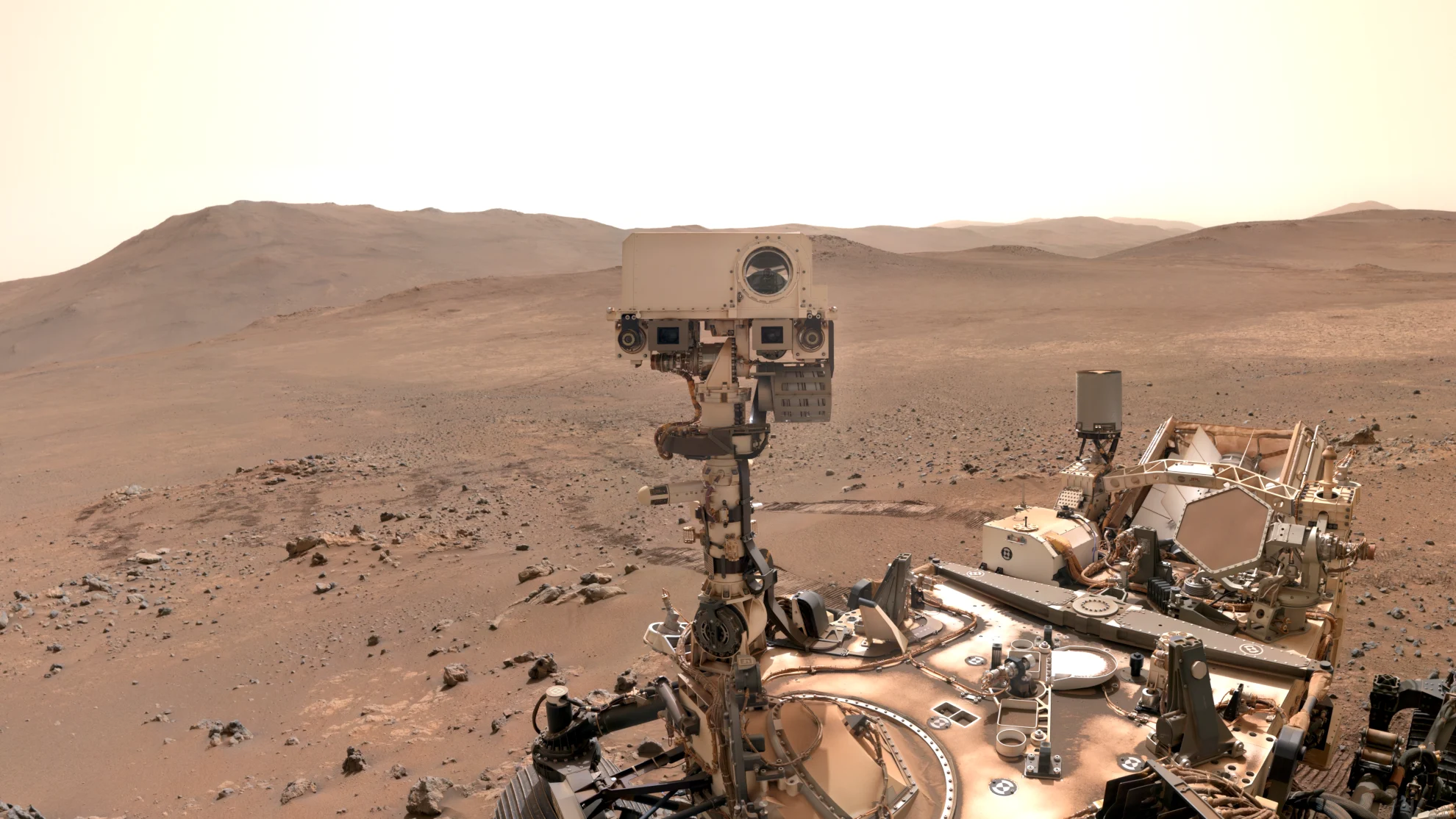
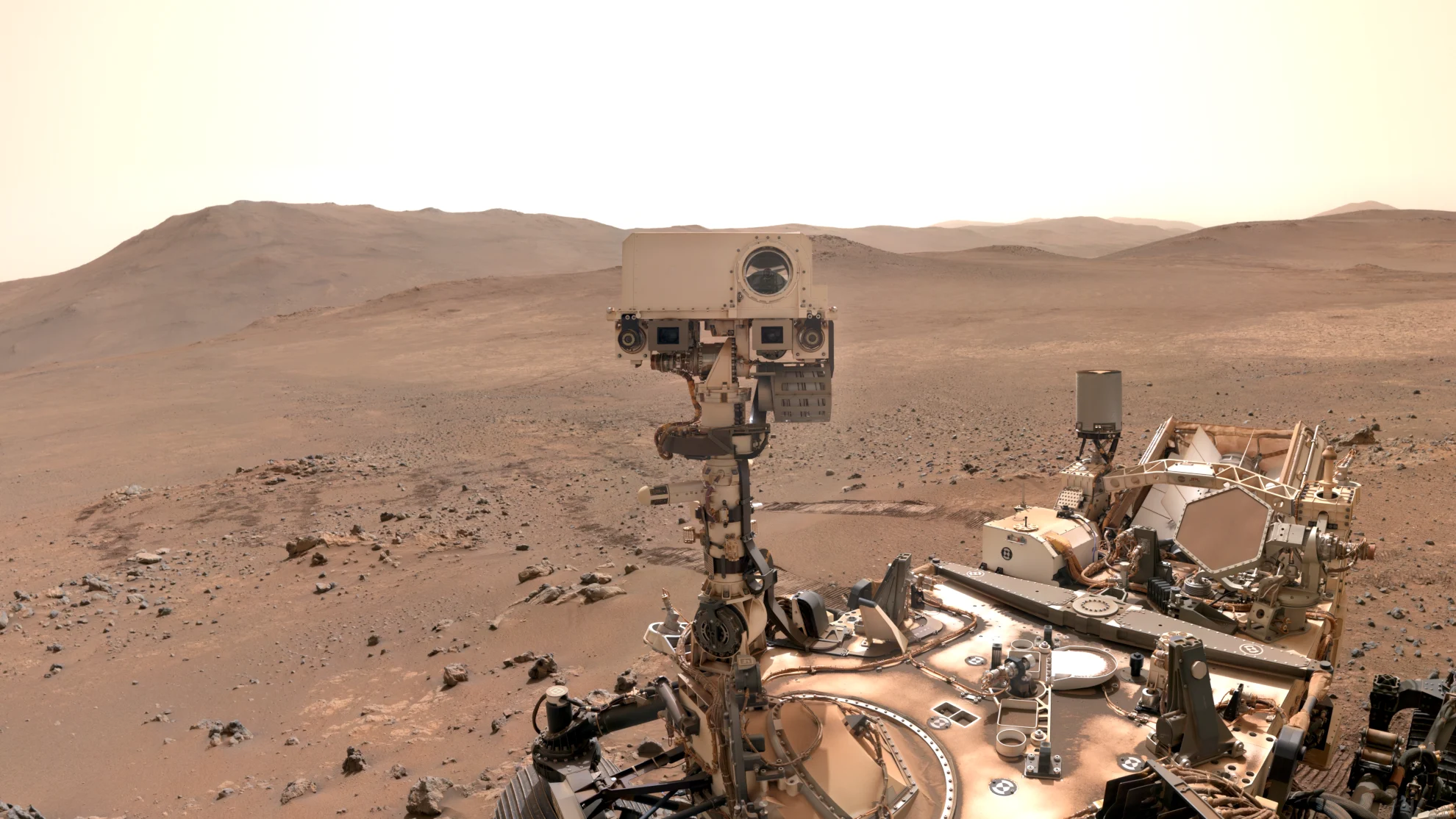
Perseverance took this 'selfie' at the Arathusa target on March 11, 2026. (NASA/JPL-Caltech)
RELATED: Potential signs of ancient life found in Mars rock sampled by Perseverance
NASA says that this "thinking while driving" means that Perseverance can maintain its top speed while rolling around obstacles, allowing it to travel up to 412 metres each Martian day.
While Curiosity has been using this same system since 2013, it has been climbing up Mount Sharp, zig-zagging back and forth through the elevated terrain, which has limited its long-distance driving. Perseverance, on the other hand, has reached much farther on the fairly level ground in and now to the west of Jezero Crater.
"The rover that broke this record did so by making its own decisions about the path. Given the autonomy to just go, Perseverance is a better driver than the one that landed, and we're not done,” Mark Maimone, deputy team chief for robotic operations on Perseverance, said in a mission blog post. "Our newest software teaches Perseverance to steer less and roll more, and to check its own position against orbital maps mid-drive."
"The next frontier is sunlight itself," Maimone added. "Glare in the navigation cameras is why we park by mid-afternoon if we’re driving toward the Sun, and if we can teach the rover to see past those artifacts, every rover that follows gets a longer working day."
According to Steven Lee, the project manager of the Curiosity and Perseverance rovers at NASA’s Jet Propulsion Laboratory, the original mission plans for Perseverance only called for it to travel about 20 kilometres.
"We've blown well past that," Lee said, "and with all mobility systems fully operational and favorable extended-ground-life test results, we expect Perseverance to keep adding to this record for many years to come.”