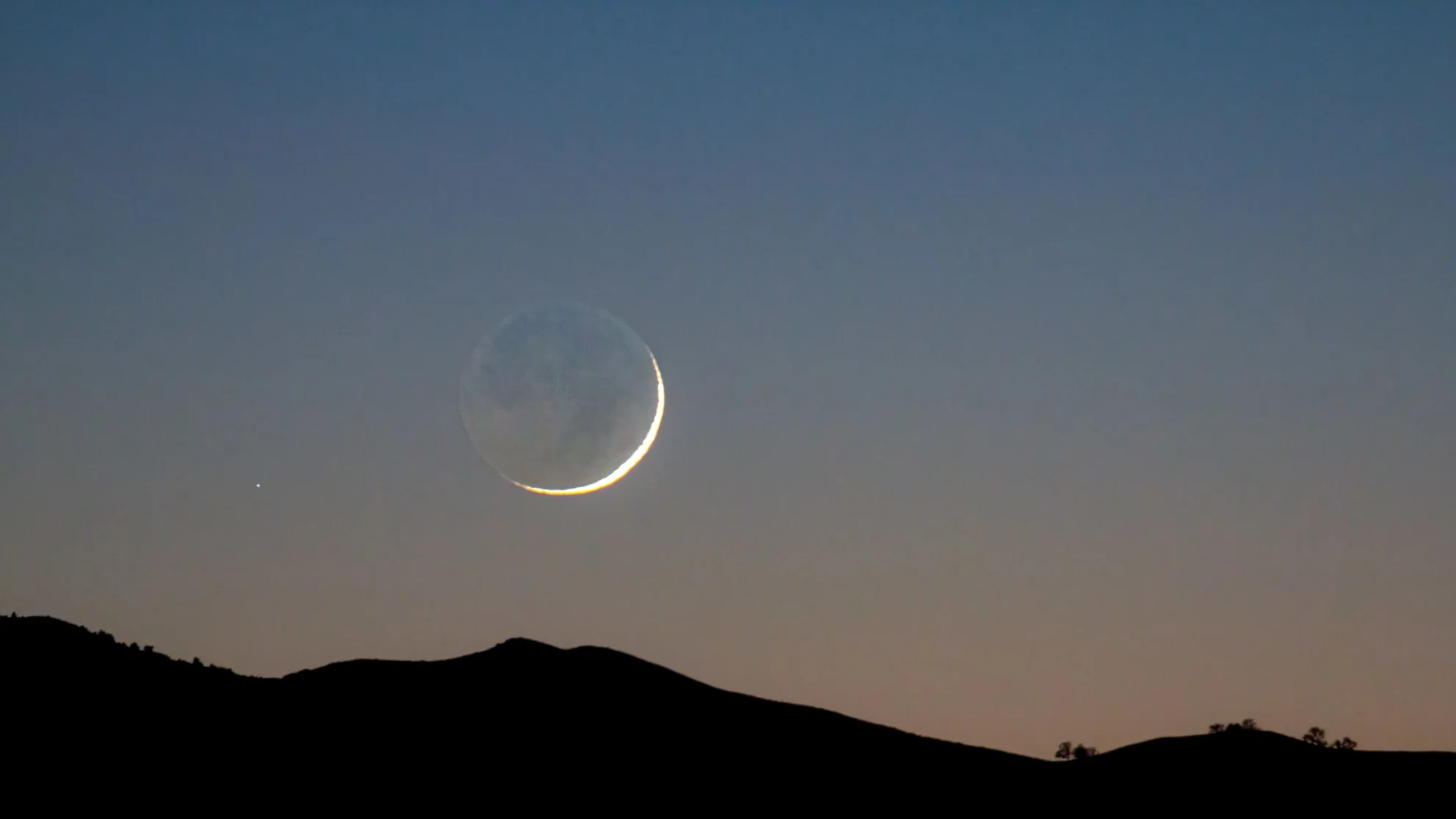
Have you seen Earthshine? Over the next week is the best time to spot it!

Sometimes there truly is no dark side of the Moon!
Have you ever looked up at a thin Crescent Moon, as it sets in the western sky, and rather than the rest of its face just being in darkness, you could actually still see its basic surface features? This is a phenomenon called Earthshine, but what is this and when can we see it?
As the Moon travels in its orbit around Earth, it goes through a series of 'phases'. Just as with the Earth, the side of the Moon facing directly towards the Sun is always fully illuminated by sunlight. The phases occur because, depending on exactly where the Moon is in its orbit around the Earth, we — here on Earth's surface — may only see a small portion of that fully lit side.
Each cycle starts out with the New phase, when the Moon is positioned more or less directly between Earth and the Sun. Then, it goes through the rest of the phases — Waxing Crescent, First Quarter, Waxing Gibbous, Full Moon, Waning Gibbous, Last Quarter (or Third Quarter), and Waning Crescent — before the next New Moon.
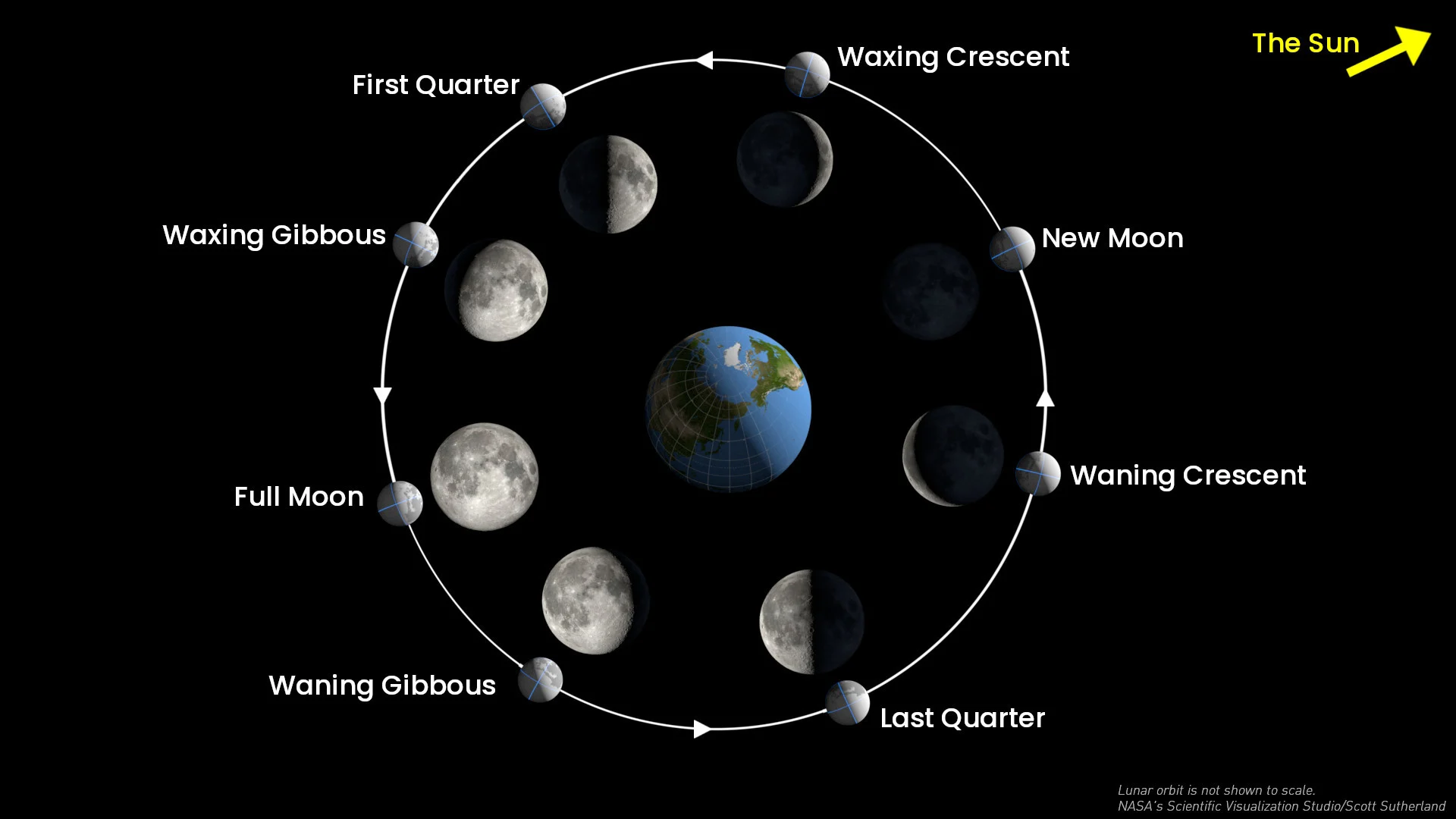
The Moon's orbit and how it relates to the lunar phases we see each lunar cycle. (NASA SVS/Scott Sutherland)
DON'T MISS: Watch Mars and Jupiter 'slow dance' in the sky throughout November
During most of this cycle, when we look up at the Moon, we only see the parts of it that are directly illuminated by the Sun. The rest is lost in shadow.
This is especially true between the First Quarter and Last Quarter phases, as half or more of the Moon's illuminated surface is visible to us, and, more importantly, it is only lit by the Sun. It also happens during every New Moon, when its fully illuminated side is facing directly away from us, and its presence in our sky is overwhelmed by the brightness of daylight.
However, during the first few evenings at the beginning of a lunar cycle, and the last few mornings before the end of a lunar cycle, something special occurs.
At those times, the Moon is in just the right position in its orbit — on the Sun-ward side of Earth, presenting its mostly-shadowed face to us — where it can be illuminated by two light sources.
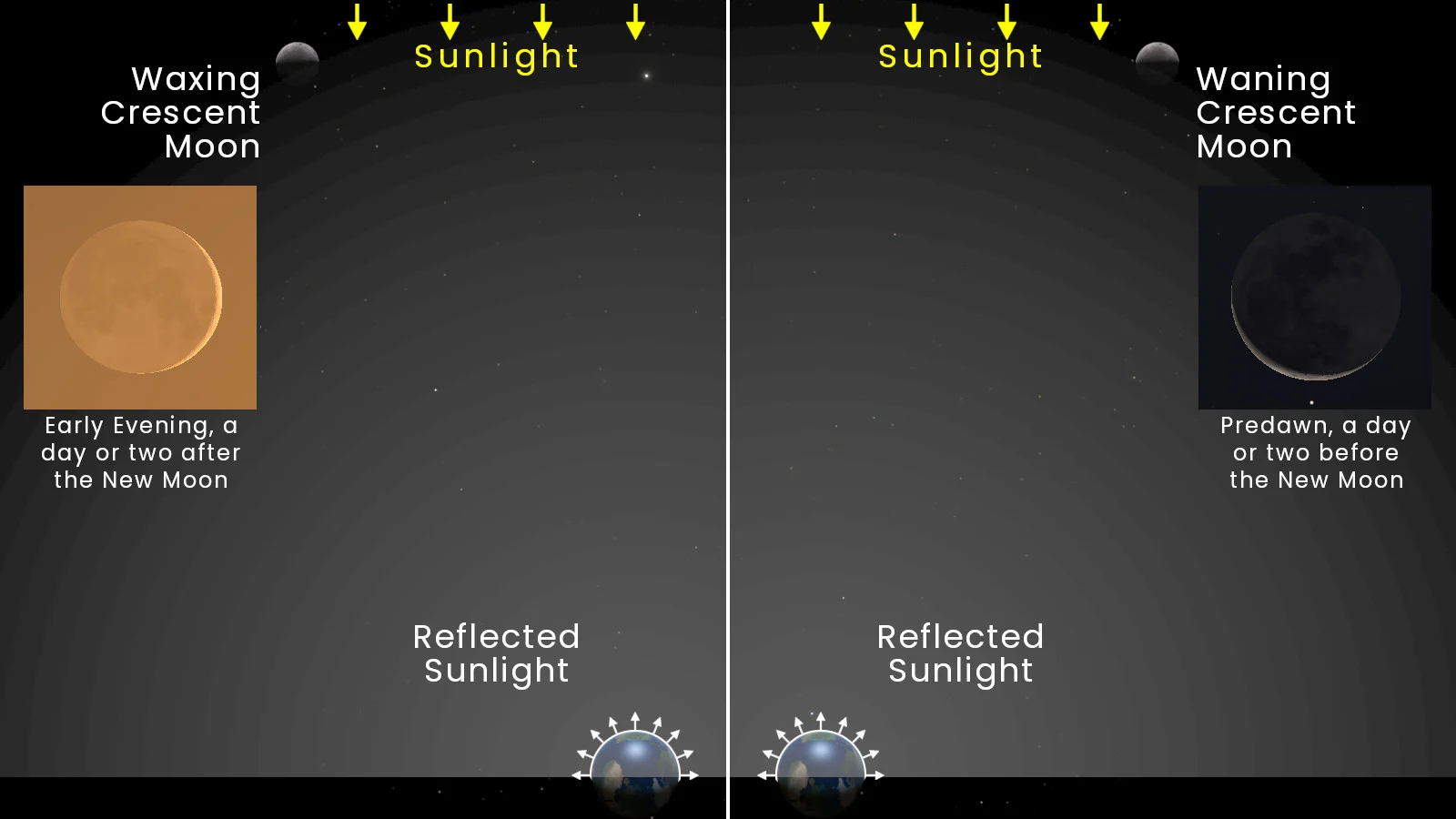
This diagram illustrates Earthshine geometry, as the Moon is in the right location during the Waxing and Waning Crescent phases to be partly illuminated by sunlight reflected from Earth. (Scott Sutherland/Celestia/Stellarium)
DID YOU KNOW? There is a near side of the Moon, which always faces Earth, and a far side, which always faces away. However, there is also a dark side of the Moon, constantly on the move, but always visible, except at two times — when it aligns with the far side during a Full Moon, and when it aligns with the near side during a New Moon.
The first, of course, is the Sun, with us seeing a very thin crescent of brightly-lit lunar surface.
The other source of light is us, the Earth, as our atmosphere and oceans reflect sunlight directly back into space!
The reflected light is only pale and scattered compared to the direct light from the Sun, but it is still enough where we can see it dimly illuminate the shadowed regions of the Moon's surface.
This is Earthshine.
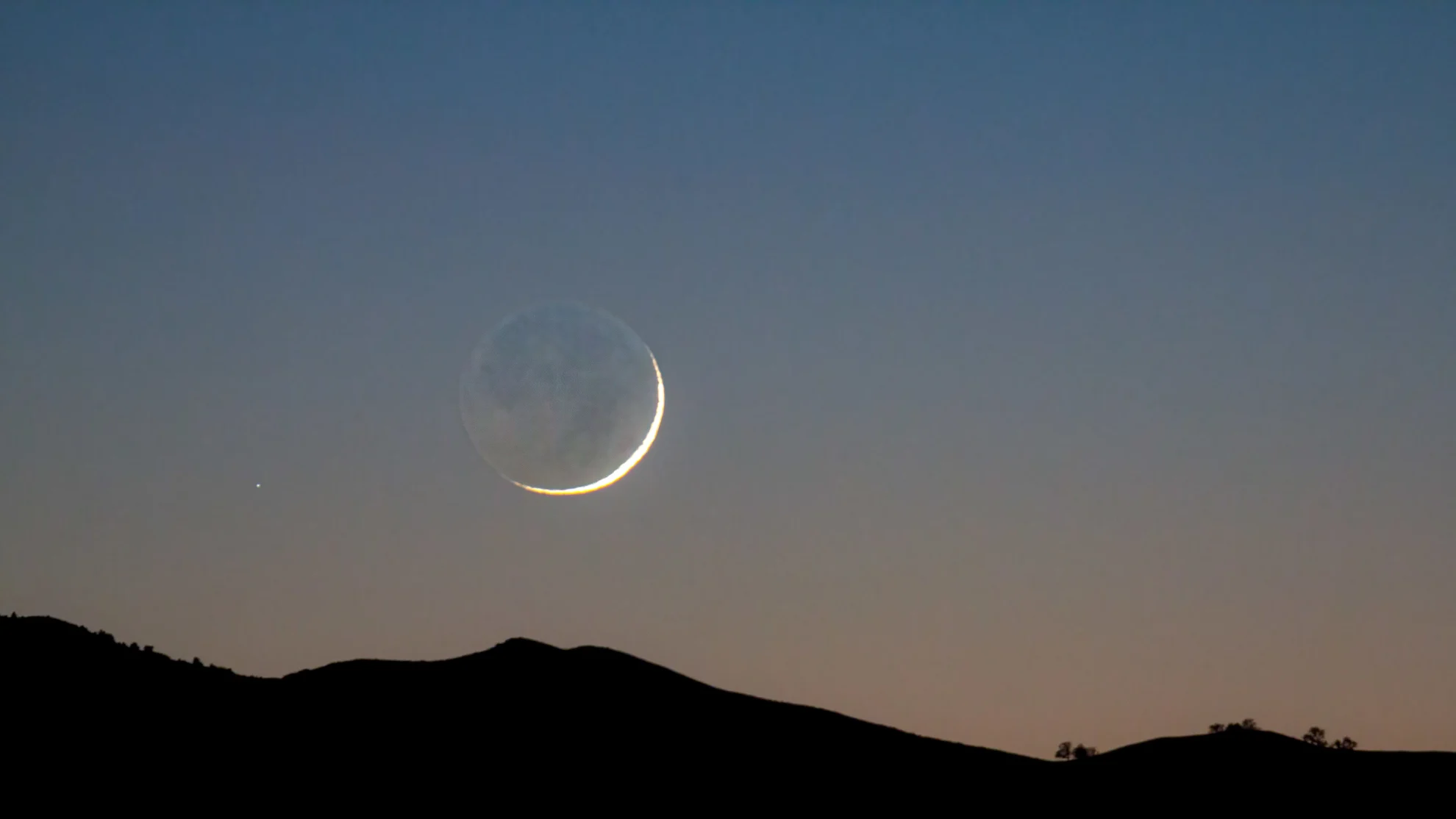
Earthshine, spotted as the Waxing Crescent Moon sets over Valencia, Calif., on Dec. 15, 2020. (Kevin M. Gill (CC BY 2.0))
READ MORE: 'Earthshine' is dimming and that's bad news for the climate
The reason we can see it so well at these times is also due to contrast. With the crescent of sunlit lunar surface so small compared to the shadowed region, our eyes can pick out the parts dimly lit by the Earthshine fairly easily.
Even though the Moon is still on the day side of Earth at the time, during the last few nights of the Waxing Crescent phase, and the first few mornings of the Waning Crescent phase, the area of the sunlit region of the Moon tends to be large and bright enough that it becomes difficult to see the Earthshine light the rest of it.
It's only on the days just before and just after the New Moon that it is easiest to see.
So, when can we see it next?
In November of 2026, the New Moon occurs on the 9th. Therefore, provided we have reasonably clear skies, the predawn sky on the 6th, 7th, and 8th will be the next best time to see Earthshine. Face east and look for the Moon close to the horizon.
For those who aren't up and outside that early, though, it can be seen again, in the southwestern sky, on the evenings of the 10th, 11th, and 12th (again, if we have reasonably clear skies).