Climate change may boost California’s hurricane flood risk: study

Hurricanes aren’t common in California. But a changing climate may make rainfall from nearby storms much more impactful in the future
Hurricanes are exceptionally rare in California. Records hold only a handful of strikes since the middle of the 1800s, and even those were just glancing blows.
The trend may not hold as the climate changes. A recent study revealed that southern California may endure more frequent heavy rain and landslide events in the future as tropical cyclones push closer to the region.
DON'T MISS: What’s the difference between hurricanes, typhoons, and cyclones?
Tropical cyclones are rare in California
The eastern Pacific Ocean is a hotbed of tropical activity every year, producing around 15 tropical storms in an average season, with eight of those storms growing into hurricanes.
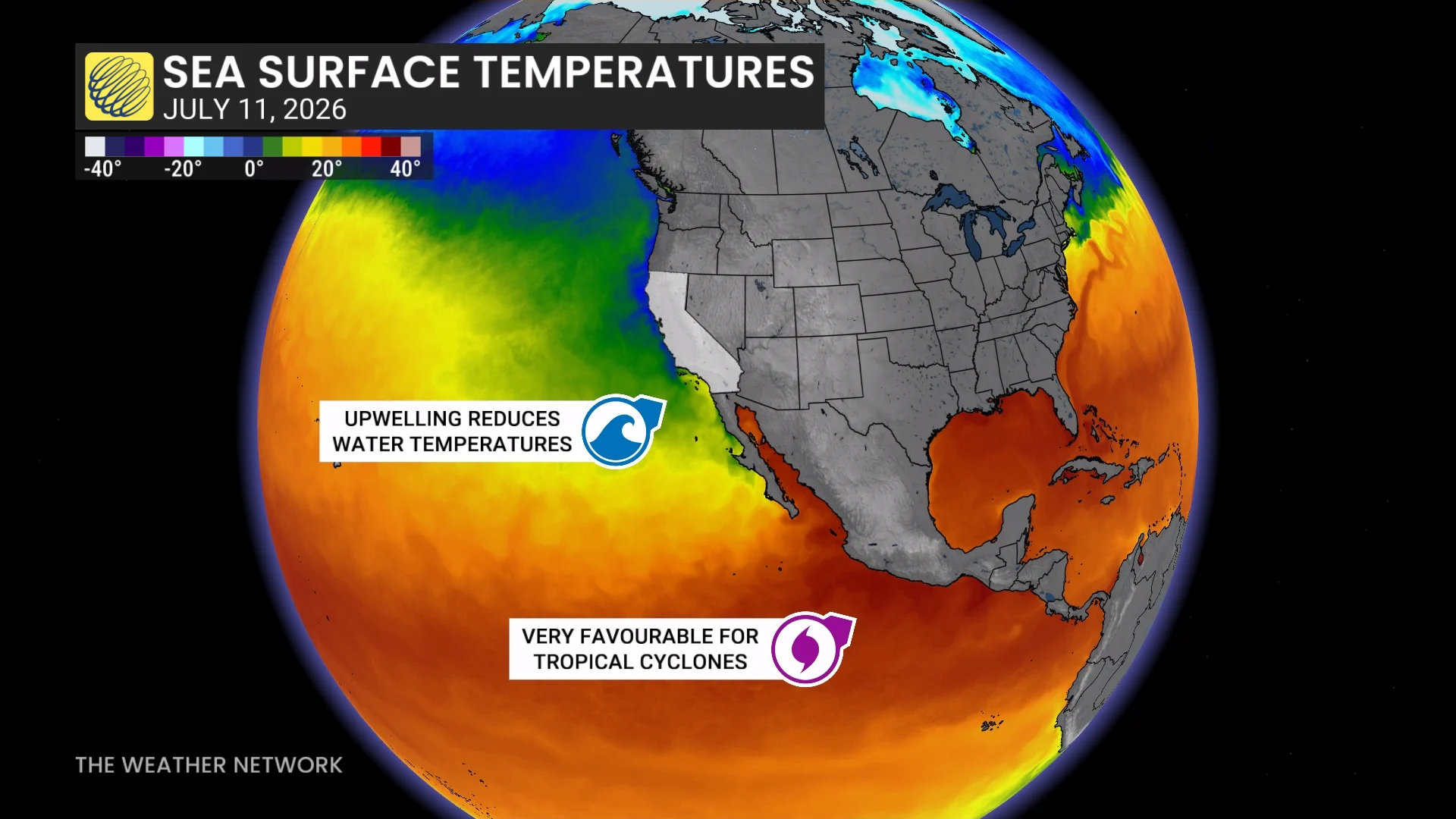
Most of that activity remains off the western shores of Mexico where favourable atmospheric conditions and very warm sea surface temperatures can support development.
Storms tracking north typically fall apart in a hurry due to cold sea surface temperatures. Only a handful of tropical systems have ever made it to California intact, including a hurricane that grazed San Diego in 1858, followed by a tropical storm landfall in 1939.
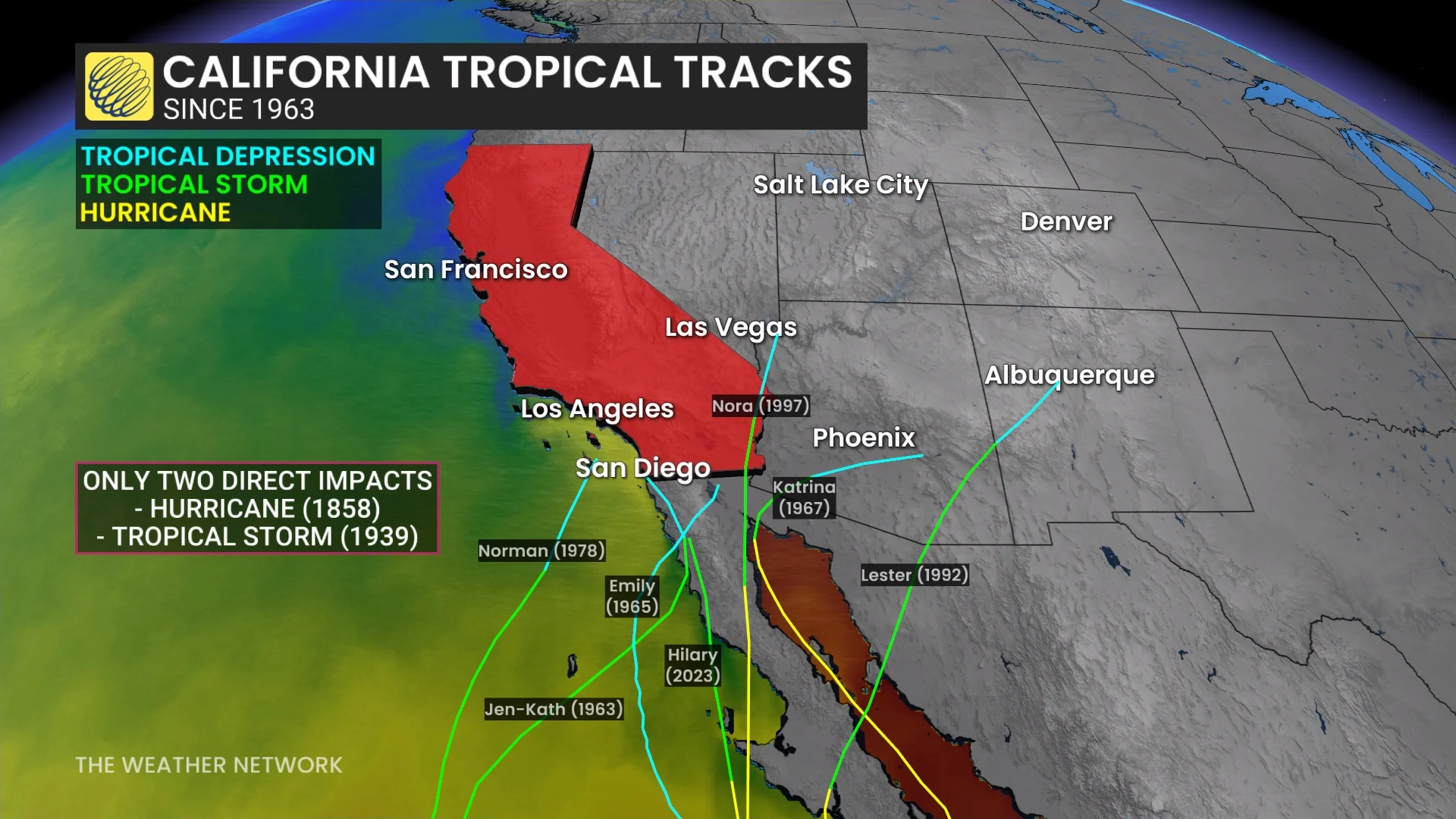
A storm doesn’t need to survive to landfall in order to cause significant hazards. The remnants of storms can cause some hefty issues of their own, with heavy rainfall far and away the greatest threat.
Moisture-packed remnants of Hurricane Hilary sparked widespread flooding in August 2023, giving downtown Los Angeles its wettest summer on record (76 mm) since the books began in 1877. Some areas saw almost 300 mm of rainfall from the event.
Climate change could increase California impacts
Increasing sea surface temperatures and growing moisture levels throughout the atmosphere could contribute to greater rainfall impacts from tropical cyclones, according to a recent study published in Nature Climate Change.
“The return period of Hurricane-Hilary-magnitude rainfall (~100 mm) shortens by 50% from 110 years to 54 years in a future high-emission warming scenario,” the authors noted.
Heavy rain is a serious threat in southern California. Los Angeles averages a little more than 360 mm of rain during an average year, much of which falls between December and March.
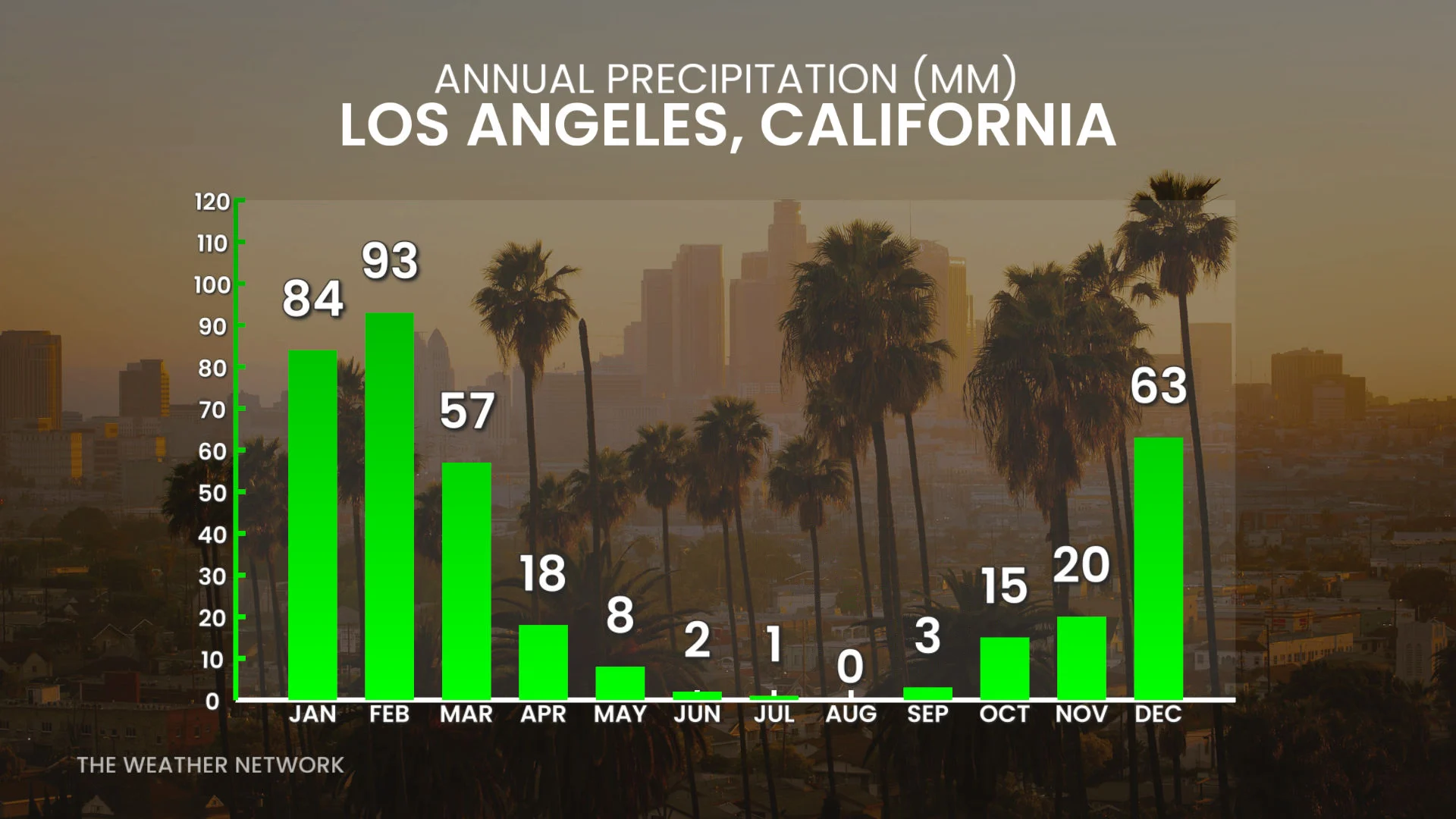
The threat for disruptive dry-season rains would significantly increase if a warmer atmosphere and warmer oceans allow tropical cyclones to survive farther north than they do in today's climate.
Flooding is common in southern California during very heavy rain as the ground struggles to absorb water compared to soils east of the Rockies. Heavy rainfall events during the region's dry season would cause additional issues due to the parched ground and fresh burn scars.
Landslides are also a significant threat on and near higher terrain. The team analyzed this risk as well, finding that lower-income communities would bear the brunt of the increased landslide risk.
The authors offered some solutions to residents and decisionmakers in the region hoping to brace against these potential future hazards.
“Potential actions to mitigate this vulnerability include implementing policies that promote resilient and low-cost housing, adopting participatory approaches to urban planning that ensure fairness and safety, providing education and training in hazard prevention and offering reasonable relocation assistance for areas at high risk.”
