U.S., Canada off to surprising, contrasting wildfire season starts

We examine the escalating drought conditions in both the U.S. and Canada, highlighting how record-low snowpack and severe dryness could lead to a dangerous wildfire season.
Drought statistics are always a reliable resource when looking at the wildfire risk.
Across the country, the B.C. Interior, Northwest Territories and Labrador are the notable regions of concern. But B.C. is the only one of the three that has dealt with significant heat this season.
SEE ALSO: Should Canada sprint to replant trees after intense wildfire years?
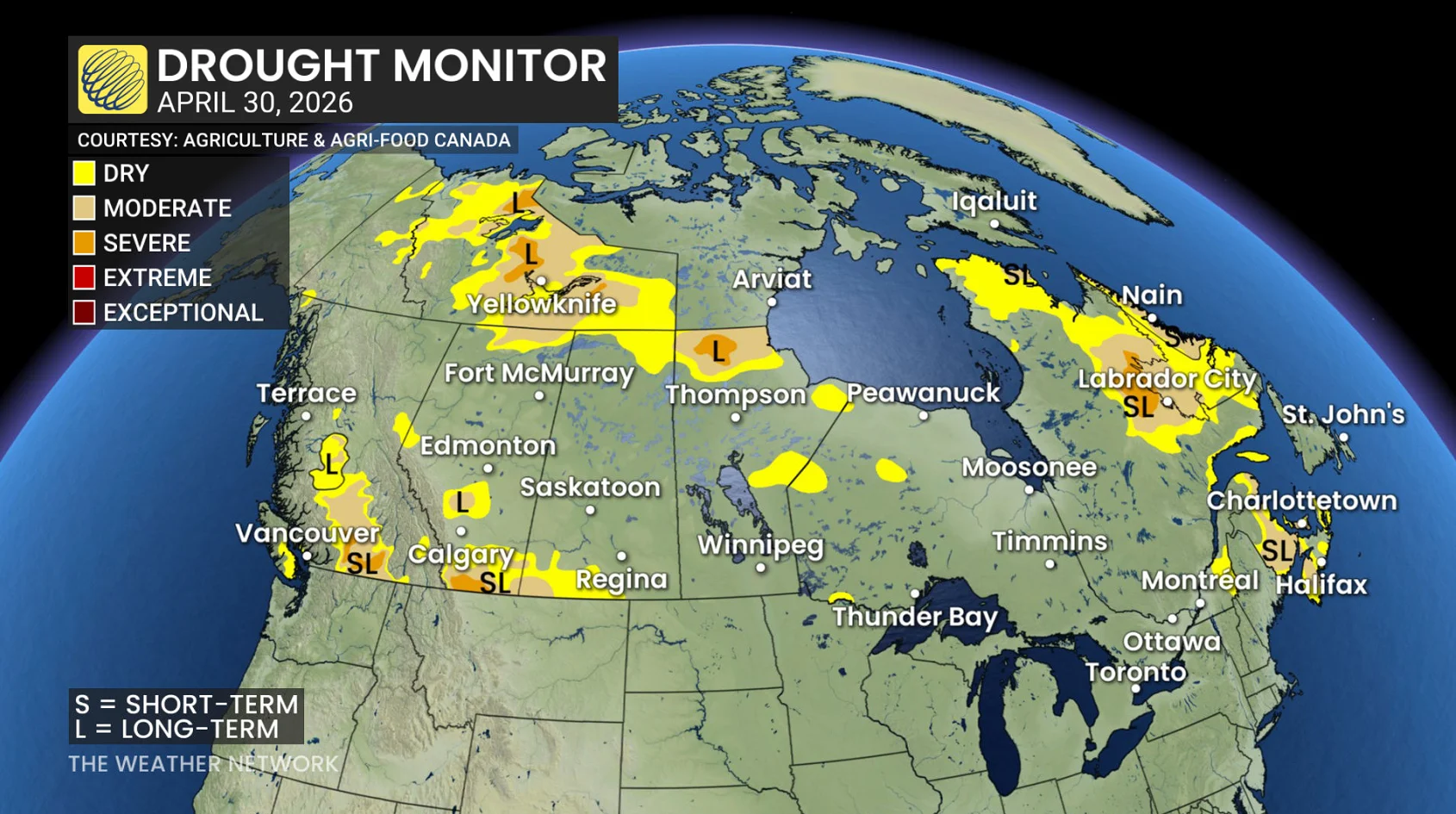
(Agriculture and Agri-Food Canada)
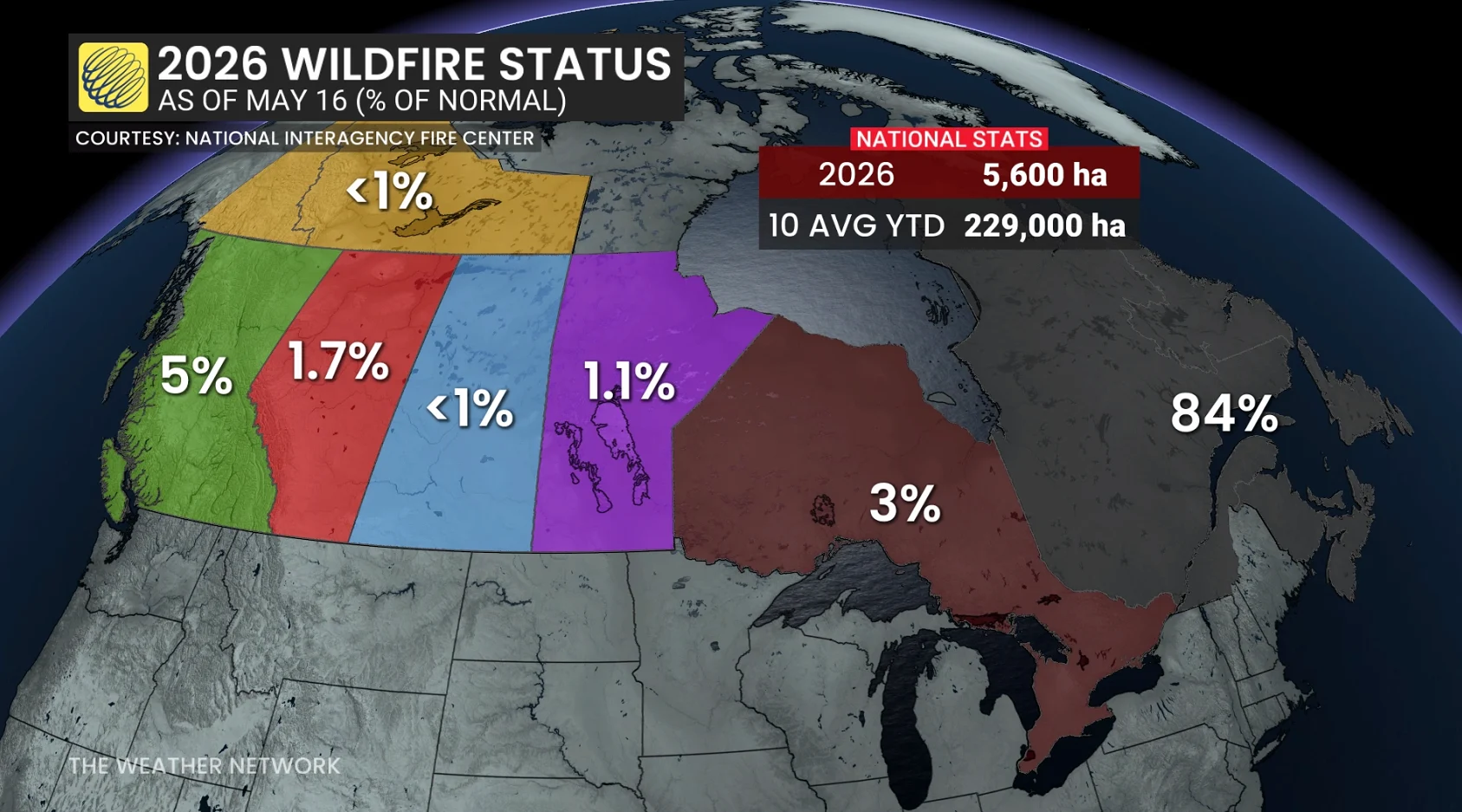
Looking at the area burned in each province as of the middle of May, most of the provinces are within one to five per cent of their normal burned area when compared the 10-year average.
New Brunswick skews the numbers in Eastern Canada where approximately 360 hectares have been burned, compared to its normal total of 129 hectares. Nationally, Canada is at about 2.4 per cent of normal.
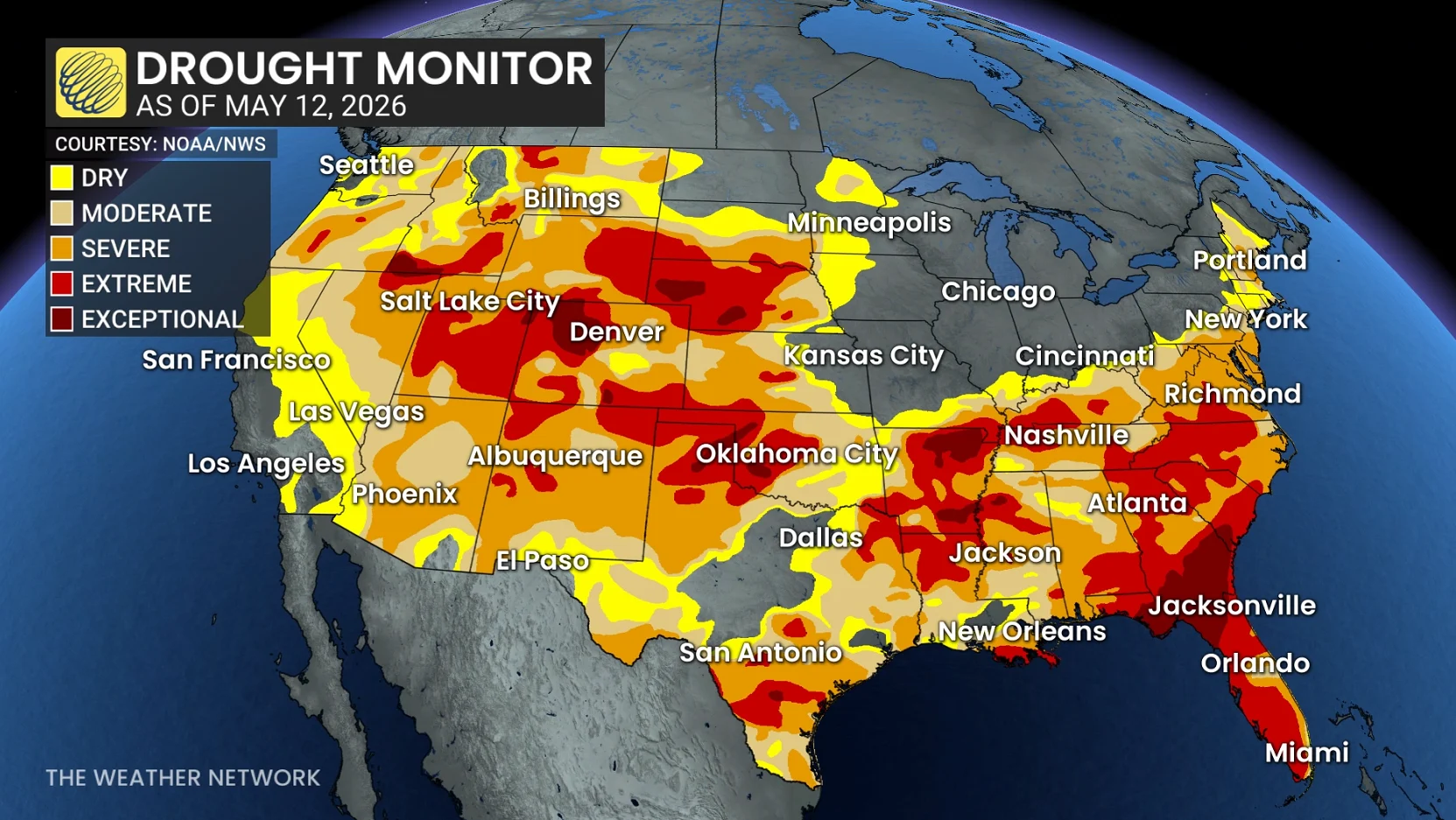
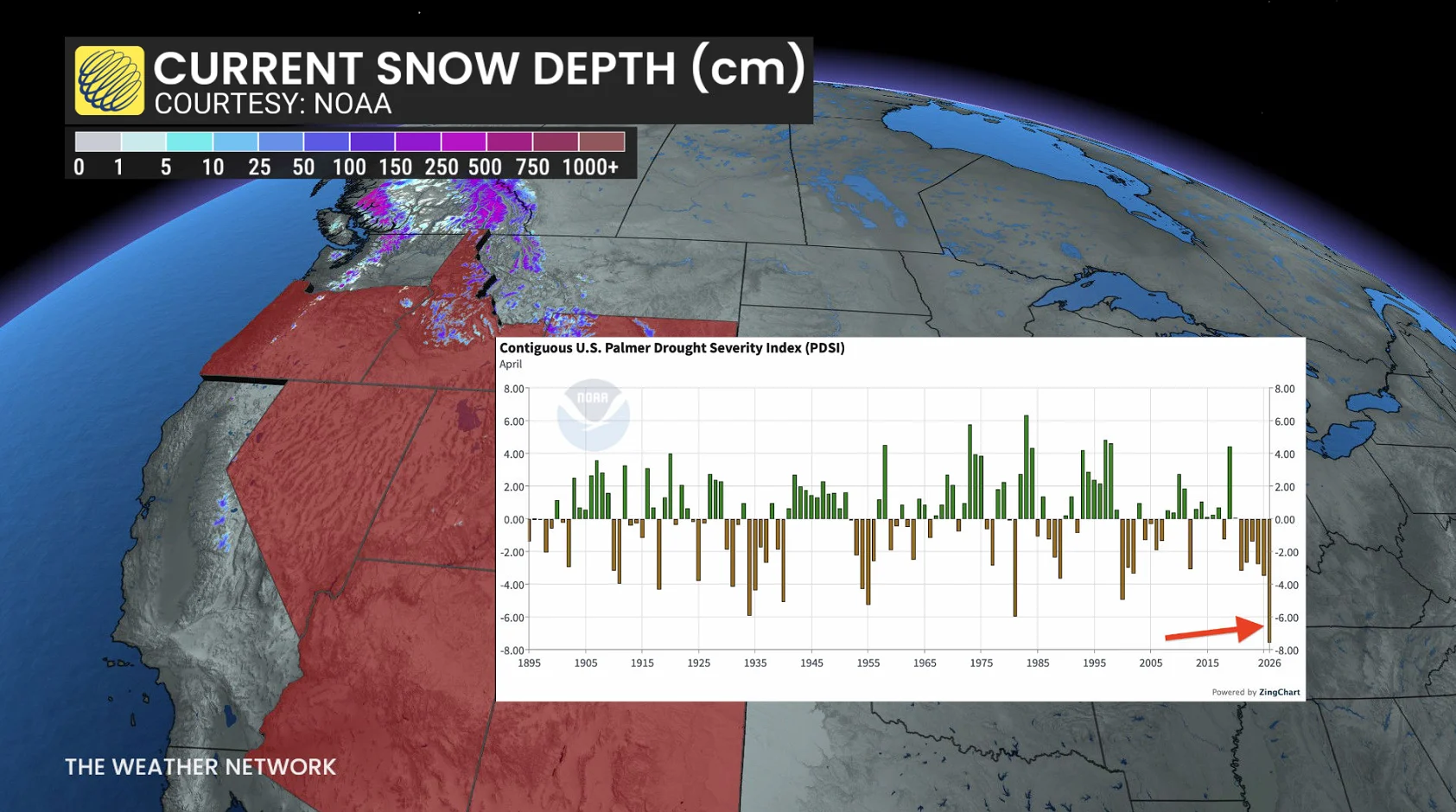
Stateside, many are dealing with extreme and even exceptional drought (occurs approximately every 50 years) from Florida and Georgia to Colorado and Nebraska.
Eight of the western states are starting the summer season with historically low snowpacks, which are reflective of the drought status and will be an increasing concern through the summer.
The three biggest fires in the U.S. this year have all been on the Central Plains, while the mountain states have been quite quiet, much like Canada. It won't take much for things to take a drastic turn, however.
Statistical breakdown
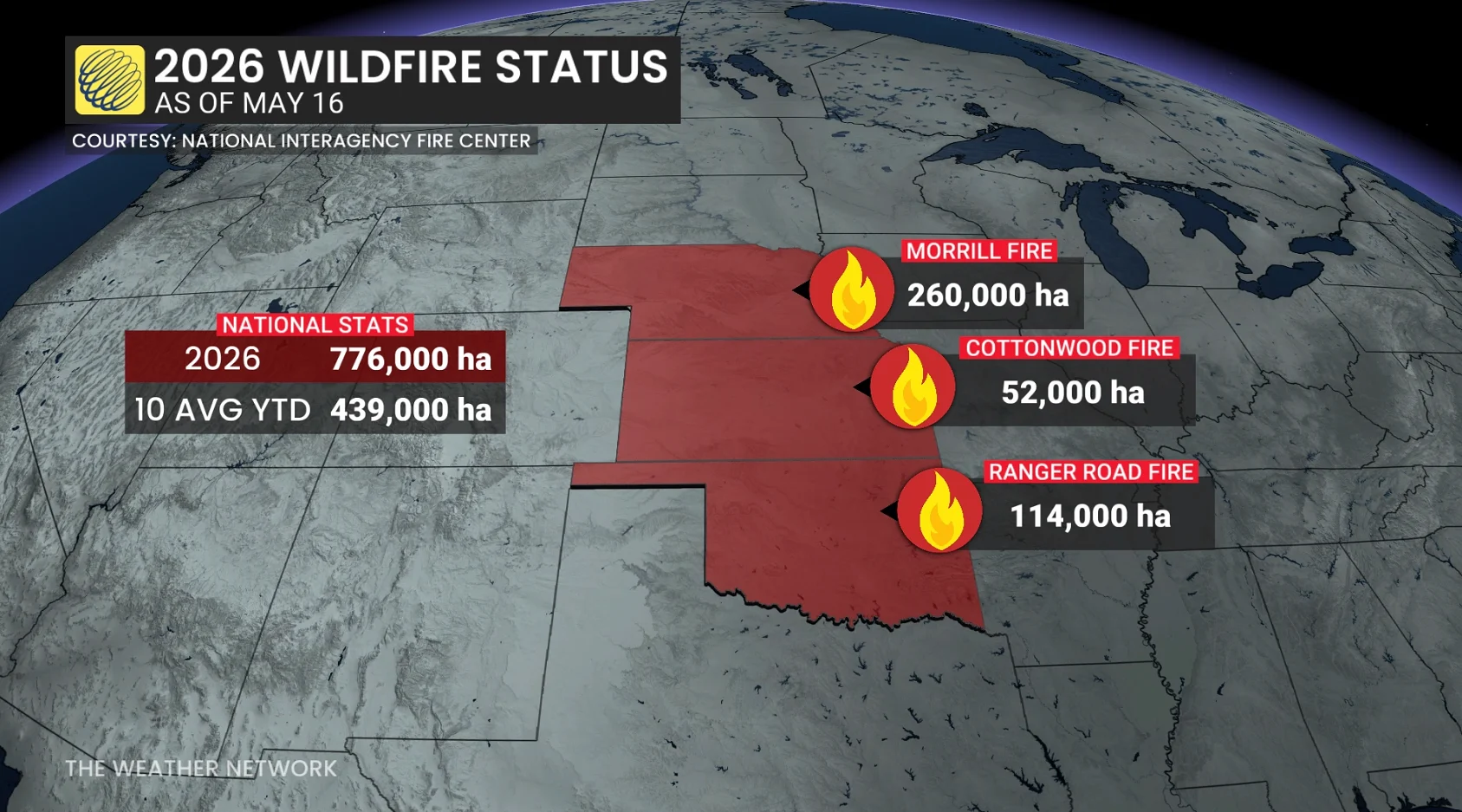
In the U.S., the two biggest wildfires this year are in Nebraska and Oklahoma.
Morrill Fire 260,000 hectares
Ranger Road 114,000 hectares
Area burned to date: 776,500 hectares (10-year average is 439,000 hectares)
In Canada, 11 wildfires are out of control (Six in B.C., one in Alberta and four in Ontario).
Area Burned to date: 5,600 hectares (10-year average is 229,200 hectares)
Although there’s some cooler weather near Texas for the next while, long-range models highlight a return to warmer-than-normal conditions across the central U.S. corridor with drier conditions across the northern U.S.
(NOAA)
With these regions already the focus of some of the most concerning areas, it is starting to look like a ticking time bomb.
The good news, though, is that an active storm track continues over the U.S. Southeast, bringing sporadic and localized relief to the most dire drought areas from Arkansas to Florida. However, much more substantial rain is needed to bring drought conditions under control.
With files from Tyler Hamilton, a meteorologist at The Weather Network.