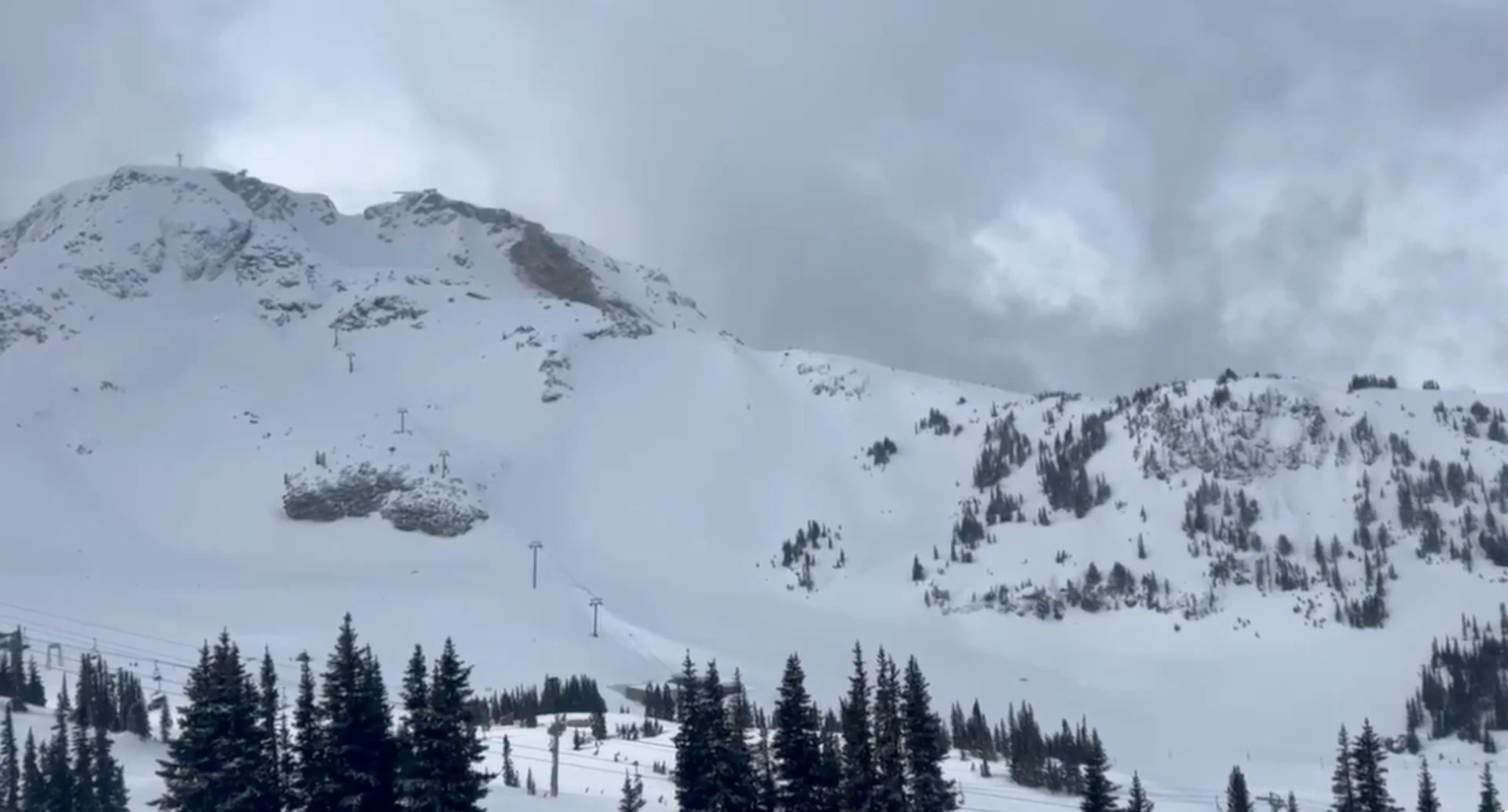
Part of Whistler ski resort closed following rockslide Thursday morning

No one was injured during a rockslide on Whistler Peak at Whistler Blackcomb on Thursday.
According to Vail Resorts, which owns and operates Whistler Blackcomb, the rockslide happened early in the morning, before the ski resort had opened.
“No one was in the area at the time,” said Chloe Hajjar with Vail Resorts.
Video taken from the area shows the slide spanned a section of roughly 100 metres on Whistler Peak, between the West Cirque and Monday’s double black diamond runs.
Hajjar said Whistler Peak and the Peak Express Chair will remain closed until further notice while its operations team assesses the situation.
Vail Resorts did not provide any details about why the rockslide occurred and said there is no more information to share as of Thursday morning.
Jeff Crompton, a research scientist at the Geological Survey of Canada based in Squamish, described the rockslide as medium in size after viewing videos of it.
“There are giant rock blocks that have come down,” he said.
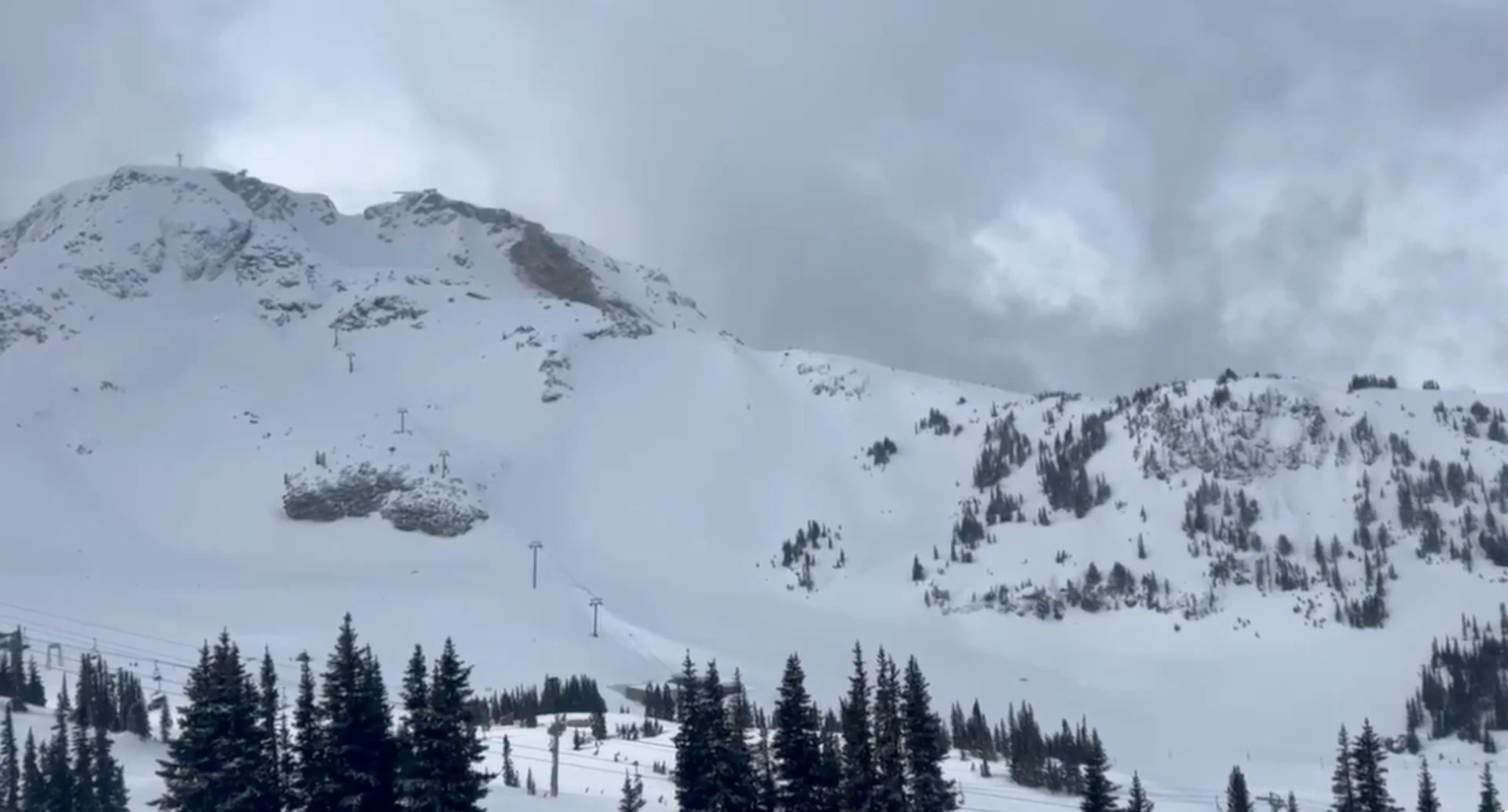
No immediate details about why the rockslide occurred were available. (Mia Gordon/The Weather Network)
The researcher said it’s too early to determine what caused the rockslide, but noted that similar events have been occurring in the southern Coast Mountains amid climate change-related warming, which causes deglaciation and permafrost degradation.
“It's a huge event to be happening in such a populated area and it's scary,” Crompton said. “I was a little bit angry, kind of like I knew that this is going to happen, and it's only a matter of time.”
He said temperatures at Whistler Peak overnight were –11 C but felt like –23 C with the wind chill, and winds were gusting up to 180 km/h.
“Last night, temperatures were getting really cold and with that wind,” Crompton said. “If there's a lot of water and that water freezes and expands, that can act as a trigger to cause the rockslide."
Avalanche Canada says 20 to 30 centimetres of snow fell in the Sea-to-Sky region Wednesday night, alongside 40 km/h southwest ridge top winds.
WATCH BELOW: This avalanche safety course is essential if entering the backcountry
This article, written by Alanna Kelly, was originally published for CBC News.