Ontario forest fire officials warn of quickly-changing conditions this weekend

While Ontario has seen a much slower start to the wildfire season compared to last year, officials are warning people heading into the May long weekend that conditions can quickly change.
There have been 22 wildfires confirmed in the province since the season began April 1, compared to 68 fires this time last year, said Alison Bezubiak, a fire information officer with Aviation, Forest Fire and Emergency Services in the northwest region.
“The 10-year average for this date is 56, so we are below last year and the 10-year average in terms of total number of fires confirmed,” she told CBC News Thursday morning.
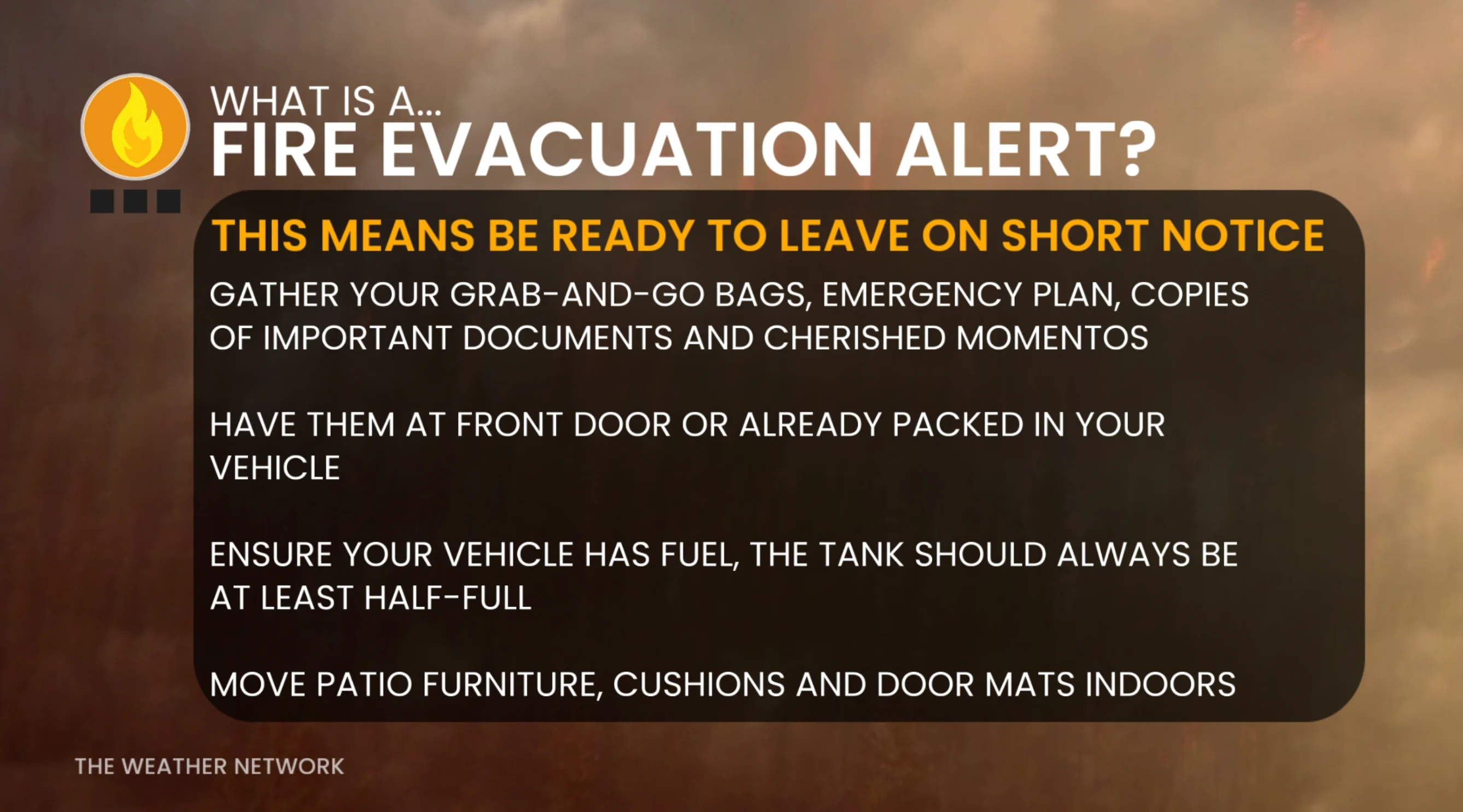
What an evacuation alert means, should one be issued.(Graphic: The Weather Network)
SEE ALSO: Latest forecast warns a very strong El Niño could emerge soon
One small fire, measuring 0.1 hectares, is being held in the Kenora district near Grassy Narrows First Nation as of Thursday.
However, forest fire danger ratings range throughout the region, with the Fort Frances area seeing extreme hazard levels, according to the province’s interactive forest fire map.
Surrounding communities north of Fort Frances up toward Sandy Lake are seeing high hazard levels, with pockets of moderate hazard in the Kenora district and areas northeast of Kenora. The hazard level in Thunder Bay is also rated as moderate.
“Despite the cool conditions to start off the season, the highest potential for spring fires occurs after snow has melted and before green up,” said Bezubiak.
Warm and windy conditions increased the fire risk on Thursday, she added.
“The fire hazard can rebound quickly after rainfall as grasses and dry vegetation from the previous season dry out, so with people cleaning up properties and spending more time outdoors, the risk of human-caused fires increases,” Bezubiak explained.
Human-caused fires essentially consist of any fires not caused by lightning, such as unattended campfires or brush piles, trees falling on power lines, sparks from equipment, and flames that spread from structure fires into grasses and forested areas, she said.
People can prevent these types of blazes by properly disposing of yard waste and woody debris through composting or using the local landfill.
As well, with Victoria Day celebrations coming up, “we urge the public to exercise extreme caution with all outdoor activities, particularly campfires and fireworks,” said Bezubiak.
Under the Wildland Fire Management Act, people can be charged with the cost of putting out fires caused by outdoor burning and unextinguished fireworks residue, she added.
Residents are reminded to check with their local fire department for the latest information on burning restrictions near them. However, they must also abide by the provincial burning regulations; fires are to be ignited no sooner than two hours before sunset and extinguished no later than two hours after sunrise.
WATCH: Not just air quality, wildfire smoke impacts water, too
This article, written by Sarah Law, was originally published for CBC News.