
720,000+ hectares burned: Ontario on track for worst wildfire season ever

Ontario's wildfire season is on course to break records, fuelled by extreme heat and an approaching wave of severe thunderstorms
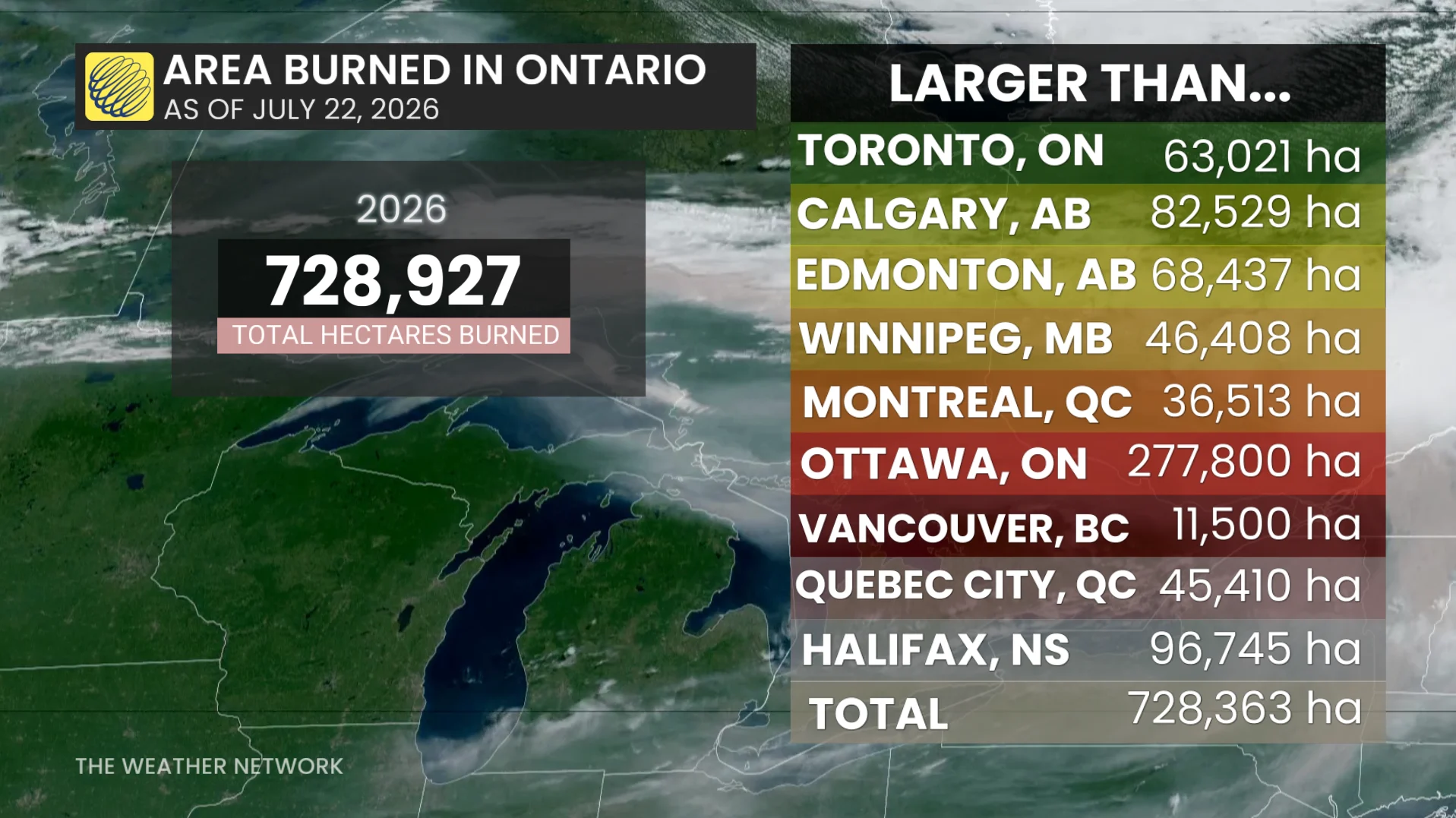
The 2026 wildfire season in Ontario is on track to be the worst on record, with burned areas already surpassing the 10-year average by mid-season.
DON'T MISS: The Weather Network's hub for all wildfire information in Canada
As of July 21, approximately 728,363 hectares have burned, an area comparable to the combined downtowns of major Canadian cities, including Toronto, Calgary, and Vancouver—or the entire expanse of Algonquin Park.
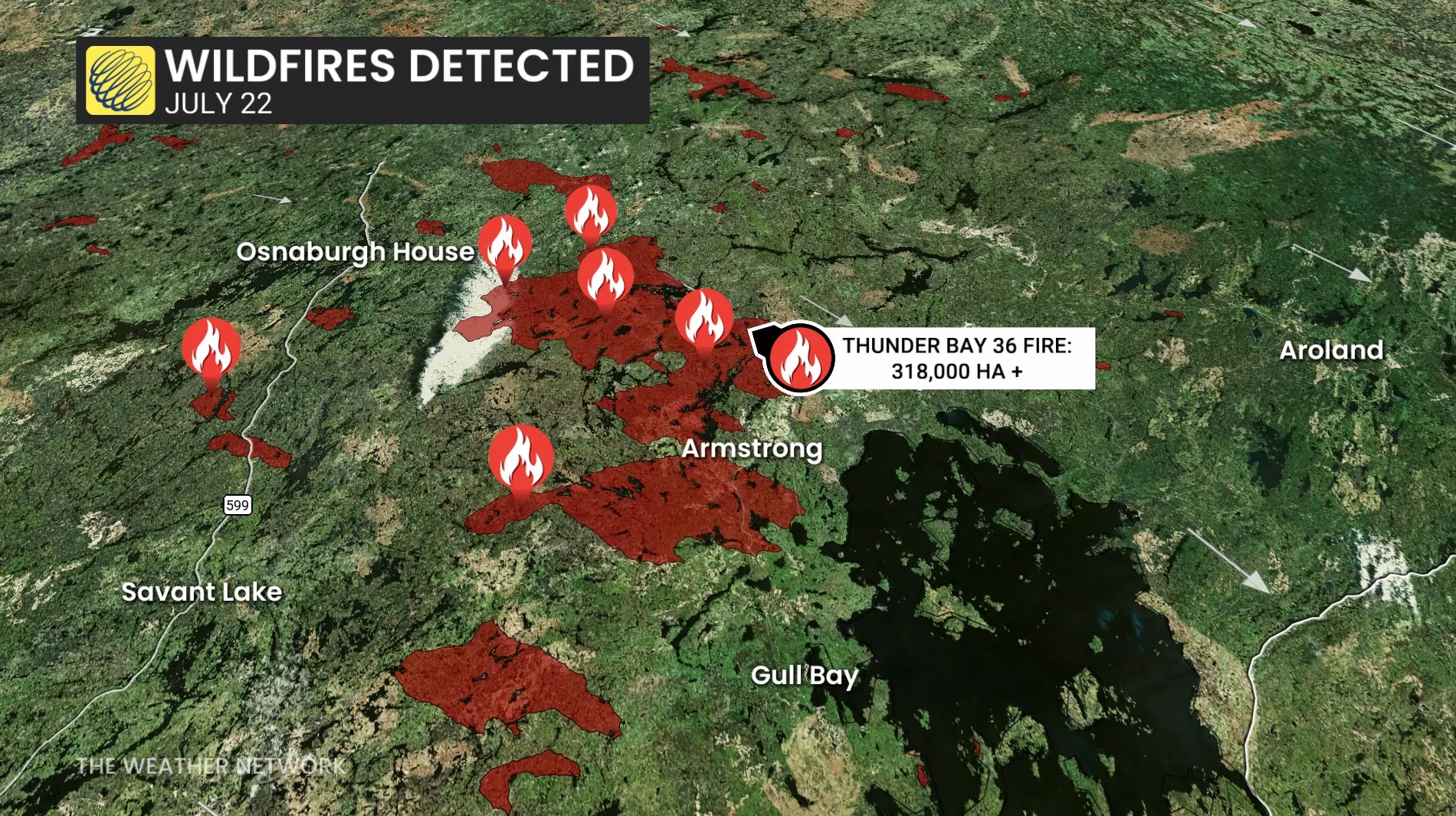
The largest blaze so far, north of Thunder Bay, has consumed 318,813 hectares, an area equivalent to Greater Sudbury.
Persistent heat and thunderstorms were major contributors to the fire spread last week.
DON'T MISS: Here's the latest on northwestern Ontario's forest fires: Wednesday, July 22
While recent rainfall has provided some relief, the risk of dry lightning and gusty winds remains high. A trough over Eastern Canada will establish an active storm track this week, bringing multiple days of thunderstorms to northwestern Ontario through the weekend.
Thunderstorm risk may spark new fires through Friday
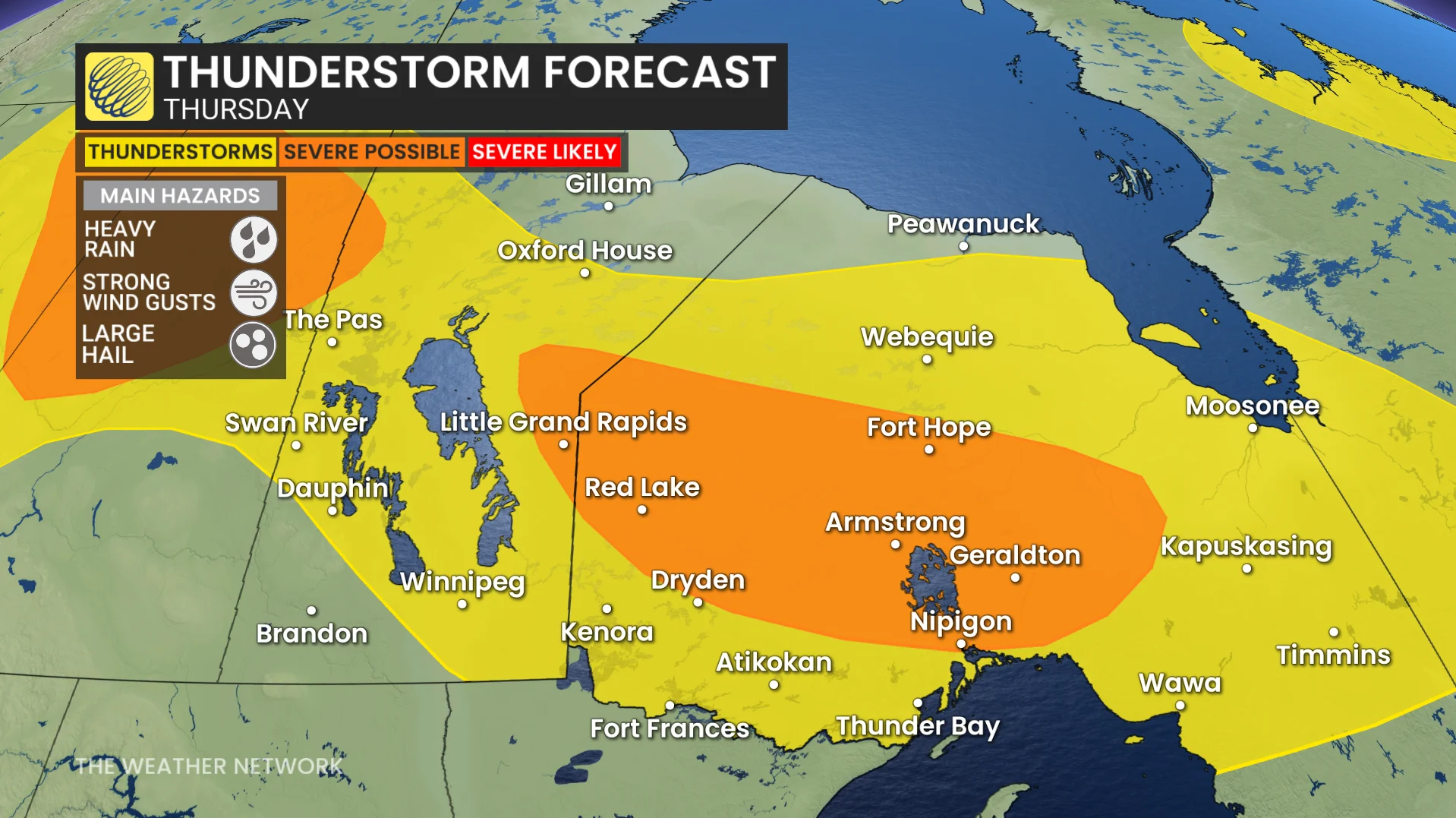
Severe storms are likely Thursday, with heavy rain, strong winds, and large hail as primary risks.
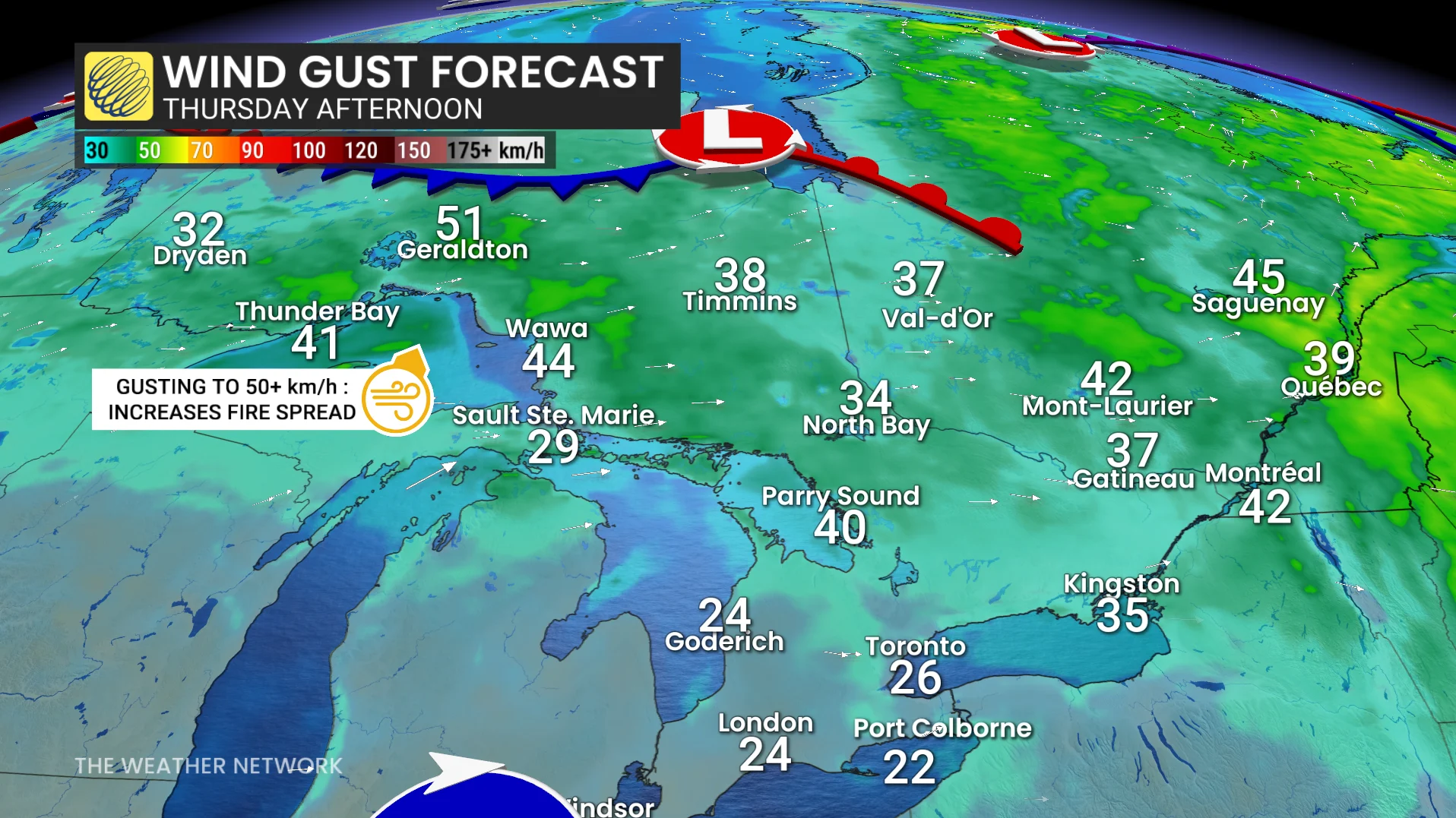
Wind gusts could fan flames, while dry lightning could ignite new fires.
RELATED: From flames to forecasts: How wildfire smoke affects your weather
The risk persists into Friday, with the potential for more severe storms.
However, heavy smoke in the region, along with additional smoke expected to move south along the cold front, may suppress some of the storm intensity. Despite this, lightning remains a significant concern.
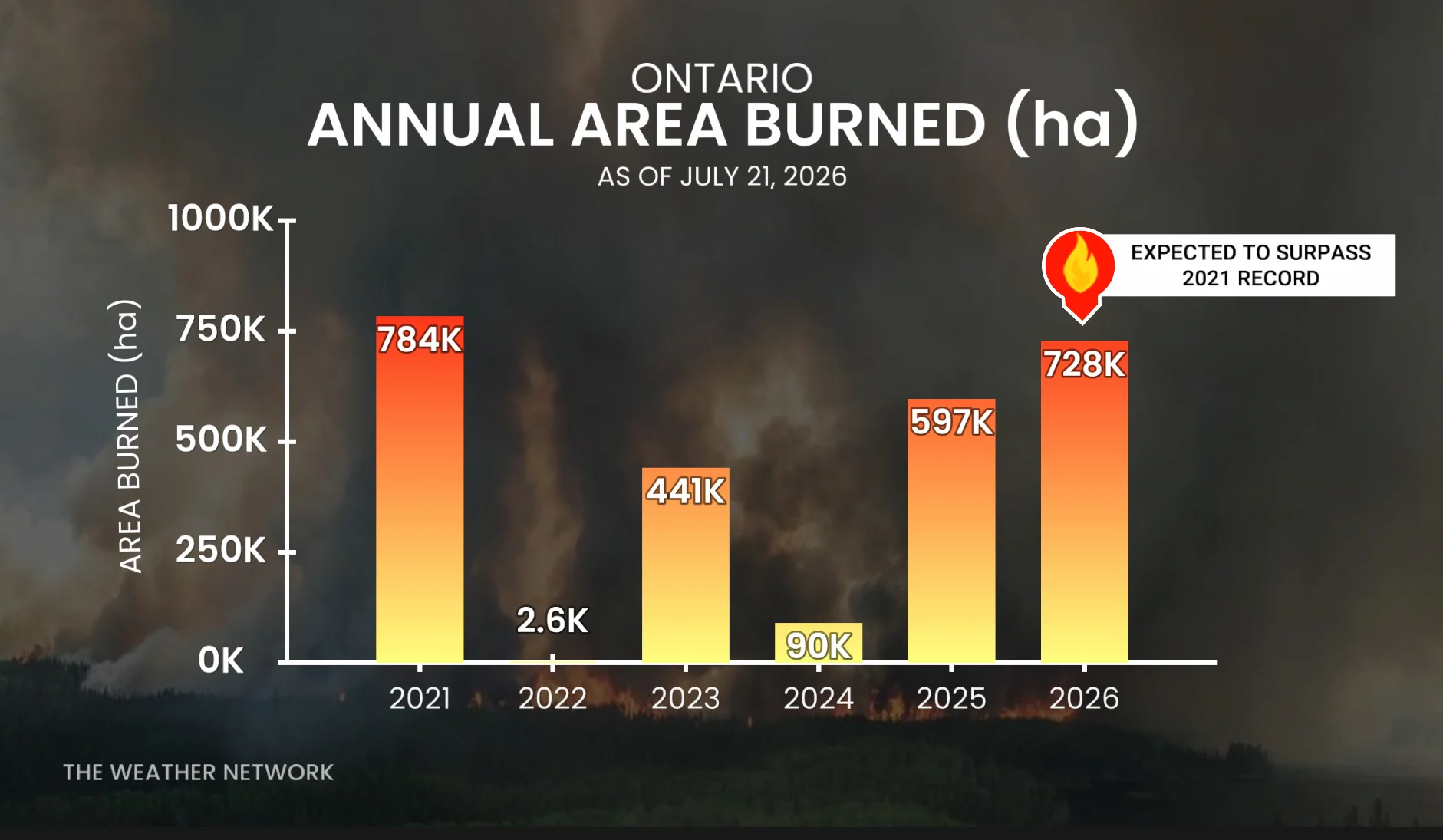
Ontario is close to surpassing its all-time record of 784,565 hectares burned, set in 2021, making the coming weeks critical for wildfire management efforts.
WATCH: Evacuations and closures continue amid firefighting efforts in northwestern Ontario
Thumbnail image courtesy: Karen Boyd