Latest El Niño forecast calls for historic heat by this autumn

Forecasters are extremely confident that the Pacific’s growing El Niño will break records in the months ahead
Forecasters are now extremely confident that we’ll have an exceptional El Niño on our hands by this autumn as water temperatures continue to rise in the Pacific Ocean.
This strengthening pattern is already putting a lid on the Atlantic hurricane season while enabling above-average tropical activity throughout the Pacific basin.
DON’T MISS: Experts are changing how we measure El Niño and La Niña
El Niño forecast to reach historic heights
August’s monthly update from the U.S. Climate Prediction Center (CPC) reflected a vigorous El Niño event unfolding around the equator in the eastern half of the Pacific Ocean.
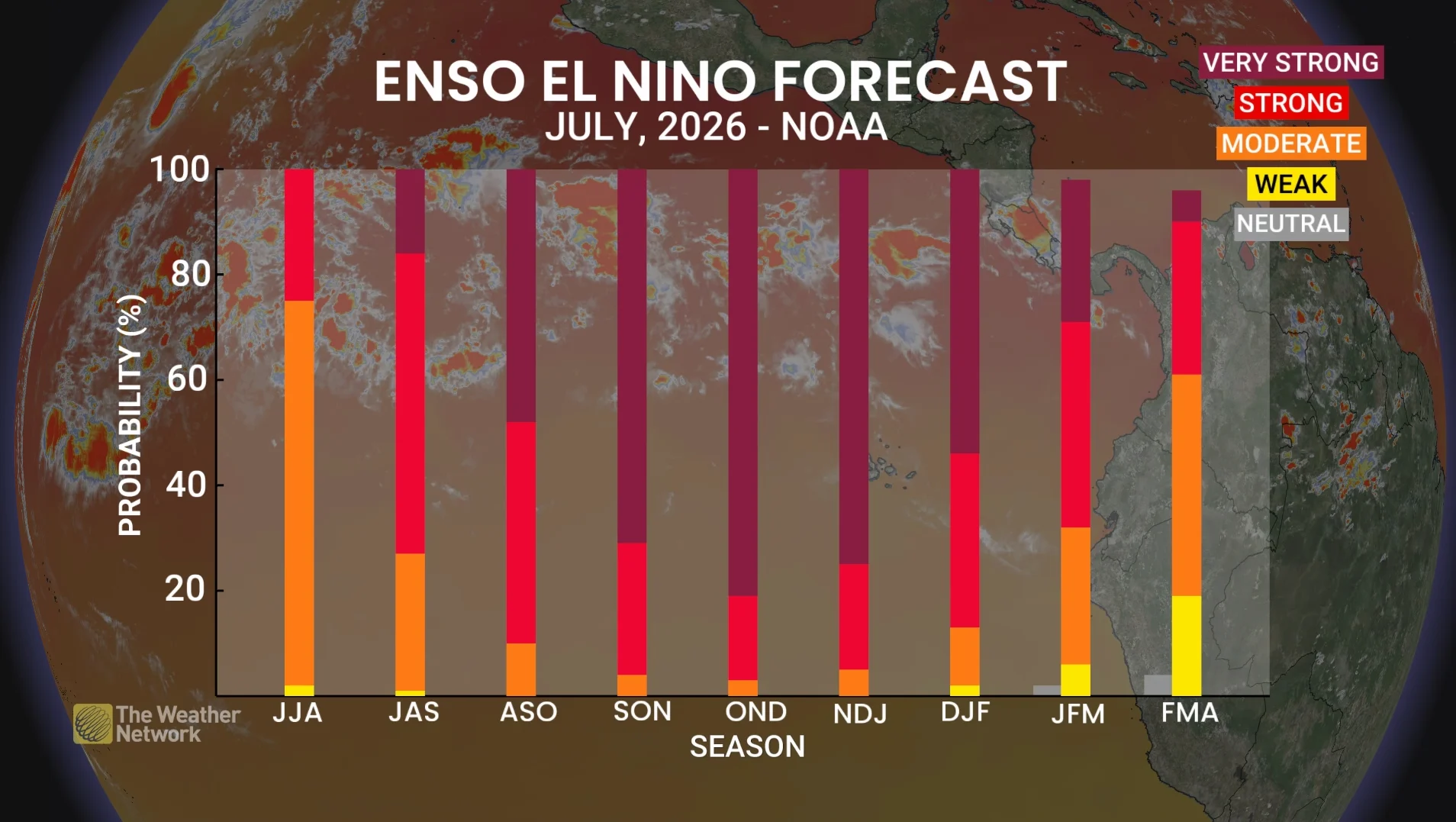
The agency says there’s a 90 per cent chance of a ‘very strong’ El Niño through the upcoming autumn and winter months.
RELATED: The Super El Niño that contributed to tens of millions of deaths
Forecasters use the Relative Oceanic Niño Index (RONI) to officially judge the strength of an El Niño or La Niña across this swath of Pacific waters. This new metric accounts for the effects of climate change, which have contributed to significantly warmer ocean temperatures in recent decades.
El Niño requires a RONI of at least +0.5°C or higher for several consecutive months. July ended with a RONI of +1.4°C in a critical swath of the Pacific known as the Niño 3.4 region.
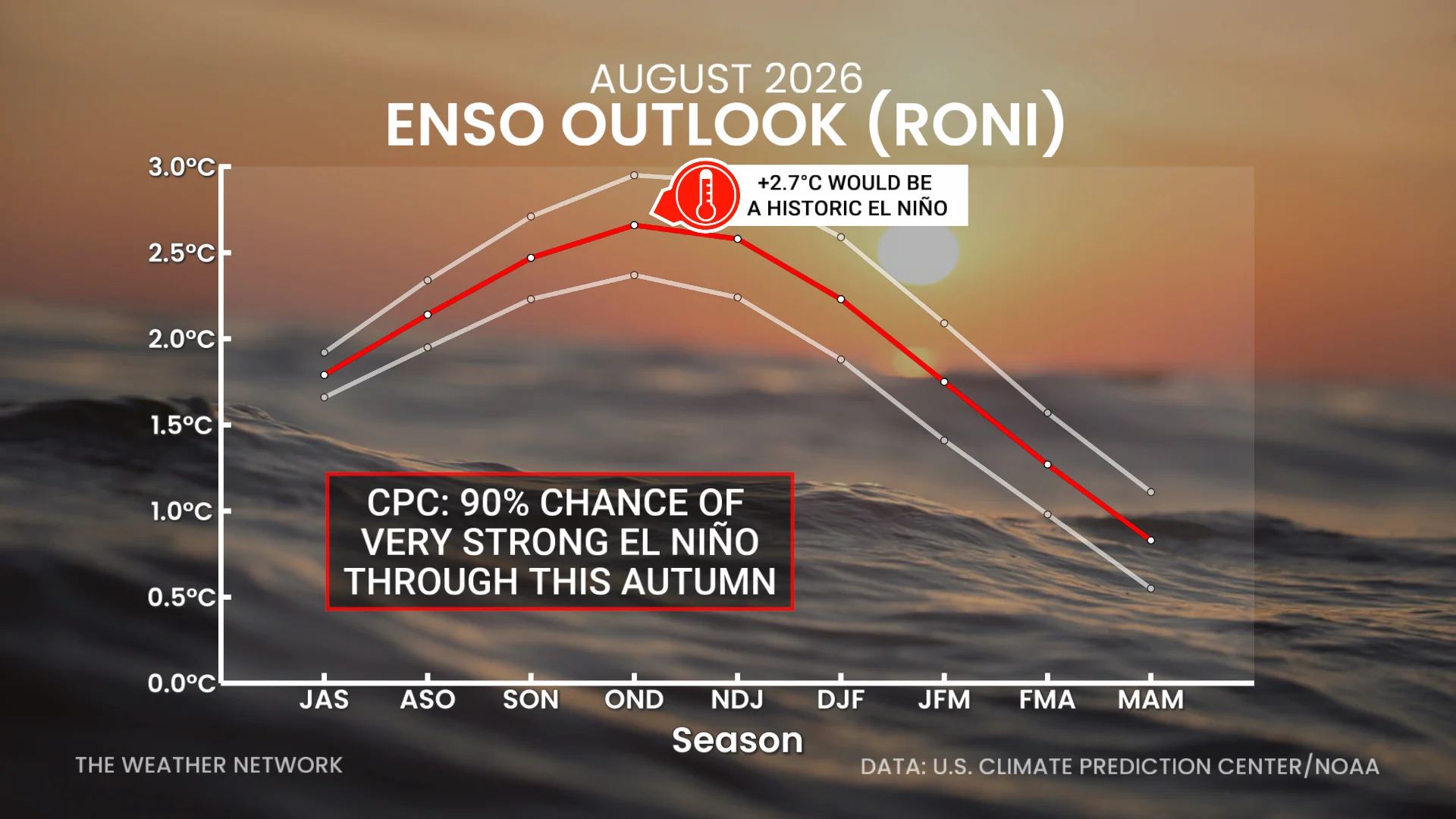
This month’s outlook from the CPC calls for the RONI to reach as high as +2.7°C by this autumn, which would make for the most intense El Niño since records began in 1950. Currently, the all-time record was +2.4°C set during the 1982-1983 event.
Significant impact on this year’s hurricane seasons
We’re already feeling the effects of this intensifying El Niño across both the Pacific and the neighbouring Atlantic.
High wind shear and below-normal rains in western Africa have contributed to a very quiet Atlantic hurricane season so far this summer, with activity running nearly 80 per cent behind normal for the middle of August.
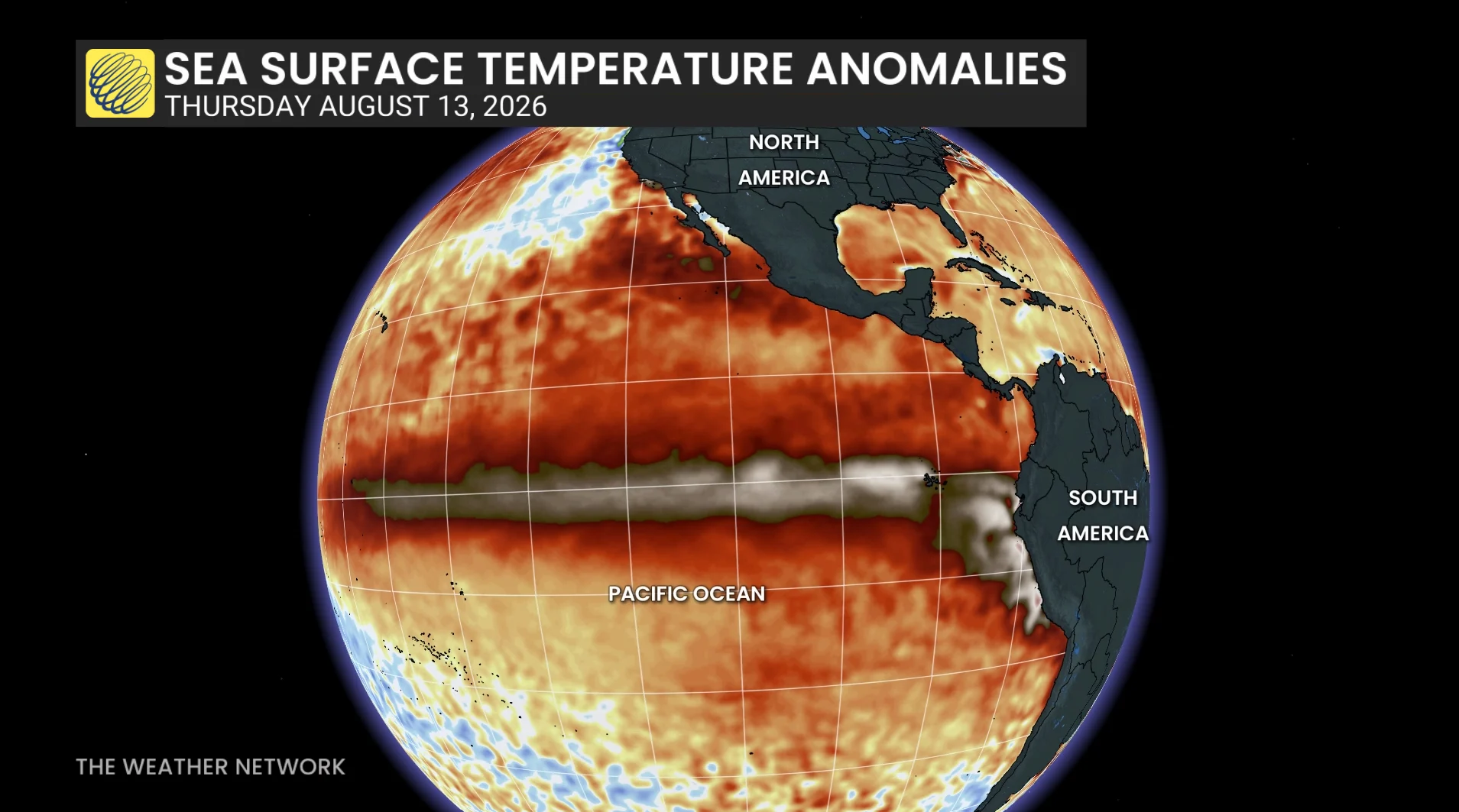
These two factors, especially the uptick in disruptive wind shear, are heavily influenced by strengthening El Niño conditions.
Meanwhile, the Pacific is practically printing tropical cyclones from China to Mexico as warm ocean waters and favourable atmospheric conditions contribute to a bustling season throughout the region.
Experts continue to expect above-average hurricane activity in the eastern and central Pacific, posing an increased threat to places like Hawaii, Mexico, and the southwestern U.S.