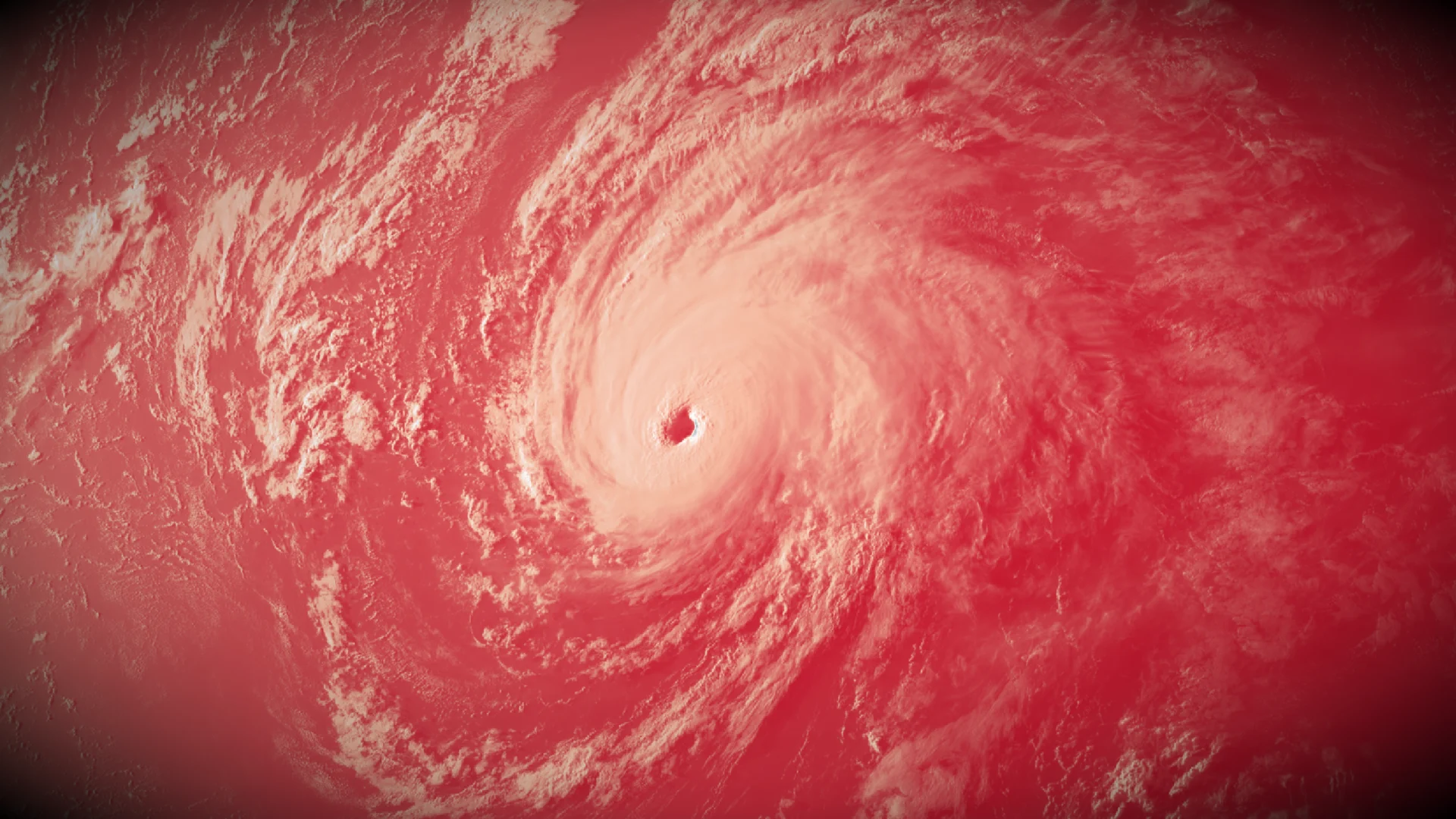
Intense El Niño helps churn out 10 major hurricanes. How does it compare?

The northeastern Pacific basin is in the midst of its most active hurricane season on record
The northeastern Pacific Ocean is a hotbed of major hurricanes this year.
Ten out of the twelve hurricanes to form in the region this year have grown to Category 3 status or stronger, including a record-tying three Category 5 storms.
An intense El Niño is responsible for kicking the season into turbo mode. But how does this year compare to previous years that experienced very strong El Niño conditions?
DON’T MISS: Northeast Pacific breaks record for its most active hurricane season
A historic hurricane season continues
The northeastern Pacific covers storms that form off the western shores of North America, as well as those that develop and track around Hawaii.
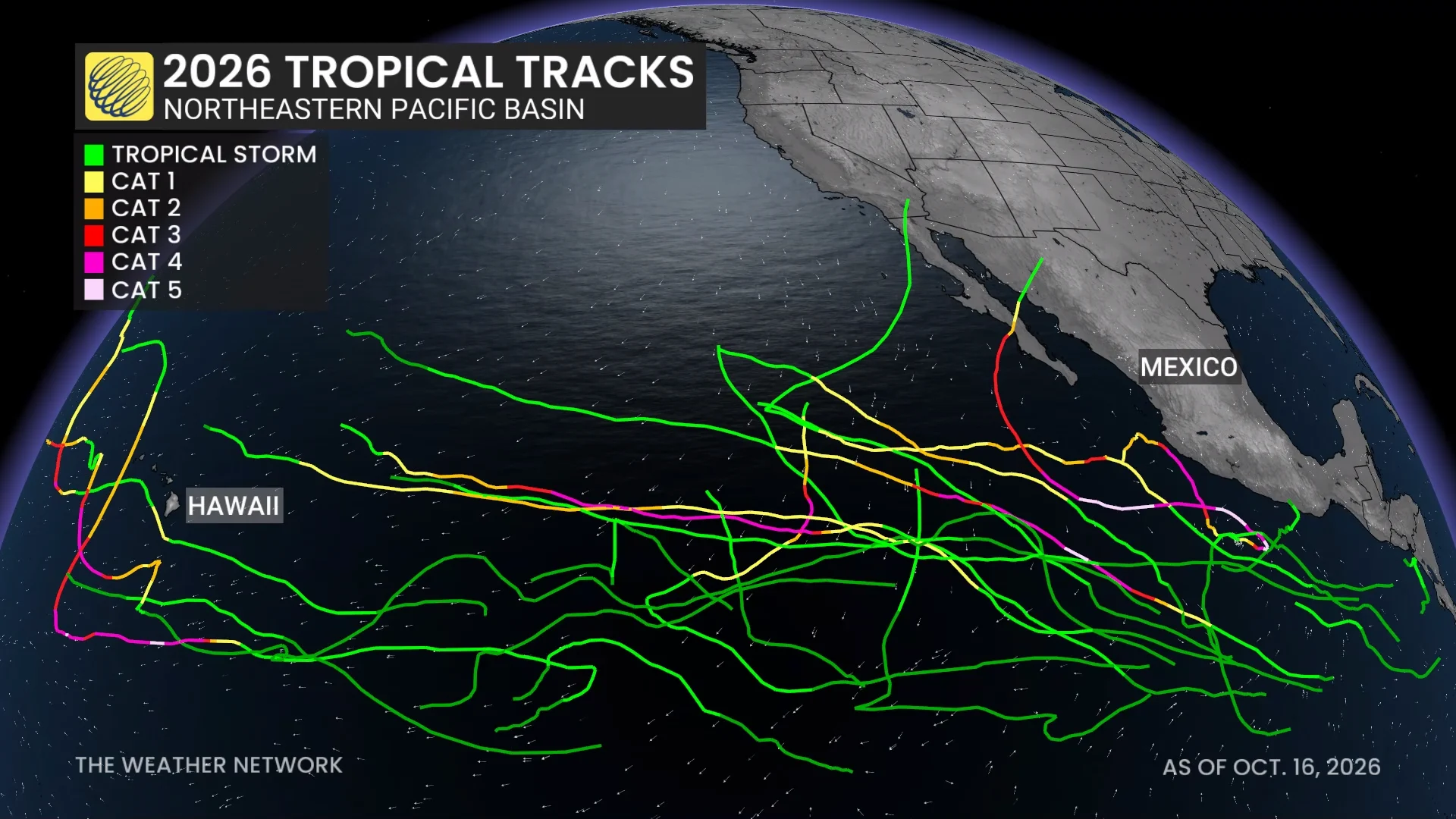
As of Oct. 16, the region has seen 22 named storms, including 12 hurricanes. An impressive 10 of those hurricanes have made it to major Category 3 status or higher.
Compare that to an average northeastern Pacific hurricane season, which produces 15 named storms, 8 hurricanes, and 4 major hurricanes.
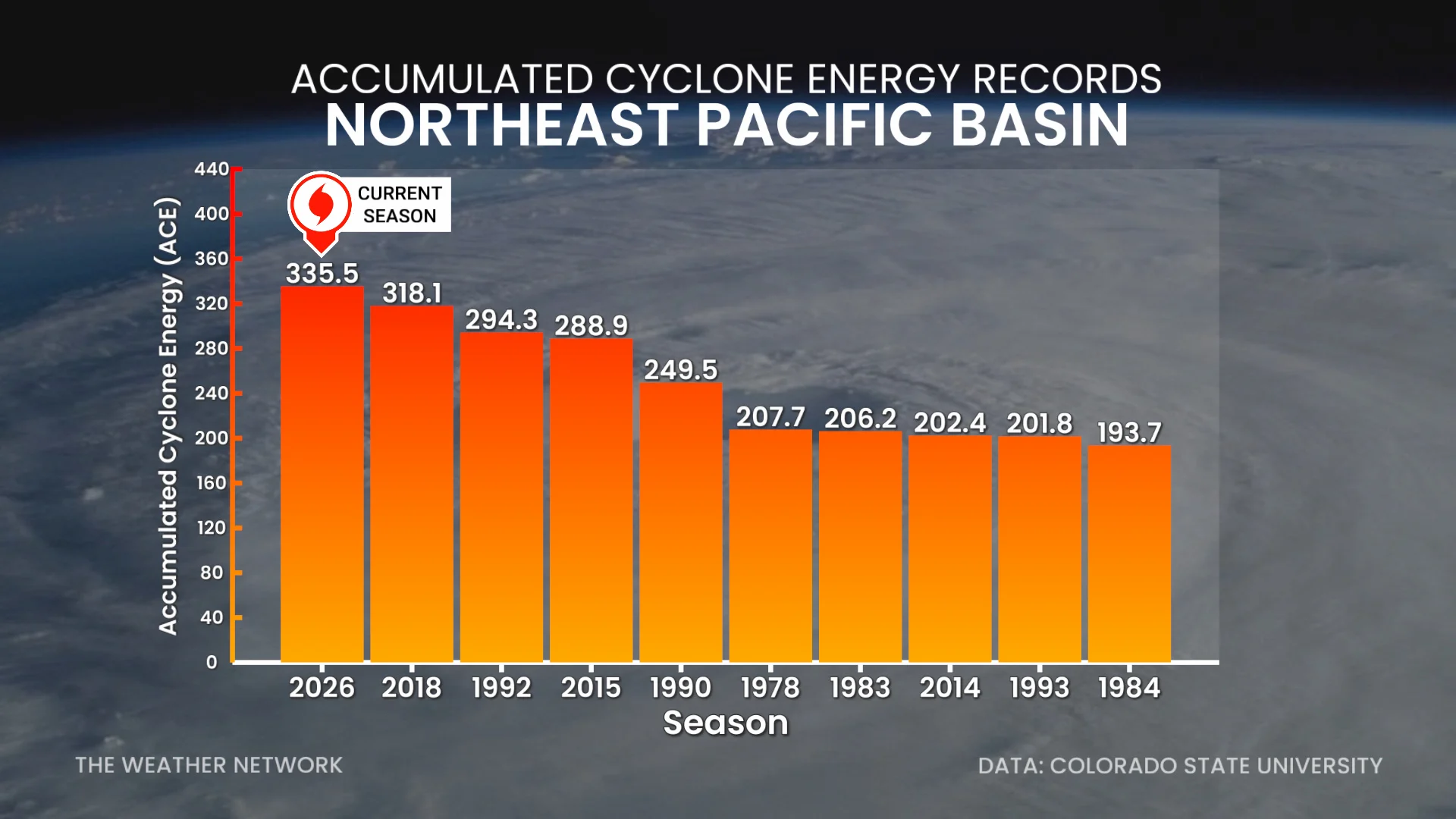
The basin recently set the record for its highest Accumulated Cyclone Energy (ACE) on record, a metric which measures the total strength and longevity of a season’s storms.
This value stood at 335.5 as of late Friday morning, far surpassing the previous record and more than doubling the average season’s ACE.
The long-lived nature of many of this year’s powerful hurricanes contributed to this lofty record. For example, Hurricane Polo was a major hurricane for seven of the nine days it existed as a named storm.
El Niño ruling the roost in the Pacific
A very strong El Niño unfolding throughout the Pacific is responsible for the region’s hyperactive hurricane season. But how does this season compare to previous years that experienced a powerful El Niño?
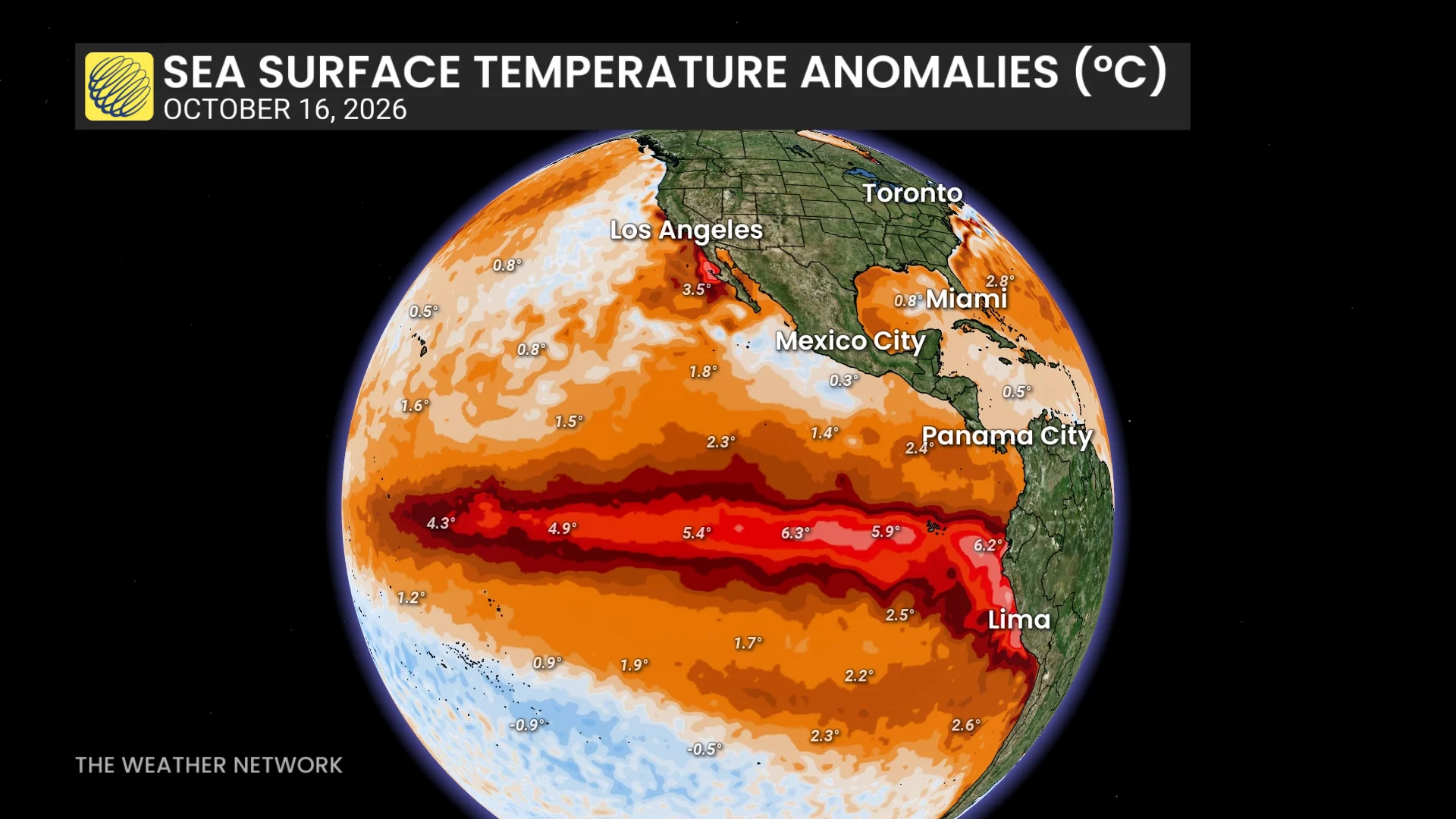
This is the seventh hurricane season since 1980 that’s unfolded in the midst of a very strong El Niño.
While each El Niño-dominated season featured its own characteristics, they all ran much more active than normal as a result of unusually warm water temperatures and very favourable atmospheric setups.
These seasons, excluding 2026, averaged six more named storms and four more intense hurricanes than a typical year would produce. Many of these extraordinarily active seasons went on to produce all-time records.
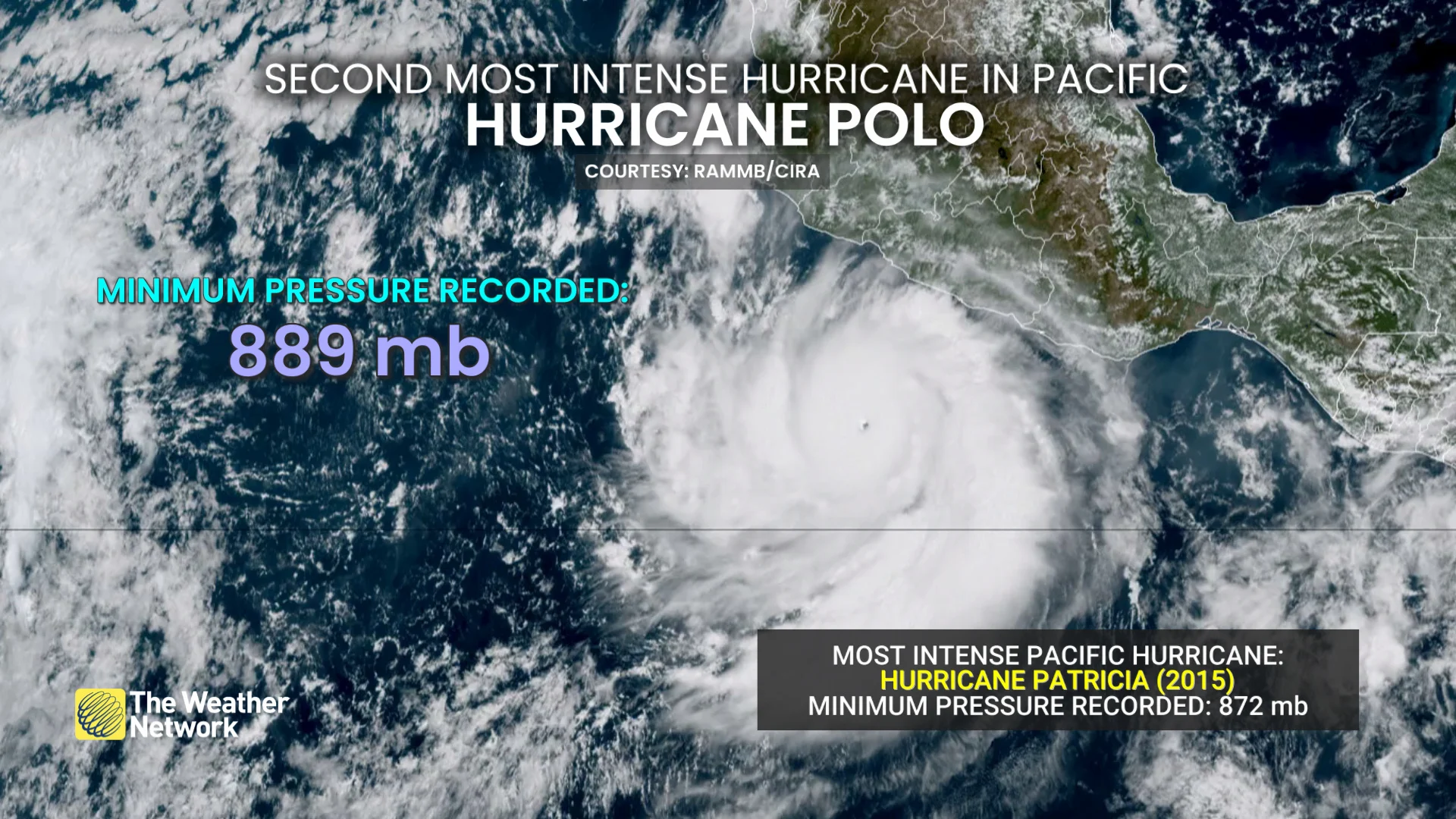
Hurricane Linda in 1997 was the region’s most intense hurricane on record, later surpassed by Hurricane Patricia in 2015. Amanda grew into the strongest May hurricane on record in 2014.
Acapulco, Mexico, suffered a direct hit from Category 5 Hurricane Otis in Oct. 2023, becoming the ocean basin’s strongest hurricane landfall ever observed.