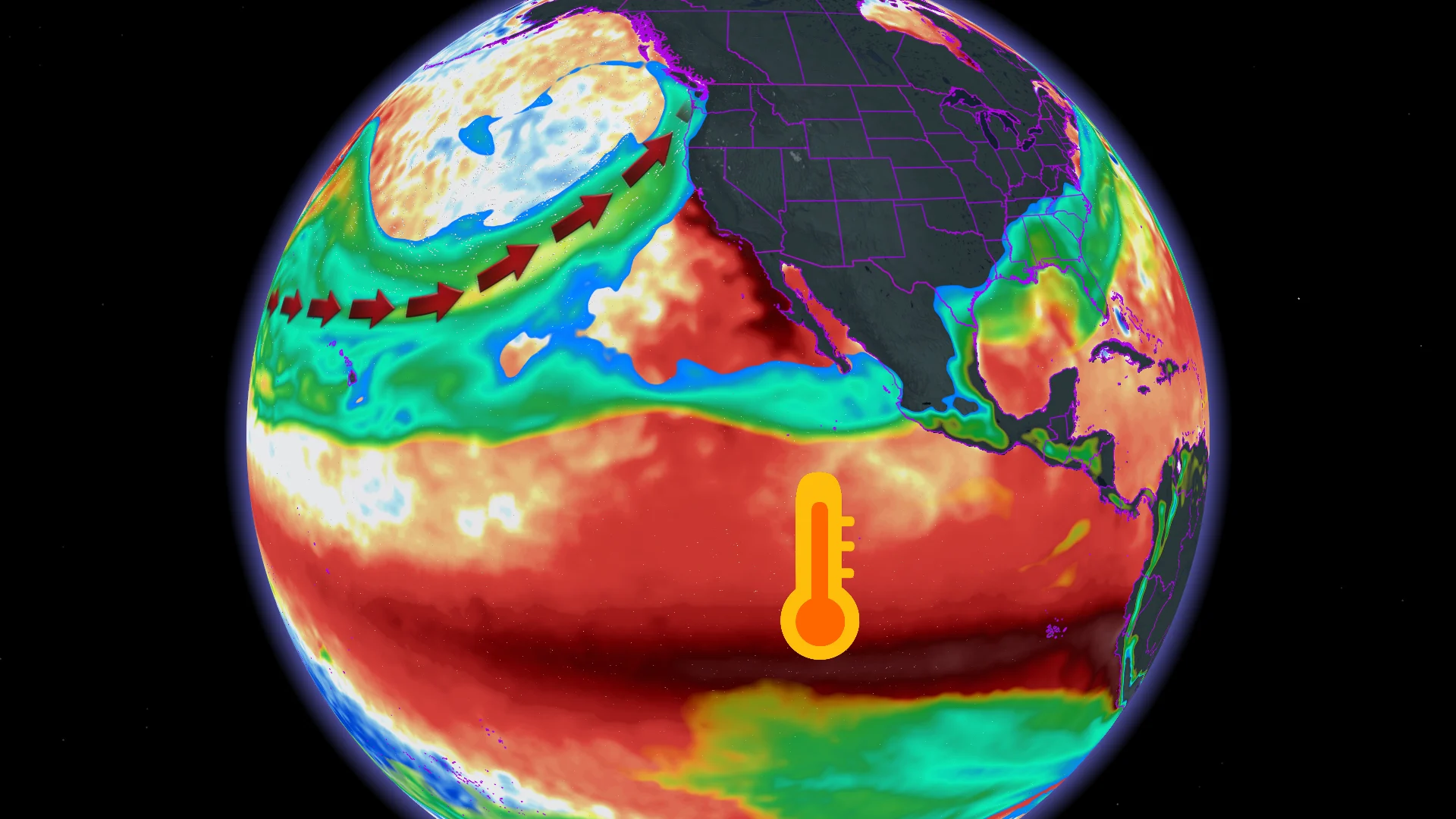
El Niño can increase the frequency of atmospheric rivers

An increase in the frequency of atmospheric rivers is one noticeable effect of El Niño along North America’s western coastline
The cooler months are a volatile time of year for the West Coast. Drenching rains, piles of snow, and blustery winds frequently buffet communities from British Columbia all the way to California.
Atmospheric rivers are a major driver of these rough conditions. El Niño can make them even worse for some areas.
DON’T MISS: Historic El Niño nears its peak, months of impacts yet to come
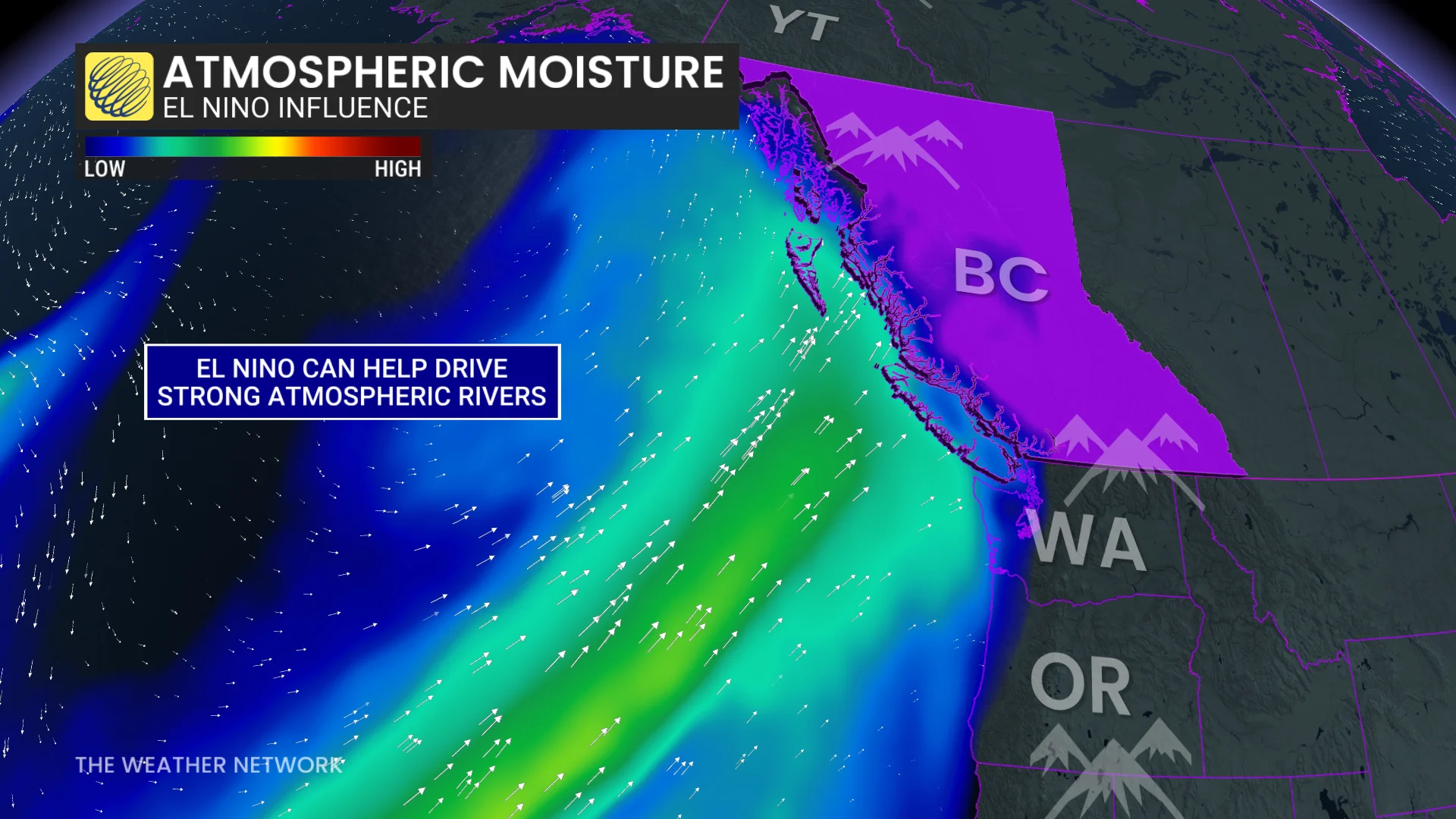
Atmospheric rivers are ribbons of enhanced moisture aloft that transport water vapour out of the humid tropics toward drier latitudes.
Strong Pacific low-pressure systems often drag robust atmospheric rivers toward North America’s western shores during the autumn and winter months. These rich reserves of moisture can fuel very heavy rainfall and intense mountain snows.
The warmer waters of an El Niño influence storm tracks and moisture availability throughout the Pacific Ocean.
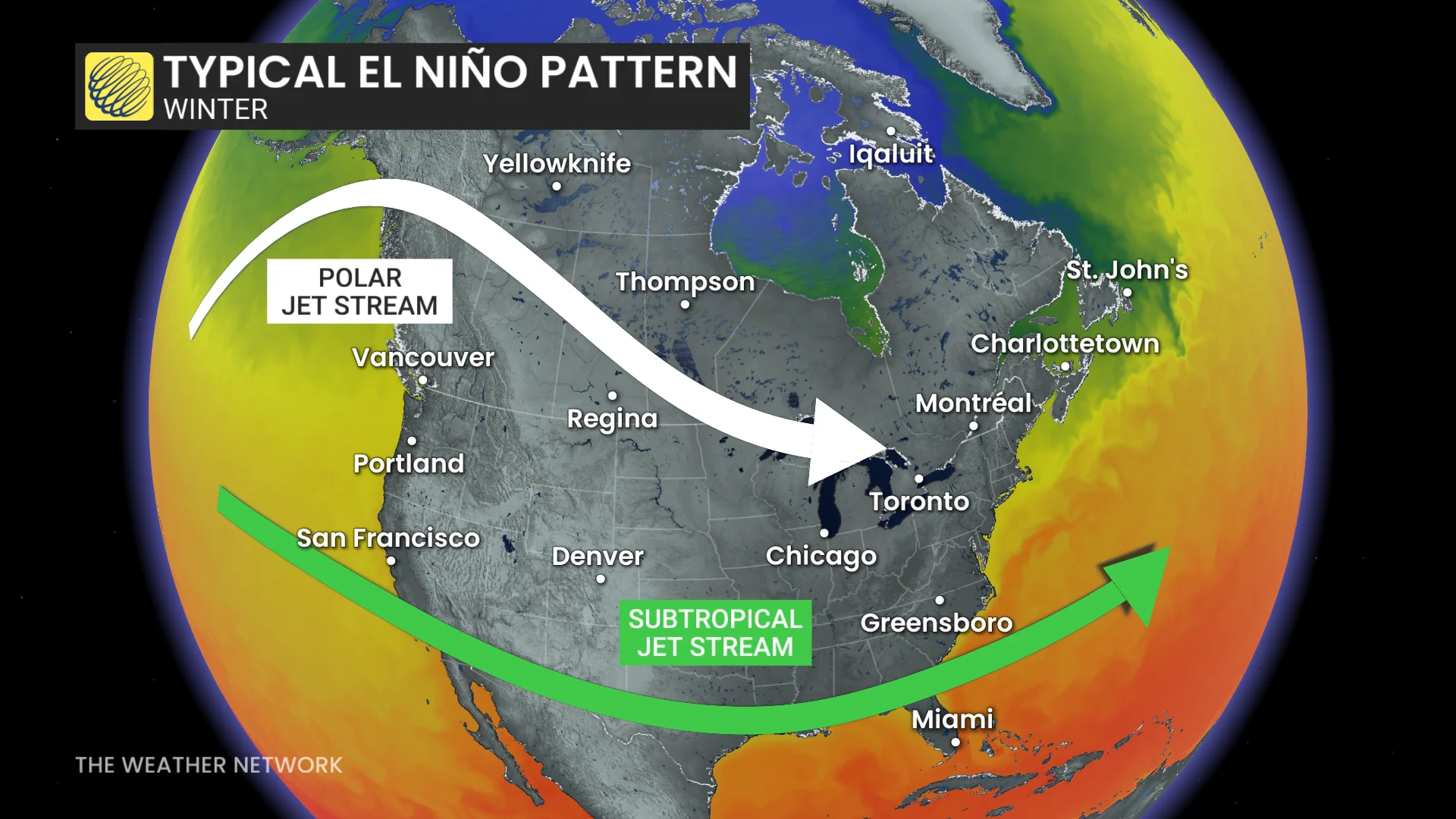
El Niño became a household name during the winter of 1997-98 when an active storm track sent repeated atmospheric rivers sloshing over the U.S. West Coast.
Torrential rains in San Francisco and Los Angeles brought both cities their wettest winter and all-time wettest month on record. Each city saw around 350 mm of rain in Feb. 1998 alone, with San Francisco picking up measurable rain 23 out of 28 days that month.
That historic winter wasn’t a fluke.
A 2022 analysis from NOAA found a noteworthy uptick in atmospheric river days along the U.S. West Coast during years featuring El Niño conditions.
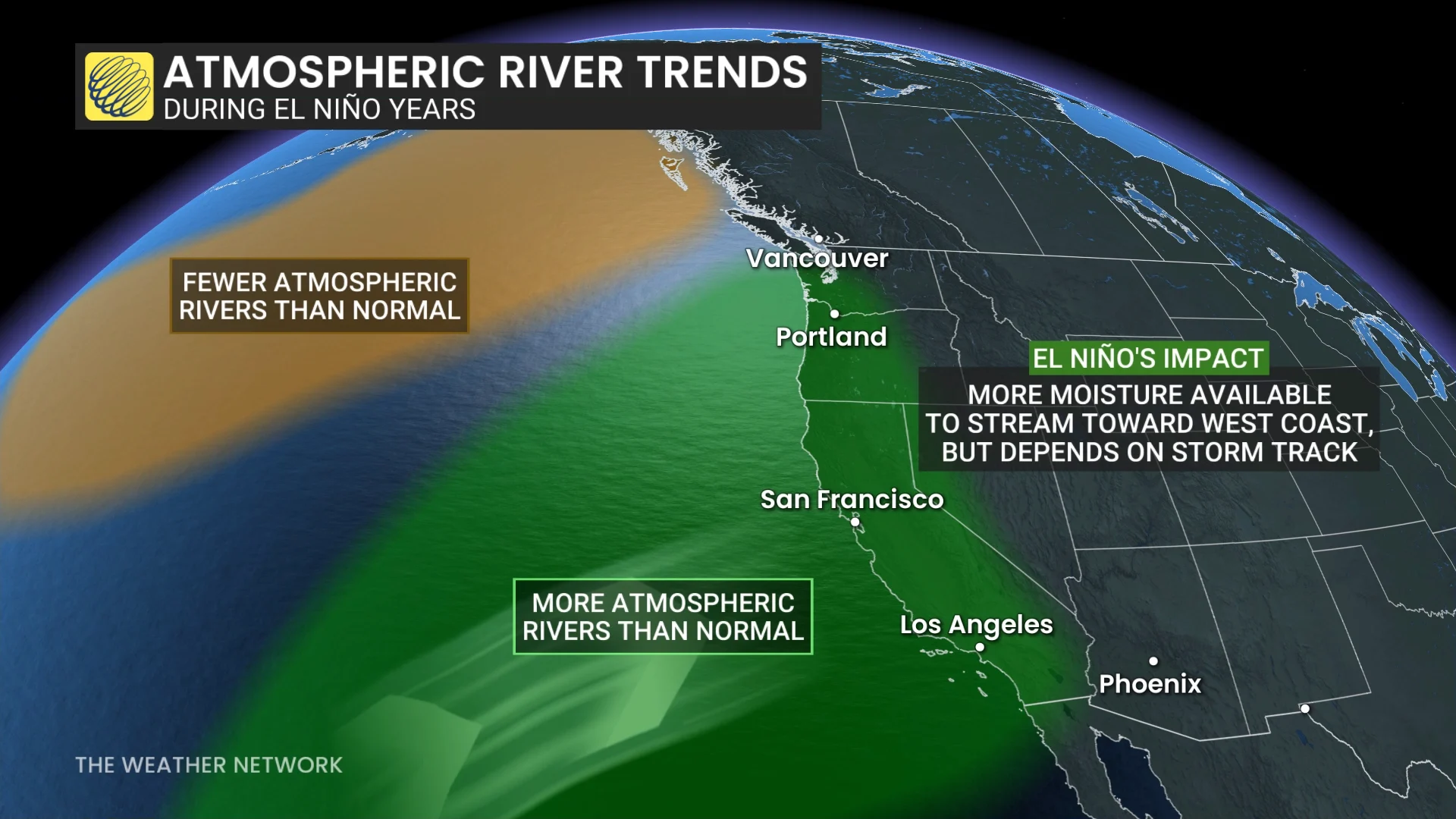
The same analysis noted that there were fewer atmospheric rivers than usual across the central and northern B.C. coasts, with the province’s South Coast experiencing little noticeable change.
Not every event leads to worse or more frequent atmospheric rivers. But overall, a winter dominated by El Niño can load the dice for high-impact atmospheric river events if the timing and intensity of individual storm systems align just right.
Surges of moisture sweeping ashore are a mixed bag in terms of impacts. These events provide a substantial portion of the West Coast’s annual rainfall and can alleviate long-term drought conditions.
But too much rain all at once can lead to significant flooding and landslides. Atmospheric rivers can also abruptly raise freezing levels, causing rapid snowmelt and destabilizing existing snowpack.