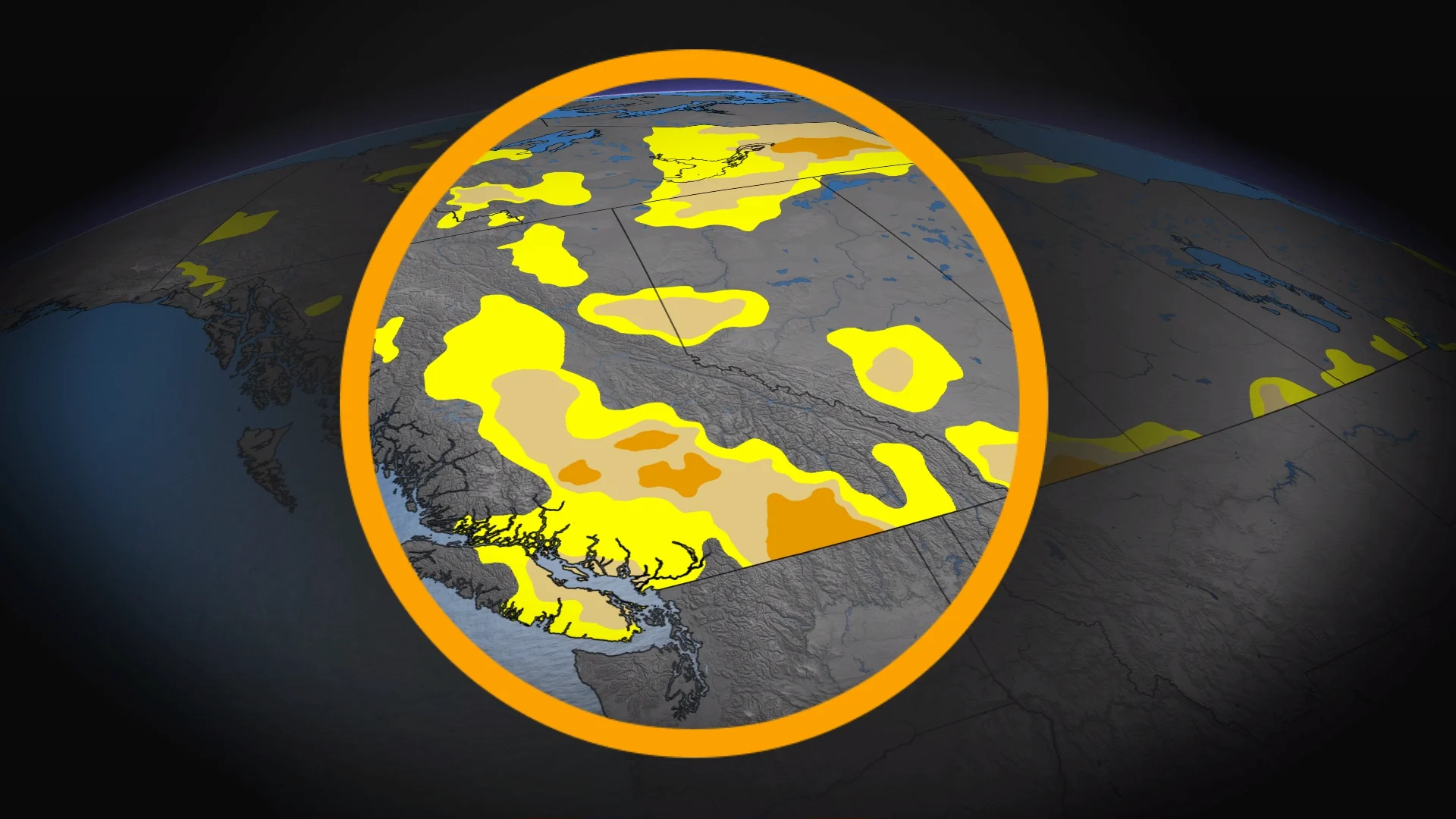
Abnormally dry conditions cover a quarter of Canada to start summer

25 per cent of Canada went into June experiencing abnormally dry or drought conditions
Canada entered June with pockets of drought spread across the country, according to the latest update of the Canadian Drought Monitor.
Portions of British Columbia, southern Alberta, northern Quebec, and the Northwest Territories experienced the most impactful conditions, with an increased risk of wildfires as a result. The prolonged dryness is also impacting agricultural interests in the affected regions.
DON'T MISS: The wait is over: El Niño is officially here and it may make history
Drought slightly expands heading into June
The monthly update of the Canadian Drought Monitor found that 25 per cent of the country entered the month of June experiencing abnormally dry or full-on drought conditions.
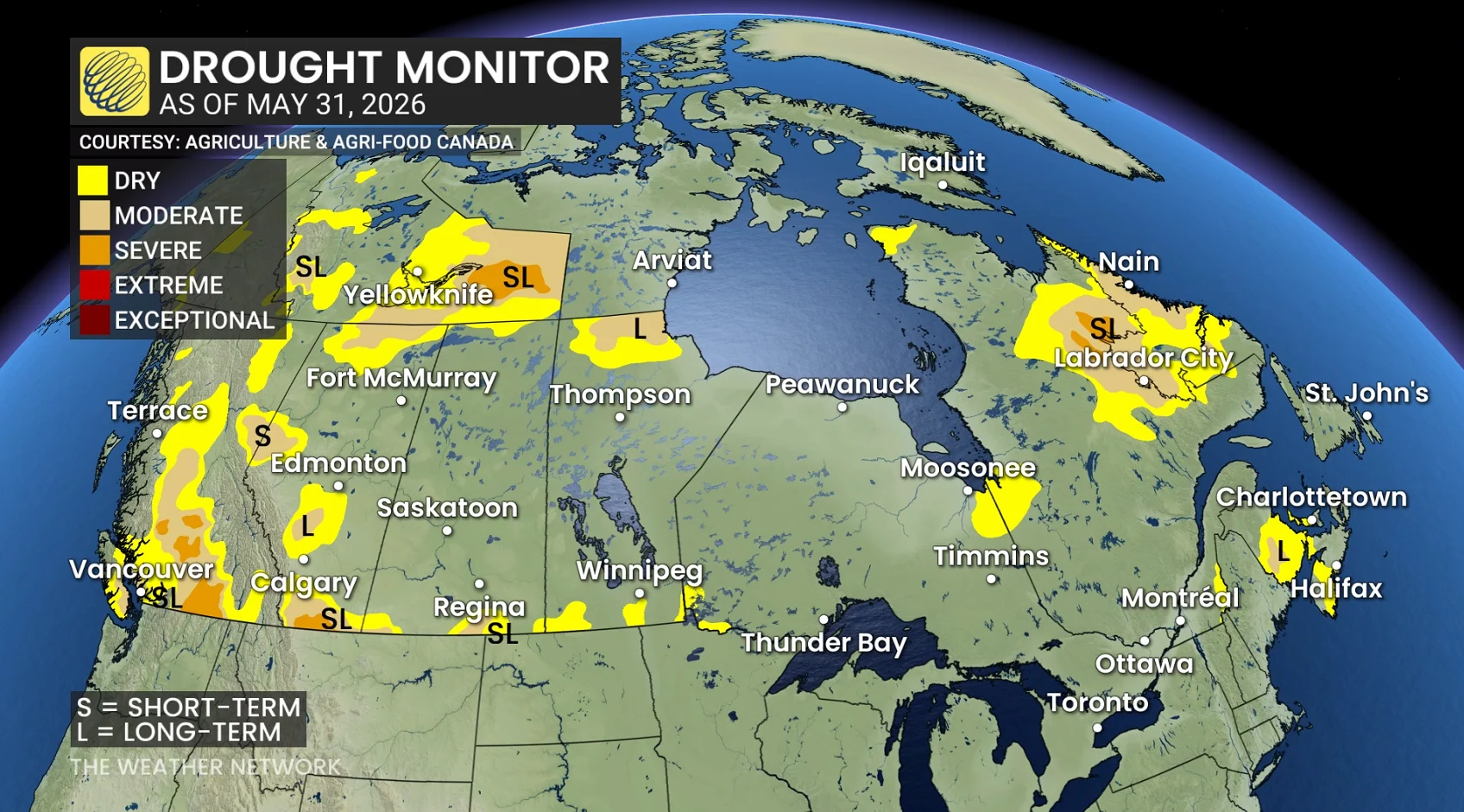
This is up slightly from the 21 per cent coverage we saw at the start of May.
A myriad of factors play into the severity of drought conditions, including precipitation, temperatures, snowpack, riverflows, and soil moisture trends.
Conditions worsen in British Columbia, steady on the Prairies
British Columbia witnessed the country’s most significant worsening compared to last month. The analysis on May 31 found that 40 per cent of B.C. was dry or in drought, including 71 per cent of the province’s agricultural lands.
Much of the B.C. Interior found itself mired in a moderate or severe drought to start June, with moderate drought also beginning to develop across the coast near Vancouver and Victoria.
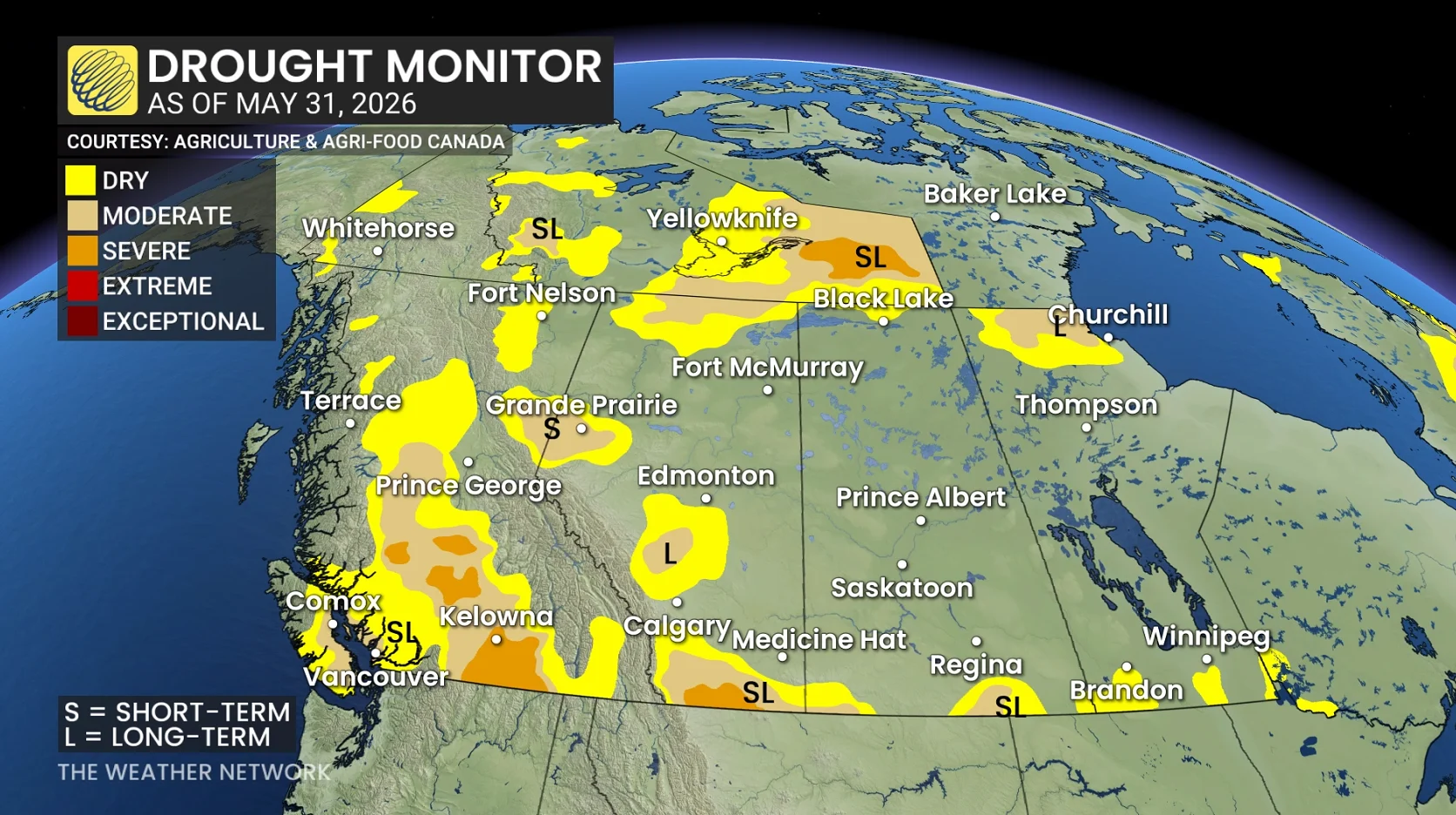
Dry conditions, warm temperatures, and a fast-melting snowpack contributed to B.C.’s worsening trend.
Farther east, conditions remained largely unchanged on the Prairies throughout May, with a severe drought continuing for a small swath of southern Alberta. The time period for this analysis took place before flooding rains swamped the Prairies during the second week of June.
Eastern half of Canada largely in good shape
We often see large swings in precipitation trends from one community to the next as thunderstorm season arrives in the eastern half of Canada.
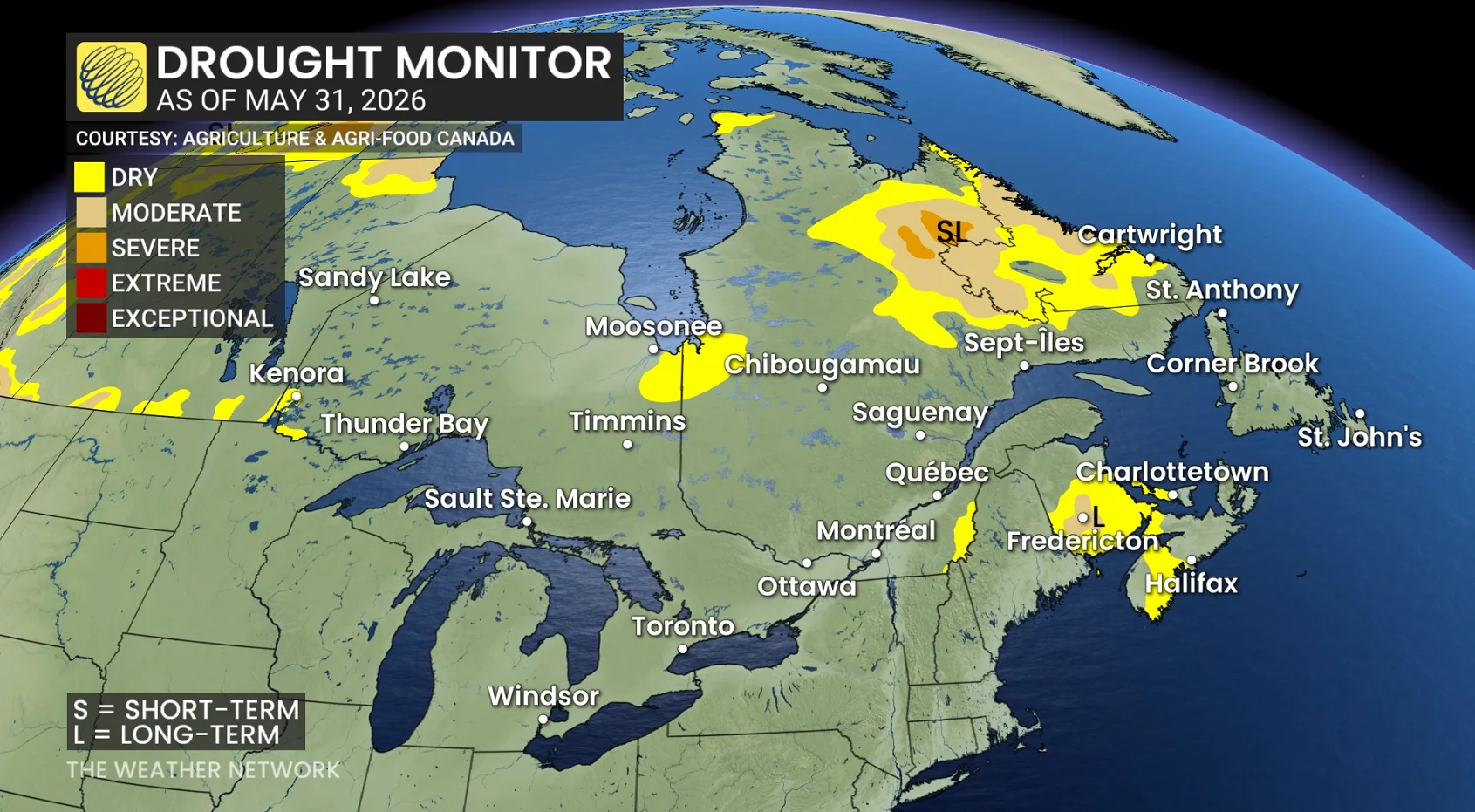
Most of Ontario and Quebec were in good shape heading into June despite below-normal precipitation throughout the region. The area of greatest concern remained northeastern Quebec and western Labrador, where moderate to severe drought conditions persisted.
The Maritimes were a bright spot in the update, with persistent rains bringing a significant reduction in abnormally dry and moderate drought throughout New Brunswick and Nova Scotia. A few of these areas saw more than 200 per cent of their normal precipitation in May.