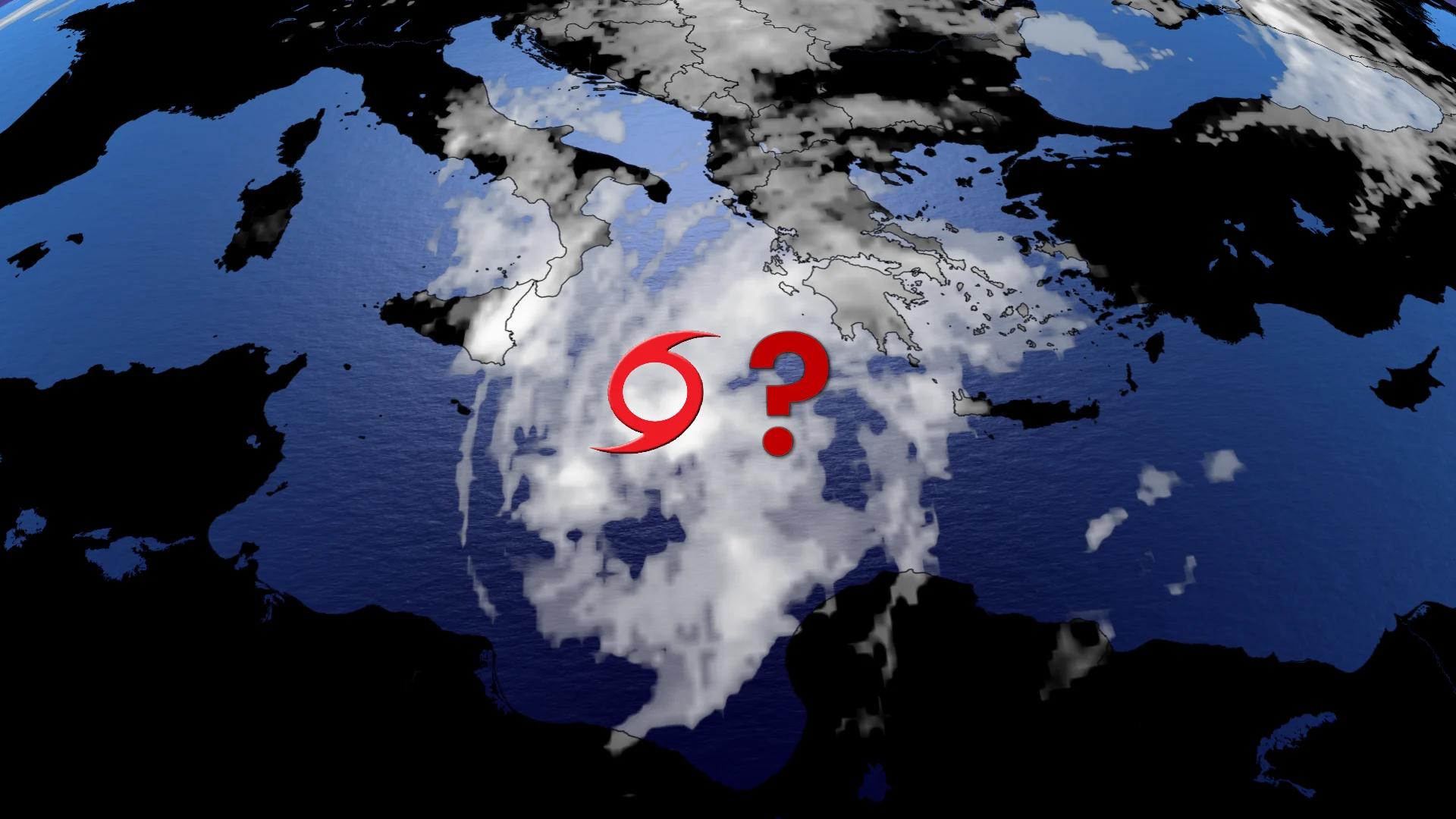
While the Atlantic basin runs dry, a rare 'medicane' is in the works
Some regions surrounding the Mediterranean Sea could be seeing a rare 'medicane' this week, a hurricane-like storm that could bring potent wind gusts, heavy rain and flooding
While forecasters in the Atlantic await the arrival of the season's first hurricane, the latest on the calendar on record, the Mediterranean Sea may soon welcome a rare "medicane."
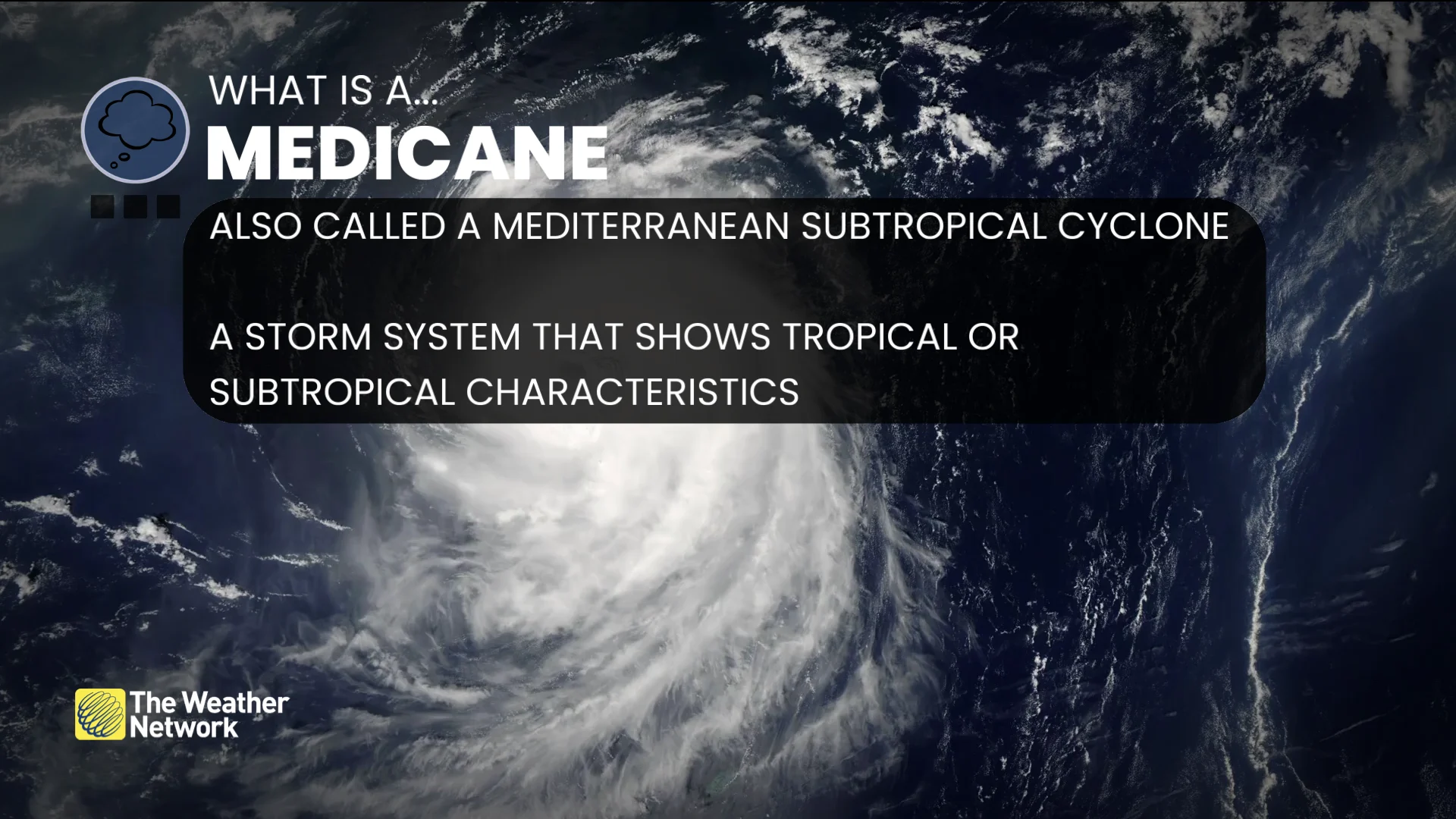
Hurricane-like storms sometimes form in the Mediterranean Sea, striking portions of Europe and Africa with damaging winds and destructive flooding.
So, combining hurricane and Mediterranean, the storms are given the moniker of medicane.
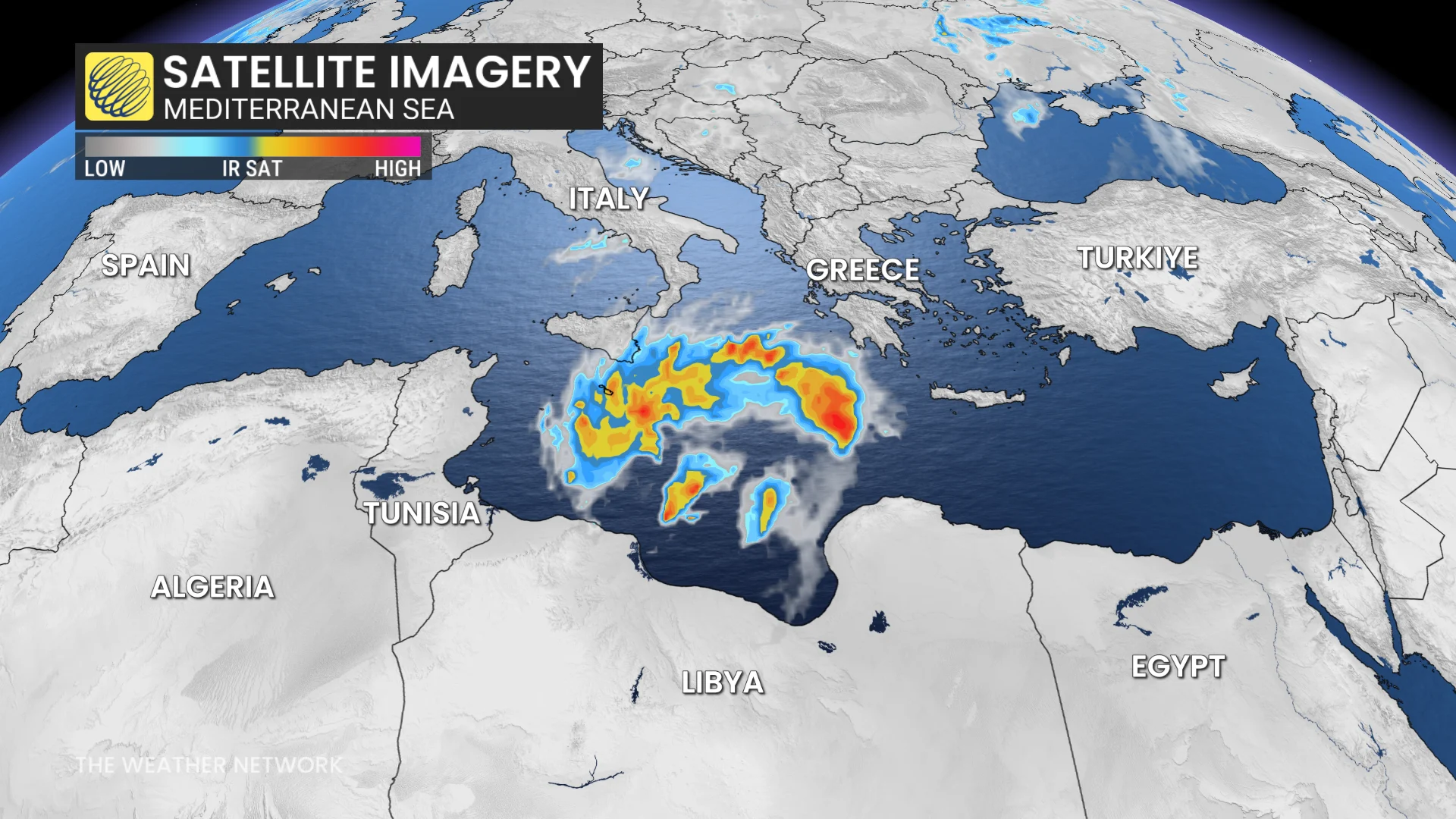
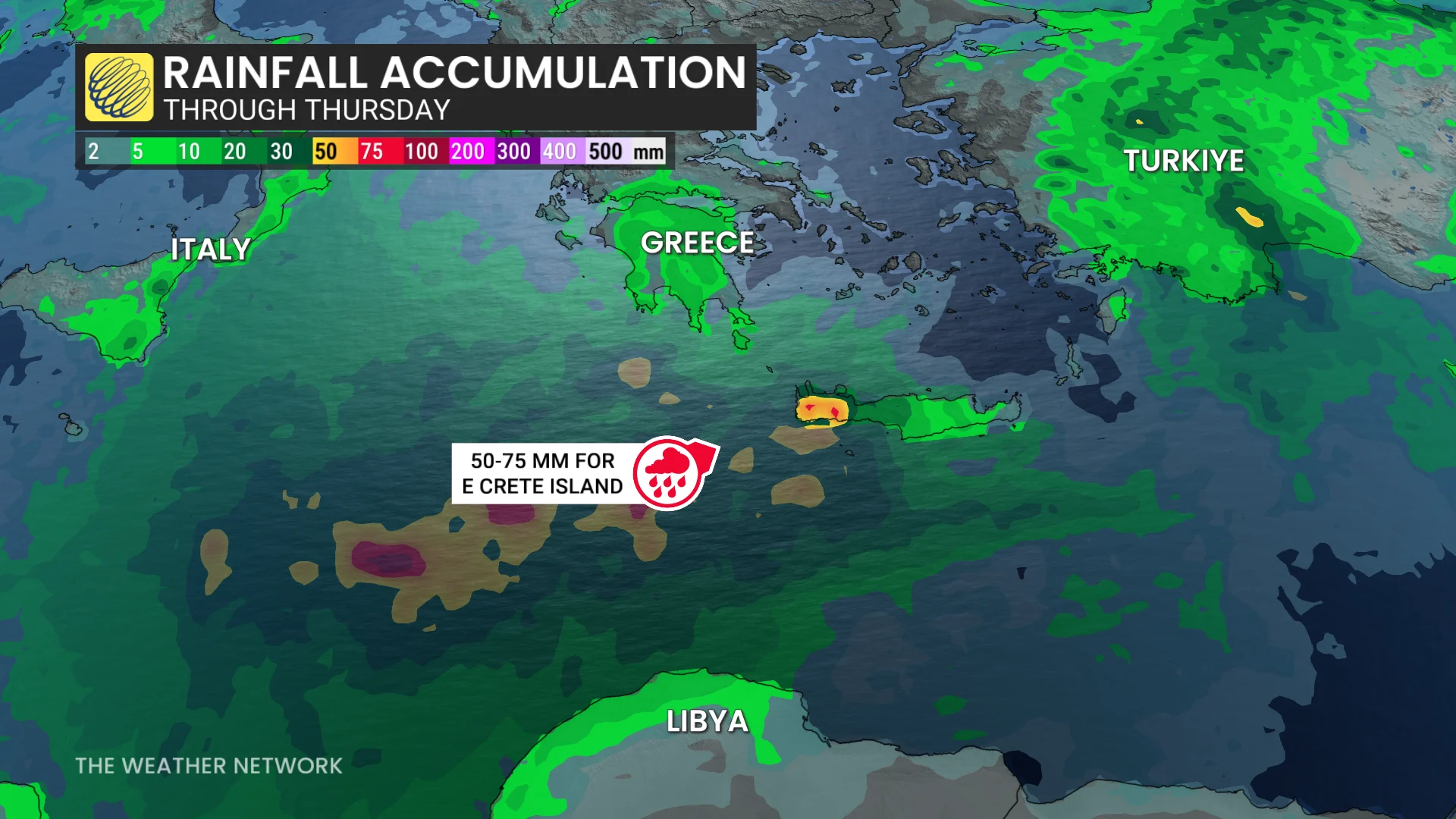
This week a medicane is likely to form just northeast of Tripoli, Libya, expected to develop sometime in the Tuesday to Thursday time frame.
Forecasters are keeping a close eye on area of low pressure that has tropical characteristics.
As of Monday, confidence is in the low-to-medium range (30 to 40 per cent chance) as the path is hard to predict.
Surrounding regions such as Sicily, Greece, northern Libya and northwestern Egypt should be aware of the storm developing.
Similar to a tropical storm, impacts could include strong winds (tropical storm-force winds) and inland flooding.
The eastern Mediterranean waters are running several degrees above average, giving the convective storm suitable fuel to grow.
The storm complex is forming in quite a small basin, so there is limited energy and time to fully develop. Thus, seeing a medicane is rare.
Medicanes form when storms are in clashing air masses, but if they are able to drift over warm air long enough, they can refuel off the warm water. As a result, it can switch to acting like a real hurricane as hurricanes get energy solely from heat rising off the warm ocean water.
In the past, notable medicanes include Cyclone (or Medicane) Ianos (Greece in September 2020), the strongest on record. It peaked as the equivalent of a Category 2 hurricane.
The other was Storm (or Medicane) Daniel (Libya in September 2023). It is the deadliest medicane ever, causing the collapse of the Derna and Abu Mansour dams--resulting in thousands of deaths.
With files from Amandeep Purewal, a meteorologist at The Weather Network, and Dennis Mersereau, a digital journalist and weather specialist at The Weather Network.