
U.S. heat wave to influence weather for millions across Canada

A shifting atmospheric pattern is pushing a significant U.S. heat wave into Canada this weekend
A robust area of high pressure is building over the central U.S., pushing heat northward into Canada this weekend and beyond.
The southern Prairies and Great Lakes region will feel the brunt, with above-normal temperatures spreading across Ontario by early next week. Meanwhile, cooler air persists in B.C. and Atlantic Canada, offering more seasonal weather.
DON'T MISS: A normal July brings Canada drought, downpours, and dizzying heat
By Sunday, parts of southern Saskatchewan and Manitoba, including Regina and Winnipeg, will approach 30°C, with humidex values nearing 40.
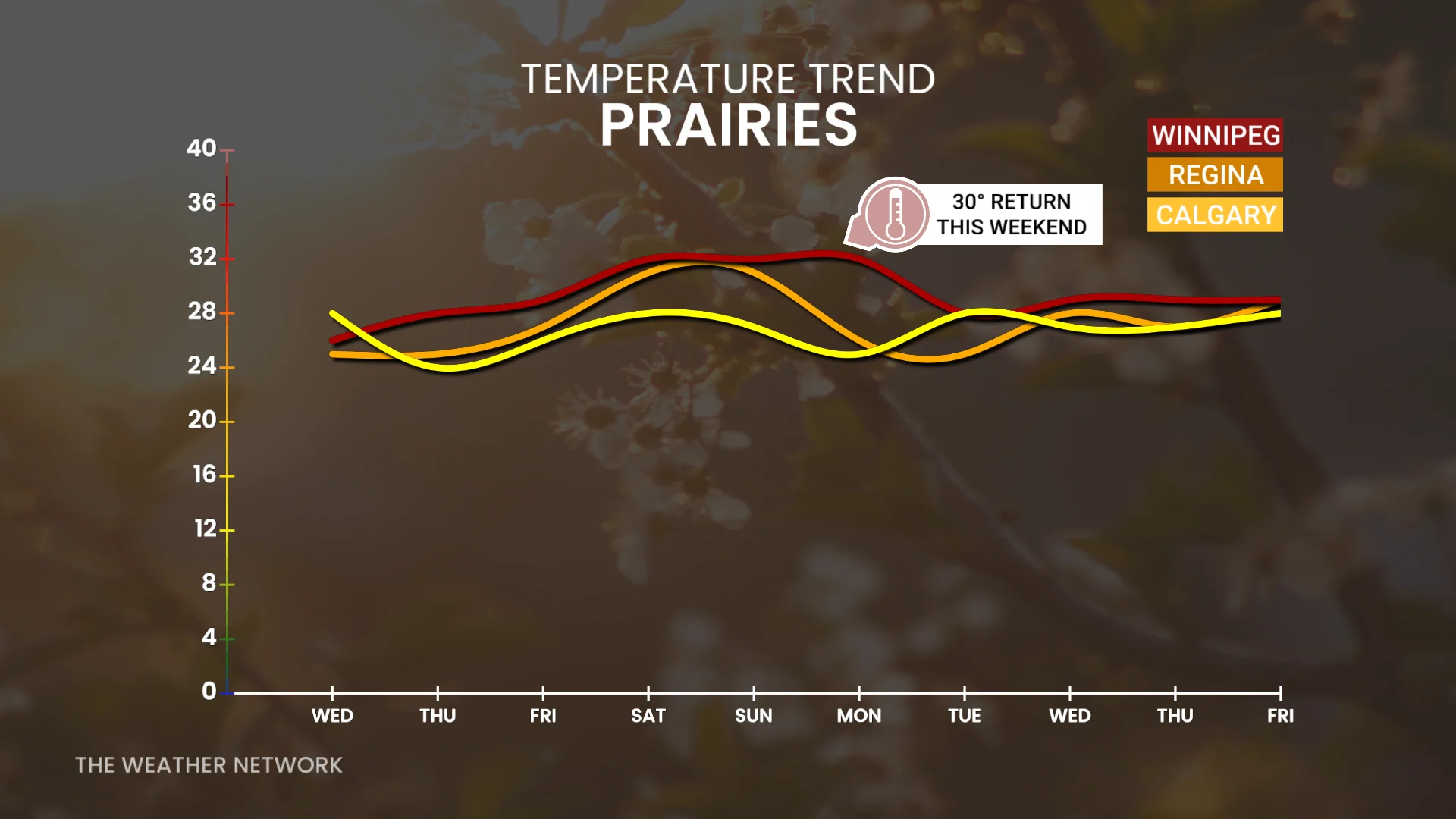
The heat will then spread toward northwestern Ontario.
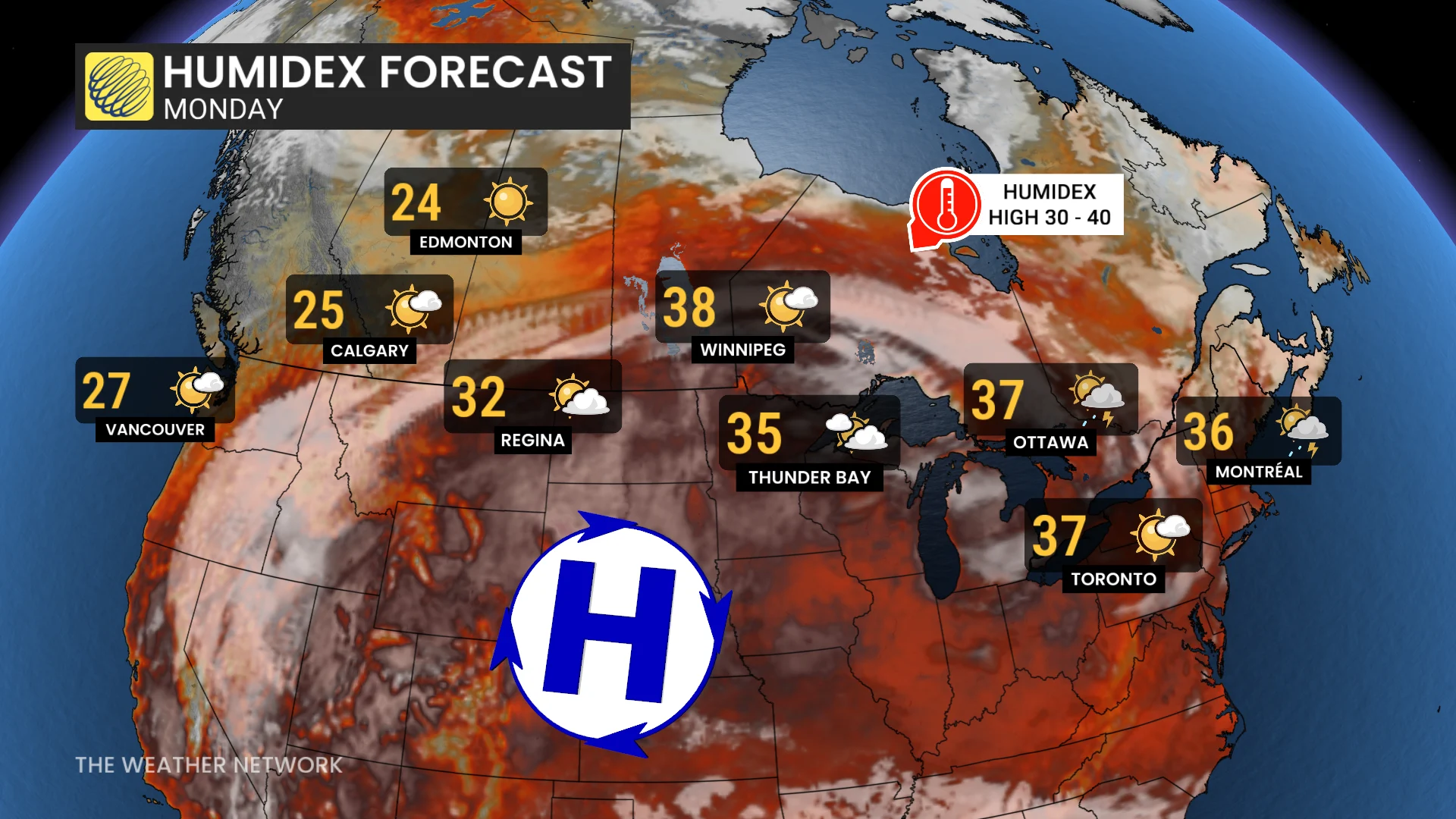
Major urban centres like Toronto, Windsor, and Ottawa should anticipate temperatures over 30°C by Monday, with humidity pushing "feels-like" temperatures close to 40. These values are about 5°C above seasonal norms.
Toronto Public Health reports 39 heat-related emergency room visits occurred between June 30 and July 4 during last week’s heat wave. The city was under an orange-level heat alert issued by Environment Canada at the time. The heat wave saw temperatures peak at 36°C, with a maximum humidex reading of 48.
RELATED: Extreme heat: Warning signs to watch for
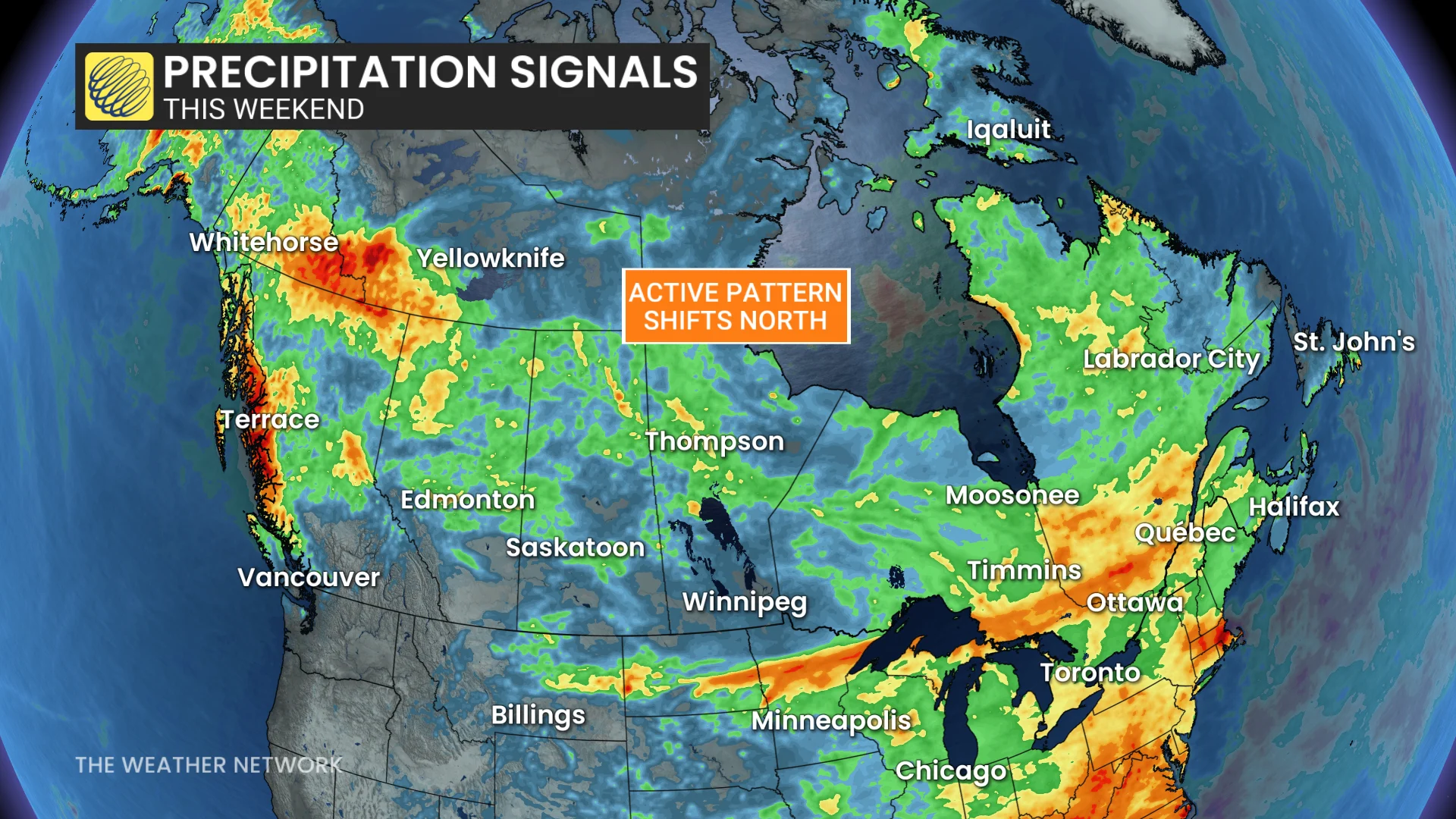
Thunderstorms and much-needed rainfall may develop across central and northern Prairies during the weekend, as an active weather pattern is expected around the edge of the high. However, dry, extreme heat in the U.S. Plains raises wildfire risks, and smoke could even drift thousands of kilometres into parts of Canada.
Looking ahead, next weekend may bring active weather to the Great Lakes region as cooler air follows the shifting high pressure system. A warmup is also anticipated for B.C. around this time.