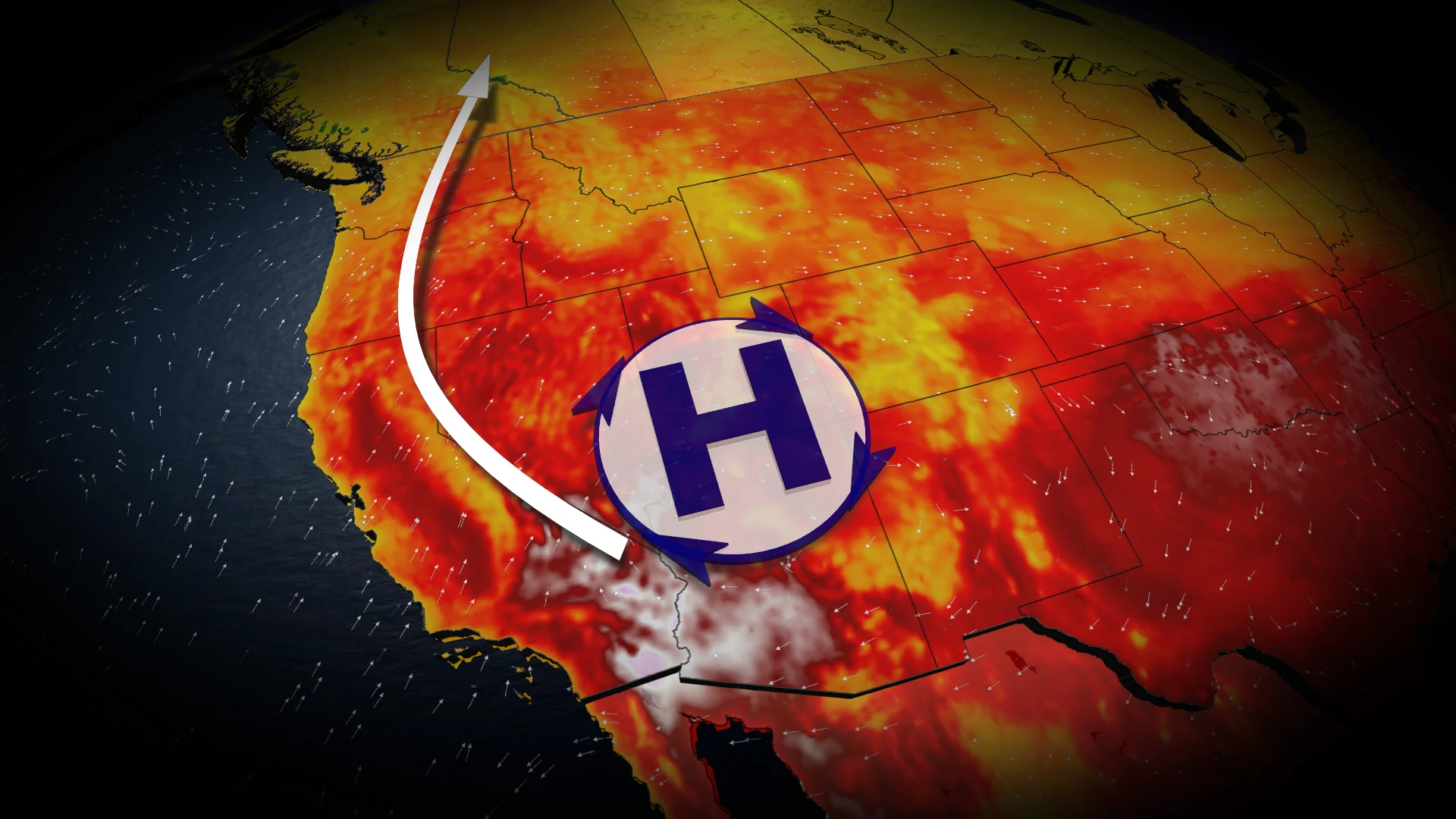
U.S. heat dome intensifies and strains major water resources

A strong U.S. heat dome is bringing hot, dry air to B.C., raising temperatures and worsening wildfire conditions
The U.S. heat dome is rebuilding, with some heat reaching western Canada, but impacts remaining intense across the U.S.
RELATED: Shifting heat dome brings dry conditions and fire risks to B.C.
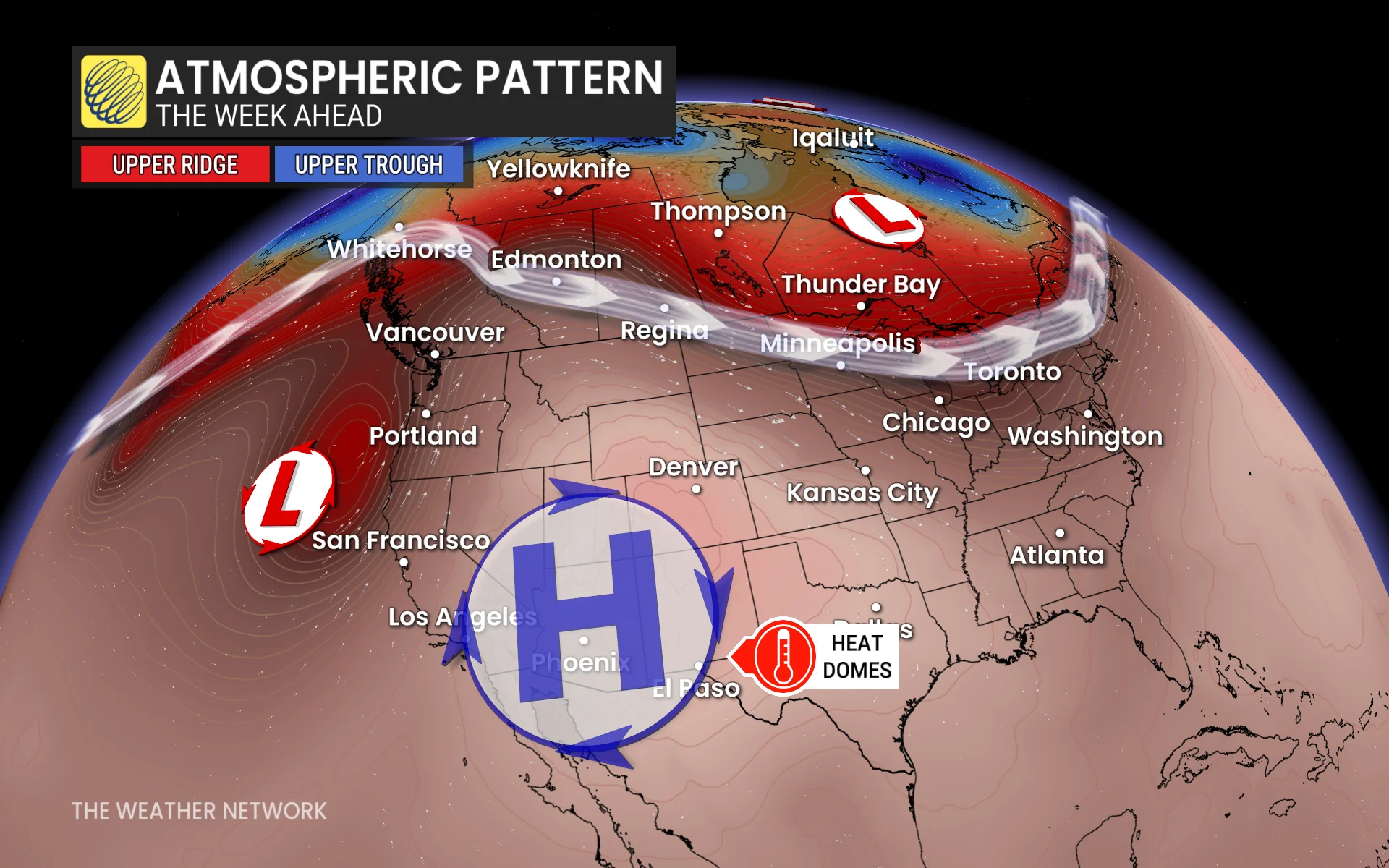
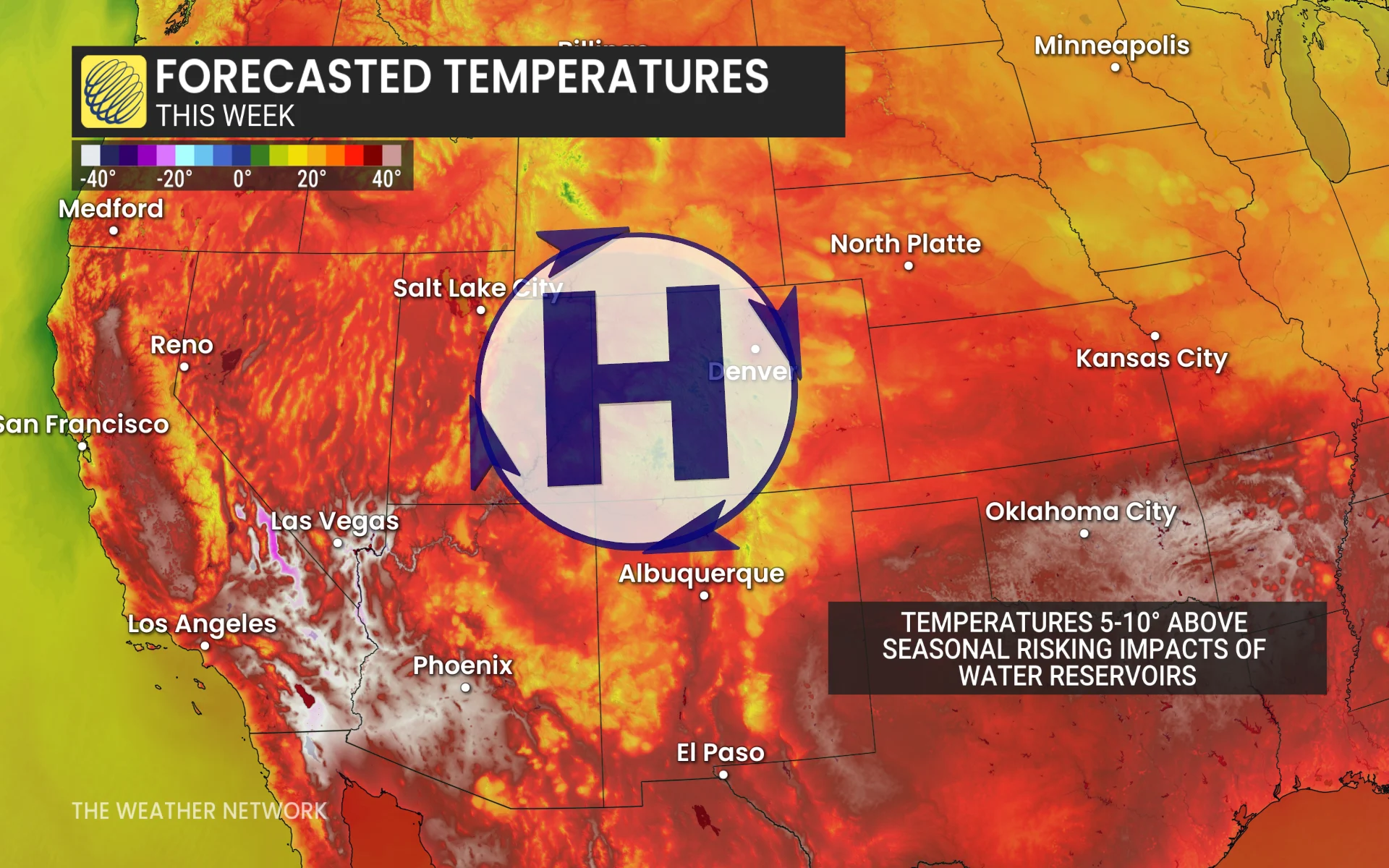
Although not as severe as earlier this summer, it is still aggravating drought conditions, stressing water resources, and pushing reservoirs like Lake Powell and Lake Mead to record lows. As of Monday, Lake Powell’s levels dropped to 1,072.84 m, while Lake Mead fell to 316.93 m, impacting hydroelectric output at the Hoover and Glen Canyon dams.
Canadian impacts
While the heat extremes predominantly affect the U.S., parts of British Columbia's Interior will also experience rising temperatures, increasing by 5–10°C above seasonal normals, especially in valley regions.
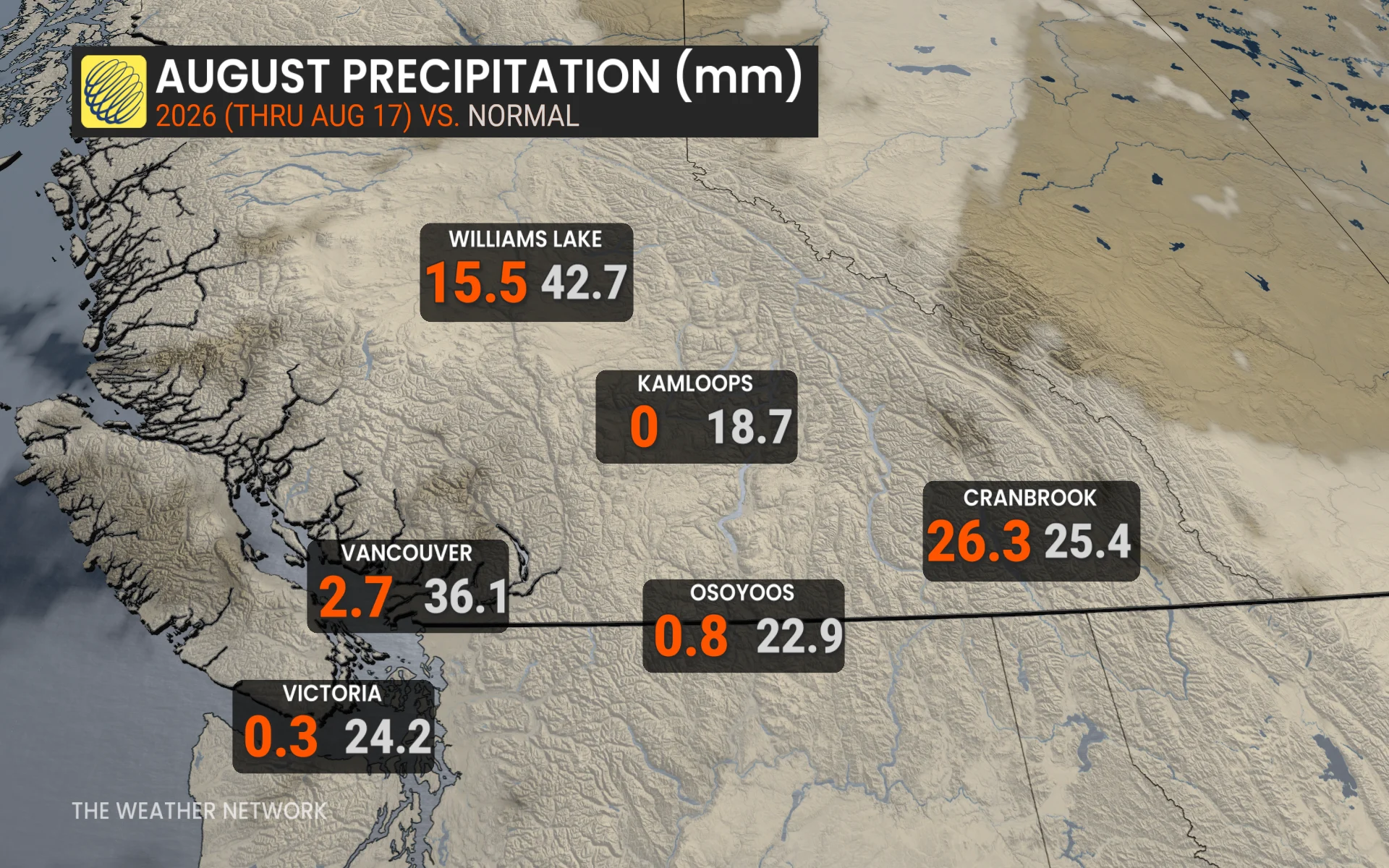
These elevated temperatures could exacerbate already challenging wildfire conditions, following a July that concluded with severe drought across much of the Interior.
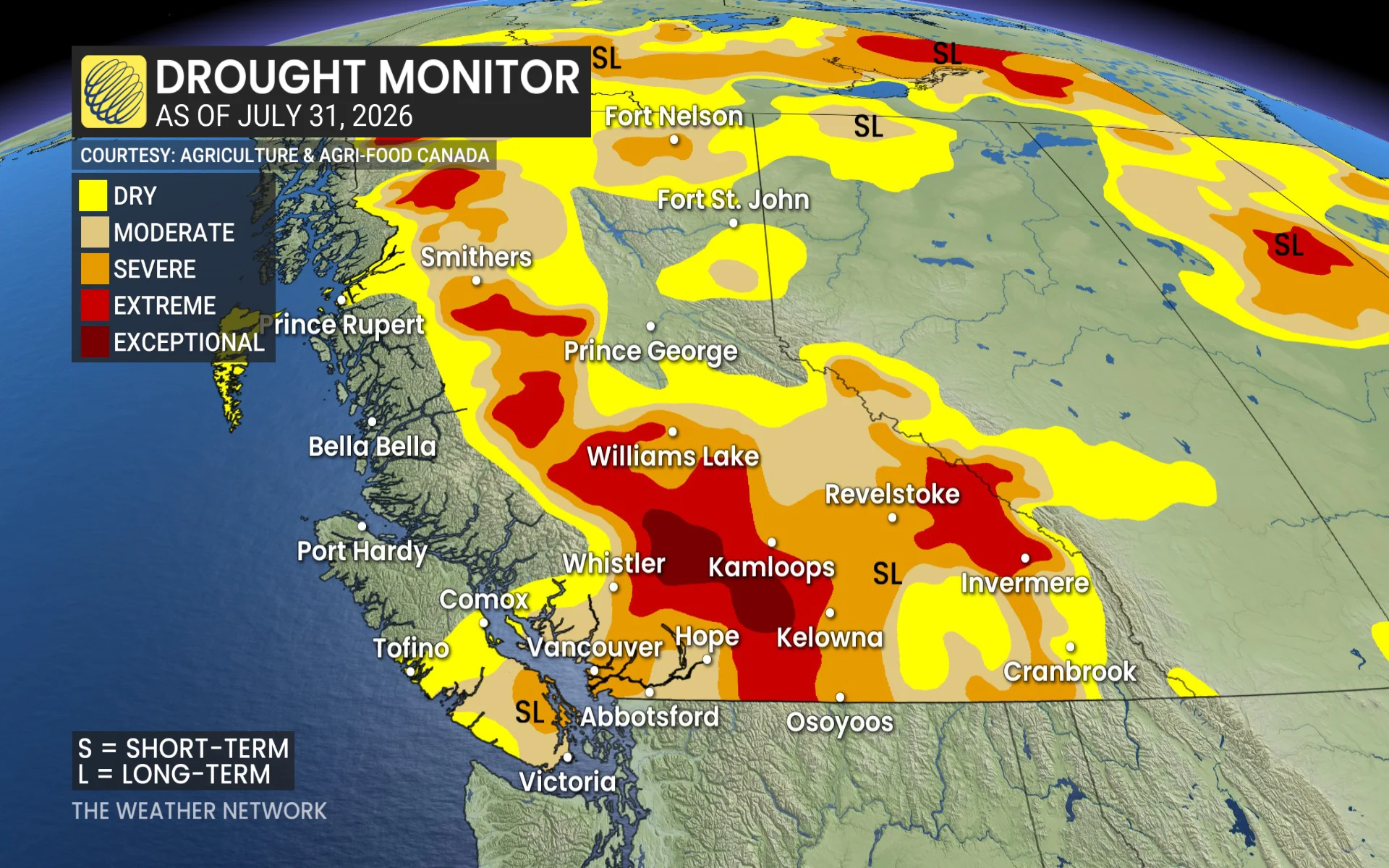
Relief is on the horizon. A trough is forecast to move through the region by Saturday, bringing much-needed rainfall to parched and fire-stricken areas.
DON'T MISS: The Weather Network's hub for all wildfire information in Canada
Depending on its development, these rains could help ease wildfire threats and provide some moisture to areas suffering from extended dryness.
Stay up to date with any evolving weather advisories.