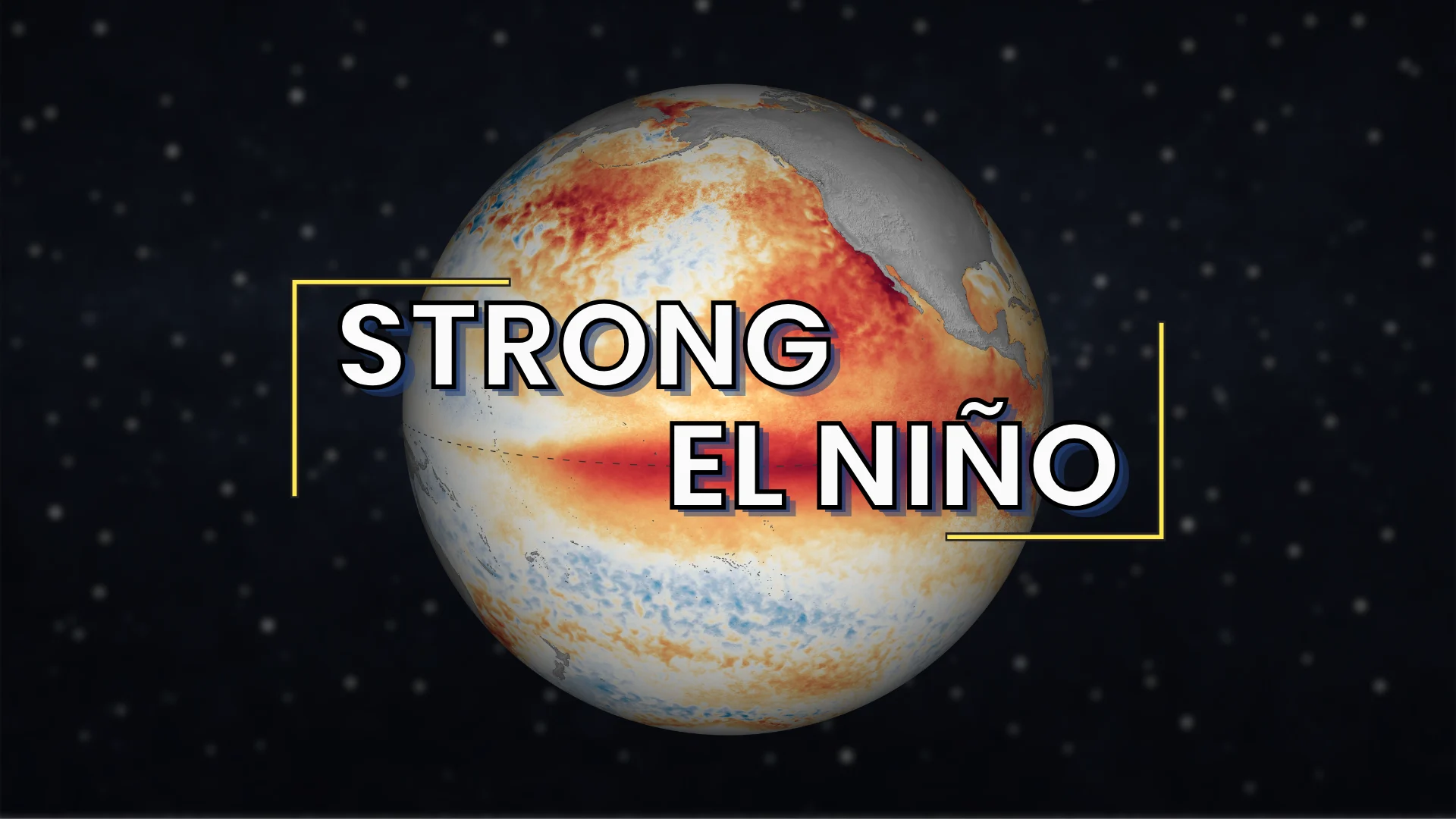
Latest forecast warns a very strong El Niño could emerge soon

The latest forecast increased the odds of a strong or very strong El Niño later this year
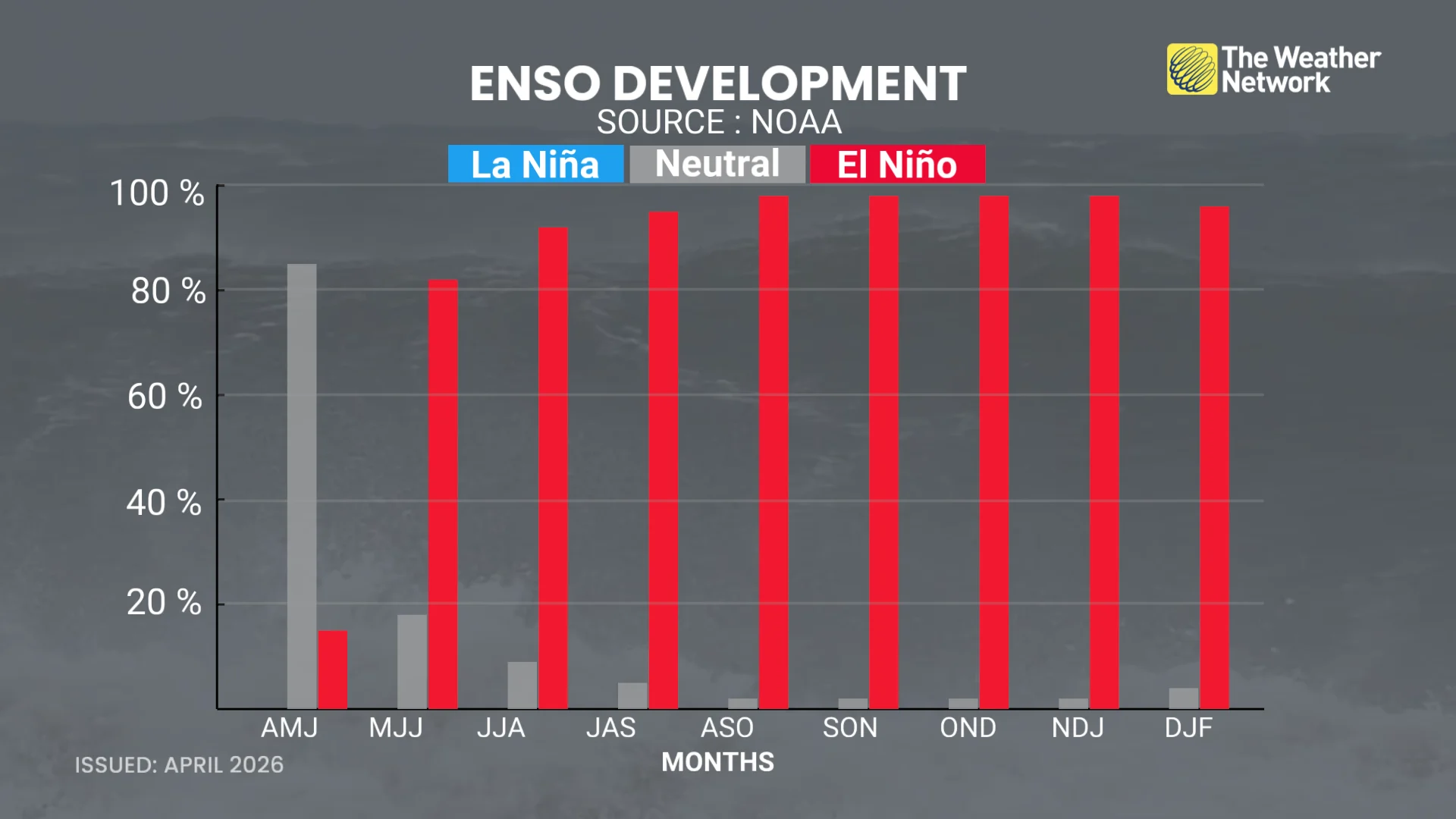
Experts continue to see near-certain odds of an imminent El Niño beginning this summer and continuing through at least the end of the year.
Pacific water temperatures are already running a touch above seasonal, and a reserve of very warm water just beneath the surface almost guarantees that El Niño will develop soon.
DON’T MISS: El Niño may split Canada’s summer in two
All signs point toward El Niño arriving soon
The U.S. Climate Prediction Center (CPC) detailed the setup in its monthly outlook released on Thursday.
“El Niño is likely to emerge soon,” the agency said, adding that the warmer-than-normal Pacific pattern is likely to persist through the end of the year.
Average sea surface temperatures are likely to increase soon as very warm waters lurk just a few hundred metres beneath the surface.
RELATED: Confidence increasing in a very strong El Niño by this summer
Waters down to a depth of 300 metres are averaging more than 2.0°C above normal for this time of year. This rich reserve of underwater warmth will help reinforce toasty temperatures at the surface.
Much like a fever in the human body, the atmosphere can ‘feel’ these warmer waters and respond with altered weather patterns around the globe, the odds of which increase with greater ocean temperature anomalies.
How strong will this El Niño grow?
While some computer models insist that we’re on the cusp of a very strong and potentially impactful El Niño event, the experts urge caution.

SEE ALSO: Experts are changing how we measure El Niño and La Niña
“While confidence in the occurrence of El Niño has increased since last month, there is still substantial uncertainty in the peak strength of El Niño,” the CPC said in its outlook.
Here’s an example of that uncertainty.
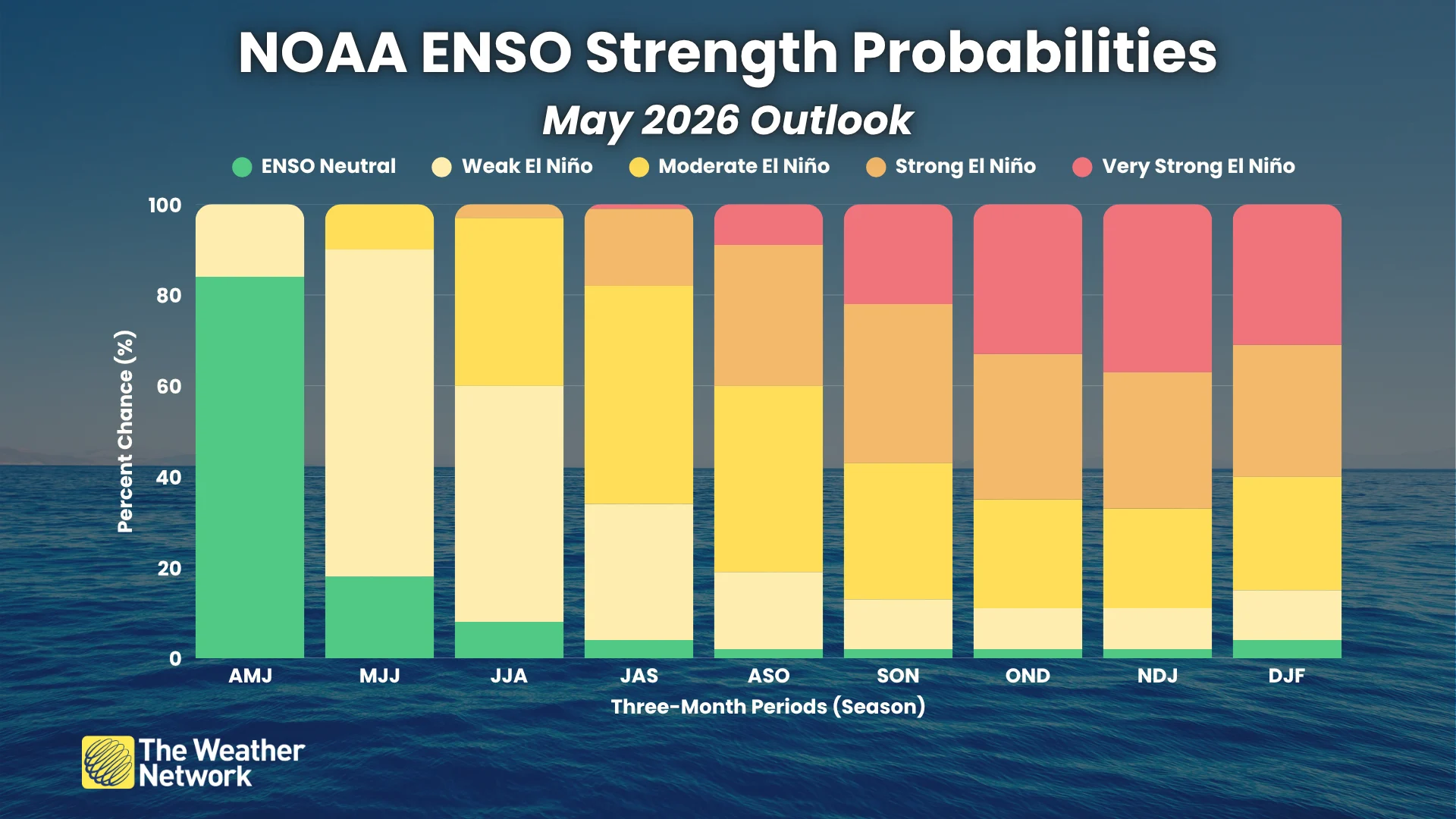
The CPC predicts the odds of an El Niño or La Niña’s strength during three-month periods within each outlook. Forecasters expect similar odds of a moderate (22%), strong (30%), or very strong (37%) El Niño between November and January.
Our emerging pattern in the Pacific Ocean will have far-reaching effects around the world, including for Canada’s summer and the upcoming Atlantic hurricane season.