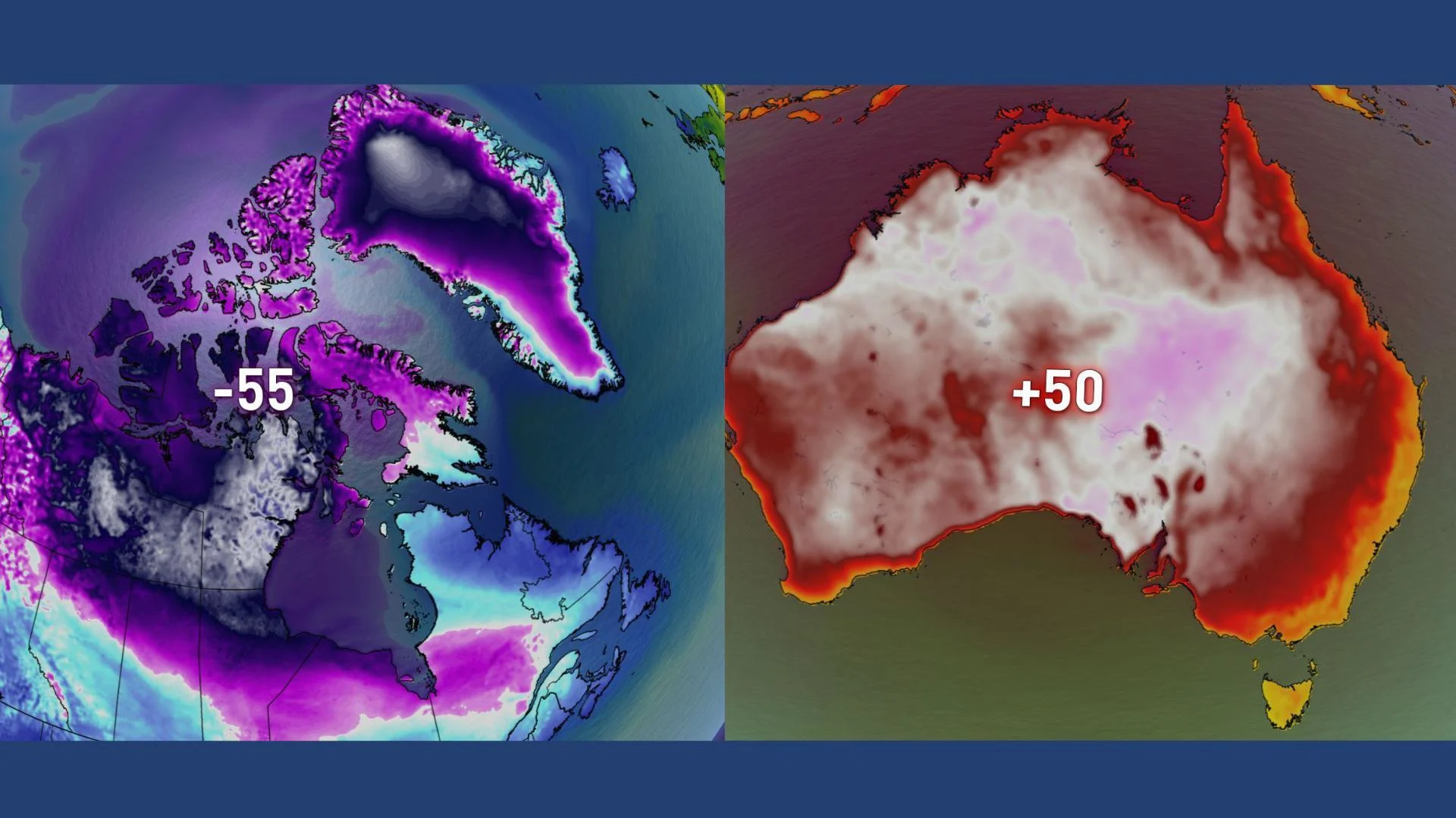
Extreme heat vs. biting wind chill in 100-degree temperature split
While northern Canada sits in the deep freeze, Australia is poised to set multiple records for highest-ever recorded temperatures. And, as you might imagine, the difference between the two will be massive.
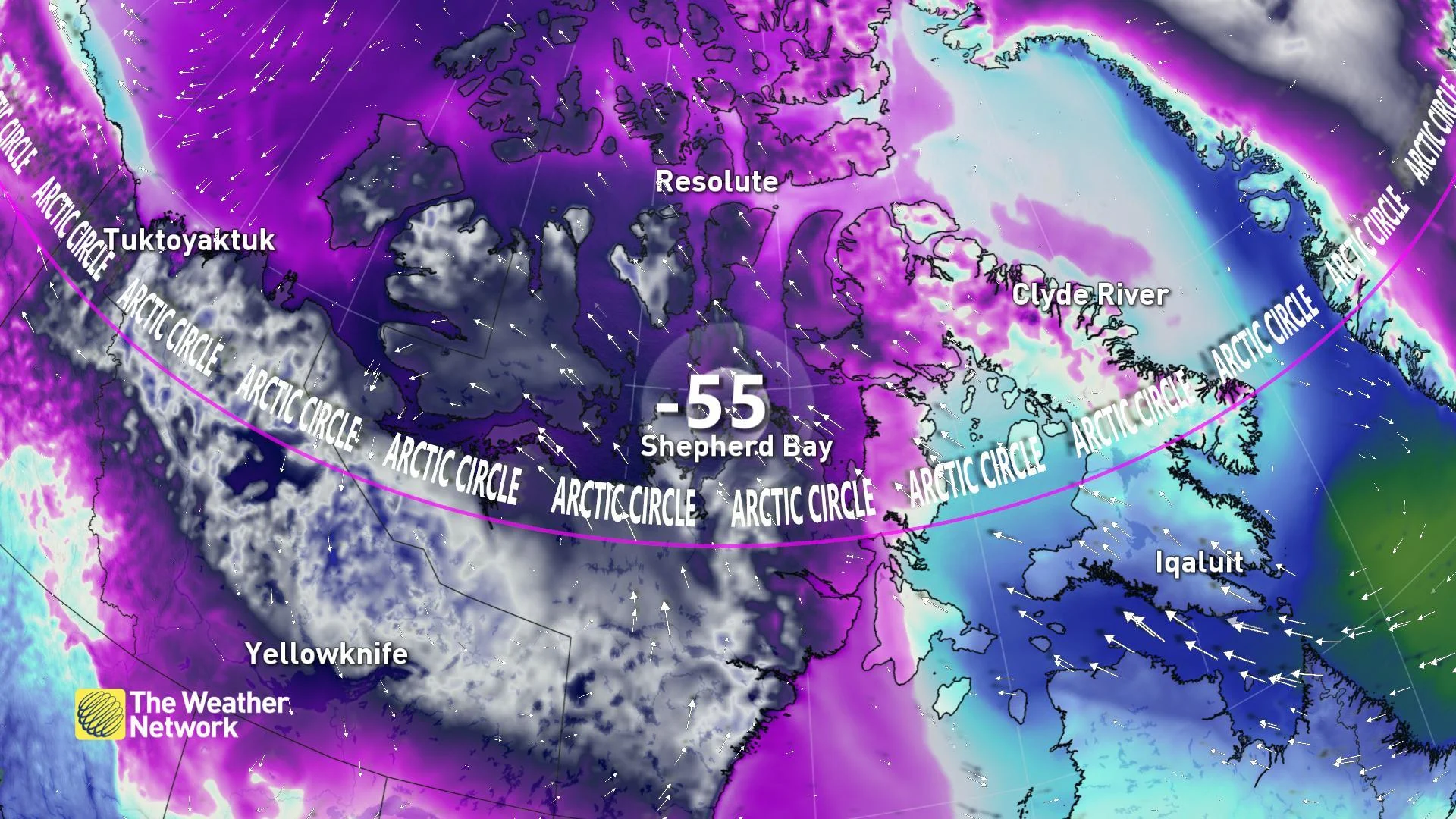
The first spot in the country to reach -40ºC this year, Shepherd Bay, Nunavut, is still one of the iciest places in the country. Wind chill values early this week hovered around a frigid -55 at the inlet.
A world away, Australia is facing a historic heatwave this week that may see all-time temperature records fall not just once, but several days in a row, as temperatures near 50ºC.
Australia's Bureau of Meteorology (BOM) issued a release on Tuesday, cautioning that "large areas of inland South Australia, Victoria and New South Wales" were expected to see temperatures in the mid-to-high 40s this week.
"The existing record for the highest maximum temperature averaged over Australia for a day is 40.3ºC. That was set back in January 2013," BOM climatologist Dr. Blair Trewin said in an interview released by the agency. "Current indications are that we'll be at least a degree above that on Wednesday and Thursday."
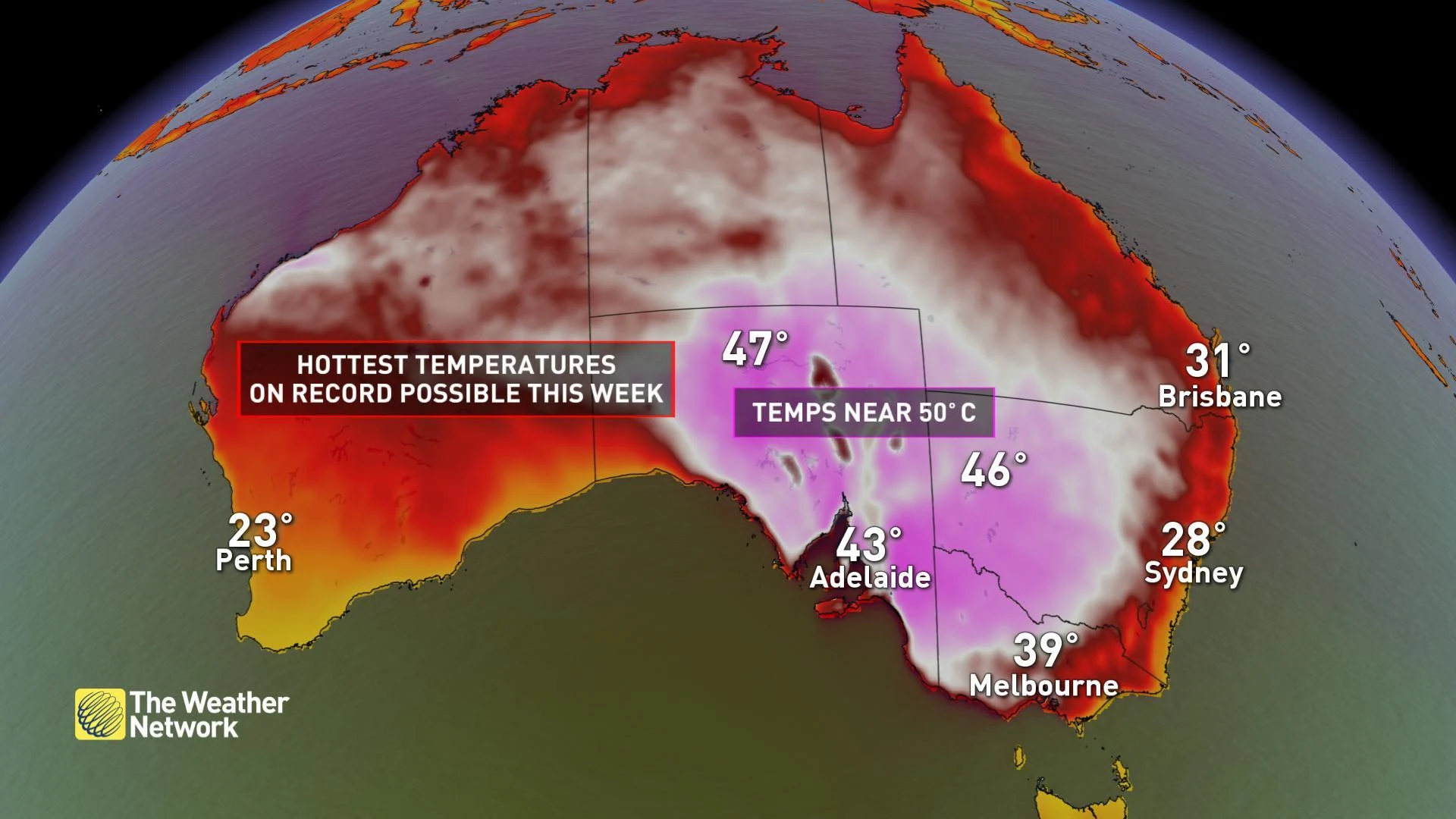
Blair called it a "really extreme event on a nationwide perspective," adding that, in addition to the overall average record, all-time and December records are expected at individual sites across much of the region.
The exceptional heat comes courtesy of an extremely hot, dry air mass that's developed over the northwestern part of the continent and is now moving east.
Blair points to a strong positive Indian Ocean Dipole (IOD)as being the primary driver of Australia's weather this year. The IOD is one of Earth's ocean-atmosphere interaction cycles, like the North Atlantic Oscillation or the infamous El Niño that we sometimes talk about with Canada's weather.
A positive IOD allows cold water to 'pile up' off the northwestern coast of Australia, which in turn limits the amount of tropical moisture that flows onto the continent. Scanty soil moisture across the country -- Blair says the year is on track to be the driest on record for Australia -- mean that there's very little moisture added to the air each day to help moderate daytime temperatures.
"There's not a lot of cloud in the north of Australia, not a lot of rainfall," BOM meteorologist Pual Lainio told ABC News. "Until we get a lot of rain -- the monsoonal type effects -- then we've got a pool of dry, hot air across the north of the continent."
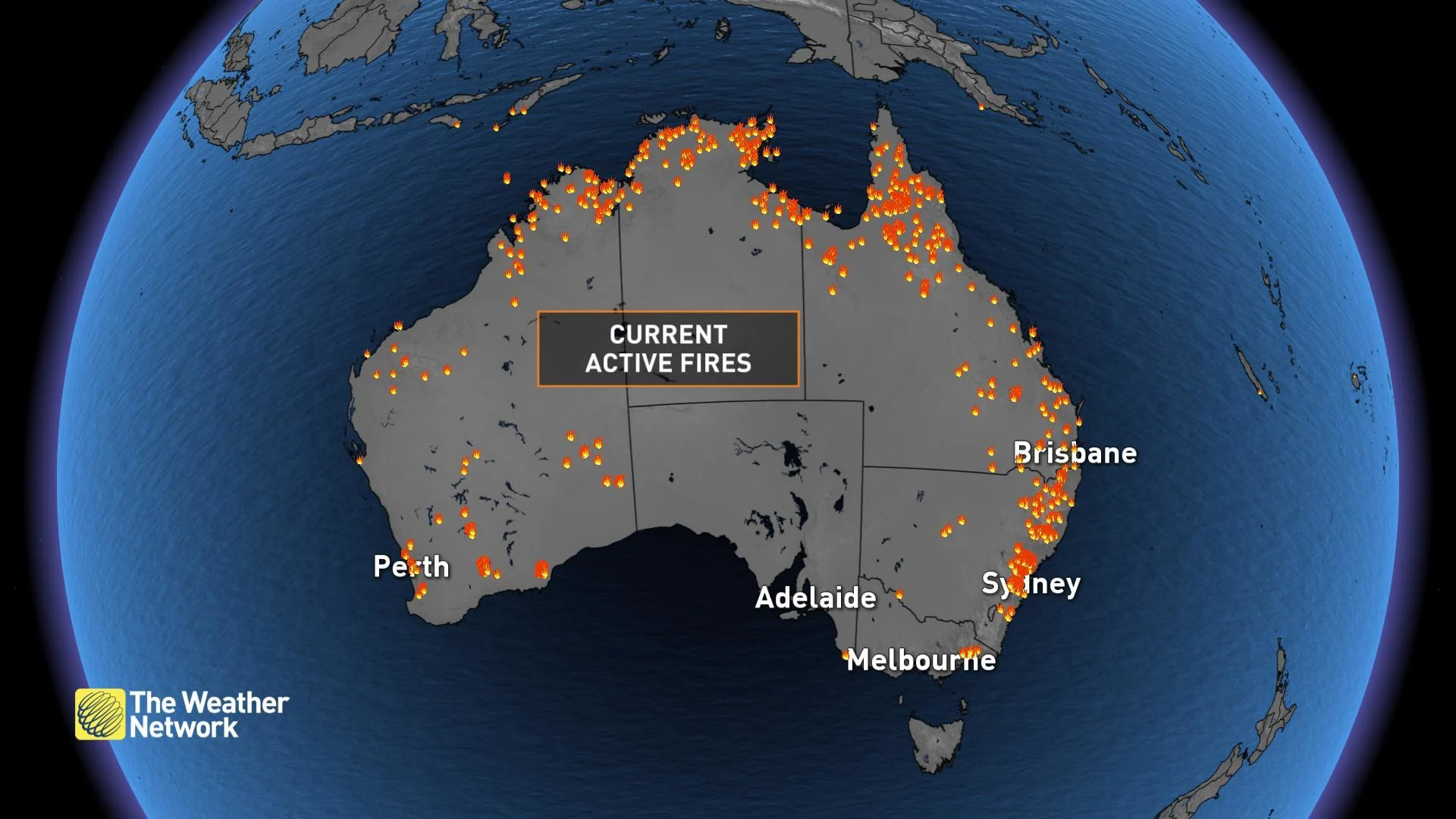
That dry, hot air is no help wildfires raging across the country. Strong wind gusts moving east with the core of the heat will raise an already extremely high fire danger through the week.
Sources: Bureau of Meteorology | ABC News |