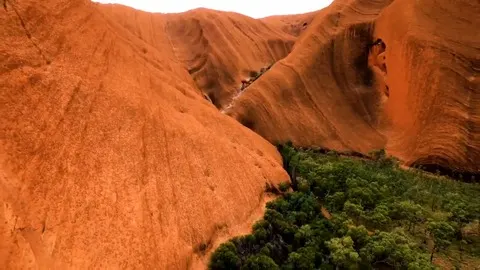
Climbers make final hike atop Australia's Uluru as ban comes into effect

Decision to shut down the popular sandstone monolith has generated public backlash from Australians and tourists from around the world
Australians and tourists are expressing outrage over a ban to permanently close off access to Uluru, which came into effect Friday afternoon, local time.
Climbing the iconic sandstone monolith had been a decades-long tradition for millions of people, but in 2017, a ban to permanently shut down the site was unanimously passed by members of the Uluru-Kata Tjuta National Park Board of Management.
The decision was not a welcomed one, as it has polarized the Indigenous community in Australia and angered tourists from other countries for months prior to the shutdown.
Those who are caught trespassing on Uluru are now subject to a C$5,600 fine.
SEE ALSO: Violent winds leave worker dangling from Edmonton skyscraper
A new sign notifying hikers of the closure was installed at the base of the rock, informing them that the climb was now permanently closed -- nearly 34 years since the Anangu people — the original owners of the land — were handed back the deed to Uluru.
The government was given a 99-year lease by the traditional owners, on the condition that the park is jointly run by a board containing a majority of Anangu members.
DISAPPOINTMENT EXPRESSED OVER BAN
Minister for Indigenous Australians Ken Wyatt told The Associated Press he was disappointed by the final rush to climb the rock, which is renowned for its changing colours with the seasons and the time of day.
"It would be equivalent to having a rush of people climbing over the Australian War Memorial, if I can be so brazen in that regard, because sacred objects, community by community, are absolutely important in the story of that nation of people," said Wyatt, who is Indigenous.
Climbing Uluru was often cancelled at short notice due to high winds or heat and reaching the rock doesn't ensure the summit is attainable.
Since 1948, at least 37 climbers have died -- mostly from medical events --the year the first road was established to attract tourists. Every death causes the Anangu anguish.
The divisiveness of opinions has been greatly debated in recent months as thousands of visitors gathered on one of Australia's most famous landmarks to make the final trek to the top. Tourists were reported to have been illegally camping on roadsides for kilometres because local sites and accommodations were booked.
Sources: news.com.au |The Associated Press