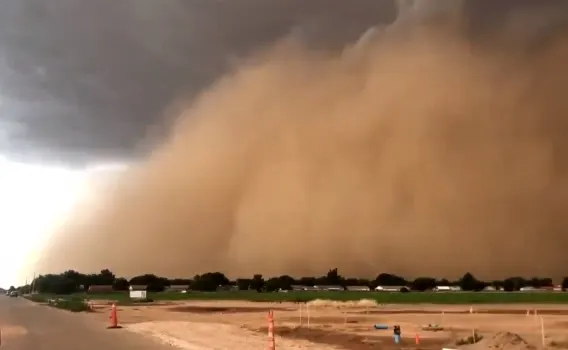
Towns engulfed as giant dust clouds mushroom across Texas
Walls of dust made for some stunning pictures in parts of West Texas on Wednesday as several haboobs engulfed residents in instant night.
A line of strong thunderstorms stretching from the Texas Panhandle south toward the Mexican border fueled the imposing clouds on Wednesday evening, including one that rolled through Lubbock and blotted out the sun.
Summer revealed! Visit our Complete Guide to Summer 2019 for an in-depth look at the Summer Forecast, tips to plan for it and much more
WATCH BELOW: DAY TURNS TO NIGHT IN LUBBOCK
The driving force behind a haboob is typically an atmospheric gravity or density wave, which gives the cloud its signature wall-of-dust shape. The cold burst of air that makes up a thunderstorm outflow is a frequent culprit, but haboobs can also form along other atmospheric boundaries like fronts and drylines.
The dust wall can be 1000 metres high or higher, and 100 kilometers wide, travelling up to 100 km/h. The phenomena can last for several hours, and dump significant quantities of dust and dirt over an area, though once the leading edge of the haboob passes over a location, visibility quickly improves.
An impressive haboob was also reported further south, near Big Spring, Texas, thanks to the same cluster of thunderstorms.
SEE ALSO: Australia looks like Mars as dust storm blots out sun
While haboobs are fairly common in the summer in the Desert Southwest, they're not unheard of in Texas. The term haboob caused a dust-up (pun intended) in the Lubbock area a few years ago when locals were dismayed by the National Weather Service's use of a "foreign term". The word stems from the Arabic word habb, which means wind.