Flash floods target desert cities as monthslong deluge continues

Some areas have seen more than four times their normal rainfall over the past couple of months
Torrential downpours and severe thunderstorms have brought widespread flash flooding to typically dry parts of the U.S. Southwest in recent weeks.
Additional heavy rain is on the way as a Pineapple Express sweeps into the region, threatening potentially record-setting floods in some areas.
DON'T MISS: What’s a Pineapple Express? Diving into this robust atmospheric river
Desert already soaked by weeks of heavy rains
Severe thunderstorms and heavy rainfall battered the arid U.S. Southwest throughout October. Alongside flash flooding, residents had to deal with hail larger than 7 cm in diameter, as well as several confirmed tornadoes.
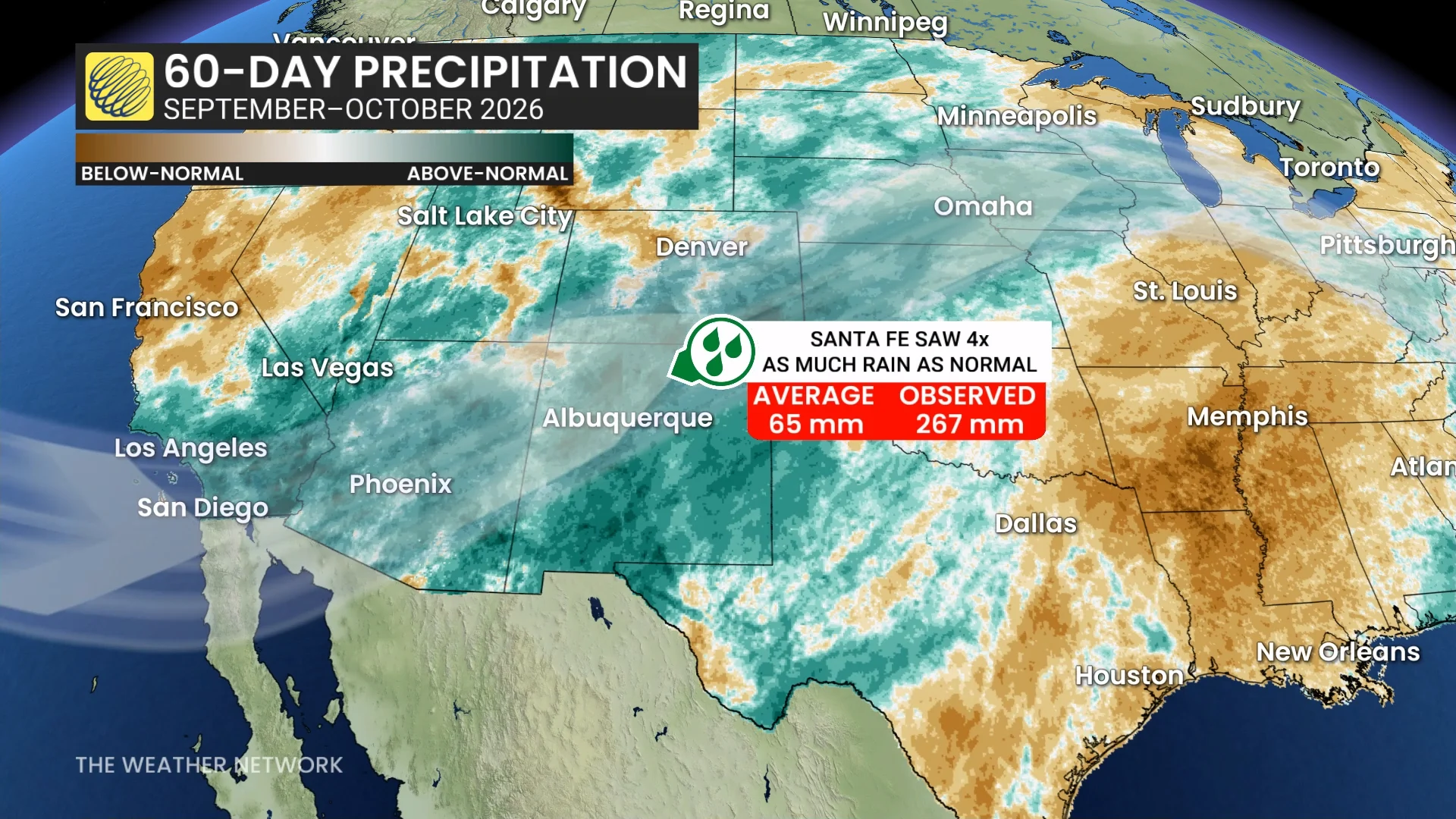
Parts of the region have seen 200-300 per cent of their normal rainfall over the past 60 days. This was the wettest-ever first two months of autumn on record in the cities of Flagstaff, Albuquerque, and Santa Fe.
A typical September and October brings Santa Fe, New Mexico, around 65 mm of rainfall. The city had recorded more than 265 mm of rain during the same period this year.
Pineapple Express moves in this week
Residents are bracing for another round of very heavy rainfall as a potent atmospheric river pushes into the region.
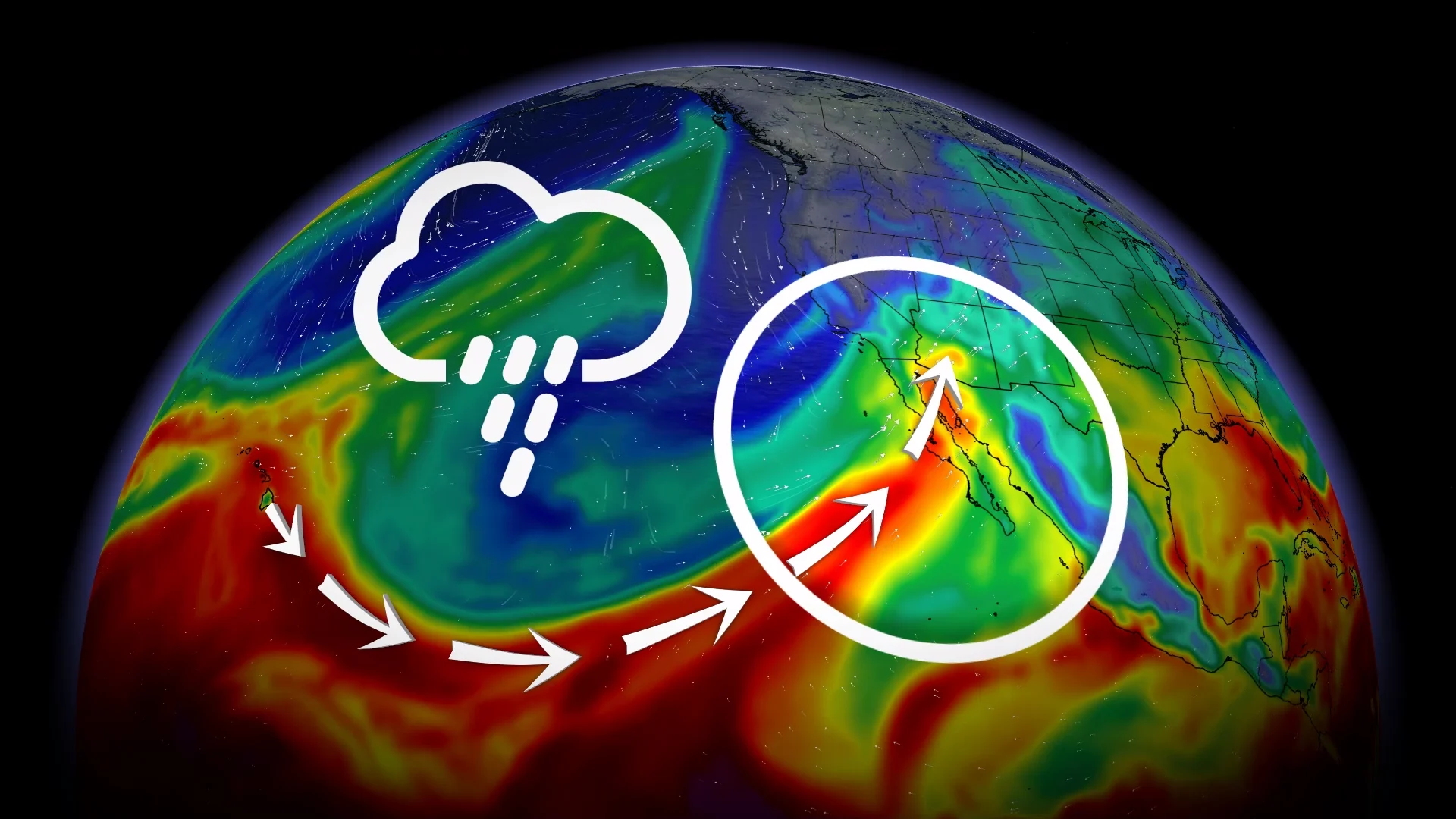
A significant surge of moisture that originated near Hawaii will sweep over Mexico’s Baja Peninsula this weekend and move into the U.S. Southwest.
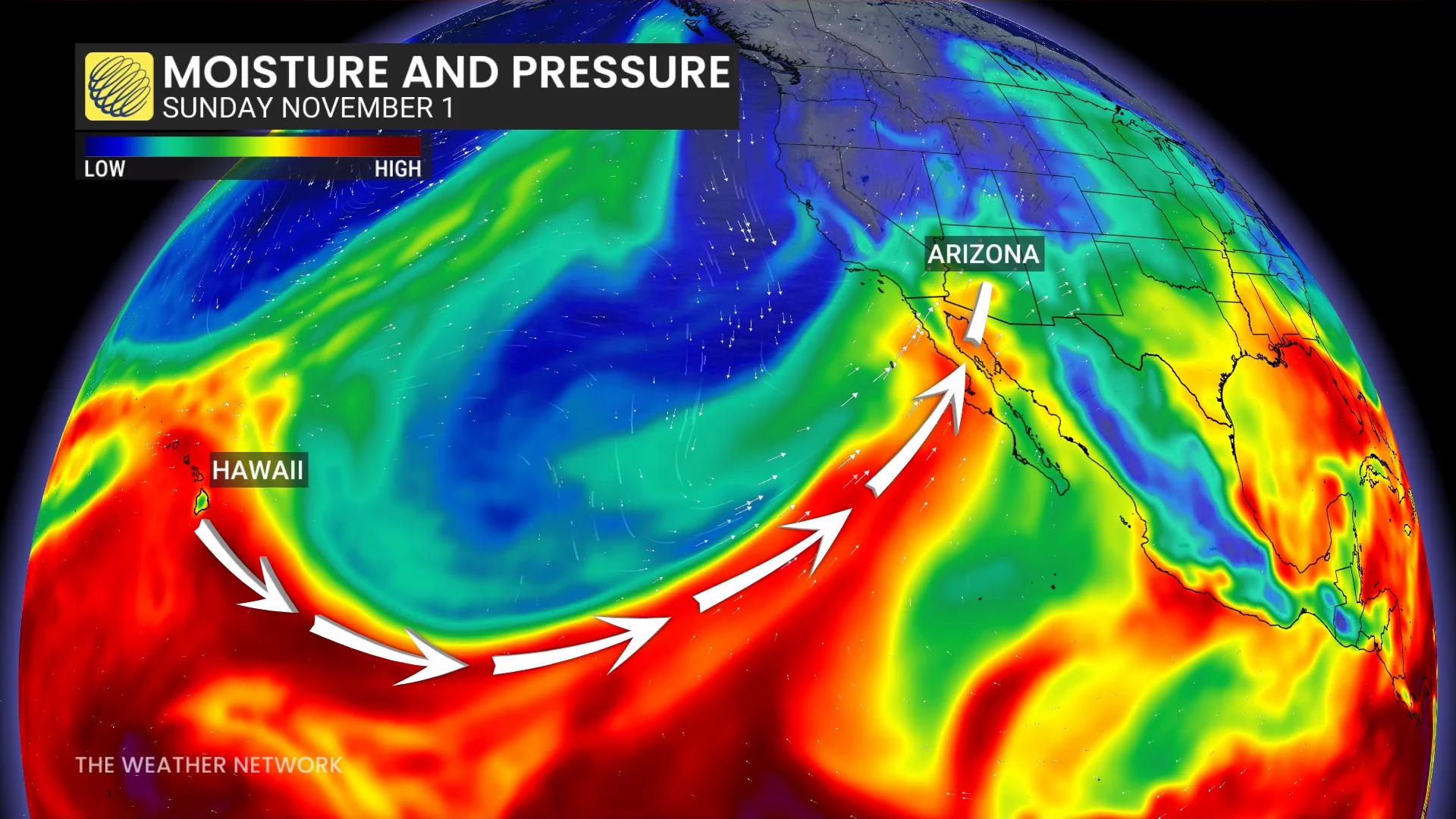
This atmospheric river, known as a Pineapple Express due to its origins, is rated AR4 to AR5 on the ranking scale. AR5 is the highest category on the scale, meaning that the moisture and its associated heavy rainfall will be mostly hazardous to the affected regions.
Widespread flash flood watches are in effect for Arizona, New Mexico, and parts of Nevada, Utah, and Colorado as heavy rain develops Saturday night and lingers through early Monday morning.
Rainfall totals of 50-100+ mm are possible beneath heavier showers and thunderstorms. This may not seem like much, but the cities of Phoenix and Albuquerque average about 15 mm of rain during a typical November.
This kind of a pattern is a hallmark of strong El Niños during the cooler seasons, which often see active storm tracks sweep through the western and southern portions of the United States.