
Developing tropical system likely to aim for Florida next week

A disturbance in the Caribbean has a high chance of developing into a tropical system and heading toward Florida early next week
Visit The Weather Network's hurricane hub to keep up with the latest on tropical developments in Canada and around the world
Forecasters are keeping a close watch on Florida this weekend as a budding tropical disturbance in the western Caribbean Sea has an 80 percent chance of developing into a tropical system by early next week.
This system would likely track toward Florida by the middle of next week, a path that would take it over some of the warmest ocean temperatures in the world right now.
STAY AWARE: Atlantic Canada on guard as Franklin is on track to become a hurricane
System organizing in the western Caribbean
A disturbance sitting off Mexico’s Yucatan Peninsula is in prime position to grow more organized over the next couple of days. Forecasters with the U.S. National Hurricane Center (NHC) give the system a high chance of developing into a tropical depression by the end of the weekend.
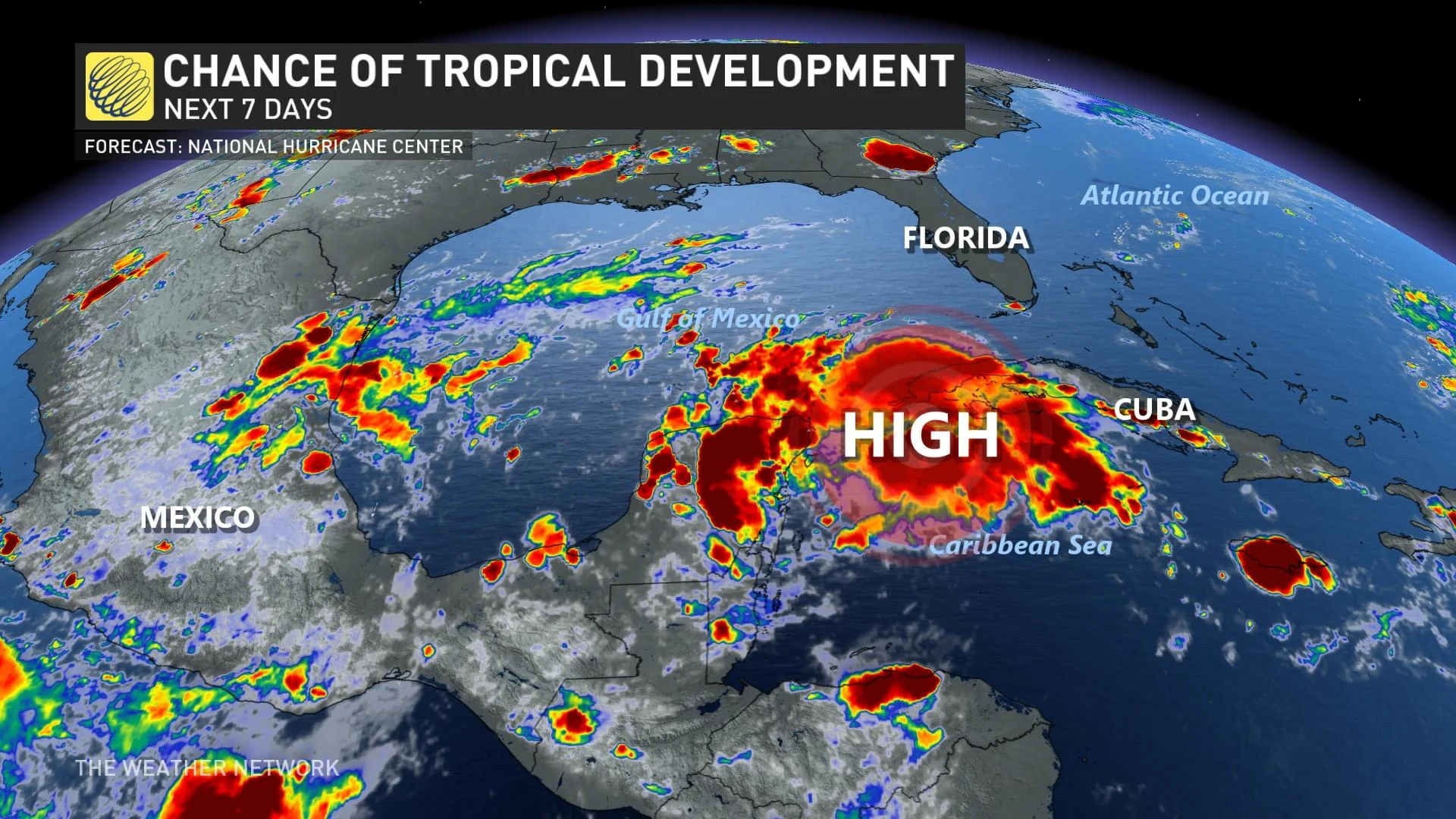
“Environmental conditions appear conducive for further development during the next several days, and a tropical depression is likely to form late this weekend or early next week while it moves generally northward over the eastern Gulf of Mexico,” the NHC said in its outlook on Friday.
RELATED: How hot water fuels the world’s most powerful hurricanes
Waters in the eastern Gulf of Mexico are positively steamy right now, with sea surface temperatures averaging around 30-31°C in the region.
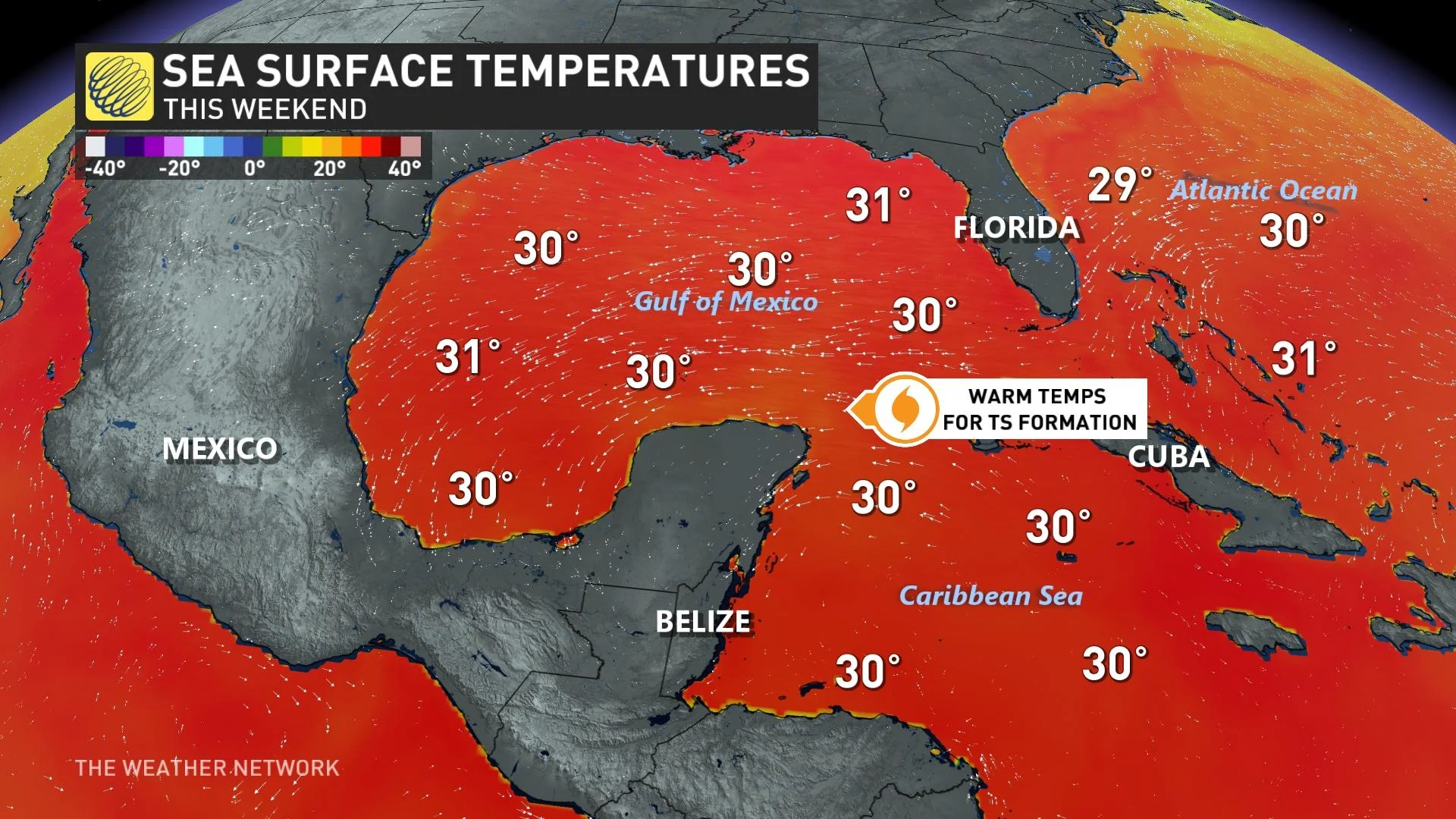
This warmth isn’t shallow, either—it extends deep below the surface, which would make the hot water more resilient to waves that could otherwise churn up cooler waters from below.
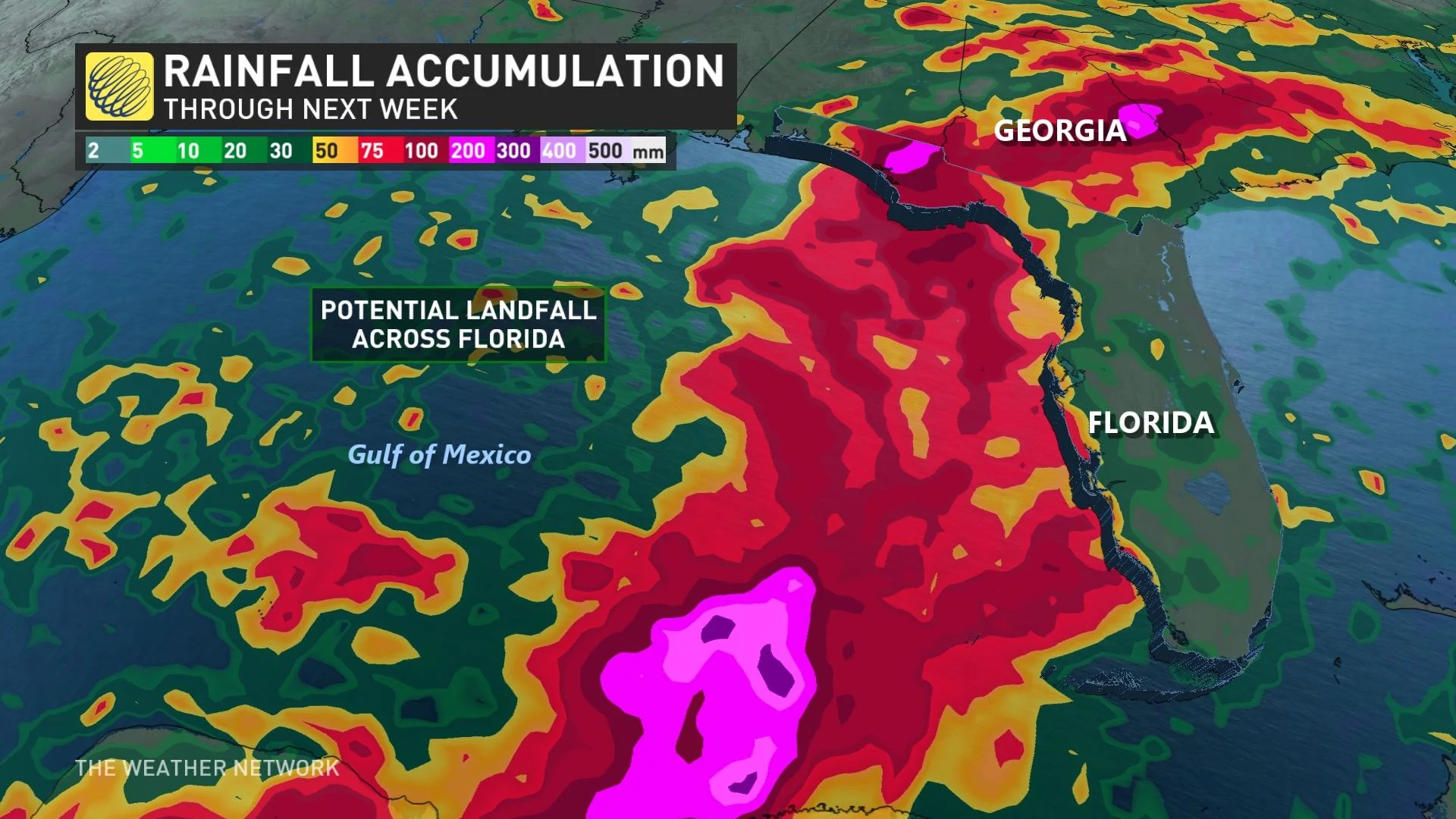
Given this vast reserve of potential fuel for a developing system, some models hint at a swiftly intensifying storm approaching Florida by mid-week, potentially affecting the Panhandle or the state’s western coast.
WATCH: Atlantic Canada braces for a potential hurricane impacts next week
If it develops, Idalia would be Florida’s first storm of the year
This disturbance would likely earn the name Idalia if it grows into a tropical storm.
Anyone visiting Florida, Mexico’s Yucatan Peninsula, or western Cuba over the next week should keep a very close eye on the development of this system in the days ahead.
DON’T MISS: The best way to prepare for a hurricane is well ahead of a potential disaster
Remember that a landfalling storm’s effects don’t stop at the coast, and a storm’s wind and rain can extend hundreds of kilometres from the centre of a storm. Have a plan in place to deal with high winds, heavy rain, and potential flooding across the state.
This system’s development would put us a few paces ahead of a ‘normal’ hurricane season, which typically wouldn’t see its tenth named storm until the third week in September. This is in line with predictions of an above-average hurricane season.
(If you’re curious—even though ‘I’ is the ninth letter of the alphabet, the storm count is off by one this year because our first system was an unnamed subtropical storm back in January.)
STAY SAFE: What you need in your hurricane preparedness kit
This will likely be Florida’s first tropical threat so far this hurricane season. In fact, Los Angeles, California, endured its first-ever tropical storm warning earlier this month with Tropical Storm Hilary in the Pacific, long before any Atlantic systems came within shouting distance of Florida.
Most of the Atlantic’s storms so far this season have formed far away from the United States, with only Tropical Storm Harold making landfall in southern Texas on August 22.
Folks across Atlantic Canada are watching a separate system—Tropical Storm Franklin—for possible impacts on the East Coast toward the latter half of next week.
Stay with The Weather Network for the latest updates throughout hurricane season.