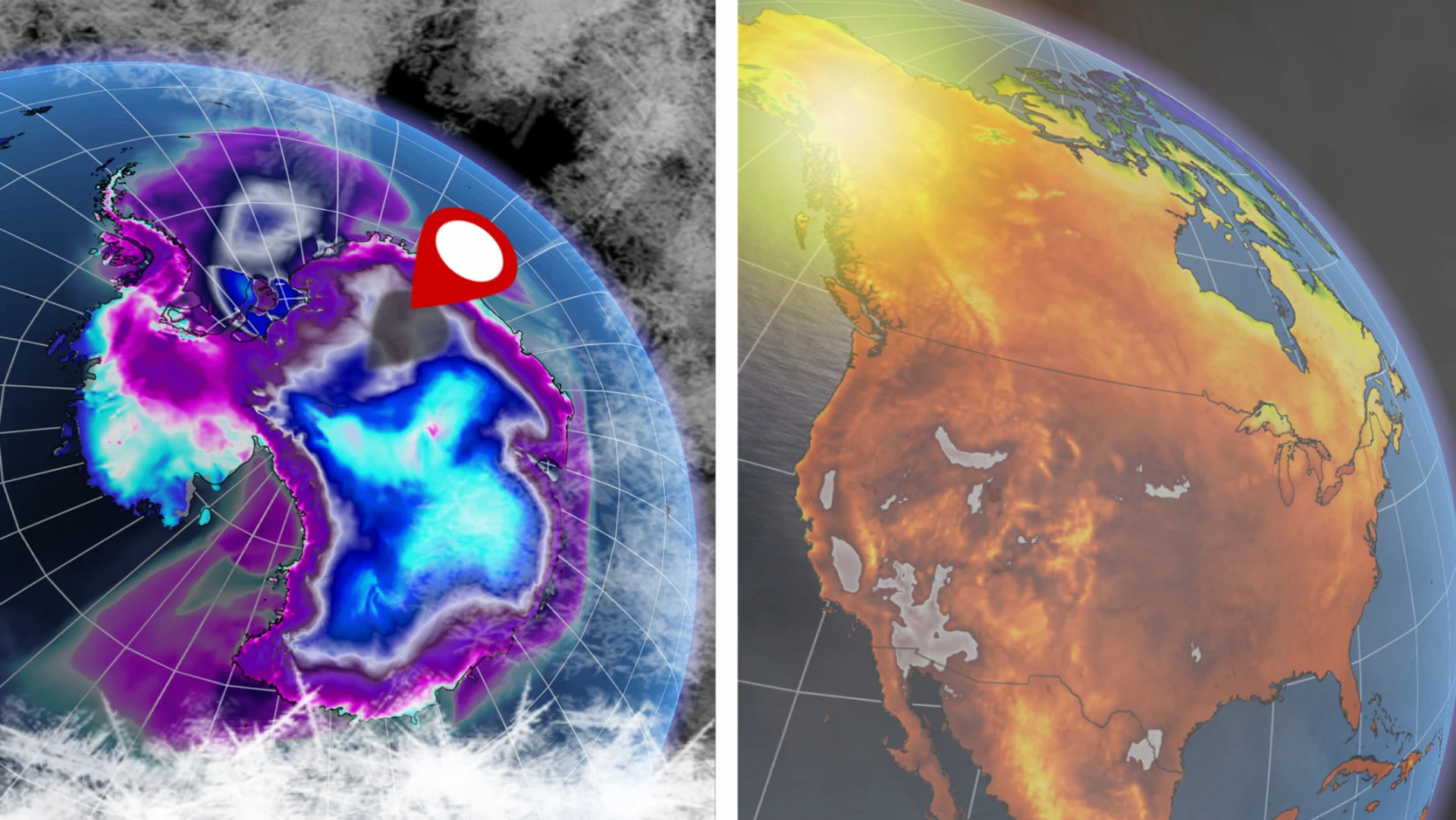
136°C difference: Amid extreme heat, Earth records its coldest temperature

As extreme heat grips much of the northern hemisphere, including Canada, we just saw Earth's coldest global temperature recorded since 2012.
Over 100 countries around the world have been reporting record temperatures this year, including in Canada and the United States, where we have been seeing severe and prolonged summer heat waves.
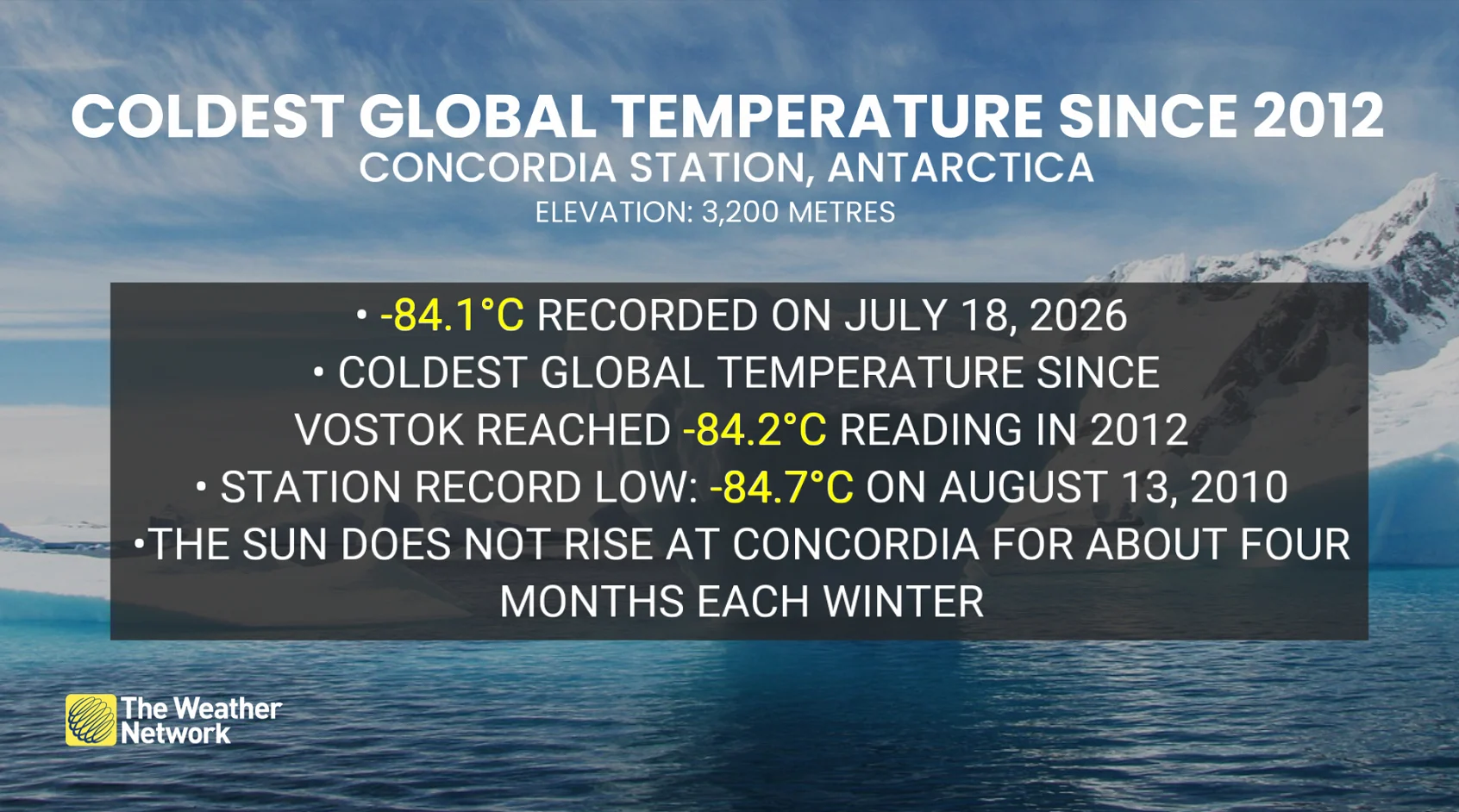
Just five days after Armstrong, Ont., reached 40.8°C, the province's first 40°C reading since 1995 and likely the warmest since the infamous 1930s Dust Bowl, Antarctica’s Concordia Station plunged to -84.1°C, the coldest temperature recorded anywhere on Earth since 2012.
SEE ALSO: Is Canada baking? Here's what the latest drought analysis says
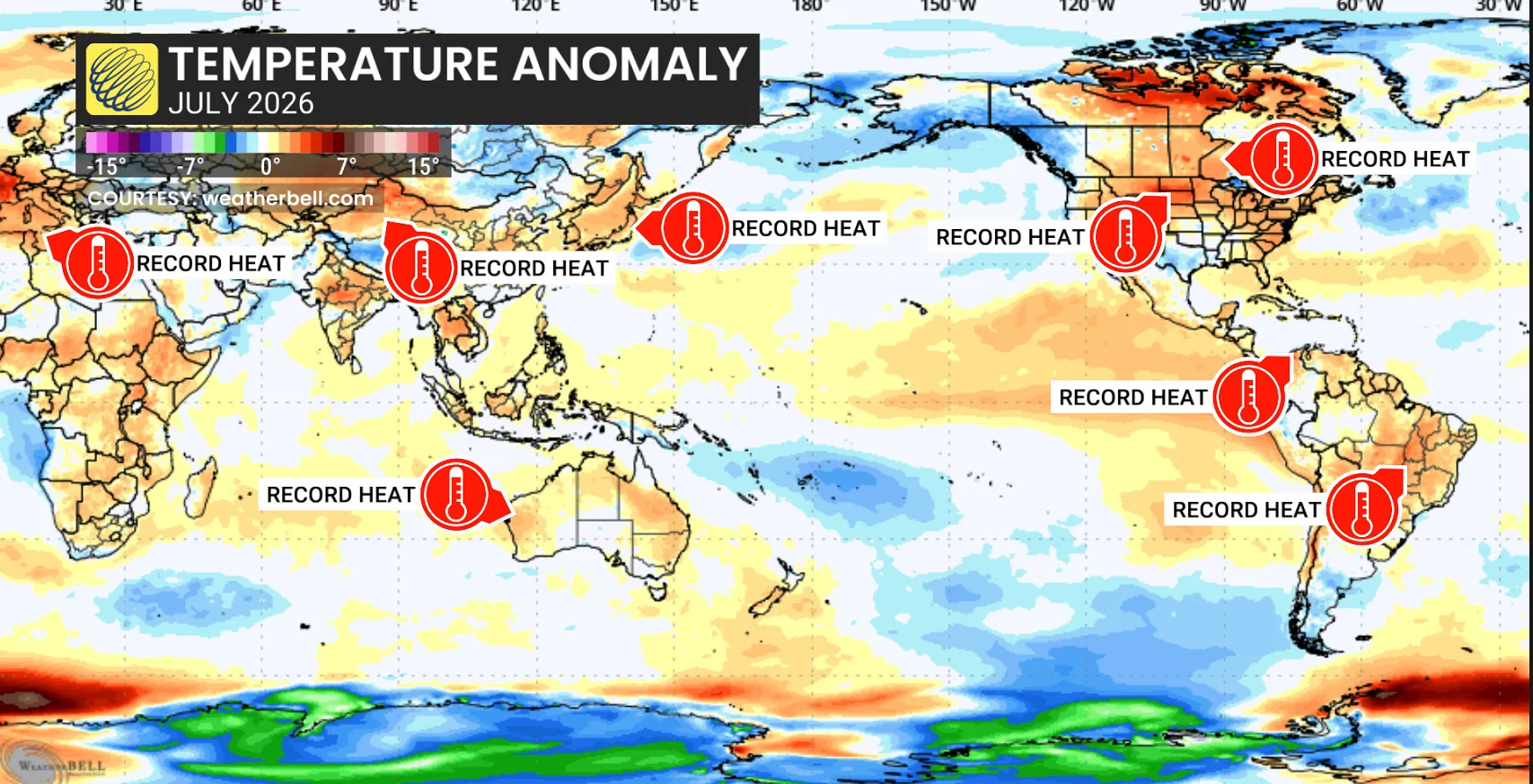
However, this is not the most extreme temperature range we've seen on a global scale so far this year.
The warmest global temperature recorded so far in 2026 was 52.7°C in Omidieh, Iran. That's a 136.8°C difference from Antarctica's -84.1°C!
Shockingly, that's not even the coldest temperature ever recorded on Earth, although it does come close. The coldest temperature was -89.2°C on July 21, 1983. At this magnitude, outdoor survival for humans is impossible without heavy-duty winter gear. Even then, one would only last several minutes, and any exposed skin would freeze almost immediately.
DON'T MISS: As El Niño strengthens, is an ‘Atlantic Niña’ developing?
Conversely, the hottest temperature ever recorded on Earth was 56.7°C in Death Valley, California, on July 10, 1913, although the claim has recently been disputed on account of equipment being improperly used.
Why is there such an extreme difference?
The extreme temperature difference we're seeing this year is partly due to the northern hemisphere being in the peak of summer, while Antarctica in the southern hemisphere is in the depths of winter and the sun doesn't rise over Concordia Station for about four months.
The other factor, though, is the severity of heat waves across the northern hemisphere this summer. Temperatures across Europe rose in late June during a historic heat wave that claimed over 10,000 lives.
Global ocean temperatures also hit a record high in June with an average of 20.98°C, raising alarm bells among climate scientists.