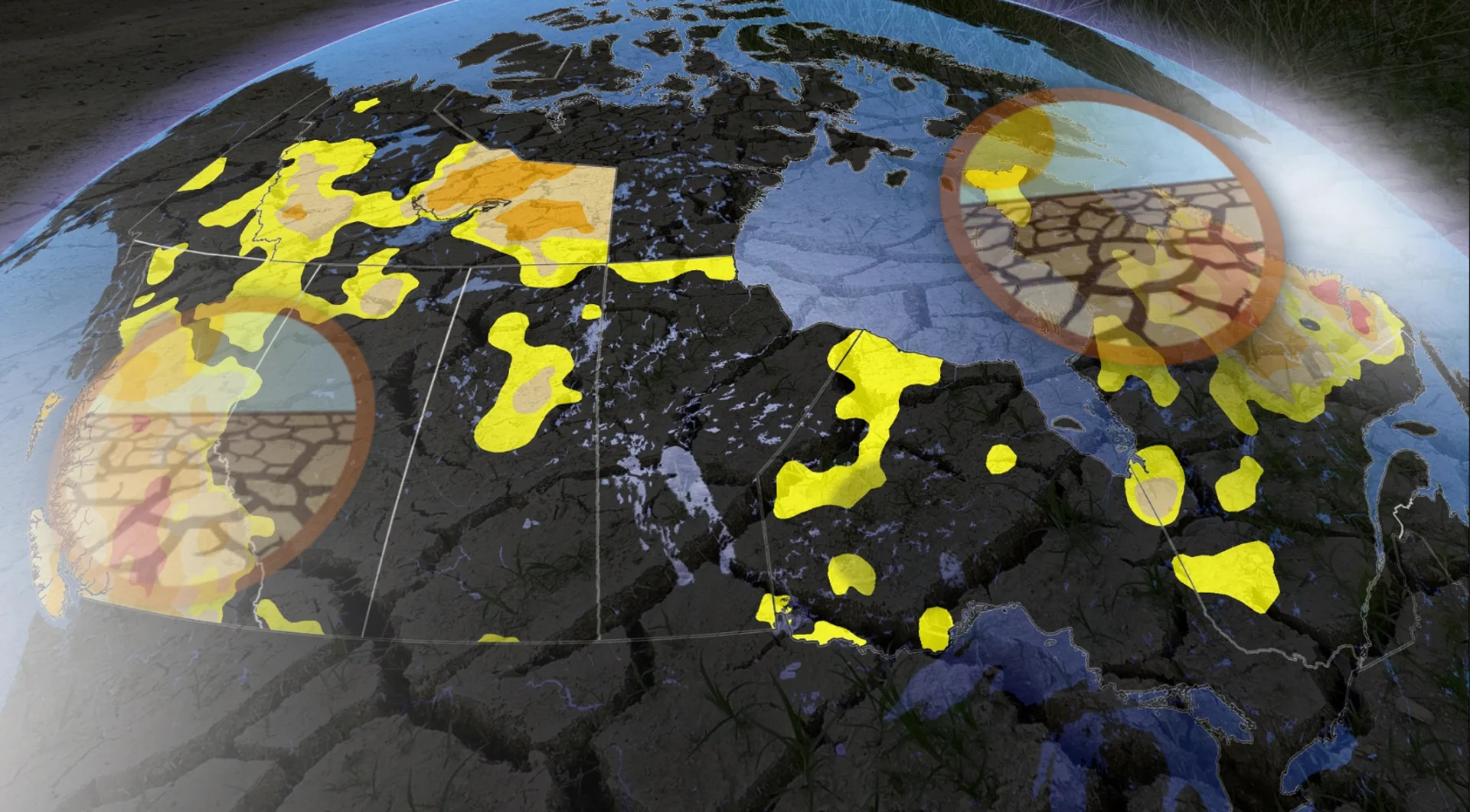
Is Canada baking? Here's what the latest drought analysis says

Much of Canada has been cooking up some wild weather this summer, but some regions have been baking in drought instead
It's been an active summer across much of Canada so far in 2026, with the country already on track to see an above-average tornado season. Because of the active weather, especially across the Prairies, we've also seen a slower wildfire season than usual. But not everyone in Canada has had the luxury of a rainy summer.
The latest update from the Canadian Drought Monitor shows a sharp split in conditions across the country. While some communities grapple with flooding from extreme rains, others are entering extreme drought conditions.
DON'T MISS: The Weather Network's wildfire hub
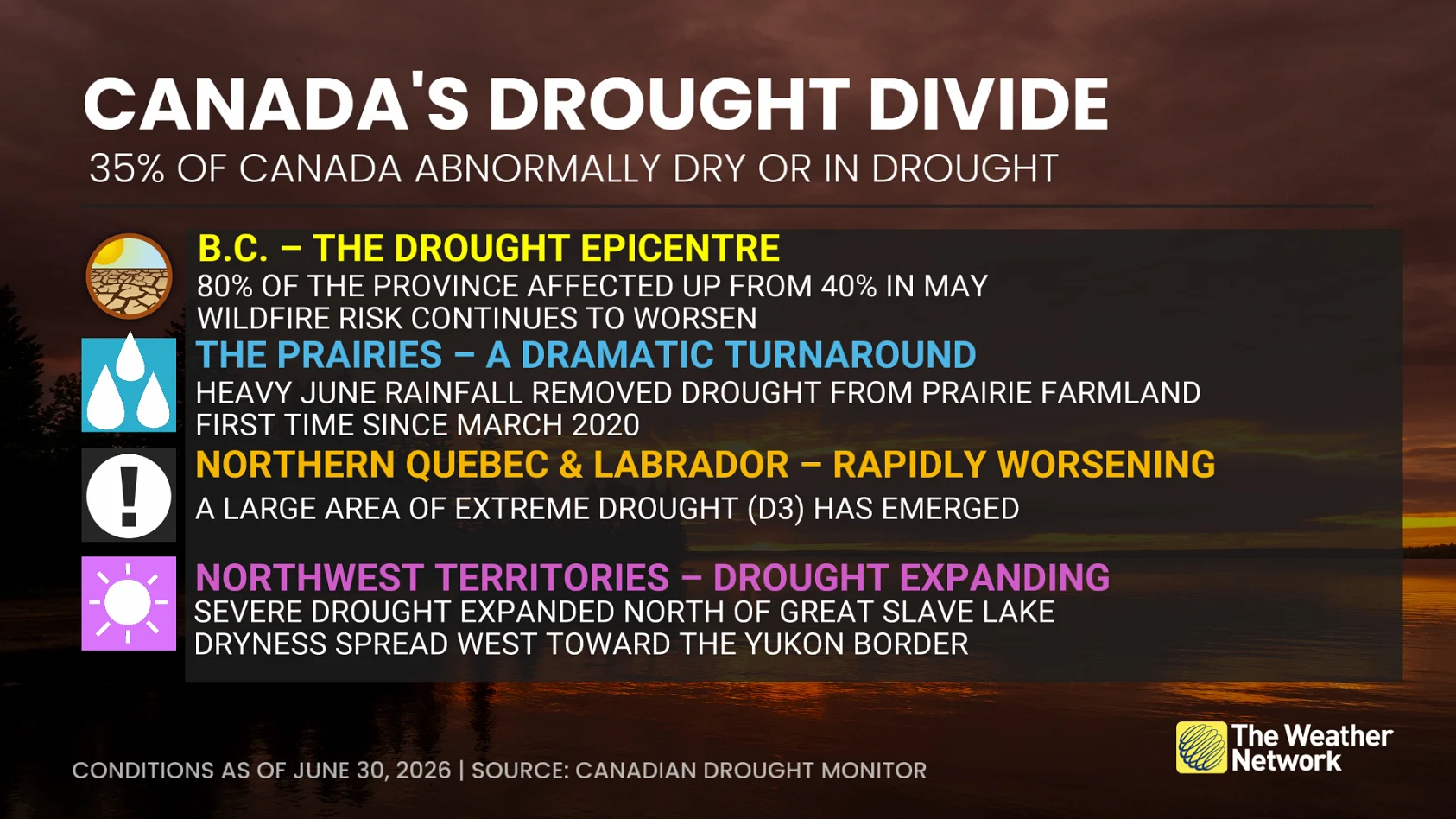
According to the update, 35 per cent of Canada was classified as at least 'abnormally dry' as of June 30. Within this 35 per cent is also 13 per cent of the country's agricultural landscape.
June really did produce a striking divide, with substantial recovery on the Prairies but deepening water shortages and increased wildfire stress across British Columbia and Northern Canada.
Drought in B.C. doubles in June while the Prairies soak in the rain
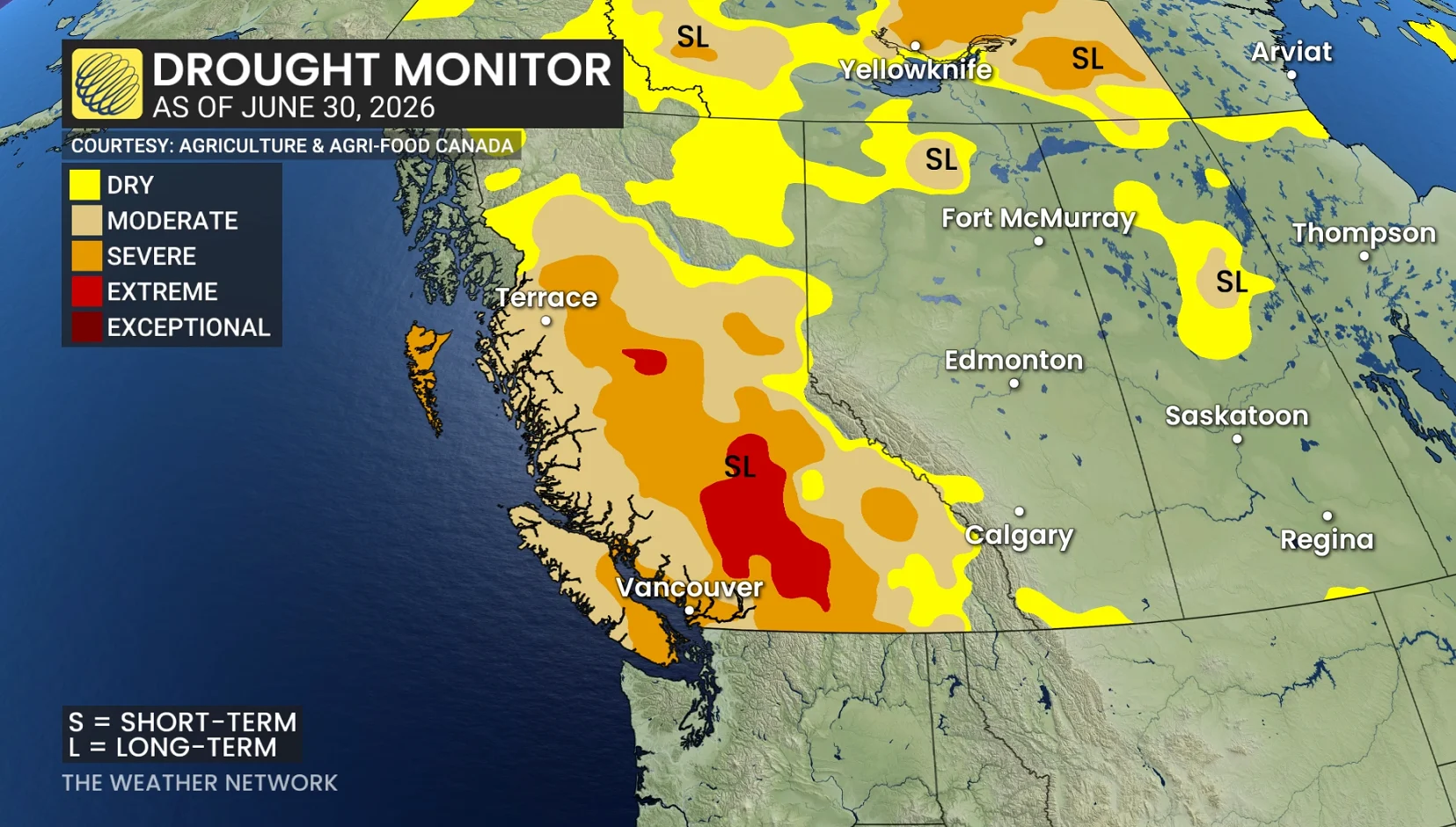
By the end of June, about 80 per cent of B.C. felt conditions ranging from abnormally dry to extreme drought. Back in May, the percentage was half of that.
Extreme drought developed in the Thompson-Okanagan and parts of the Nechako Plateau, where we are seeing record-low stream flows, a depleted snowpack, and worsening wildfire risks heading into the second half of the summer.
On the other side of the Rockies, however, we are seeing a completely different story.
Several drenching, slow-moving systems and training thunderstorms have brought exceptional rainfall to the three Prairie provinces so far this summer.
That has erased drought from the Prairies' agricultural zones for the first time since March 2020!
SEE ALSO: One day, all of Earth's plants will disappear. Scientists think they know when
Drought conditions getting worse across Northern Canada
Extreme drought conditions have emerged across northern Quebec and Labrador, increasing concerns for the hydroelectric supply needed to power communities.
According to the Canadian Drought Monitor, the Northwest Territories received less than 40 per cent of the territory's average June precipitation. Paired with abnormally warm weather, we're beginning to see the dry conditions spread further. Severe drought conditions have even spread north of Great Slave Lake.
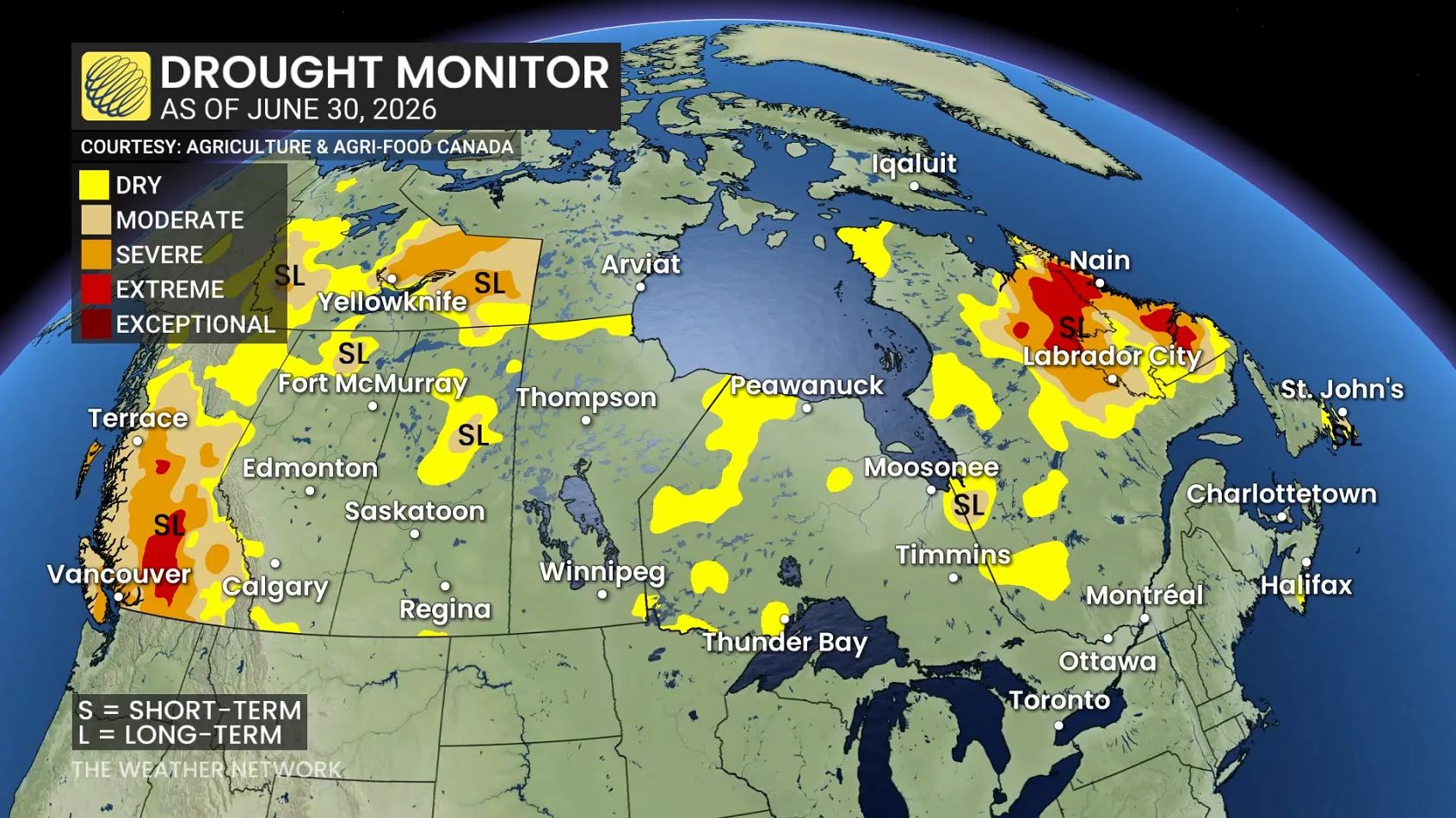
This is a concerning pattern for the territory, as it's also where we are seeing the majority of wildfires so far this season in Canada.
Dry conditions are also beginning to seep west into the Yukon, despite the territory receiving slightly above-average precipitation in June.
Will Canada continue to bake for the remainder of July?
For the remainder of July, precipitation trends point to a significant dry signal across the B.C. coast, extending into the North, as well as a drier trend across the central and eastern Prairies. Although stubborn, wet conditions may persist across central and southern Alberta, due to elevated levels of moisture in the area.
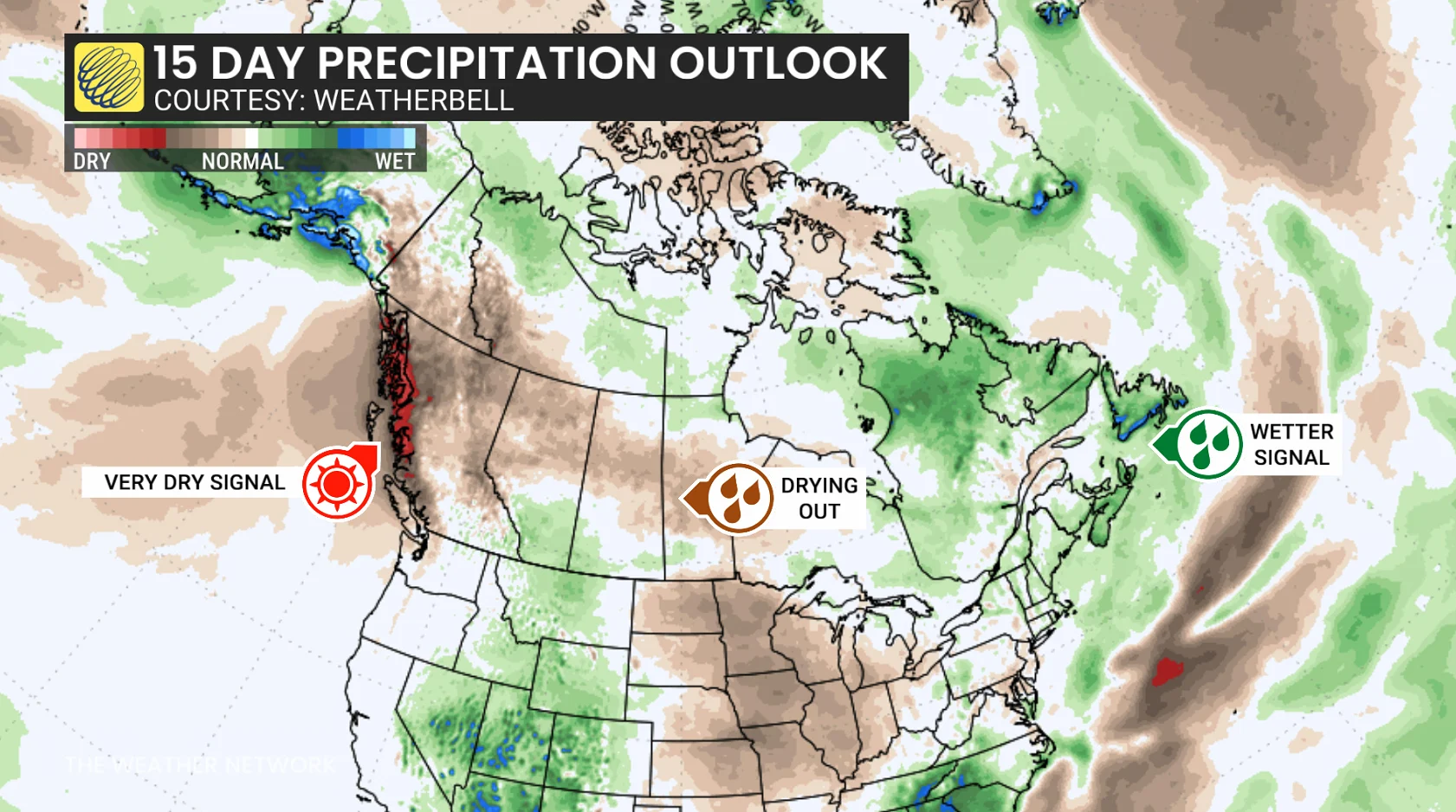
Meanwhile, in Eastern Canada, Atlantic Canada is dealing with a wetter signal to finish off the month. Parts of Quebec and Labrador are in for a few rainy spells as well, while Ontario will likely see normal conditions prevail.
Stay with The Weather Network for the latest updates on Canada's drought and summer conditions.