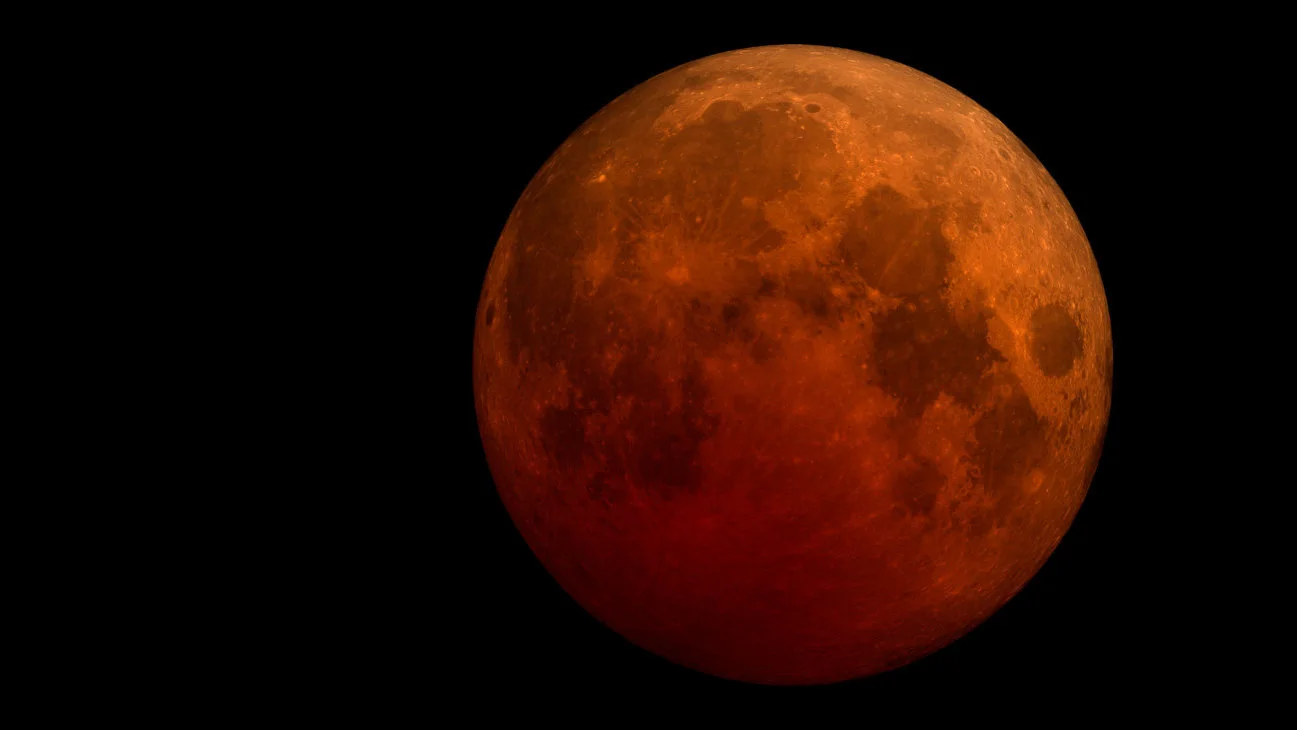
What is a lunar eclipse, and why don't we see one every month?

A lunar eclipse is about to cross our skies. Here's what's going on.
Every six months or so, a Full Moon will darken and sometimes even change colour from grey to dusky blood red! What causes this phenomenon?
Every year, as the Earth orbits around the Sun, and the Moon revolves around the Earth, we see 12 or 13 Full Moons. These occur when the Moon reaches the position in its orbit where it is on the opposite side of Earth from the Sun, and its Earth-facing side is fully illuminated by sunlight.
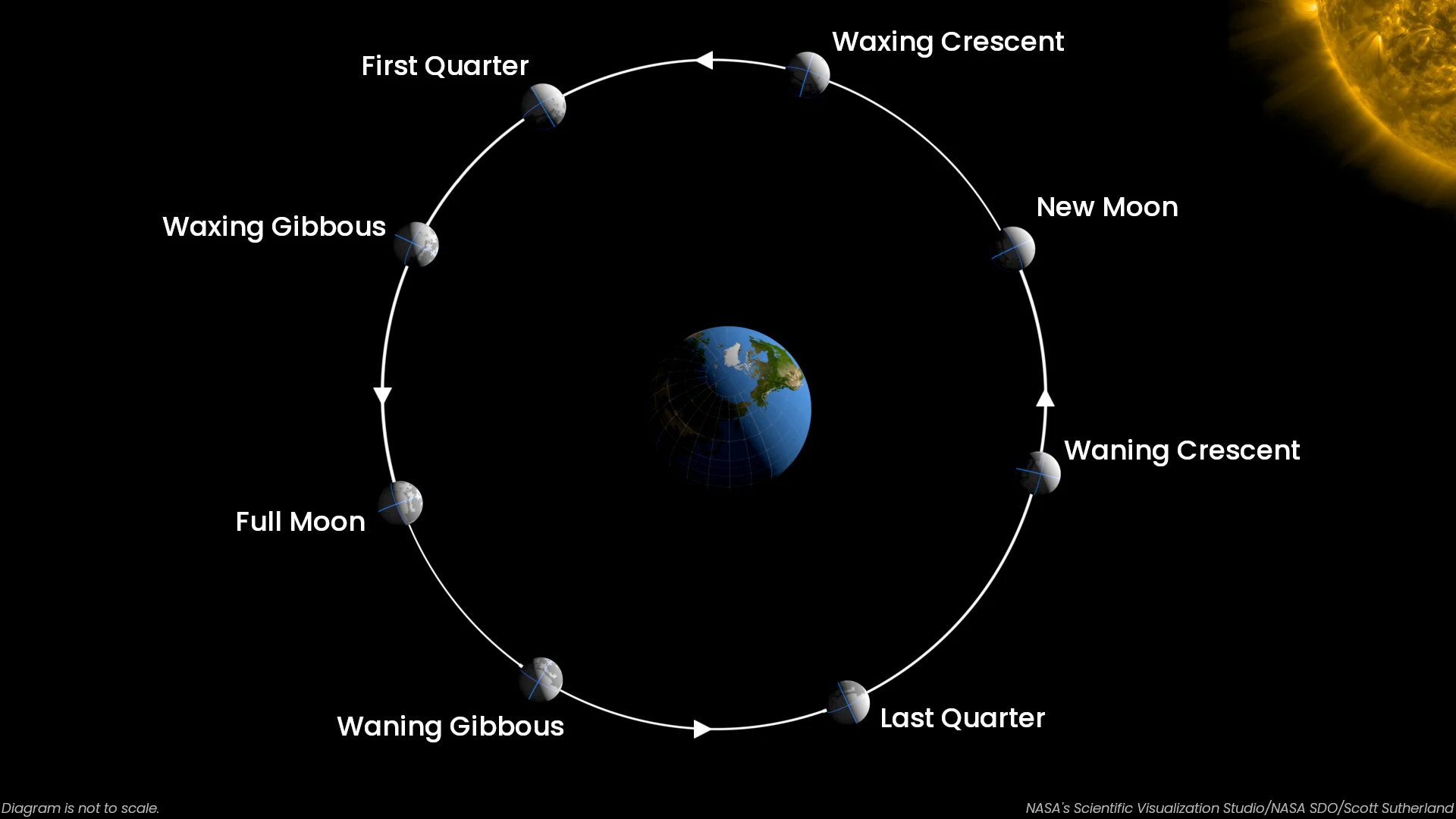
The Moon's orbit around the Earth causes the lunar phases, due to how the sunlit side of the Moon changes with respect to Earth as it orbits around our planet. (NASA's Scientific Visualization Studio/NASA SDO/Scott Sutherland)
Depending on the year, though, one or two of these Full Moons (or possibly even more) will be very different from the others.
While the Moon may start off bright as it climbs higher in the night sky, it will begin to dim, then a dark shadow will cross it, and eventually it will turn a dusky shade of red. Then, the process will reverse, with the Moon losing its red tinge, and slowly emerging from the shadow until it returns to its original brightness.
This is a total lunar eclipse.
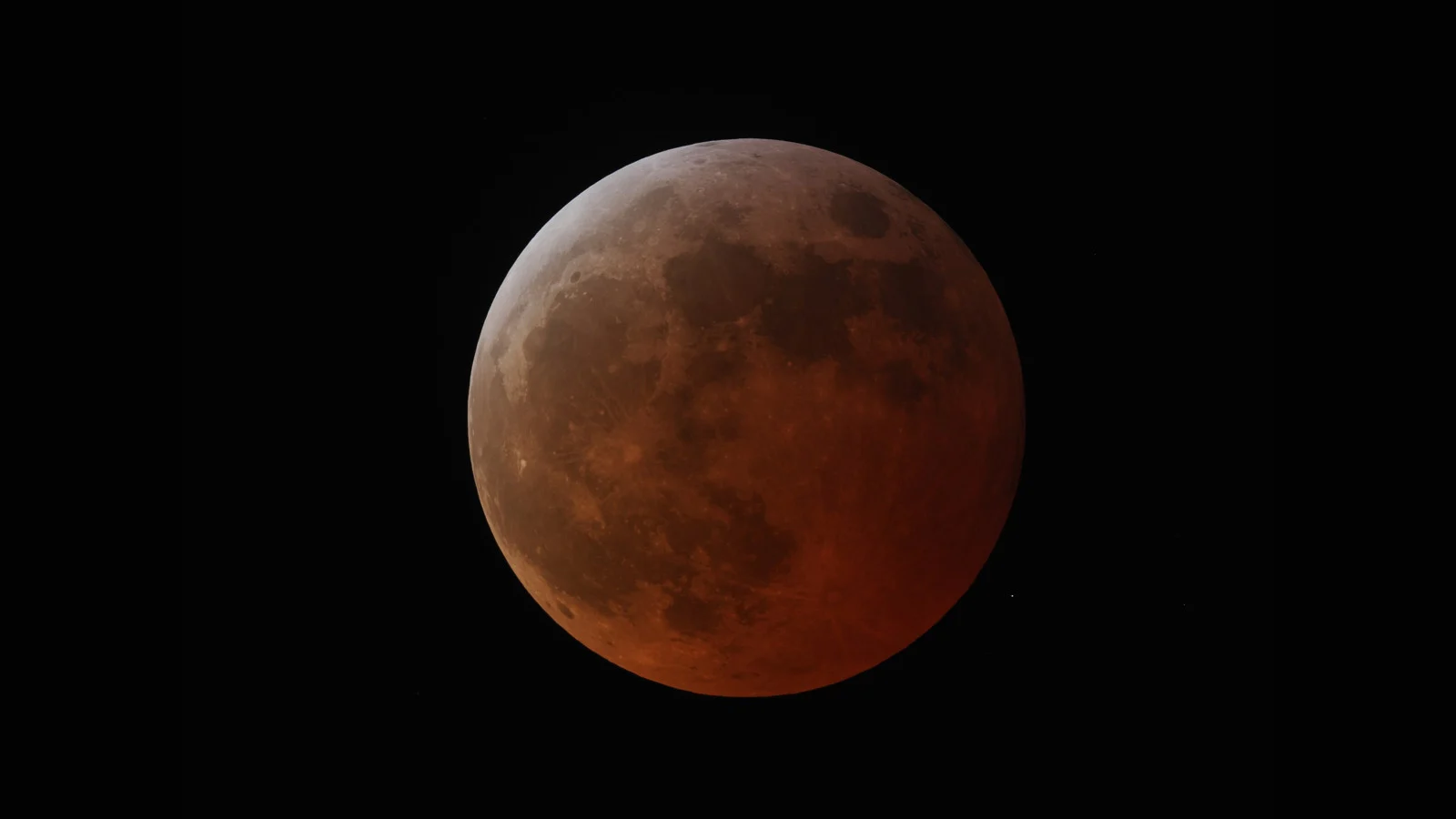
This total lunar eclipse was photographed as the March 14 2025 Full Moon crossed Earth's shadow. (Marcus Humberg/Wikimedia (CC BY-SA 4.0))
DON'T MISS: Next week's Full Moon will produce a 'nearly-total' lunar eclipse in the sky
This is one of three types of lunar eclipse.
We also see partial lunar eclipses, where the dark shadow only passes over part of the Moon, and penumbral lunar eclipses where the Moon only dims slightly.
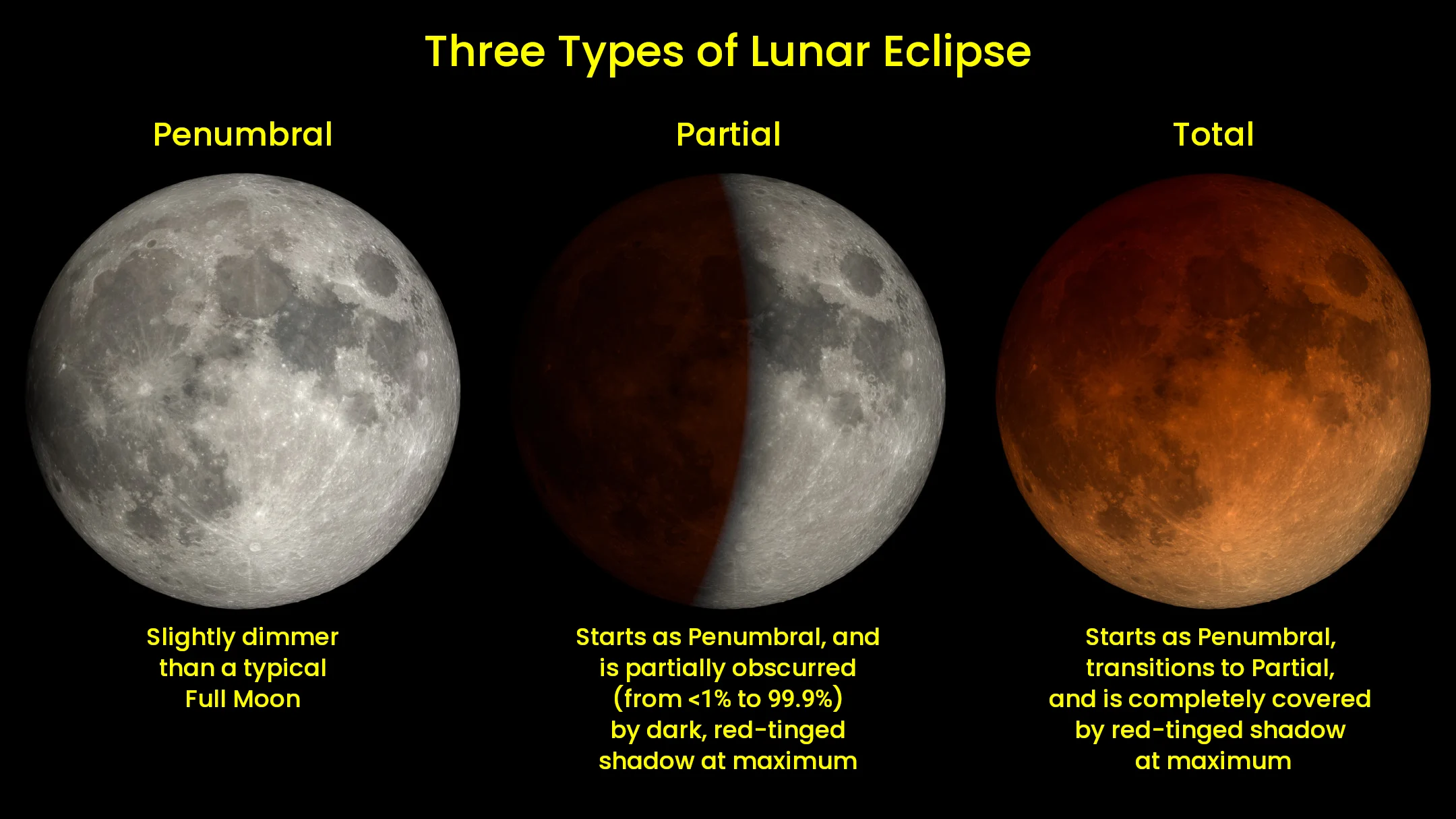
The three types of lunar eclipse. (NASA's Scientific Visualization Studio/Scott Sutherland)
What causes a lunar eclipse?
As Earth travels along its orbit, it casts a long shadow out into space, pointed at all times directly away from the Sun.
Because Earth is a sphere, illuminated by a much larger sphere of intensely hot ionized gas located 150 million kilometres away, the planet's shadow takes on a very specific shape — that of two overlapping cones, one that spreads outward, and one that converges inward.
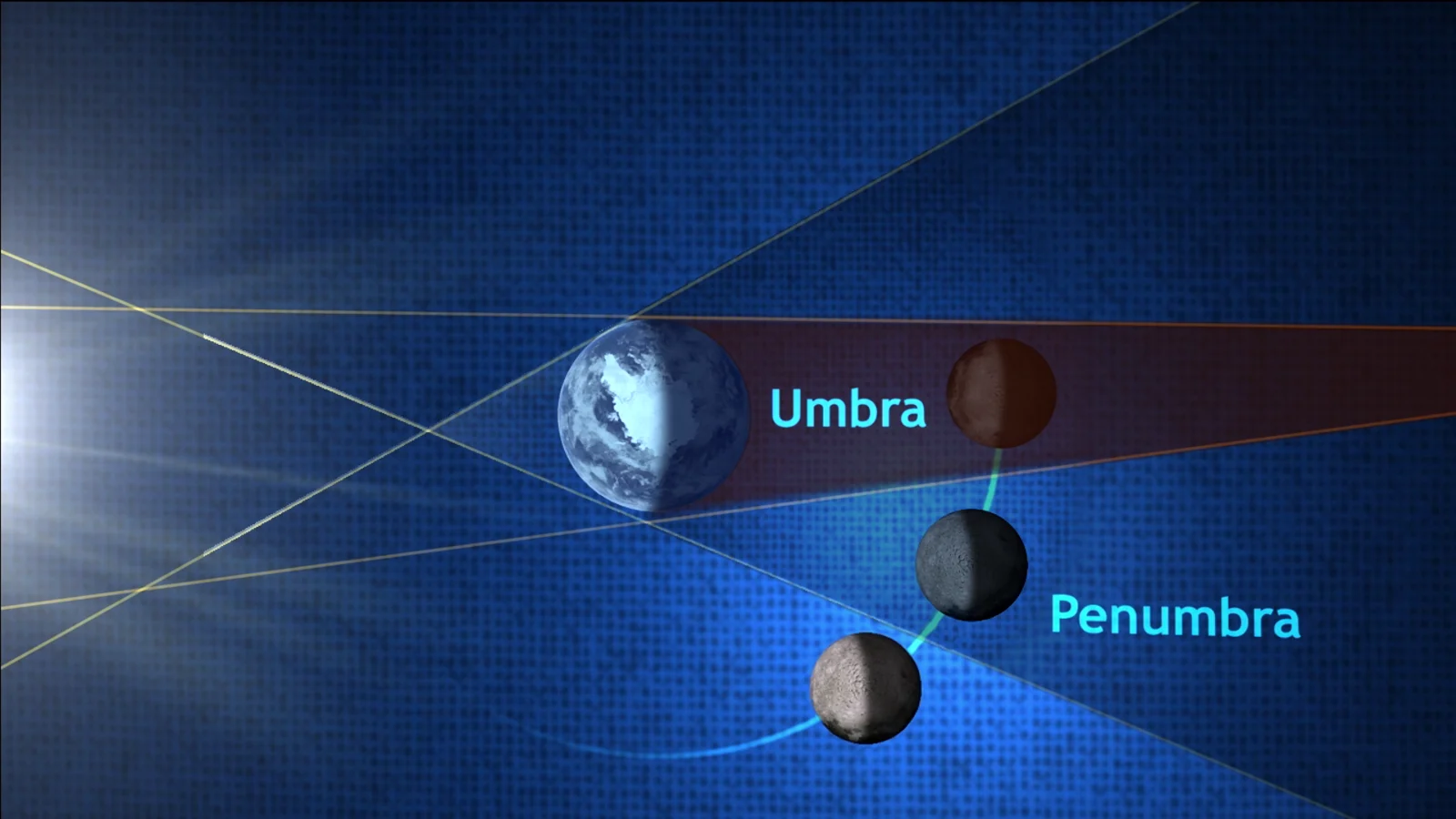
This infographic shows the geometry of the Sun and Earth that produces Earth's two-layered shadow. (NASA)
The outer layer of Earth's shadow is known as the penumbra. There, some of the light from the Sun is blocked by the Earth, but not all of it.
When the Moon is within this outer layer of the shadow, the eclipse is in its penumbral phase. If this is as far as the Moon gets into the shadow, we call it a penumbral lunar eclipse. In either case, while it is in the penumbra, the Moon's surface dims slightly compared to normal.
How much it dims depends on how deeply it is immersed into the penumbra. However, unless you are watching very closely, it is often difficult to notice any change in the Moon's appearance.
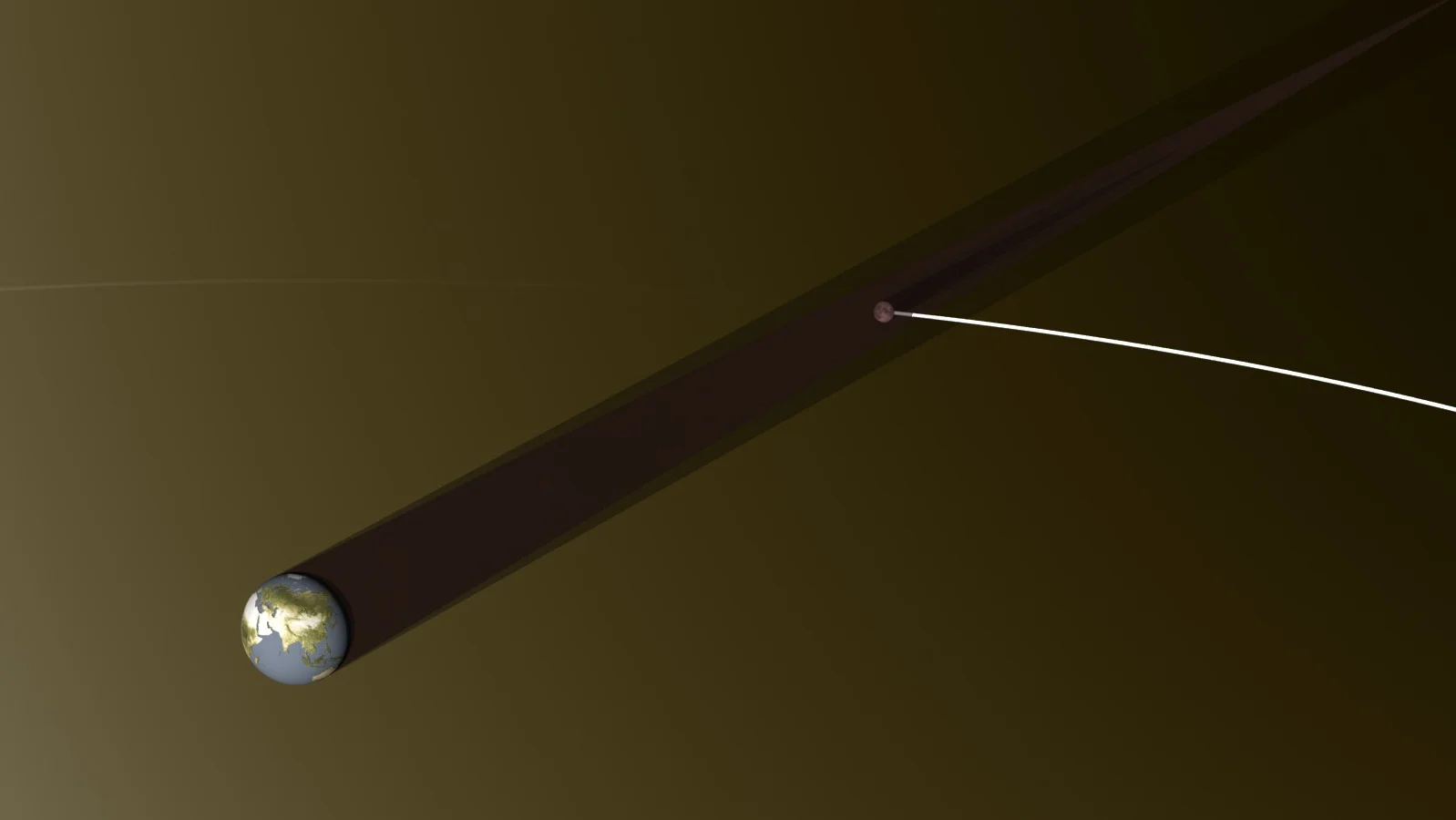
Shown from a different angle and at a different scale, this image reveals the 3-dimensional nature of Earth's shadow, and represents its proportions in a more realistic way. (NASA's Scientific Visualization Studio/Scott Sutherland)
The inner region of Earth's shadow is known as the umbra. Within the umbra, all direct light from the Sun is blocked by Earth.
However, sunlight passing through Earth's atmosphere is scattered and refracted into the umbra. Due to the way the air scatters sunlight, only the longer wavelengths make it back out into space. Thus, the umbra becomes filled with orange and red light.
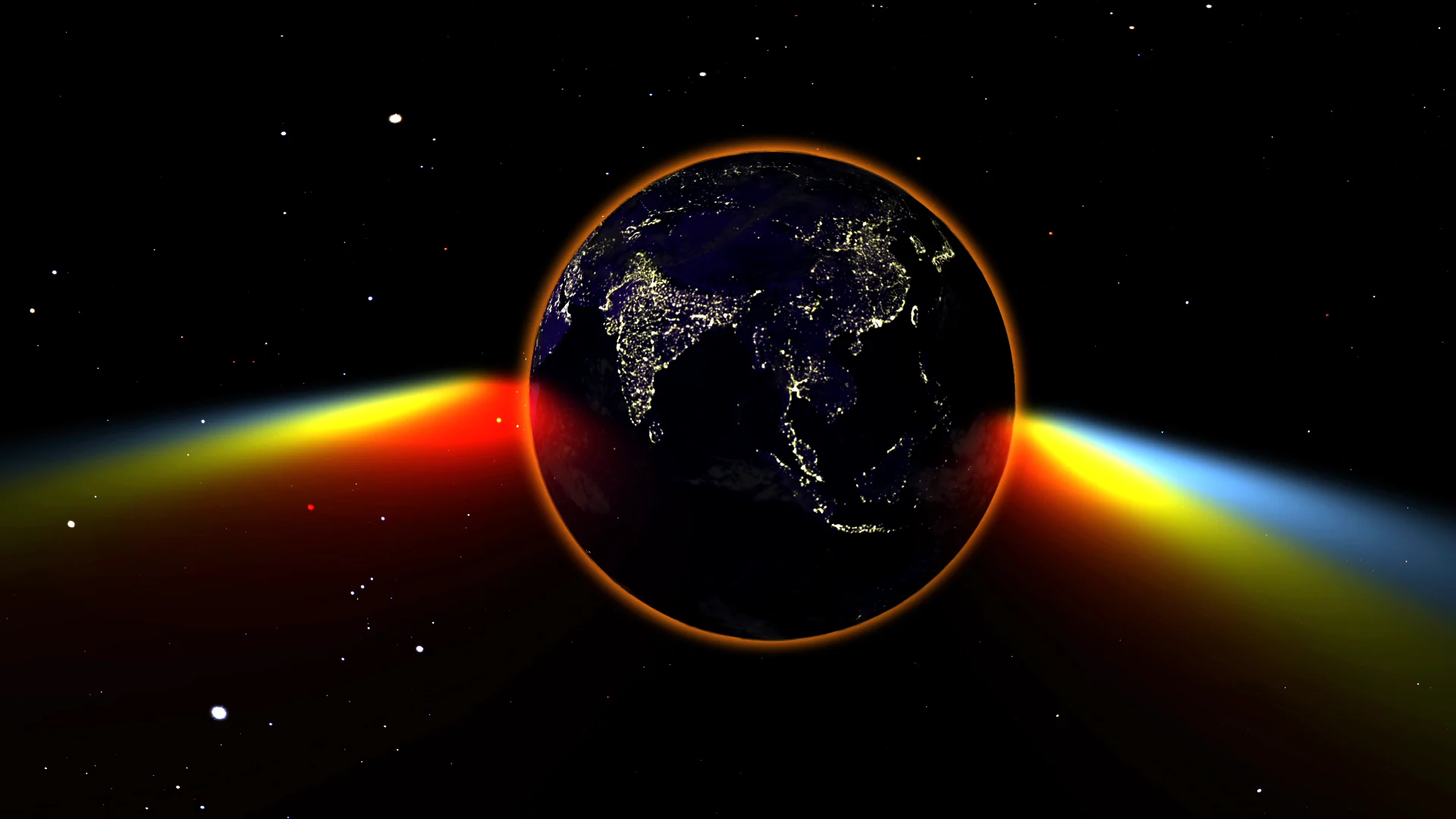
Filtered sunlight is refracted into Earth's shadow by the atmosphere. (NASA's Scientific Visualization Studio)
So, when the Moon slips into the umbra, it first appears that a dark shadow is creeping across its face. The contrast between the darker regions immersed in the umbra and the brighter regions still in the penumbra make it difficult to notice the reddish tinge at first. Only when most of the Moon is within the umbra does that red colour begin to stand out more.
If the angle of the Moon's path across the shadow only dips part of it into the umbra at the eclipse maximum, this is a partial lunar eclipse.
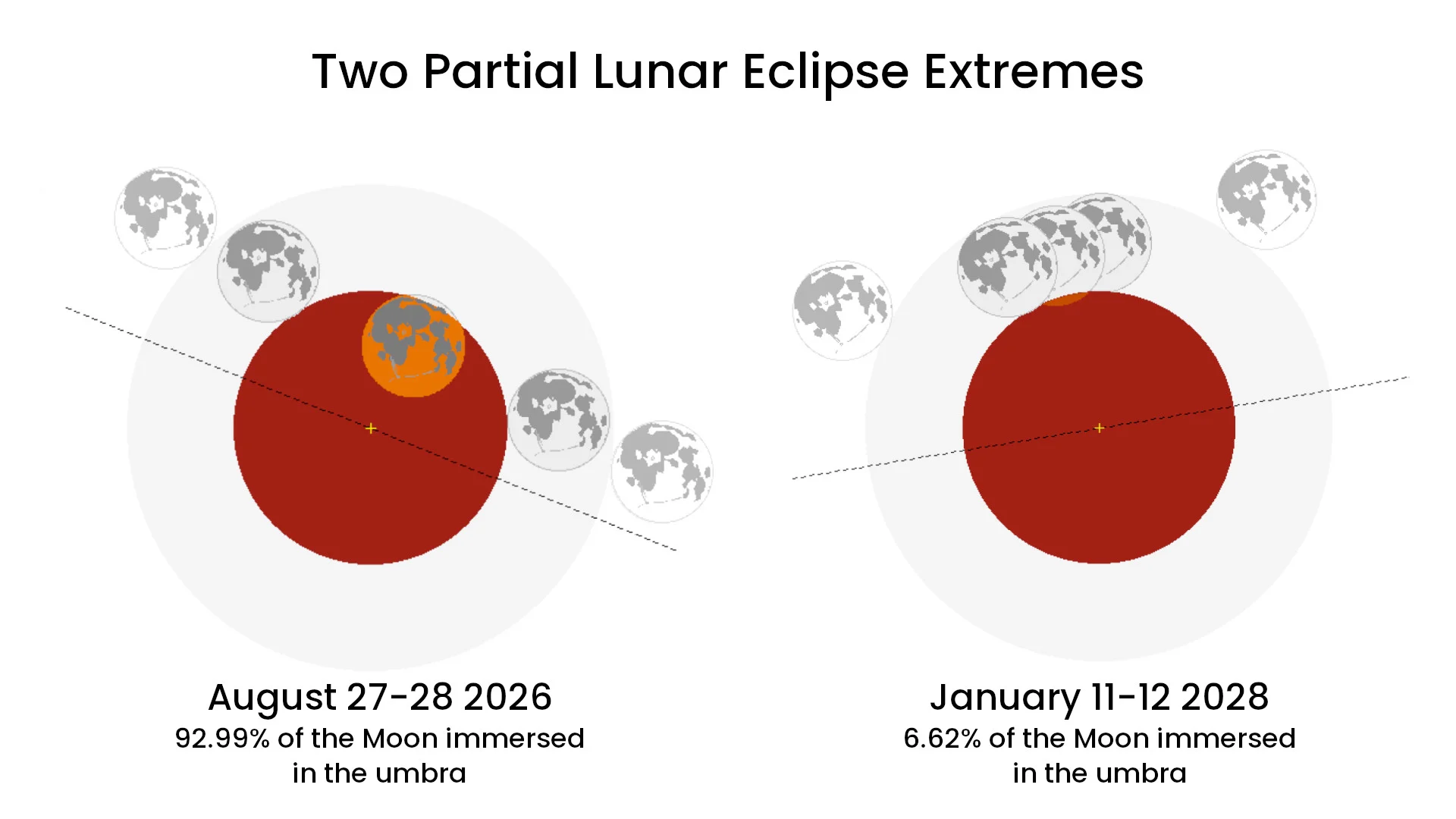
Two extremes of partial lunar eclipses. (NASA's Goddard Spaceflight Center/Fred Espenak/Scott Sutherland)
As shown above, at the eclipse maximum, the Moon can be almost completely immersed in the umbra, leaving only a thin sliver of the polar region still in the penumbra. Alternatively, just a thin sliver of either the north or south polar region can cross the edge of the umbra. Both of these cases, and everything in-between, are all partial lunar eclipses.
If the Moon is completely immersed in the umbra, it produces a total lunar eclipse.
RELATED: How the Full Moon briefly vanished, nearly a thousand years ago
Why not every month?
So, to see a lunar eclipse, all we need is for the Full Moon to pass through Earth's shadow.
With the Earth's shadow pointed directly away from the Sun at all times, why don't we have a lunar eclipse with every Full Moon?
The reason for this is because the Moon's orbit is tilted by 5.1 degrees with respect to Earth's orbital plane around the Sun (the ecliptic).
This tilt stays in roughly the same orientation throughout the year as we travel around the Sun, but watching it from here on Earth's surface, it appears to wobble, and makes the Moon appear to 'librate'.
Due to this tilt, most Full Moons pass either above or below Earth's shadow.
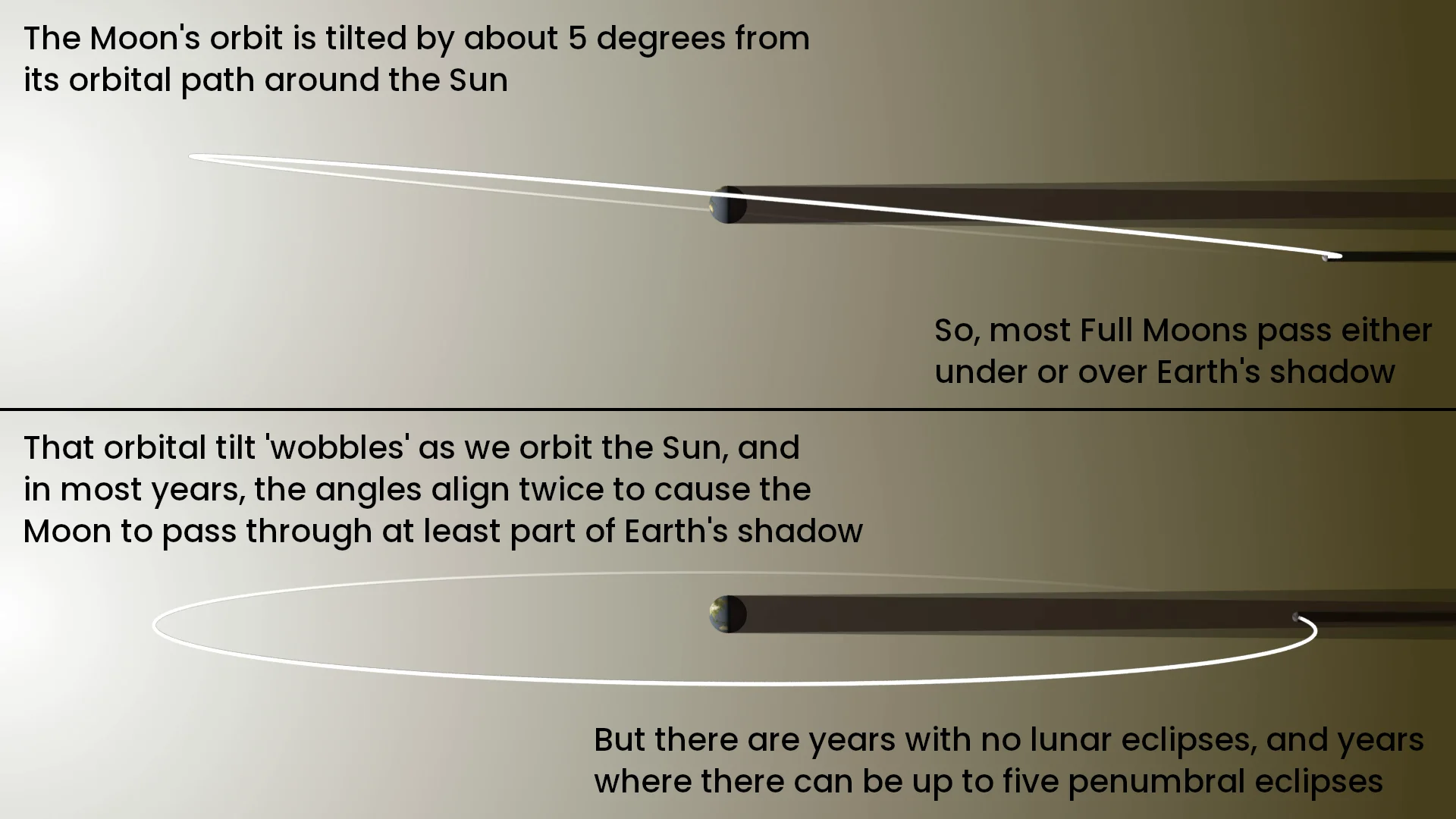
The Moon's orbital tilt as is relates to lunar eclipses (NASA's Scientific Visualization Studio/Scott Sutherland)
Some years, the angles just don't manage to line up, and they can pass without any kind of lunar eclipse occurring. Other years, the Sun, Earth, and Moon will align perfectly twice, causing the Moon to pass directly through Earth's shadow and produce a total lunar eclipse each time. Rarely, this can happen three times, like in 1982, when there were total lunar eclipses on the nights of January 9 and July 6, and early in the morning on December 30.
In between, there are years with anywhere from two to five eclipses in different combinations, with some combinations rarer than others. Most commonly, this involves a total and a partial, or two partials, or a partial and a penumbral eclipse.
In extremely rare cases, there can even be as many as five lunar eclipses in a single year! These cases always combine partial and penumbral eclipses, though — either two partial and three penumbral, or a partial and four penumbral eclipses.