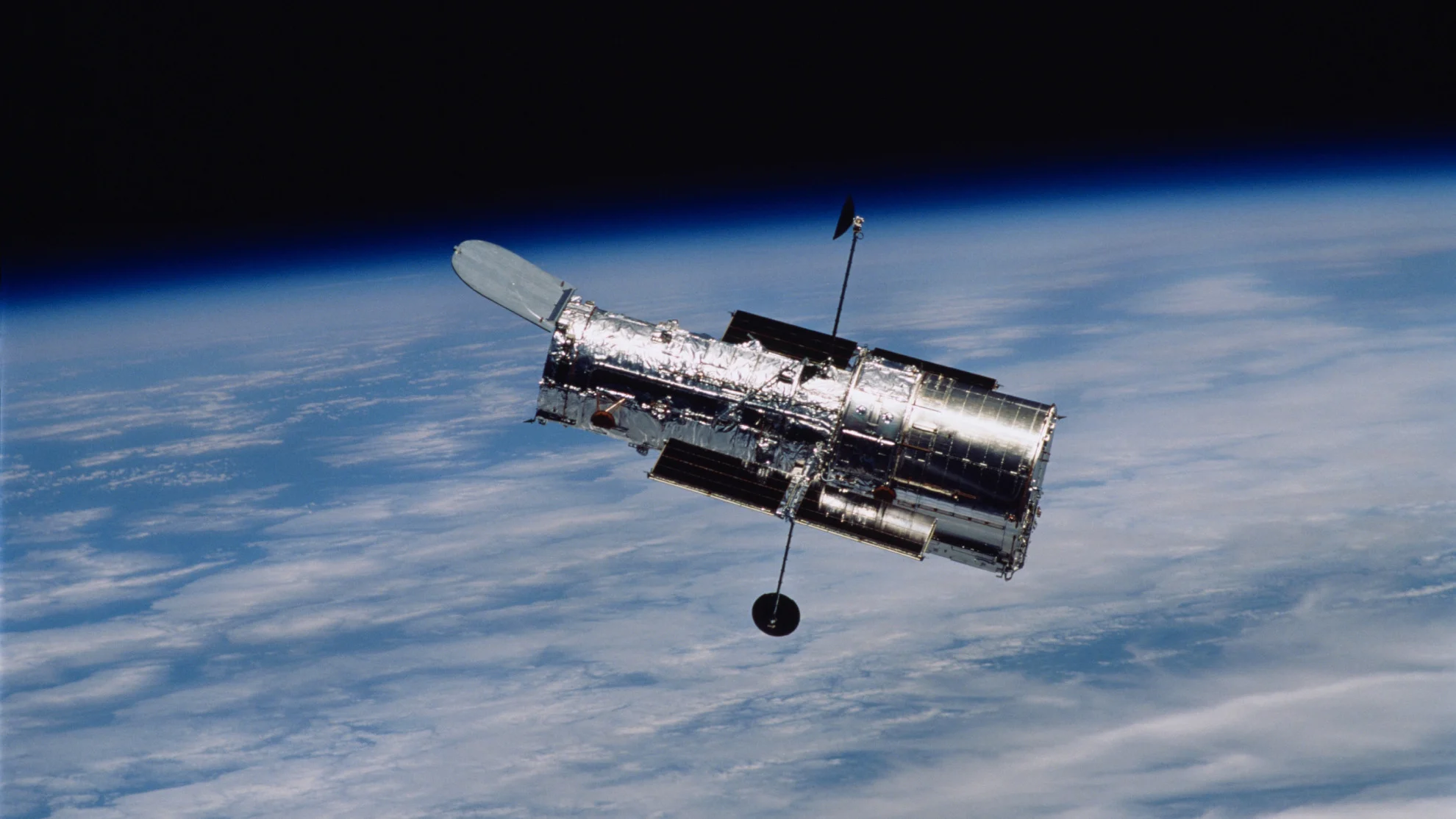
After losing Swift, NASA wants to rescue Hubble from a similar fate

Unless NASA finds a way to save it, Hubble's orbit will eventually decay and this amazing telescope will burn up in Earth's atmosphere.
With the Hubble Space Telescope only having about seven or eight years left before it falls back to Earth as a blazing fireball, NASA is looking for ways to save it, and maybe even improve its performance as it continues to expand our knowledge of the cosmos.
On November 4, 2026, after nearly 22 years of delivering breakthrough science on the most powerful events in the universe, NASA's Swift Observatory was lost. The telescope's orbit had decayed so much that friction with Earth's upper atmosphere dragged it down and turned it into a trail of burning debris in the sky over western Indonesia.

An artist's conception drawing of the Neil Gehrels Swift Observatory. (NASA)
DON'T MISS: Canadian astronaut Joshua Kutryk conducted his very first spacewalk
Months before, in early July, the commercial spaceflight company Katalyst had sent LINK to help.
This robotic spacecraft was designed, built, and launched into space in less than a year. Its sole purpose was to rendezvous with Swift, attach to it, and then use its thrusters to perform an orbital boost, putting the telescope back into a stable orbit.
However, once in orbit, LINK suffered a series of failures, causing it to tumble uncontrollably. The mission was ultimately cancelled, and Swift was left to burn up on re-entry.
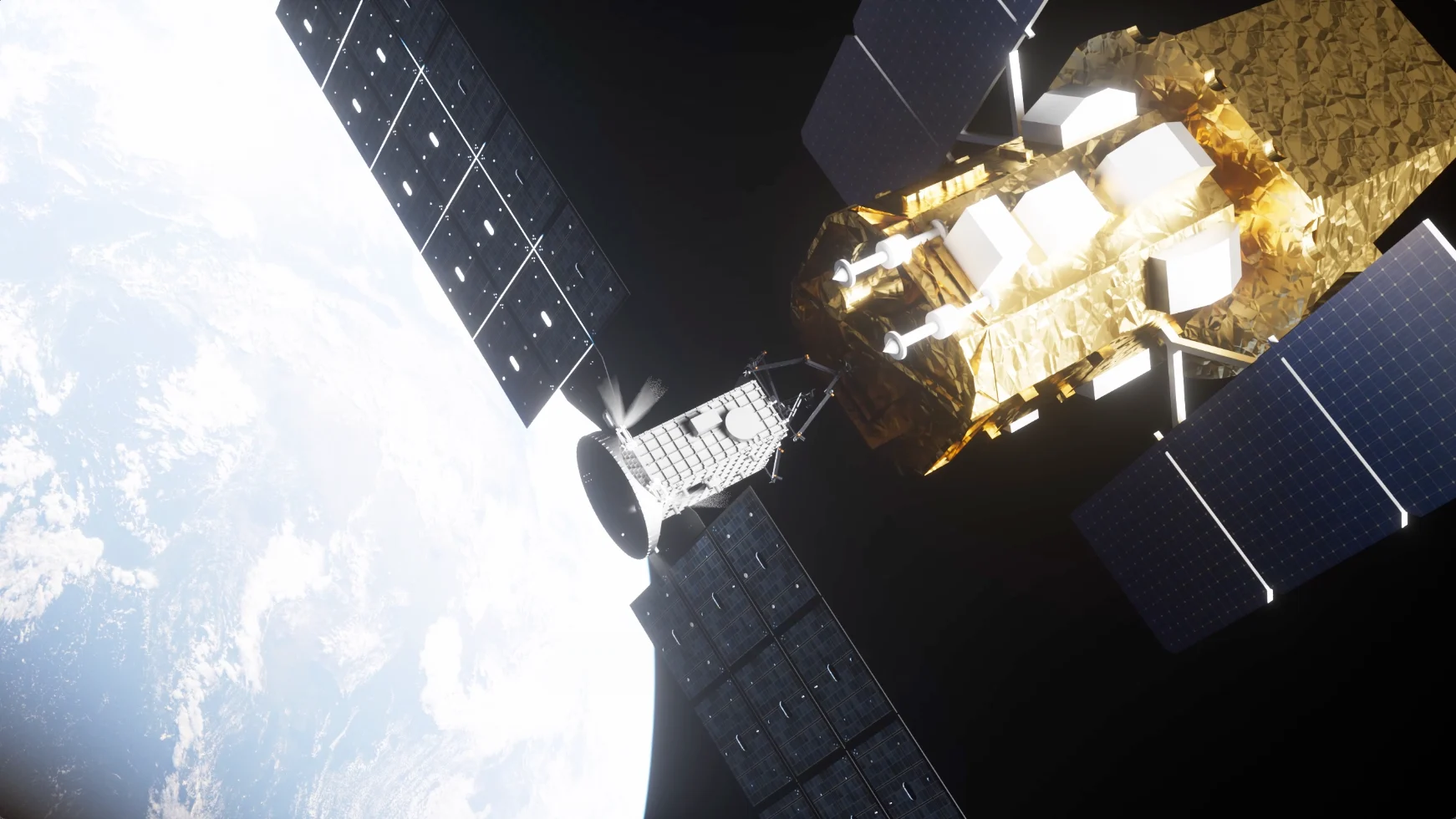
An artist's conception drawing shows the LINK spacecraft approaching to attach to the base of the Swift Observatory, in an attempt to boost Swift into a safe, higher orbit. (NASA)
As early as 2033, the Hubble Space Telescope is expected to suffer the same fate.
Hubble has been in space for over 36 years, so far. The space telescope was dropped off at an altitude of 600 kilometres above Earth by the Space Shuttle Discovery crew, during the STS-31 mission in April 1990.
Despite how thin the planet's atmosphere is at that distance, it still exerts a tiny amount of drag on the telescope during each orbit. This is enough to cause Hubble to slow down and lose altitude over time.
Many satellites have their own thrusters, which controllers on the ground occasionally use to loft them higher, countering this atmospheric drag. However, Hubble has no thrusters of its own. Over the years, it has relied on space shuttle servicing missions to boost it back into a higher orbit. Its first boost was in 1993, it was boosted a second time in 1997, and for a third and final time in 2002.
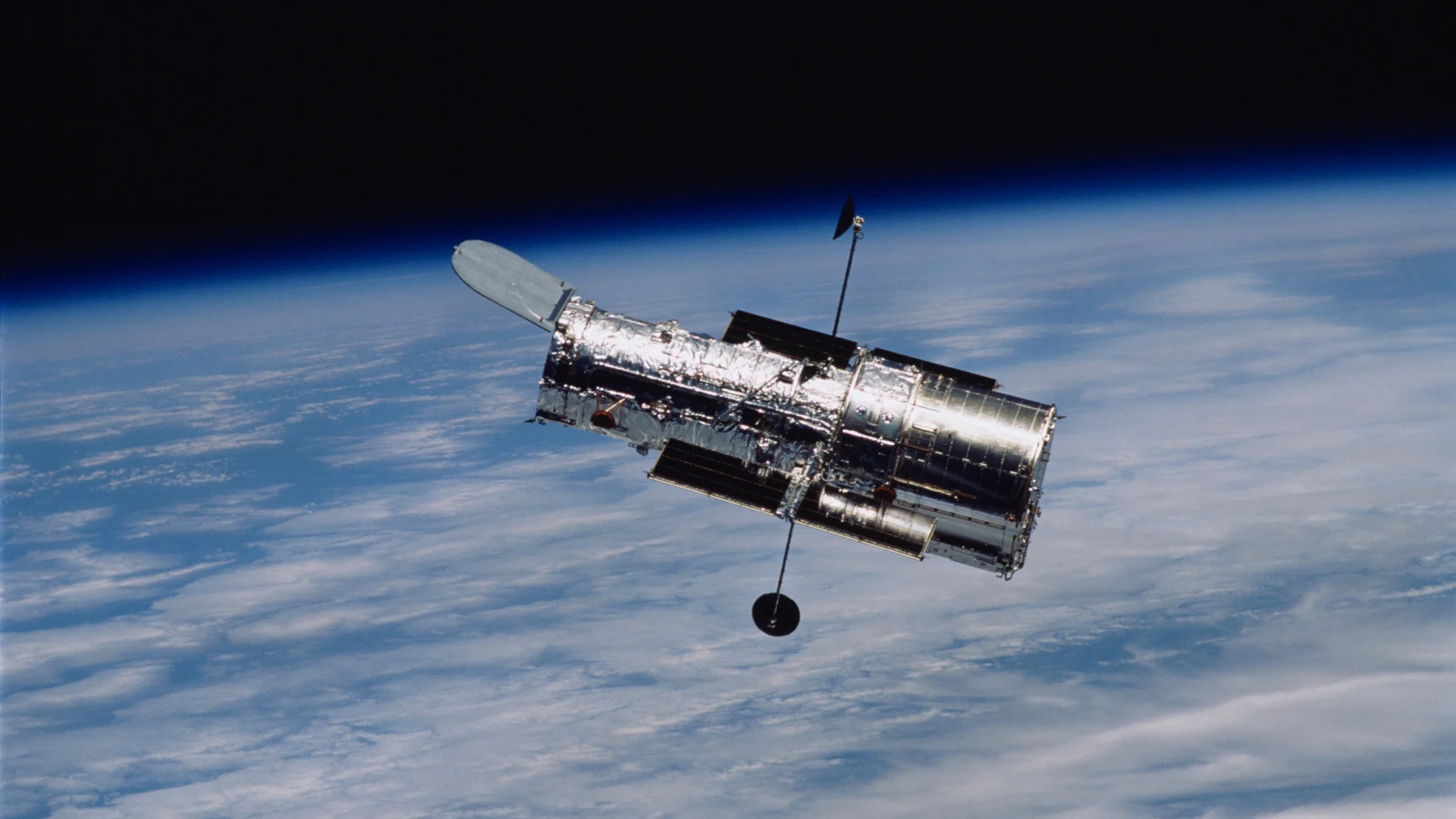
Hubble in orbit during STS-109 in 2002, when it was serviced by the crew of the Space Shuttle Columbia. (NASA)
RELATED: Mars Perseverance rover sets new record for farthest off-world driving distance
Following the 2003 Columbia disaster, new safety regulations effectively cancelled any shuttle missions that could not reach the International Space Station in the case of a problem while in orbit. As Hubble circles Earth much higher than the ISS, this included all future plans to service the telescope. Only one final mission was eventually allowed — STS-125, in 2009, by the crew of the Space Shuttle Atlantis — but boosting Hubble's orbit was not a part of that flight.
Since the end of the shuttle program in 2011, there have been no other spacecraft in use that could even attempt another servicing mission.
Now, with Hubble having completed a milestone 200,000th orbit as of September 19, 2026, its altitude has decayed to below 500 kilometres. While it remains well above the danger zone at the moment, its orbital decay will begin to accelerate in the years ahead. Thus, NASA is looking for a way to save it.
"Hubble still has important science ahead of it, and we should be looking at every reasonable opportunity to keep it delivering for as long as possible," NASA Administrator Jared Isaacman said in a NASA press release.
"If there are innovative and cost-effective ways to extend the life of an asset already on orbit, we owe it to the American taxpayer and the scientific community to explore them," Isaacman added. "Extending Hubble's life would mean more discoveries, more science, and more opportunities to expand our understanding of the universe."
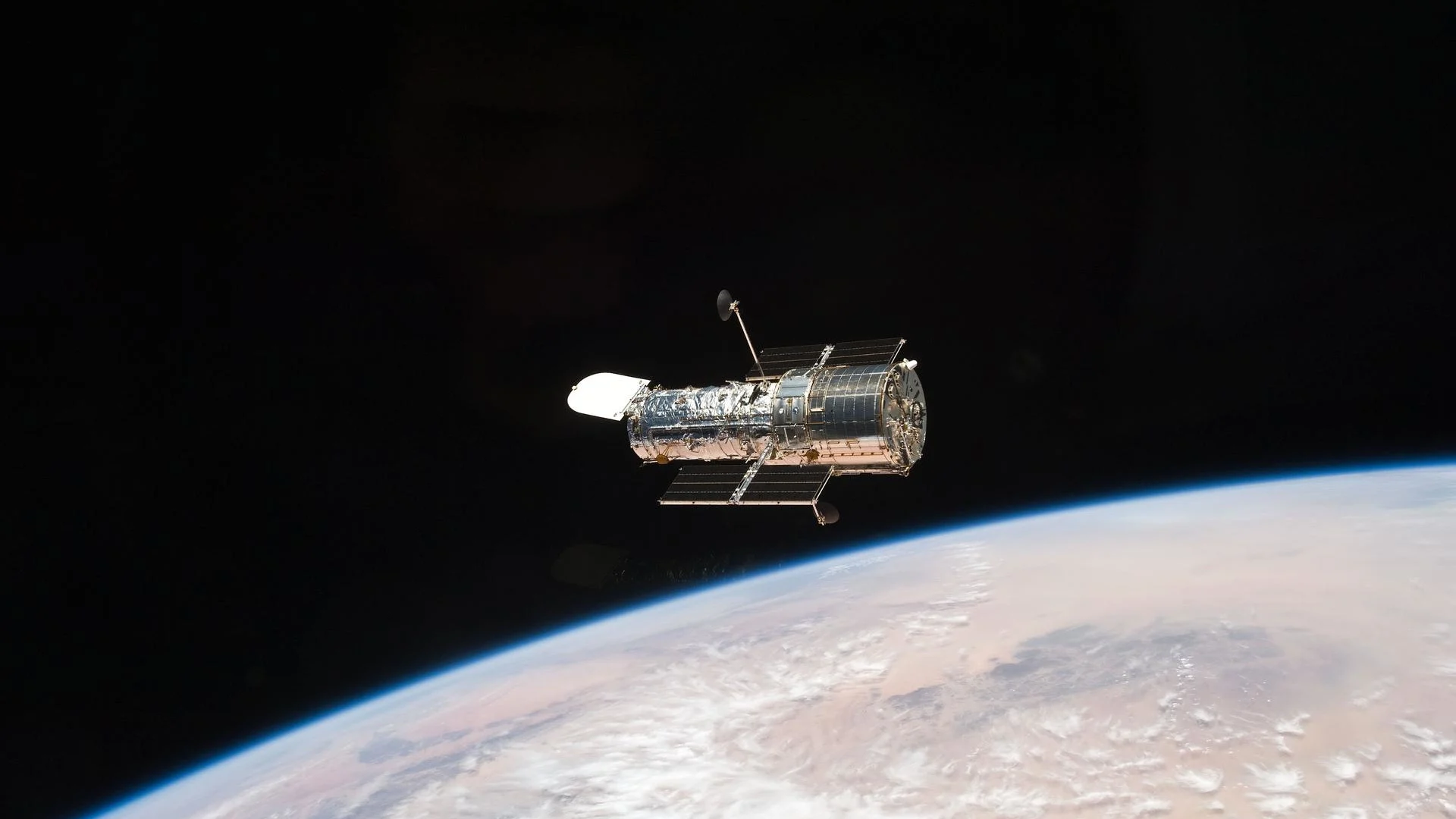
An STS-125 crew member aboard the Space Shuttle Atlantis captured this still image of the Hubble Space Telescope as the two spacecraft circled Earth together on May 19, 2009, after the crew released Hubble back into orbit following nearly a week of servicing and repairs. (NASA)
MORE FROM SPACE: Watch Mars and Jupiter 'slow dance' in the sky throughout November
If a mission like LINK could capture Hubble and deliver it back into a higher orbit, the telescope's mission could be extended by years, or possibly much longer with repeated boosts.
Or, if Hubble were ultimately retired, such a mission could push it down into the atmosphere in a controlled manner, so that it would burn up harmlessly over the open ocean. Or, instead, Hubble could be lofted into a so-called 'graveyard orbit', high above low-Earth orbit. There, it would be preserved in space, while keeping it from endangering other missions.
What's more interesting, though, is the possibility of developing missions — robotic, or possibly even crewed — that could rendezvous with Hubble to conduct true servicing missions: to perform repairs, update the telescope's hardware, or maybe upgrade its capabilities.
"Hubble is a national icon that has fundamentally changed how humanity views our universe for more than 35 years," said Nicky Fox, the associate administrator of NASA's Science Mission Directorate. "Commercial industry has rapidly evolved in recent years to offer new capabilities for in-space satellite capture and servicing. Given the time we have until Hubble's anticipated re-entry, we are eager to explore the breadth of possibilities to boost Hubble to a higher orbit while we develop the flagship mission to follow."
NASA's call for proposals from the space industry is open until the end of November. Any mission that launches from this project will need to do so within the next six years — by 2032 at the latest — to save Hubble from a fiery fate.