Are Canadians in for supercharged nor'easters this winter because of El Niño?

'Storm stayed' could become a common phrase across the East Coast of North America this winter thanks to the super El Niño
Hey East Coast and parts of Ontario! Ever heard of being “storm stayed”? It’s what happens when there’s so much snow hitting the ground that you can’t leave your home for days. It’s both fun and not fun at the same time.
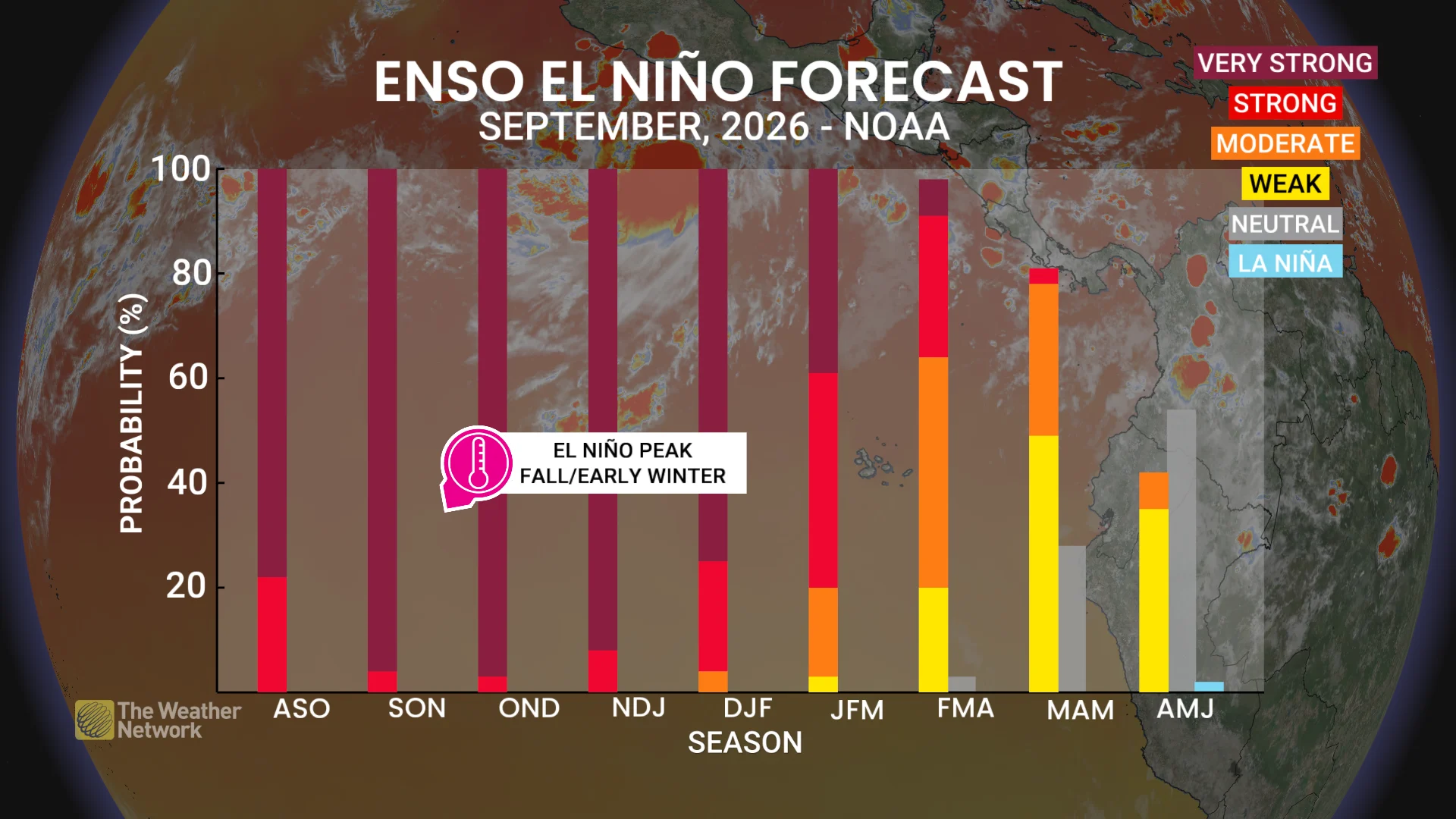
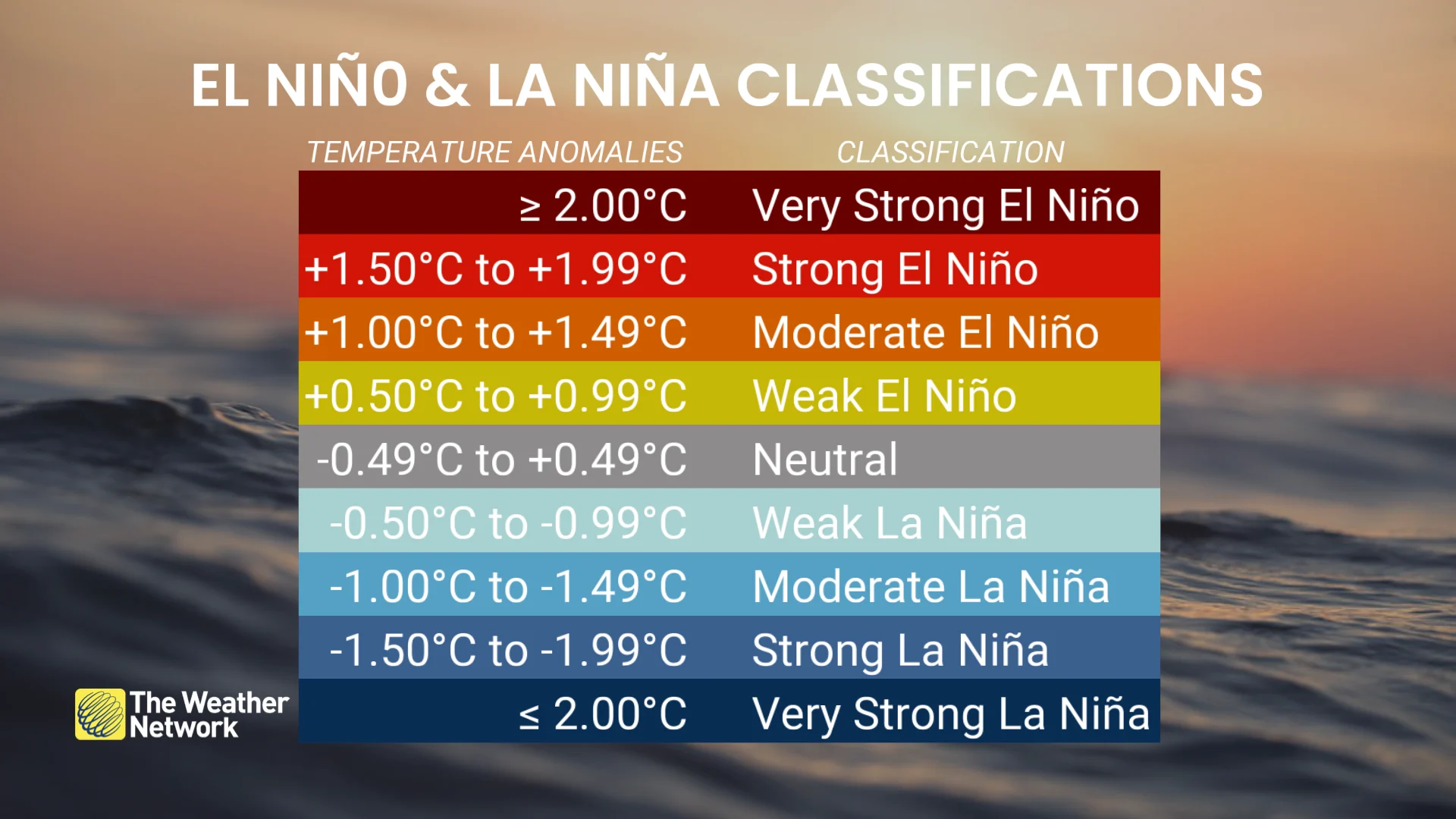
It’s also a term that might get a solid workout this winter thanks to the monster El Niño that’s building in the Pacific, an El Niño that already has ocean temperatures 3 C above the average, making it the strongest one on record by a wide margin.
El Niño is well known for is a lack of hurricanes in the Atlantic due to the wind shear that it induces (and 2026 is following what we expected—only one storm made it to hurricane status so far), but what isn’t as well known is El Niño's effect on nor’easters.
Nor’easters bring snow, rain, high winds, more snow, higher winds, and just a huge number of disruptions to everyone along the east coast of the US and Canada.
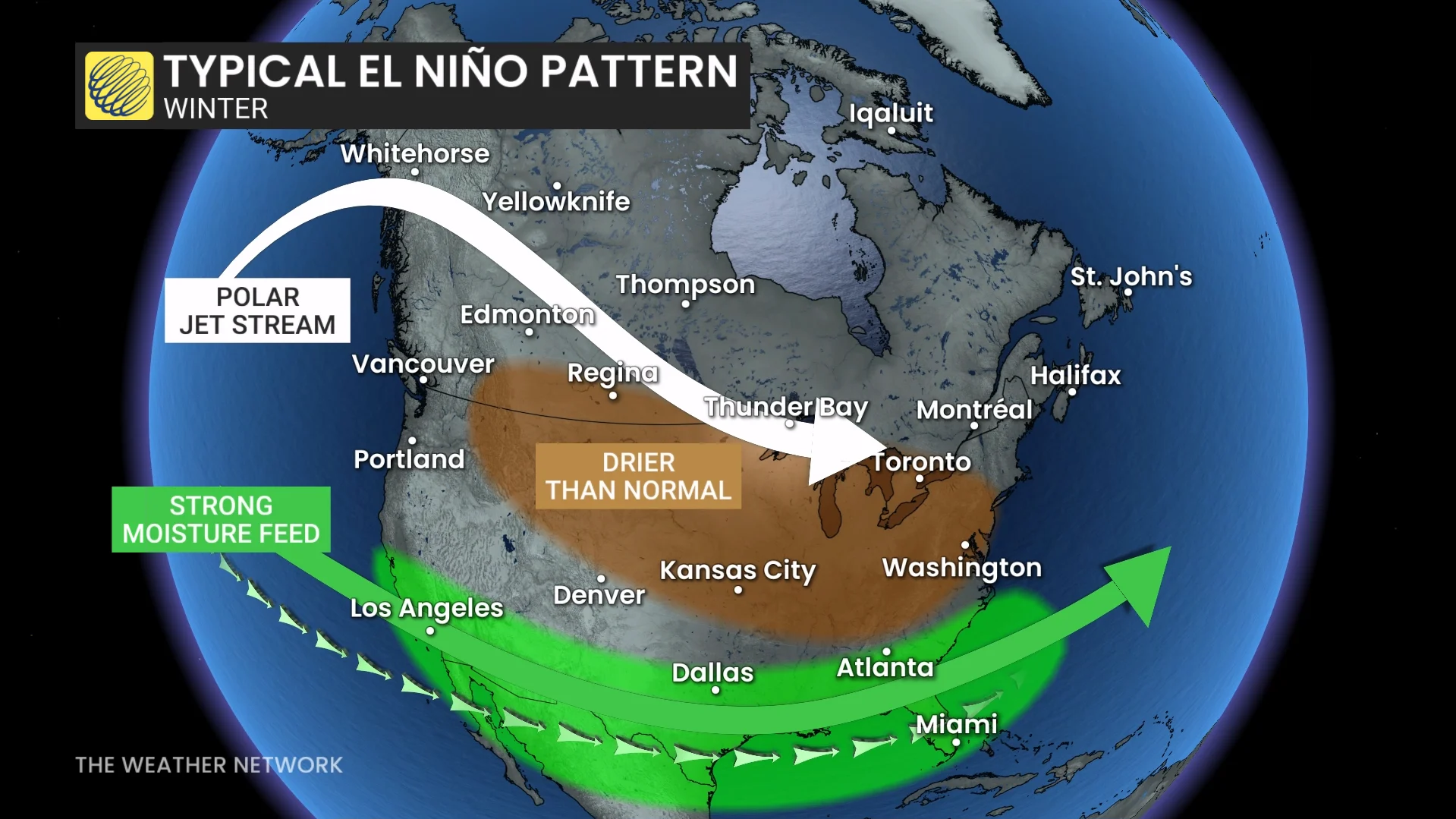
Typical El Niño winter pattern. (The Weather Network)
All of this may be in the pipeline for this winter thanks to the strongest El Niño event we’ve ever seen, but the exact set of impacts is, at this point, hard to nail down.
RELATED: Canada's Winter Sneak PeeK - El Niño puts record warmth in play
Just to make things that much worse, there’s evidence that El Niño years tend to have more nor'easters.
First, a little meteorology—nor'easters get their energy from the difference in temperature between two air masses, and more specifically, from the difference in the air being fed heat and moisture above the Gulf current and the cold air masses that sweep off the continent coming out of Canada. The difference in temperature between the cold, continental Arctic air and the warm ocean air is what drives the strength of a nor’easter, so anything that increases the difference increases the strength.
The counterclockwise rotation of the building-low acts as a conveyor belt for the warm, moist air of the Gulf of Mexico and the Gulf Stream while, at the same time, shuttling in cold, dry air from the Prairies.
In an El Niño year the Pacific jet tends to move south and makes the southeast of the US wetter and warmer as storms track along the jet out of Texas and Mexico. This jet can bring Pacific moisture across the continent and into the building No’easter. It’s like using high octane fuel in your car.
All of this is a recipe for high-impact nor'easters for both the US and Canada.
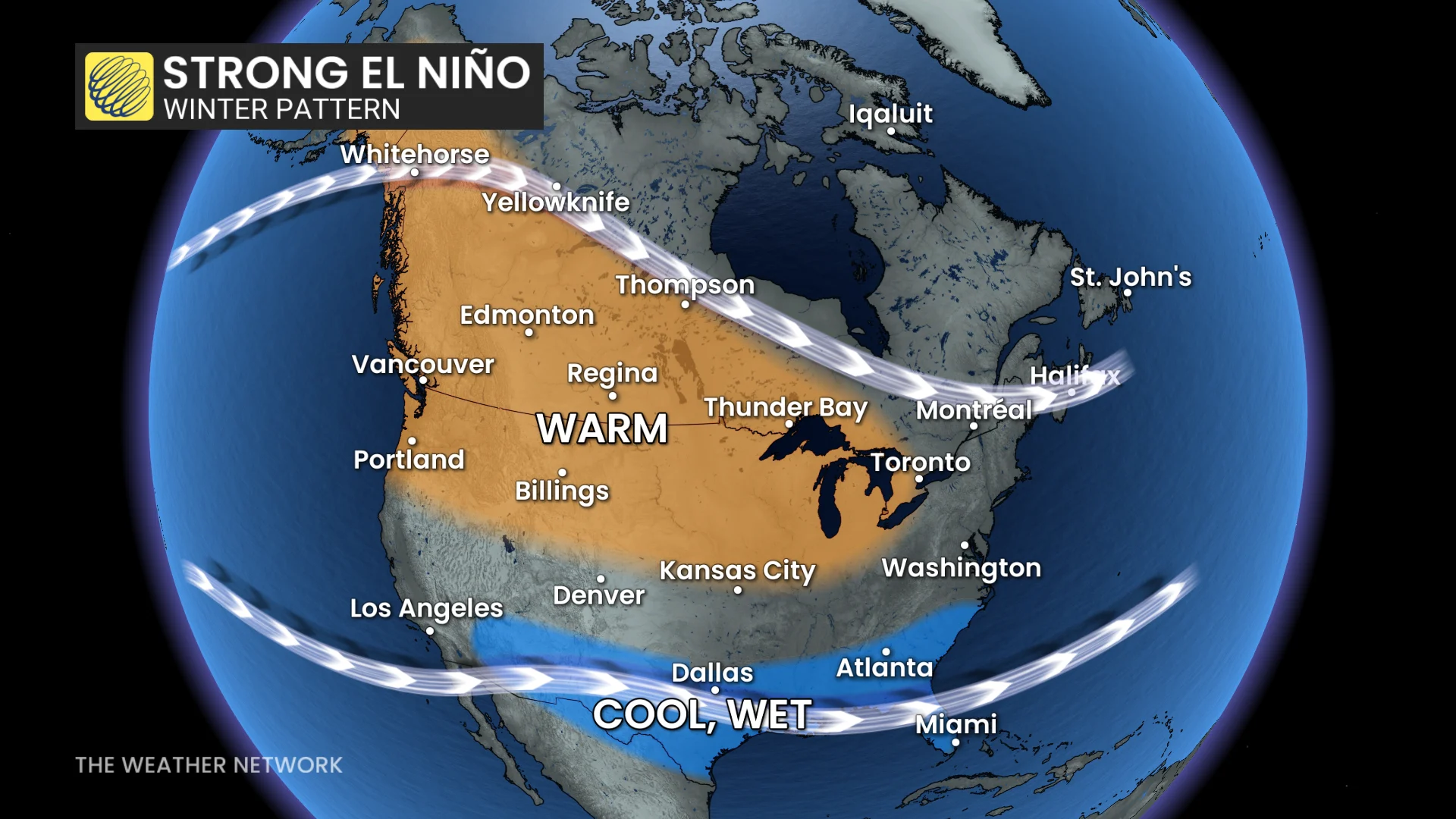
Pattern expected during a strong El Niño winter. (The Weather Network)
RELATED: The strongest nor’easters are getting even stronger, study finds
Just to give you an idea of what these storms can do, almost every year has an example, but a few stand out.
In 2013, a February nor'easter brought 68 centimeters of snow to Boston, and even Toronto had major shut-downs (1000 flights at Pearson) thanks to the snow and winds from the storm.
In 2026, a nor'easter hit the East Coast with 95 km/h winds and over a metre of snow in New Hampshire. The impacts were less in Canada even though 20 cm of snow fell in Halifax; people took the storm seriously and prepared to be “storm stayed” for a few days.
The biggest impacts of a nor’easter happen along the coastal cities like New York, Boston, or Halifax, but even Ontario can end up dealing with the cold and winds that these storms bring. These are sprawling, gigantic storms, and they can impact areas as far away from the coast as Ontario and Quebec.
In Ontario, the cold winds sweeping in over the Great Lakes and into the Northeast will get the snow squalls going, especially if the lakes are more ice-free; the stronger the nor'easter, the stronger the winds over the lakes, and the higher the snow drafts in London.
The term “storm stayed” isn’t going to be used for the hurricane season this year along the east coast, but it’s likely going to be used way more than most Maritimers are likely to be comfortable with.
And even people as far away from the coast as Ontario may be cursing the term as well, so before they start up, it’s time to get prepared.
Just ask any Maritimer what “storm chips” are.