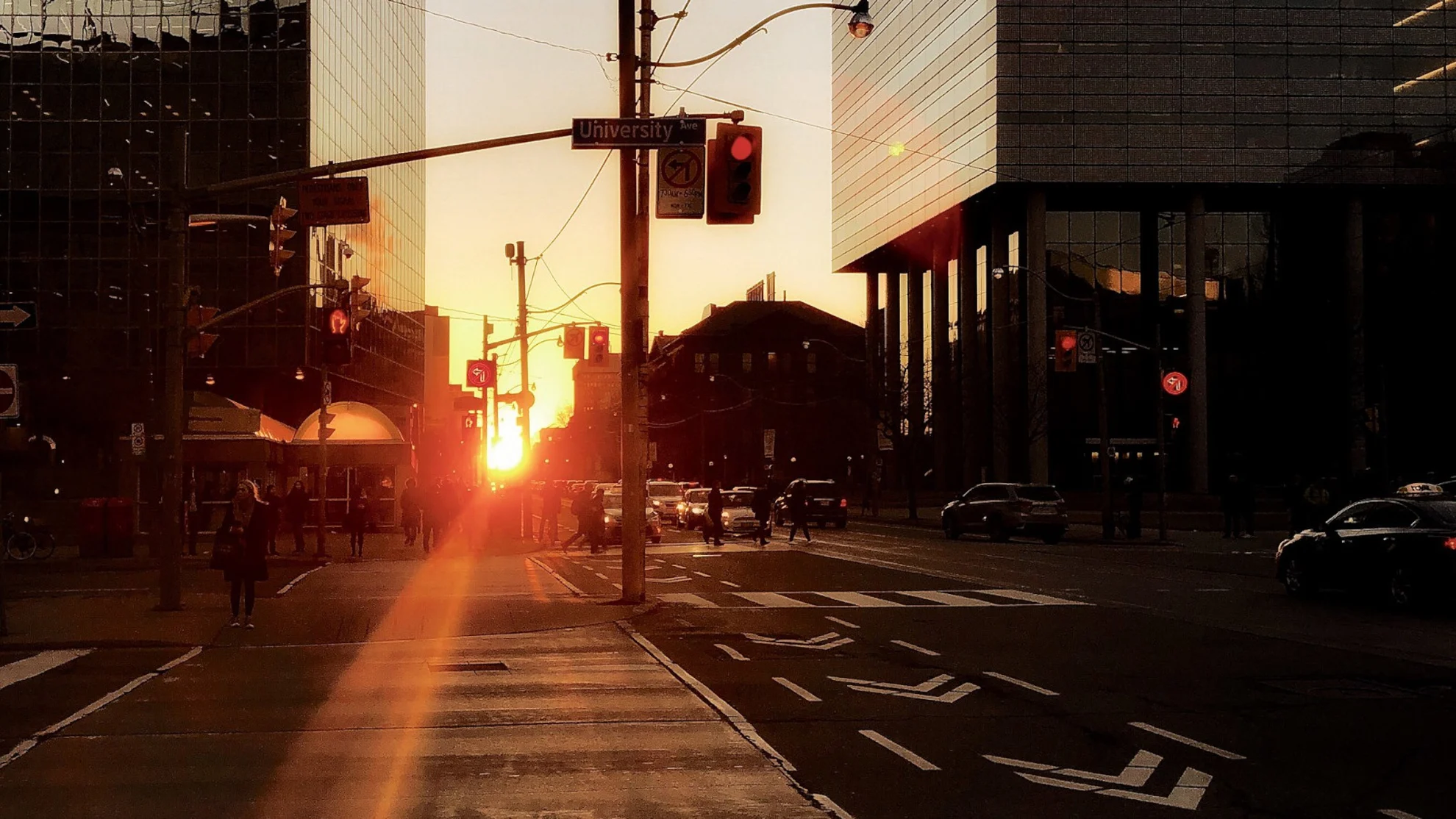
Are you ready for Torontohenge? Here's when and where you can see it

Cameras at the ready for this spectacular solar alignment, and be careful on the roads this weekend!
The city of Toronto is due for some amazing sunsets this weekend, as it experiences the solar alignment known as Torontohenge.
Twice each year, in mid-February and again in late October, the setting Sun presents a daunting challenge to evening commuters traversing Toronto's downtown core.
How do you keep the glare out of your eyes, as the Sun shines directly down the city’s east-west aligned streets, while simultaneously ensuring that you can still see the traffic, pedestrians, signs, and signals around you? In recent years, this has even begun collecting crowds along those same streets, due to a cultural phenomenon known as Torontohenge.

Manhattanhenge, captured from 42nd St in New York, in 2008. (Sevtibidou/Wikimedia Commons (CC BY-SA 3.0))
Years ago, astrophysicist Neil deGrasse Tyson coined the term Manhattanhenge, describing how the skyscrapers lining the streets of the New York City borough would perfectly frame the setting Sun on certain days of the year. Although the effect is coincidental, simply due to how Manhattan's urban grid is arranged, it brings to mind the alignments seen during the summer and winter solstices at the ancient megalith, Stonehenge.
Watch: Funny moment 'Manhattanhenge' is ruined for Instagrammers
This phenomenon isn't unique to Manhattan, though. Most cities with tall buildings arranged in a grid can experience the same thing. However, the exact timing will differ based on the location.
For Manhattan, it happens on May 28 and 29 and then July 11 and 12, each year.
Since Toronto is arranged at a different angle, along the shores of Lake Ontario, Torontohenge occurs around February 14-15 and October 25-26.
Since the Sun sets at a slightly more southerly location each night during the fall, we will first see the full disk of the Sun well above the horizon as it aligns with the city grid a few days before Torontohenge. It will then get closer to the horizon on subsequent nights, until we see what Neil deGrasse Tyson called the "full Sun on the grid" and "half Sun on the grid" alignments.
Full Sun on the grid occurs when we can see the Sun's full disk touching the horizon as we look west down the city streets. The next night we will have a half Sun on the grid, when the Sun will be half below the horizon as it aligns along that same view.

This diagram shows how the setting Sun gets lower in the western sky as it aligns with the city grid each day from October October 23-26. Credit: Scott Sutherland
For Torontohenge 2026, the city's sunsets occur at:
6:21 p.m. on Friday, October 23,
6:19 p.m. on Saturday, October 24,
6:18 p.m. on Sunday, October 25, and
6:16 p.m. on Monday, October 26.
Remember that 'sunset' is defined as the time when the Sun has completely dipped below the western horizon. So, to experience Torontohenge, find your spot in the downtown core at least a half hour beforehand. That way, you can get the full effect as the Sun slowly comes into alignment between the buildings.
During the spring Torontohenge, all of this is reversed. As the Sun sets farther north each day at that time of year, the ‘half Sun on the grid’ happens first, followed by the ‘full Sun on the grid’ the day after. The Sun will then be higher and higher as it aligns during the few days after.
Also, unlike Manhattan, Toronto can also see these same alignments to the east, during sunrise, around April 19 and August 23 each year.
DON'T MISS: A titanic ‘tug-of-war’ inside Earth is changing the length of our days
Where to watch
The best downtown locations to view Torontohenge tend to be along Wellington Street, King Street, Adelaide Street, and Richmond Street, when viewed from locations to the west of Younge Street. Each of these roads is straight, with tall buildings lining both sides, and both Adelaide and King have reasonably unobstructed views of the western horizon.
On King Street West, picking a spot just north of Roy Thomson Hall is often especially good.

This map shows the best streets for viewing Torontohenge from downtown Toronto. (Google/Scott Sutherland)
For those located farther north, Bloor Street West, near Yonge Street, is another great spot.
Any similar street will produce the desired effect, though.
Clear or cloudy?
As of The Weather Network's forecast for Toronto from Thursday, October 22, it appears as though the city will have excellent weather for Torontohenge.
The table below compiles the afternoon and evening forecasts for October 23-26, 2026 from Toronto's 7-day forecast page.
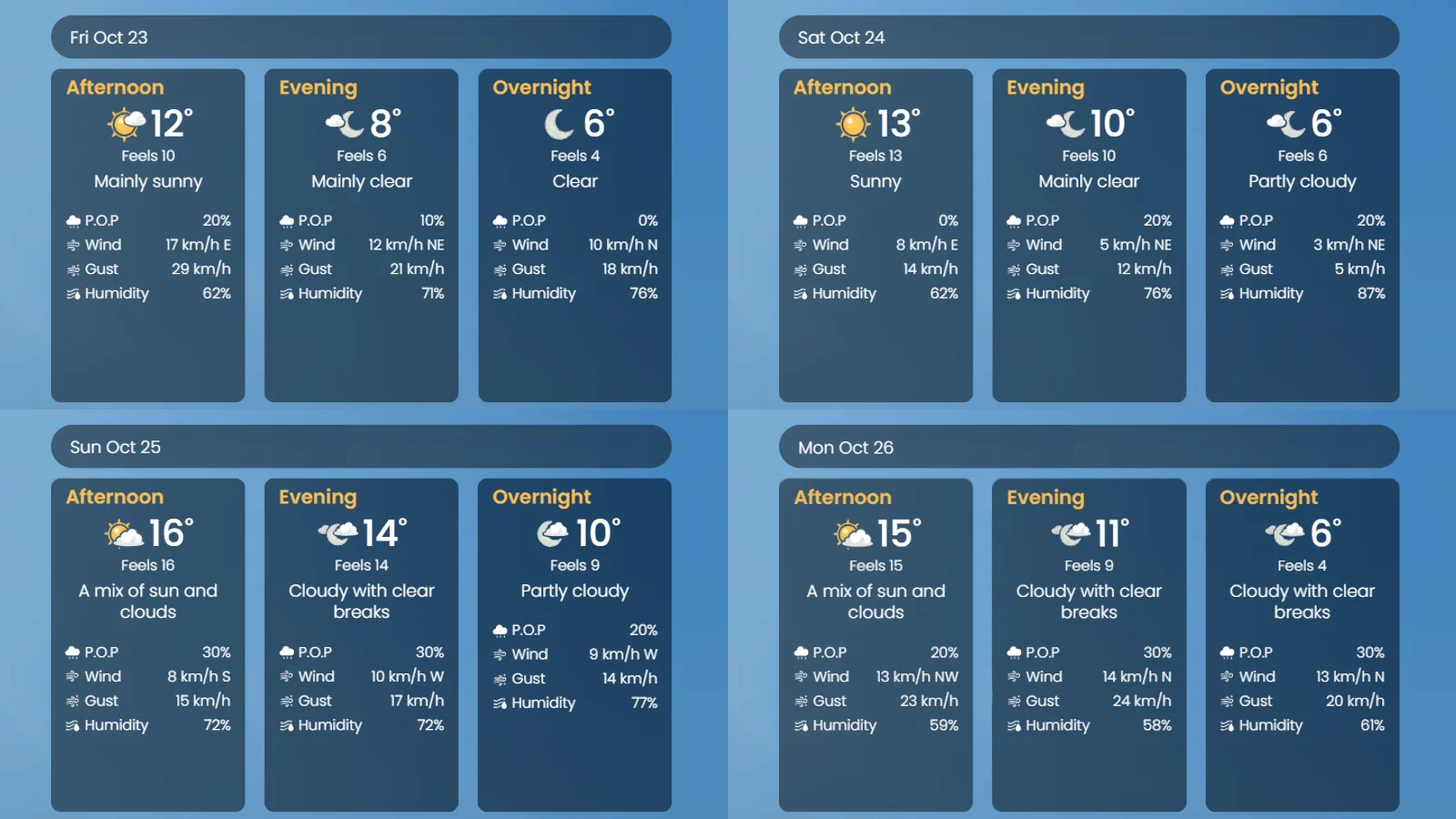
Be sure to check your local forecast before going out, though, just to be certain.
MORE WEATHER: Are Canadians in for supercharged nor'easters this winter because of El Niño?
What's going on here?
Throughout the year, the Sun's position in the sky changes. During the June solstice, it is highest in our northern hemisphere skies, and day by day, it tracks lower and lower until we reach the December solstice. Then, the process reverses, with the Sun's path climbing higher and higher each day until we are again at the summer solstice.
This change in the Sun's angle and its effect on the intensity of the sunlight when it reaches the ground is what produces our four seasons.
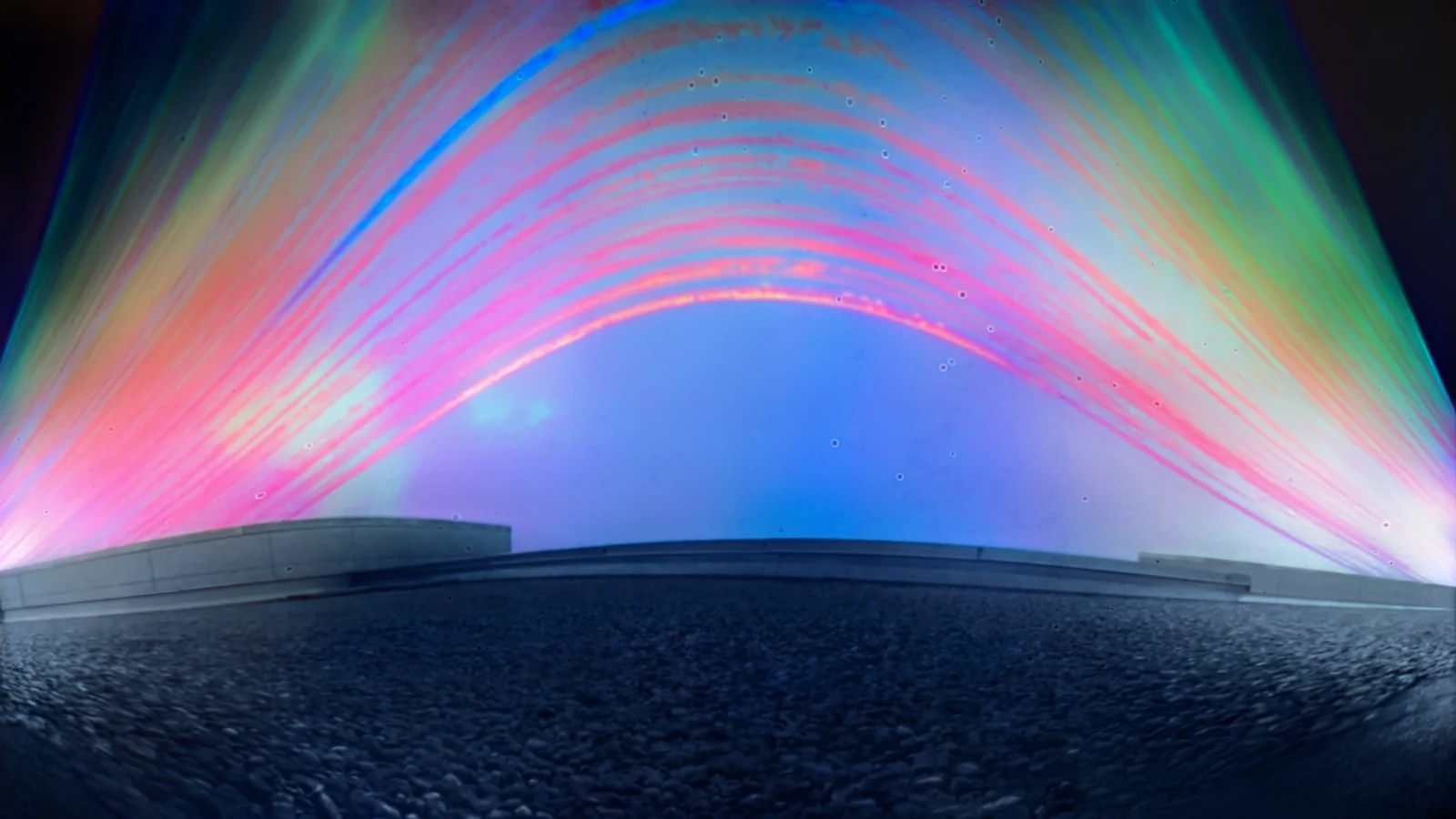
This 'solargraph' image captures the Sun's path across the sky, day after day, between the dates of June 21 and December 21, 2023. (Bret Culp (Used with permission))
So, with each sunrise and sunset we experience, we see the Sun at a different point along the horizon than it was the day before.
When ancient peoples realized this trend, they set up monuments that would line up with the rising and setting Sun on specific days of the year. The most common days to observe this alignment were on the summer and winter solstices. More sophisticated monuments also observed the spring and fall equinoxes.

(English Heritage)
However, cities such as Toronto and New York weren't built with astronomical alignments in mind. Their orientation was dictated by the local geography, specifically the shape of the Lake Ontario lakeshore and the shape and orientation of the island of Manhattan.
Coincidentally, the Sun does line up with the streets of these cities on specific dates. They just aren't astronomically significant dates. This 'henge' effect of those alignments would also not have been as noticeable when the city's streets were established. It only became a phenomenon as taller and taller buildings began to line those streets.
FROM SPACE: Mars Perseverance rover sets new record for farthest off-world driving distance
More than just Manhattan and Toronto
Other locations in Canada experience these 'henges' as well. As long as the community is reasonably grid-like, and there are straight roads lined with buildings — the taller, the better — there's a fair chance it experiences a 'henge' at some time during the year.
For example, although there are fewer tall buildings there, Halifaxhenge happens on the exact same dates as Torontohenge.
Montrealhenge occurs at sunset on Summer Solstice and sunrise at Winter Solstice, as the Sun lines up with streets running northwest-southeast, such as Robert Bourassa Boulevard and Peel Street.
For Calgaryhenge, the Sun aligns between the buildings on 4th, 5th, or 6th Avenues at sunrise around March 14 and sunset around March 21. It occurs again at sundown on September 21 and sunrise on September 28.
Edmontonhenge is best seen (both sunset and sunrise) right around the March and September equinoxes.
Caution!
Navigating Toronto's downtown core requires a sharp eye and sometimes quick reflexes. With the setting sun shining straight down the city's streets this weekend, the glare will undoubtedly make evening commutes even more challenging.
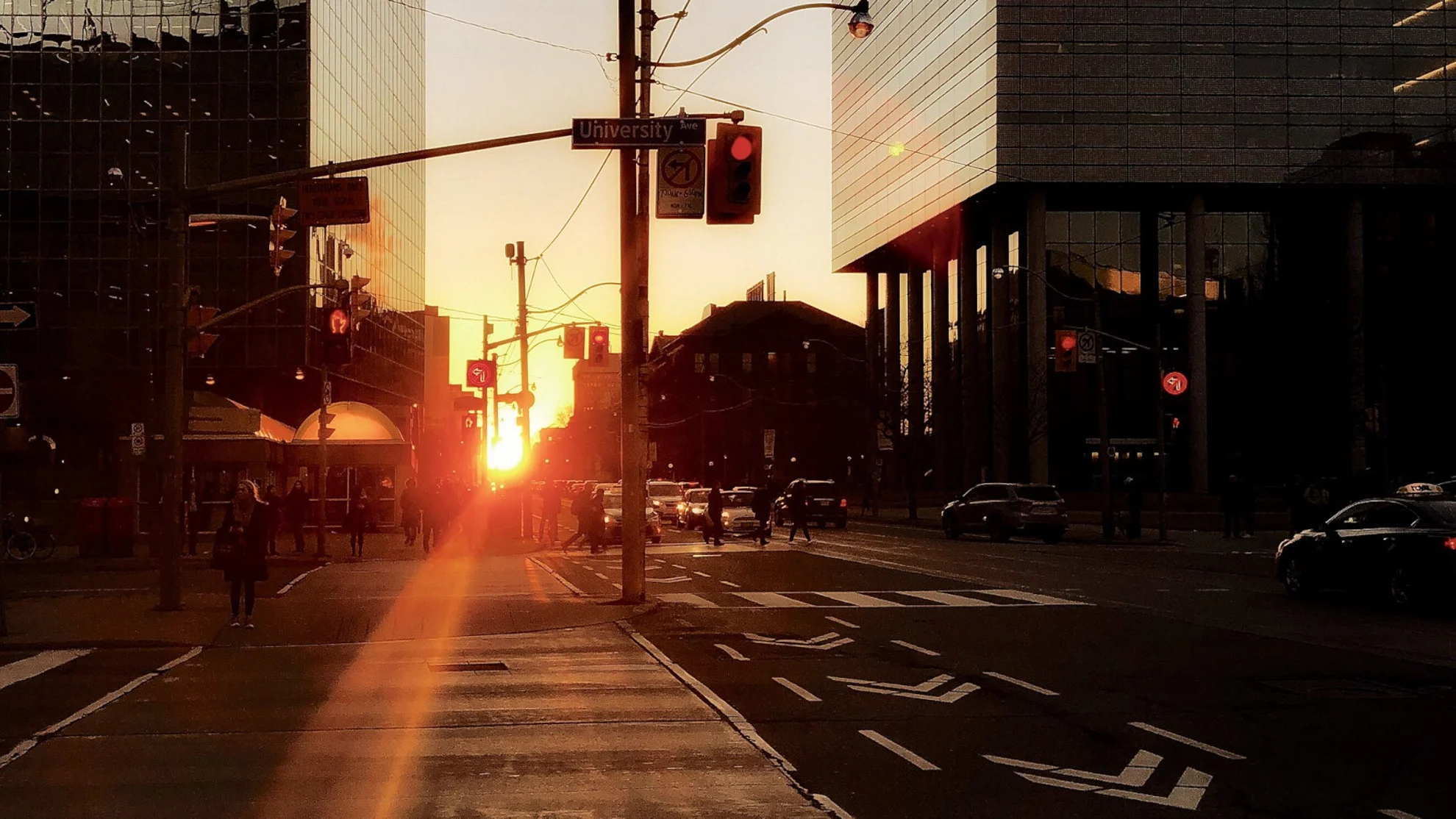
Torontohenge from College St in downtown Toronto, captured on February 22, 2018. (NextThingIKnow/Wikimedia Commons (CC BY-SA 4.0))
For pedestrians and those looking to see and capture Torontohenge, please be cautious and give commuters extra space and consideration.
This is especially true when photographing the event, as there may be some temptation to step out into the street for a better angle. Due to the glare from the Sun, you may not be as visible to drivers as you think!
And for commuters, whether the Sun is directly in your eyes as you drive west or in your rearview mirror as you go east, extra care is undoubtedly called for right now! Especially when driving downtown, pedestrians may not realize just how much the glare affects you, and there may be Torontohenge enthusiasts trying to get a better look at the phenomenon.
Please watch out for one another so that everyone stays safe!