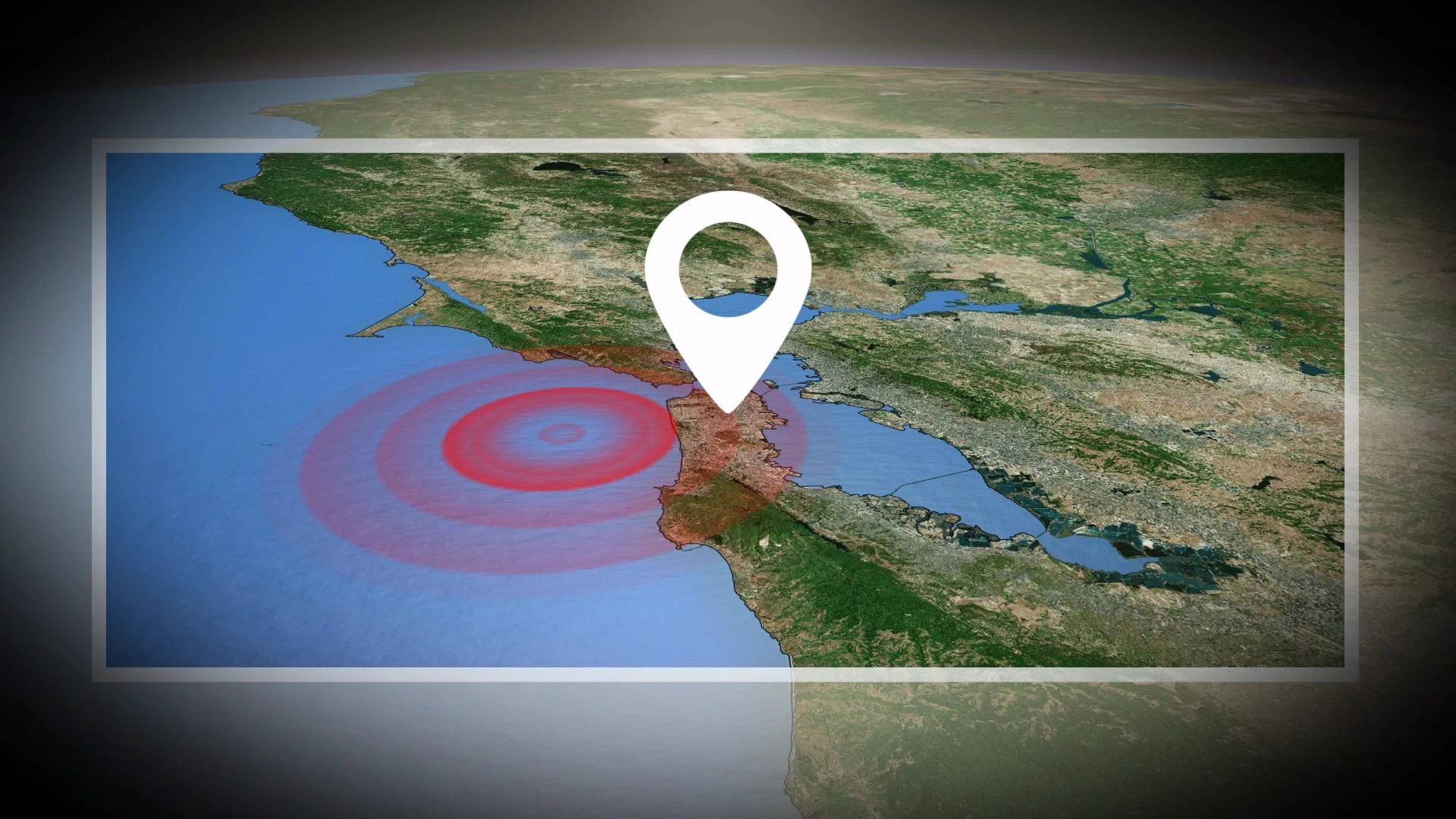
The Great Quake of 1906 nearly wiped San Francisco off the map

Thousands of people died in the earthquake and subsequent firestorm that destroyed most of the city
The deadliest earthquake in American history struck northern California during the pre-dawn hours on April 18, 1906, a tragedy that nearly wiped San Francisco off the map.
Thousands of buildings were damaged or destroyed by the violent shaking itself, but the city’s wood-frame structures didn’t stand a chance against the firestorm that ignited soon after.
DON’T MISS: Earthquakes are a risk in Canada. Here's how to stay safe
A powerful earthquake strikes San Francisco
California is one of the most seismically active regions in North America. Numerous major fault lines run through the state as the Pacific and North American plates rub past one another.
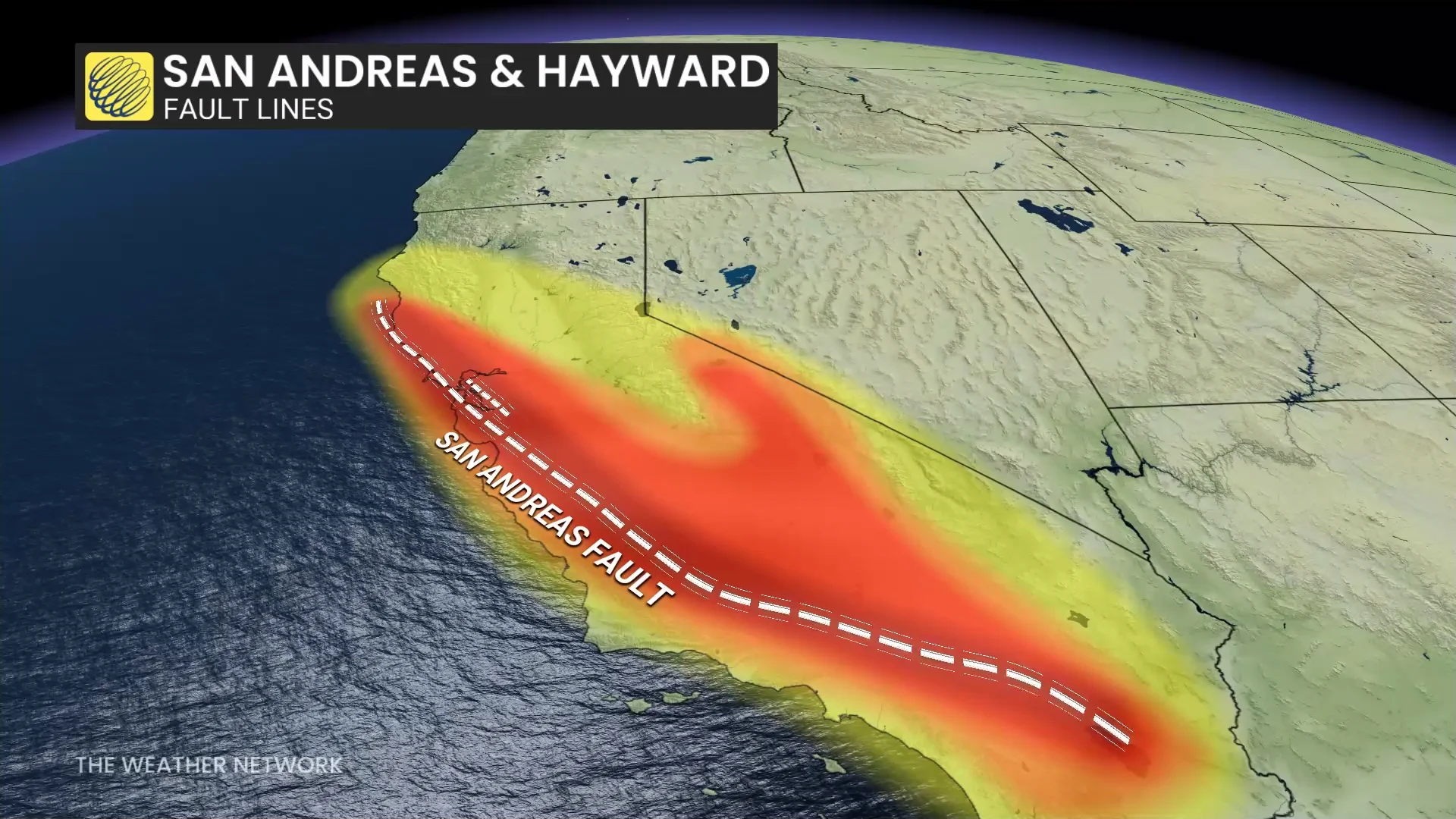
Most famous among them is the San Andreas Fault, recognized for its ability to unleash destructive earthquakes across densely populated areas.
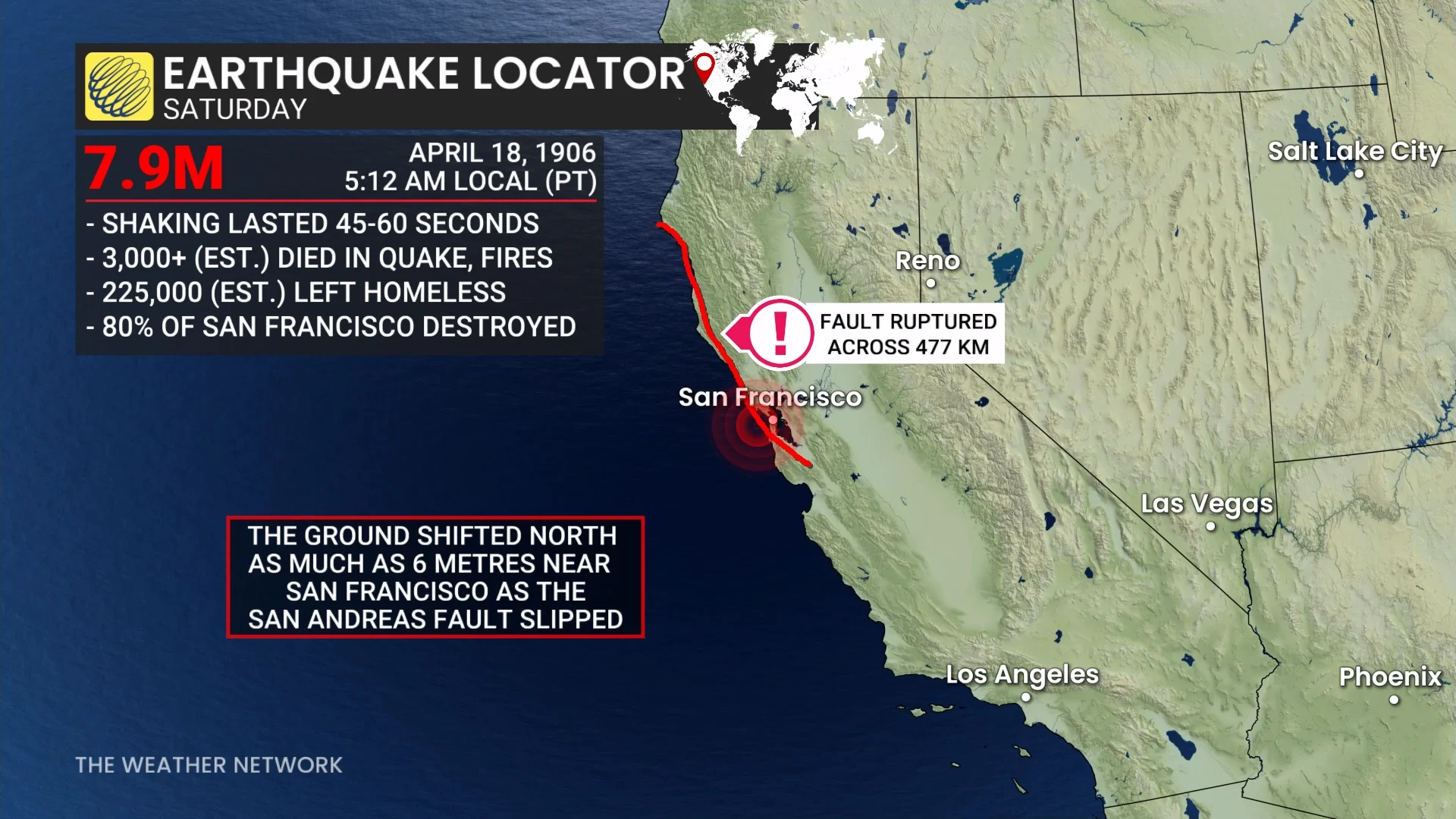
That’s exactly what happened at 5:12 a.m. on a mid-April morning in 1906.
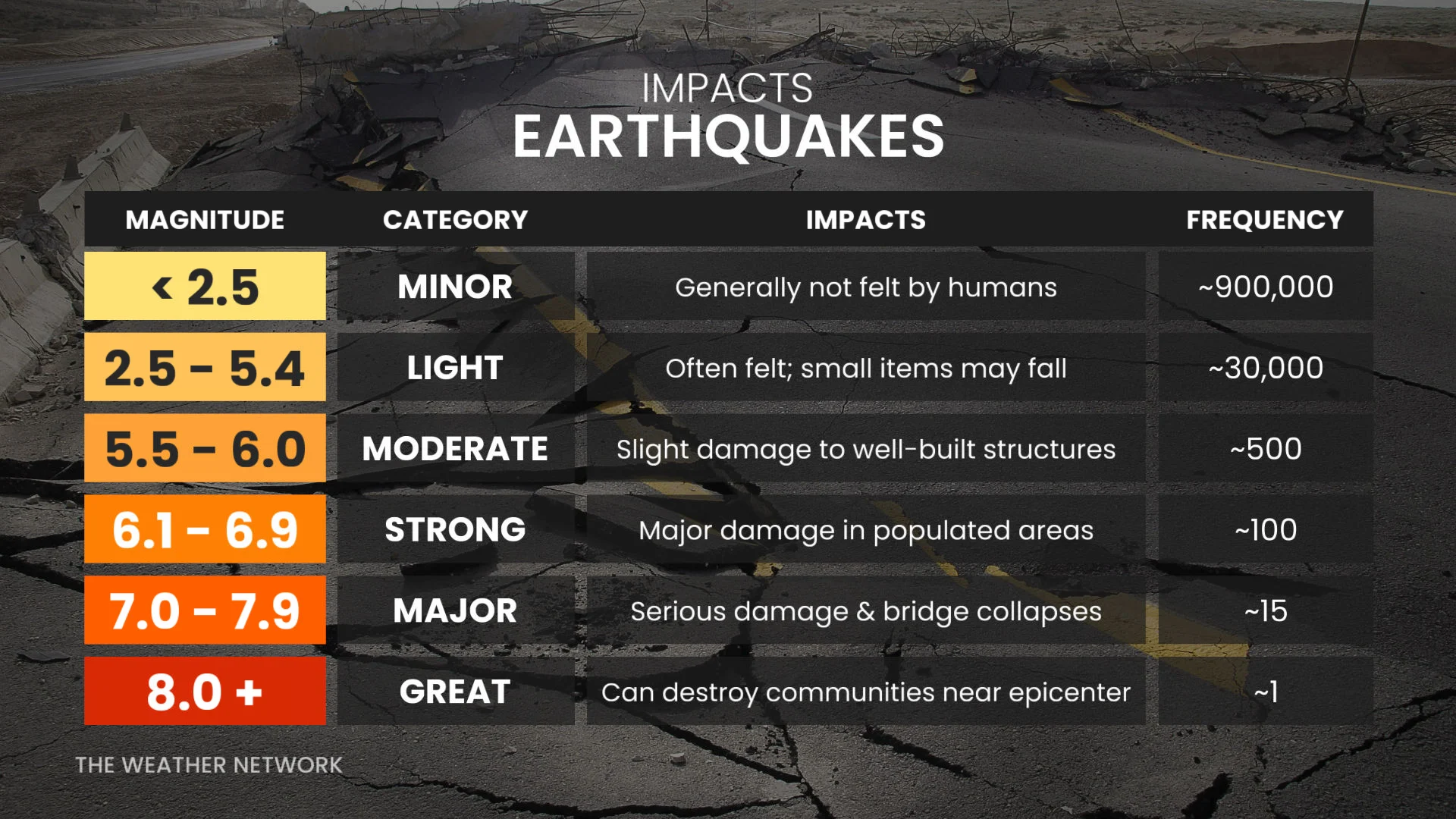
Experts today estimate that the magnitude 7.9 earthquake began just offshore from San Francisco.
RELATED: How to safely react when an earthquake strikes
A rupture measuring 477 km long broke the earth along the San Andreas Fault, resulting in violent shaking that lasted 45 to 60 seconds. The ground shifted as much as 6 metres in the community of Point Reyes.
San Francisco bore the brunt of the earthquake. Entire neighbourhoods built on soft soils or reclaimed land collapsed as the ground undulated beneath them.
Fires raged for days after the earthquake
Numerous fires broke out in the rubble.
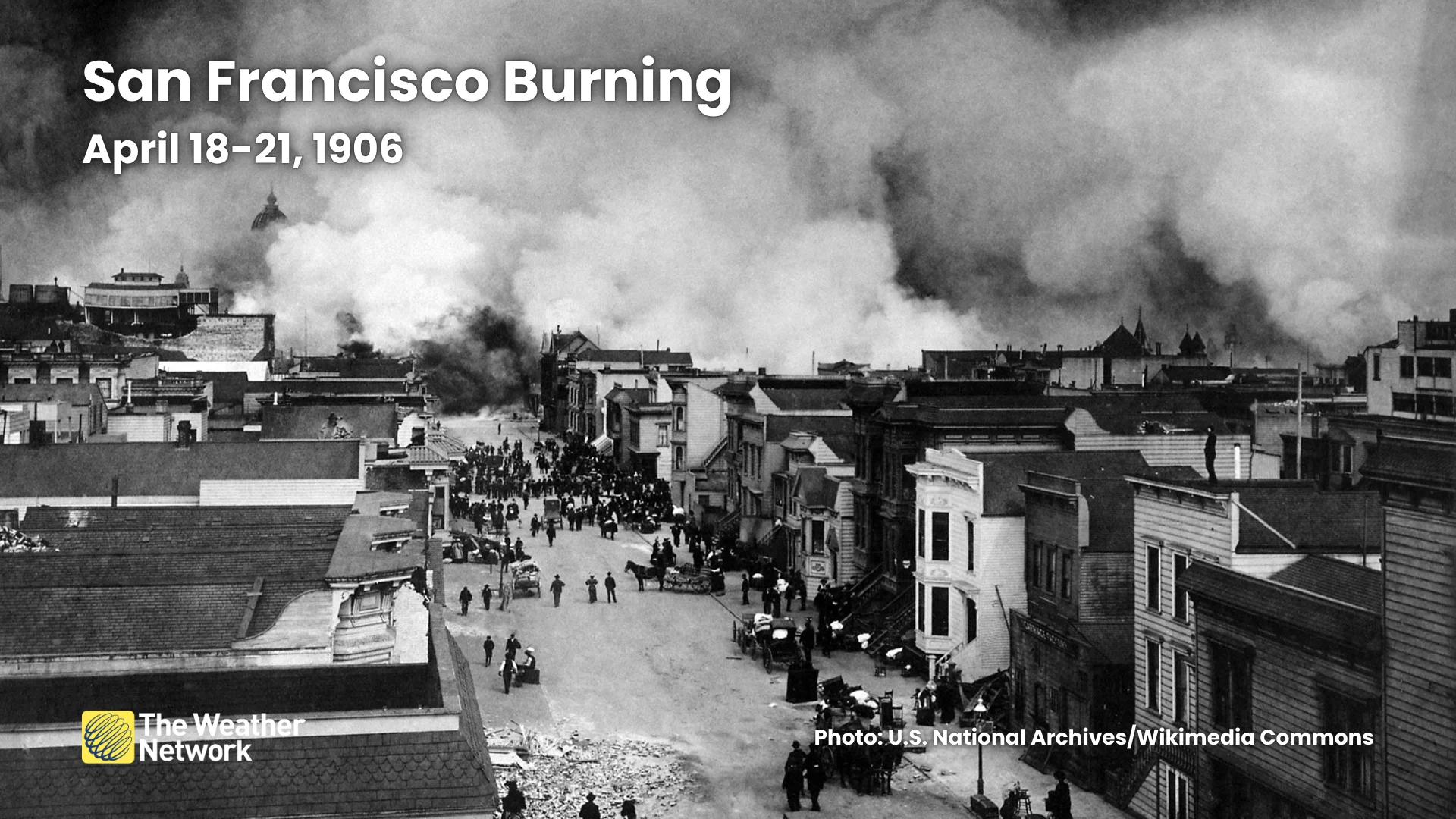
Unable to access enough water to extinguish the flames, firefighters and residents watched helplessly as blazes tore through what was left of the city for several days following the main event.
The earthquake and fires together destroyed more than 28,000 buildings, accounting for more than 80 per cent of the city’s structures. A 1989 study concluded that the event claimed at least 3,000 lives, making it one of the deadliest disasters ever recorded in American history.
Disaster kickstarted U.S. earthquake science
Earthquake science was in its infancy at the time of the 1906 disaster in San Francisco.
The first seismographs had only gone into service a few decades earlier. Charles Richter and Beno Gutenberg wouldn’t develop the Richter Scale to measure the magnitude of earthquakes for another 30 years.
RELATED: Tsunami safety tips: What to do if these dangerous waves threaten
Scientists kicked into high gear to understand these common hazards following the Great Quake. Several major breakthroughs occurred in the coming years, including the discovery that fault lines cause earthquakes.
This period also saw the development of elastic rebound theory, which describes that Earth’s crust distorts as plates rub together, and that major earthquakes result from the sudden release of this built-up tension.
San Francisco is still at risk today
Building standards, municipal infrastructure, and emergency planning have vastly improved in the century since the Great Quake. But California’s Bay Area remains vulnerable to powerful earthquakes.
The magnitude 6.9 Loma Prieta Earthquake struck near the city on Oct. 17, 1989. While considerably weaker the 1906 disaster, the Loma Prieta quake still caused widespread damage, significant fires, and dozens of fatalities.