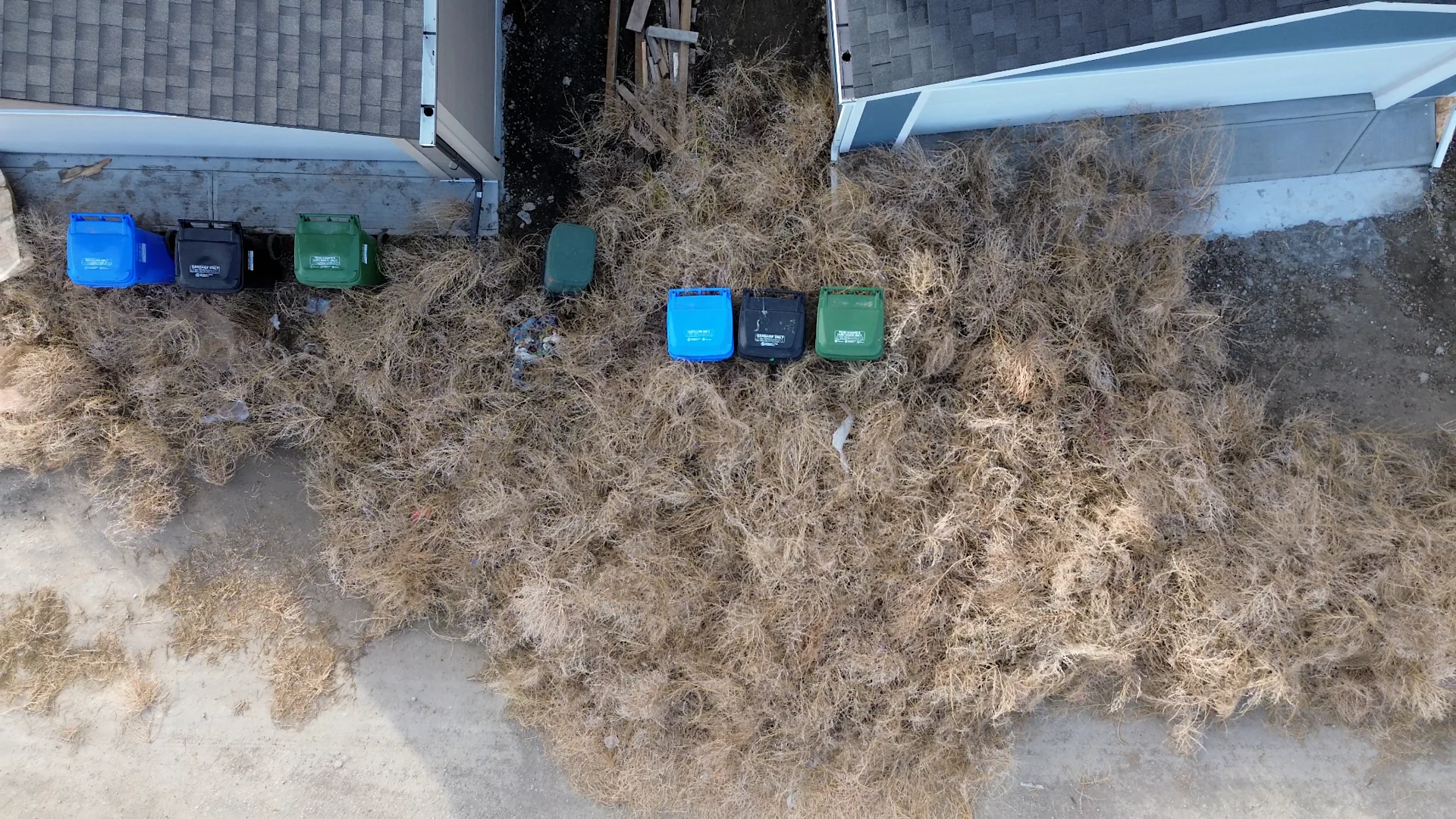
Tumbleweeds pile up in Alberta after windy weekend

It may be mid-November, but these drifts have nothing to do with snow.
With recent wind storms bringing gusts upwards of 100 km/h to southern Alberta, it’s tumbleweeds that are piling up in some communities, including Calgary and Lethbridge, rendering scenes reminiscent of a Wild West film.
Some south Calgary residents woke up Monday to find the alleyways behind their homes full of the rotund plant matter, which in some cases cut off access to garage doors, garbage bins, and green space. Cleanup was made difficult both due to not only the scale of the piles, but also the thorny nature of some of the weeds.
SEE ALSO: Could El Niño save you money? How your utility bills may be impacted
The city of Lethbridge, meanwhile, had large crews out clearing city streets and yards to start the week. Hundreds of kilograms of tumbleweeds were collected, the city says.
So, what exactly is happening here?
As one expert explains, the weeds are simply taking advantage of the gusty conditions to carry out their evolutionary marching/rolling orders.
“These plants are specialists in moving their seeds across the land and spreading their wealth,” said Christine Fulkerth, plant science instructor in the Werklund School of Agriculture Technology at Olds College.
“They break off at the base of the stem and then they roll to distribute their seed.”
As Fulkerth explains, what we colloquially call tumbleweed is usually one of two related species of broadleaf weed: kochia or Russian thistle.
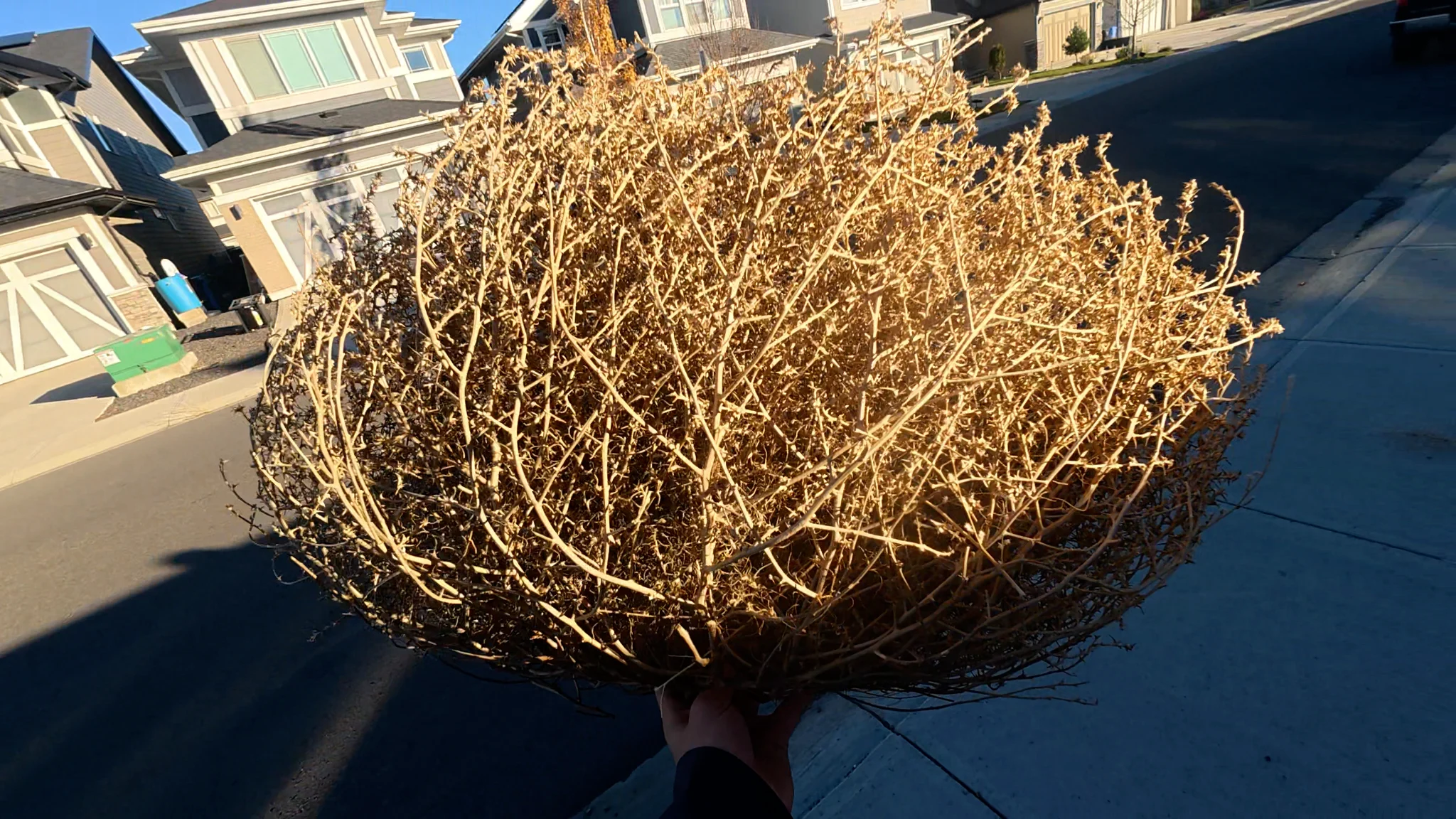
Neither kochia nor Russian thistle are native to the Canadian prairies. Kochia was originally imported from Europe and Asia to be used as an ornamental shrub. (Connor O'Donovan/TWN)
Both plants originated in Eurasia and found their way to the Canadian prairies more than a hundred years ago.
Kochia, which features a reddish “burning bush” quality in the late summer, was imported intentionally in the late 1800s to be used as an ornamental shrub. Russian thistle hitchhiked to North America in shipments of flaxseed around the same time.
DON'T MISS: Not so fast: Here's why you shouldn't rake leaves in the fall
Both of the drought-resilient plants found a welcoming home on the plains.
“What’s happened is they escaped into disturbed areas like farmers' fields. And, they adapt very well for Alberta’s climate,” explained Fulkerth.
“There seems to be an increased amount of it in all kinds of communities right now.” A single, round weed blowing in the wind can disperse hundreds of thousands of seeds—and eventually cause problems.
Fulkerth says kochia is becoming resistant to herbicides like glyphosate and Roundup. While growing, both weeds can compete with certain crops for moisture under the right summer conditions. The dead weeds can also clog machinery during harvesting operations.
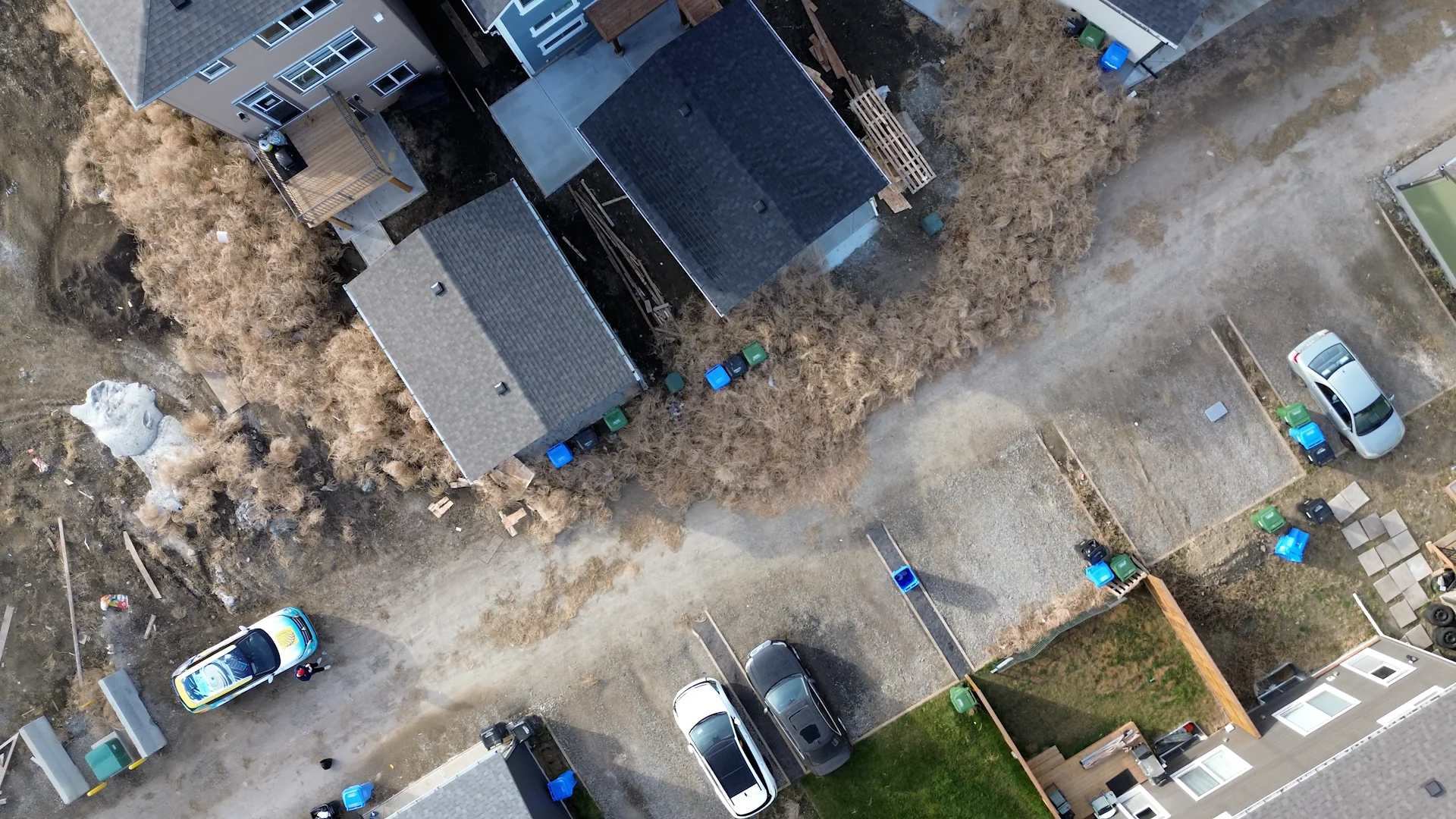
(Connor O'Donovan/TWN)
Tumbleweed drifts are also significant fire hazards. When blowing across highways, the thornier Russian thistle can damage vehicle paint.
And, if enough pile up in a new neighbourhood on the outskirts of town, they can even block access to your yard, driveway or garage.
Still, neither kochia nor Russian thistle are regulated under Alberta’s Weed Control Act.
“There are two classifications of weeds in the Act: ‘noxious’ and ‘prohibited noxious’. Neither kochia nor Russian thistle are regulated. Individual municipalities can upgrade a weed but no one's really done that yet with kochia or Russian thistle” Fulkherth said.
There is established guidance for managing the weeds in the crop field, while its recommended homeowners do the best they can to clean up what blows onto their property to prevent further seed spread. Gloves are recommended for handling.