How Alberta went "rat free," and why it needs your help to stay that way

While the Government of Alberta maintains its longstanding “rat control zone,” it says rats are increasingly sneaking past that protection by stowing away on vehicles.
Psst, hey you!
Have you seen any rats lately in Alberta? Or perhaps you’ve heard a rumour or read a story?
If so, the province wants you to “rat” on those rodents as quickly as possible, with stowaway migration on the rise.
“Now most of the rats we see coming into Alberta are hitchhiking in on vehicles from out of province,” says Alberta rat and pest specialist Karen Wickerson.
SEE ALSO: Is your car not working? Your neighbourhood squirrels might know why
“Quite often rats will climb up into a vehicle or holiday trailer and unknowingly people bring them back into the province that way.”
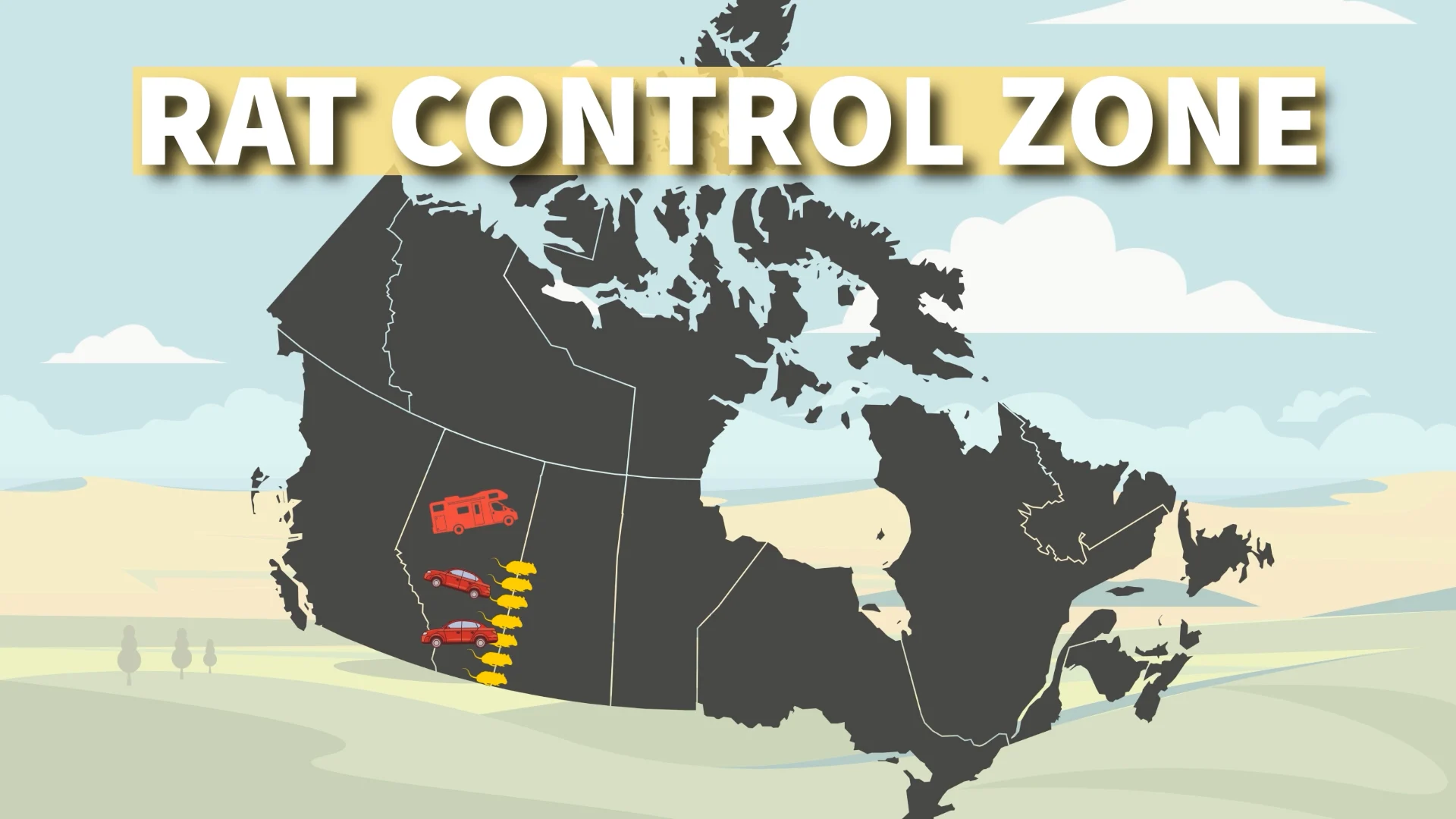
While the Government of Alberta maintains its longstanding “rat control zone,” it says rats are increasingly sneaking past that protection by stowing away on vehicles.
Wickerson says the province is seeing more and more rats coming into Alberta by way of vehicle, which is a trend the province says comes with serious risks.
Norway rats are “the most destructive vertebrae in the world,” according to the Alberta government, and “cause major economic losses to stored and infield crops, destroy property, and transmit diseases, including Rat Bite Fever, C. difficile, E. coli, Leptospirosis and superbug bacteria.”
But you may be wondering—isn’t Alberta a “rat free” province?
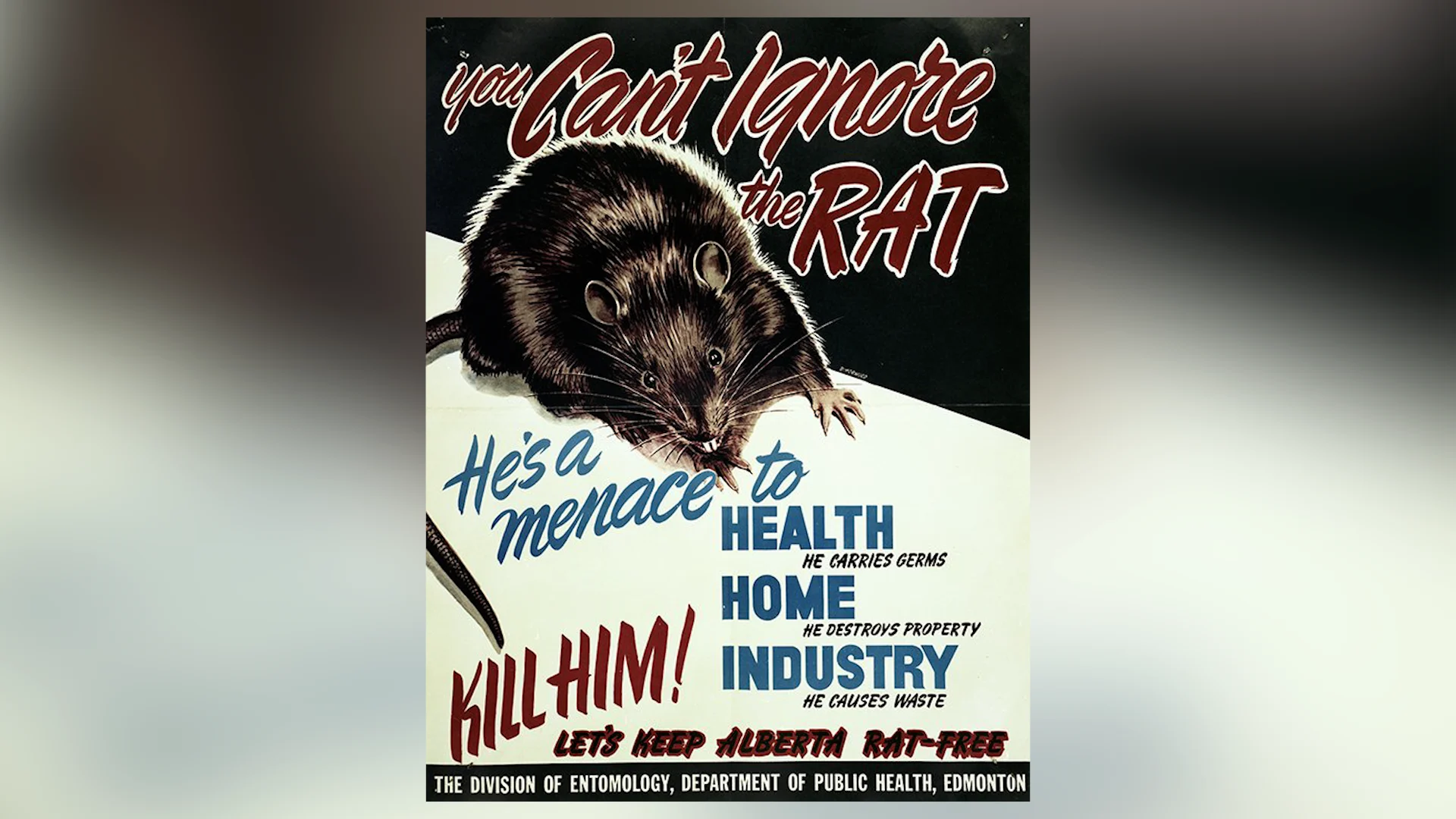
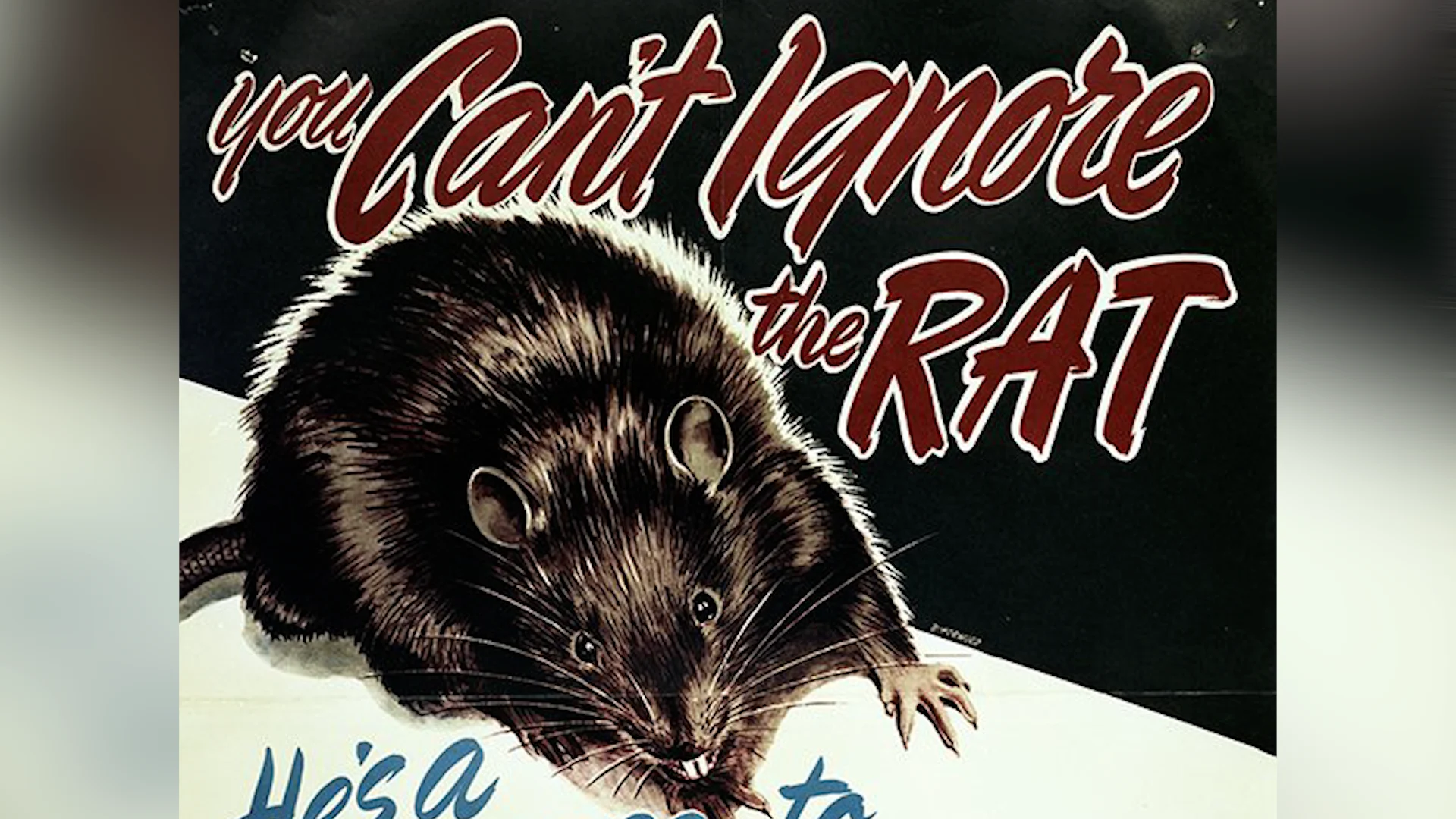
Alberta used an aggressive and evocative public awareness campaign that helped launch the control program. (Government of Alberta)
The truth is, that slogan was never meant to imply completely rat-free territory; instead, it means that there are no established breeding populations in the province.
And, by no accident, the slogan holds true to this day.
Way back in 1950, increasing sightings of the destructive Norway rat near the Saskatchewan border led to the creation of Alberta’s iconic Rat Patrol program.
Along with legislation mandating eradication of any rats found on one’s property (and prohibiting keeping them as a pet), the program spawned a “rat control zone”.
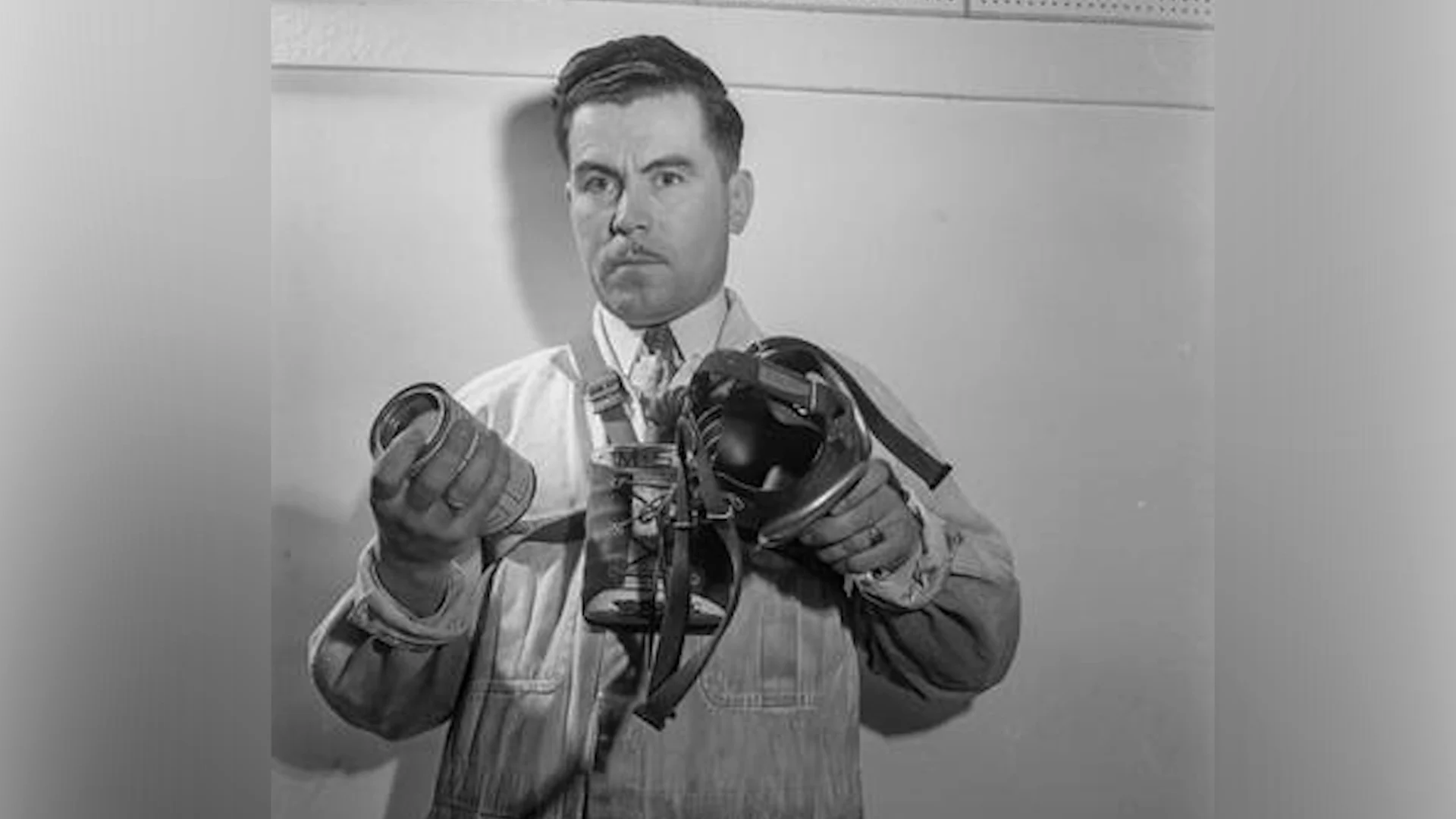
In the early years of the program, pest controllers used arsenic trioxide tracking powder on roughly 2700 farms to control rat populations. This control method, which was discontinued after just a few years due to safety concerns, involved blowing the powder underneath buildings within the control zone where rats would ingest it. (Provincial Archives of Alberta)
This roughly 600-kilometre-long stretch of Alberta-Saskatchewan border was created as a first line of defense against the spread of rats westward into Alberta. With mountains to the west, and boreal forest to the north, this area was most vulnerable to rodent activity.
DON'T MISS: Seeing (or inhaling) a lot of aphids lately? Here's why and what to do about it
Within the control zone, provincial patrollers conducted mandatory property inspections up to twice a year. While less frequent, inspections continue in a portion of the control zone to this day.
Provincial data shows infestations sharply declined starting in the 1950s, and are nearly nonexistent today.
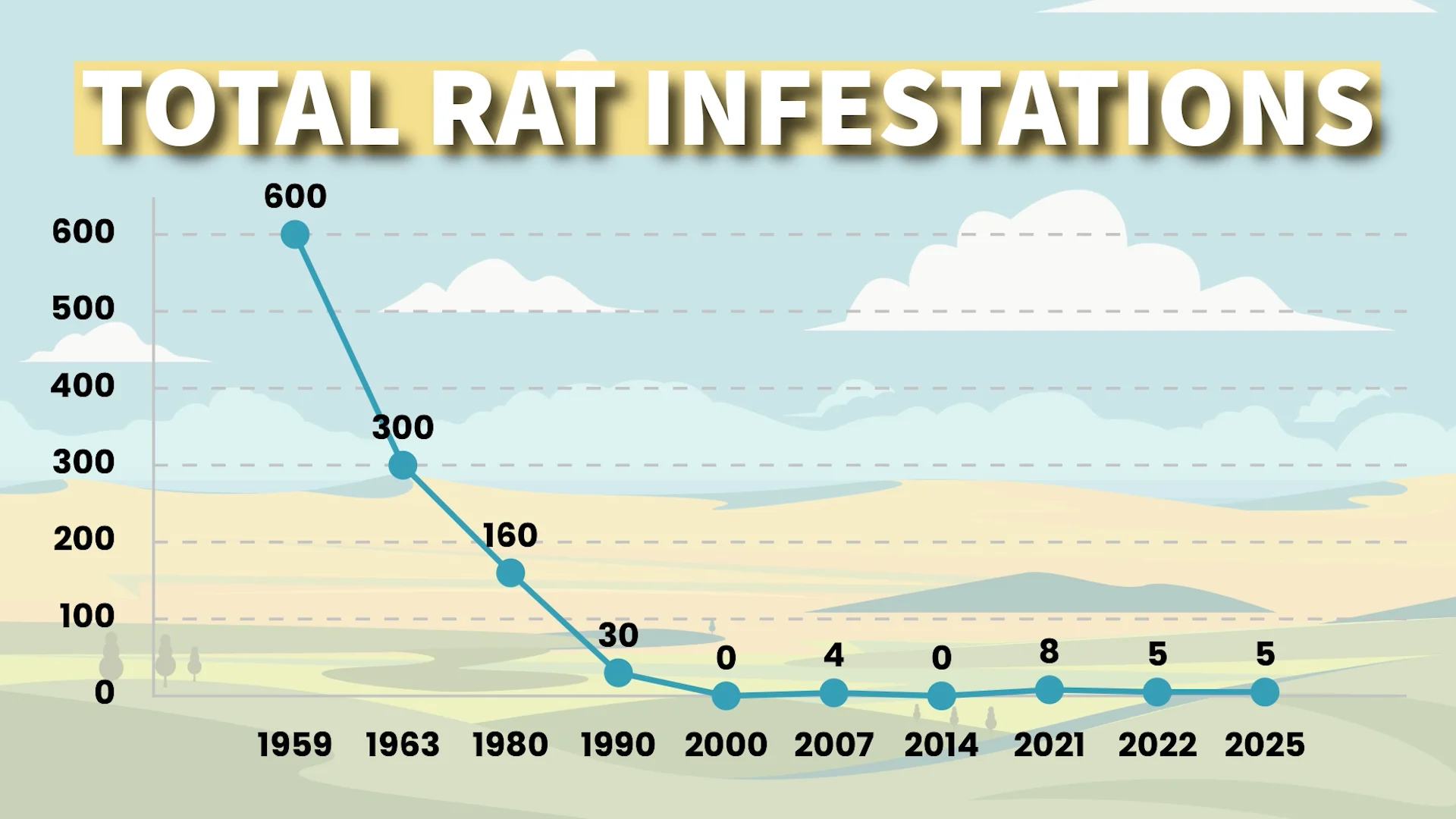
According to Government of Alberta data, recorded rat infestations registered a sharp decline after the creation of the Rat Patrol. Now, the province hasn’t seen more than eight infestations in a year since the 1990s.
“I fully admit rats do come into the province, but if they do, we have a program,” Wickerson says. “We encourage people to report to us and we will respond to ensure the rats are eradicated.”
Now, though, with more cars on more roadways, rats are finding more ways to sneak past the control zone and into the heart of the province. A dead rat was recently found in Bowden, Alta., for instance.
Wickerson says it's crucial that anyone coming into Alberta, whether returning or arriving from out-of-province, remain vigilant.
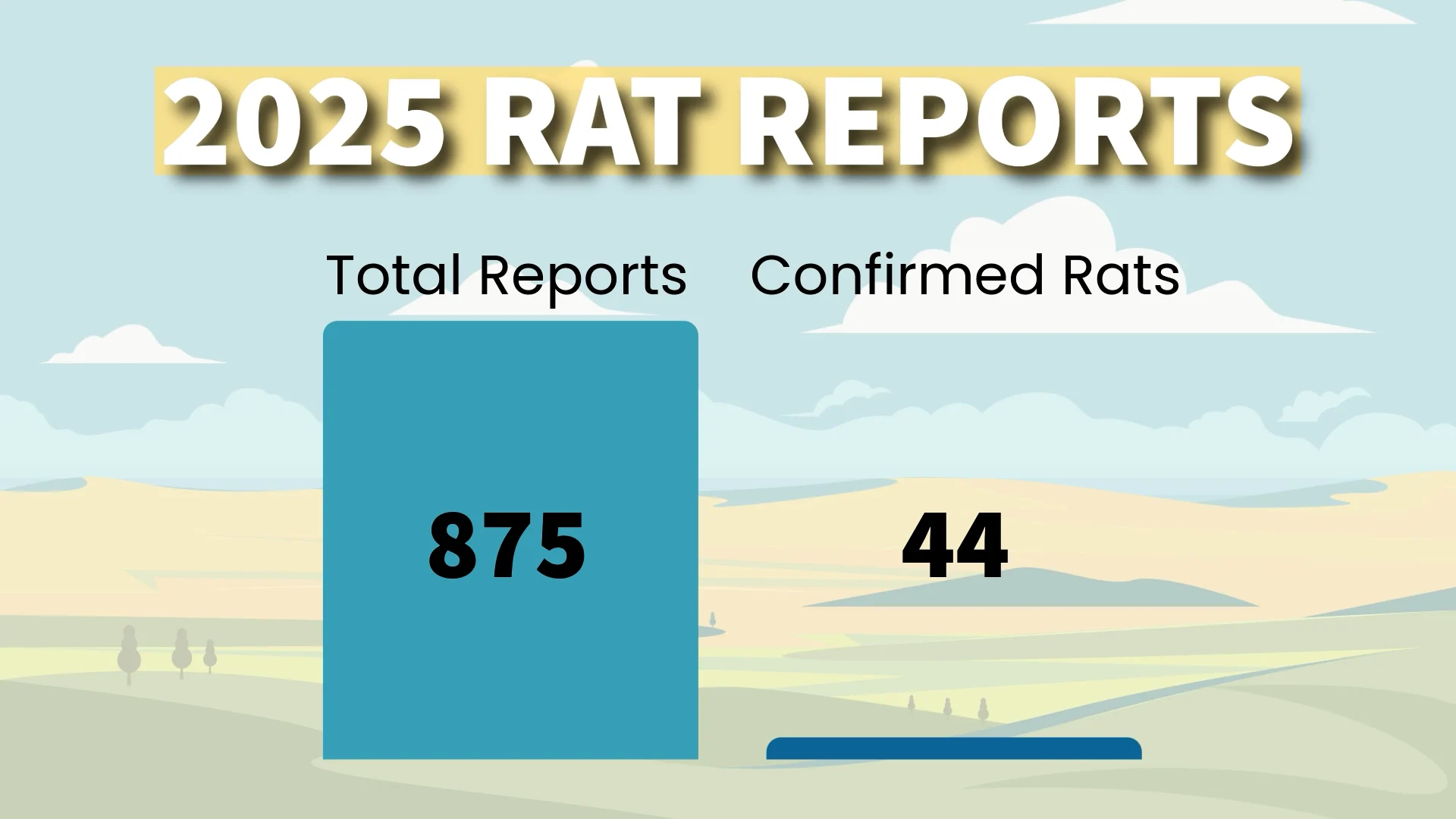
Rat reports are on the rise in Alberta, according to provincial data, though the percentage of confirmed rats remains relatively stable. Rodents commonly mistaken for Norway rats include mice, voles, gophers, squirrels, muskrats and other, smaller rat species.
“We just ask that when people return to the province, maybe lift the hood of their vehicle to see any evidence of nesting or feces,” Wickerson advises. “Sometimes you don’t even know until you come out into your garage the next morning and see those signs. At that point you can certainly contact us.”
You can identify Norway rats by their small ears, cylindrical, mostly hairless tails, small droppings and ground-based nests. They typically feature a predominantly grey-brown coat and grow to about 40 cm long. Roof rats are also controlled in Alberta. They’re slightly smaller and darker, and have slightly larger ears relative to their bodies when compared with Norway rats.
They’re most likely to stow away in your engine block, but have been known to make their way into your vehicle’s air ducts and even its glove box.