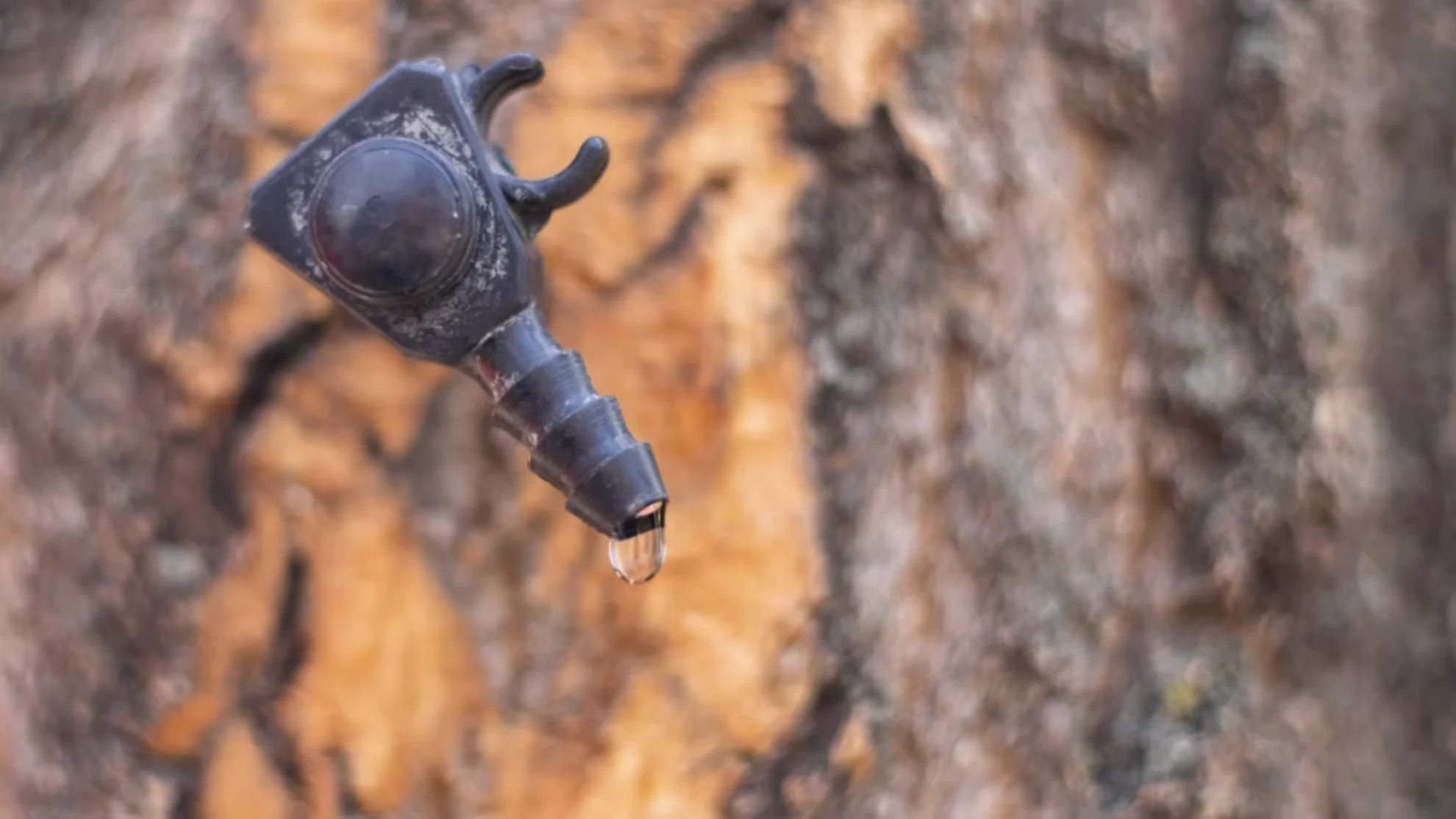
Manitoba's maple syrup season off to a slow start during late, chilly spring

A southwestern Manitoba maple syrup producer says 2023 is proving to be the worst start to a season he's seen in almost 20 years — but he remains hopeful a long spring might still make for good harvest.
Dave Barnes is just starting to check the syrup taps at Brandon's Assiniboine Food Forest — a 16-hectare (40-acre) conservation project in the city's east end that, among other things, aims to produce food for both wildlife and people.
The trees are covered in pails for sap collection, but this year the syrup has been slow to come.
This week, Barnes had about six trees out of 200 dripping good sap.
"Everybody else … they're trying to drip, but not really getting there," Barnes said.
ALSO READ: Maple syrup is a classic Canadian treat, but is it good for you?
In a normal year, he would already be evaporating sap into syrup, but this season, he has yet to turn the machine on.
When it comes to tapping, there's "an ancient rhythm," Barnes says.
The sap typically starts to flow when the snow circle around a tree begins to expose bare earth, he's found. That's often the sign the ground has begun to thaw and the sap will start to flow, Barnes says.
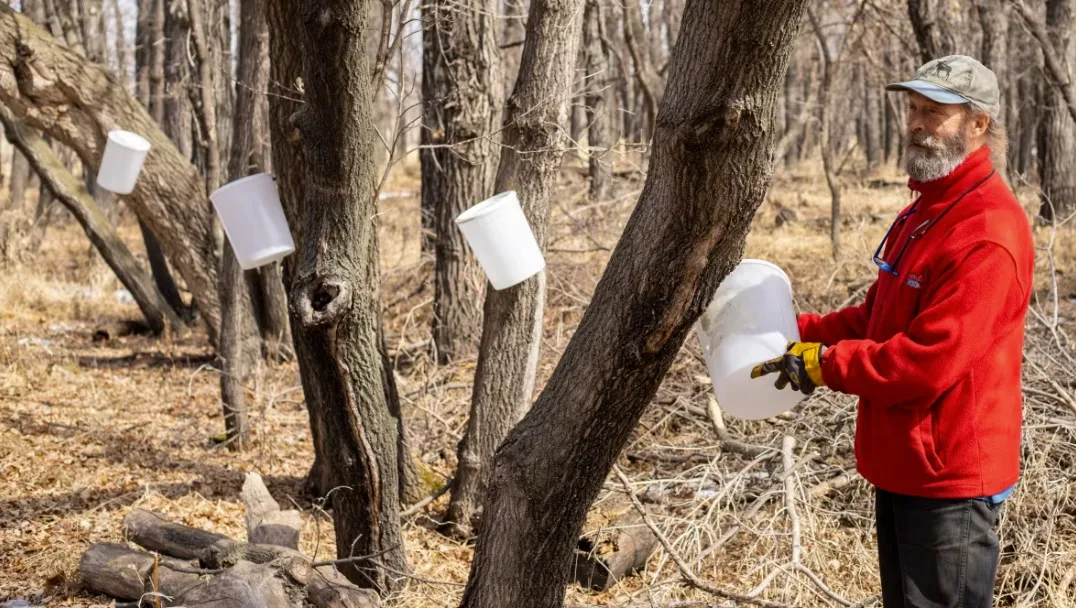
Trees are covered in pails ready for sap collection, but this year it's been slow to come. Assiniboine Food Forest will be hosting maple syrup tours this weekend — typically a time when the season is starting to come to close. (Chelsea Kemp/CBC)
But this year, the spring warm-up came late to Manitoba — and when the melt did begin, it happened so suddenly that some parts of southern Manitoba saw flash flooding.
The snow around the maple trees he taps disappeared in two days flat, Barnes says.
He usually plans a maple syrup tour every year, which typically happens when the syrup harvest is beginning to wind down.
This year's tour is set for Sunday, but they "don't even have a drop of syrup yet," he said.
Still, he remains hopeful Manitoba will see a long spring to make up for the slow start to the season.
Ken Fosty, a certified arborist who has been tapping Manitoba maples for more than 30 years, also says the start of the season was delayed by the slow and cold spring.
That means taps had to wait, but now that the weather has started warming the sap is just starting to flow.
For optimal sap flow, the trees need frosty nights around –5 C or warmer, and daytime temperatures a few degrees above zero. The freeze-thaw cycle gets sap flowing through maple and birch trees, making them ready for tapping.
Fosty expects the sap will continue to flow into the first week of May — if the weather co-operates.
"The sap just started flowing … [but] we're not even at mid-April yet," Fosty said earlier this week. "We still have lots of time for this, and we can still have a very good flow rate."
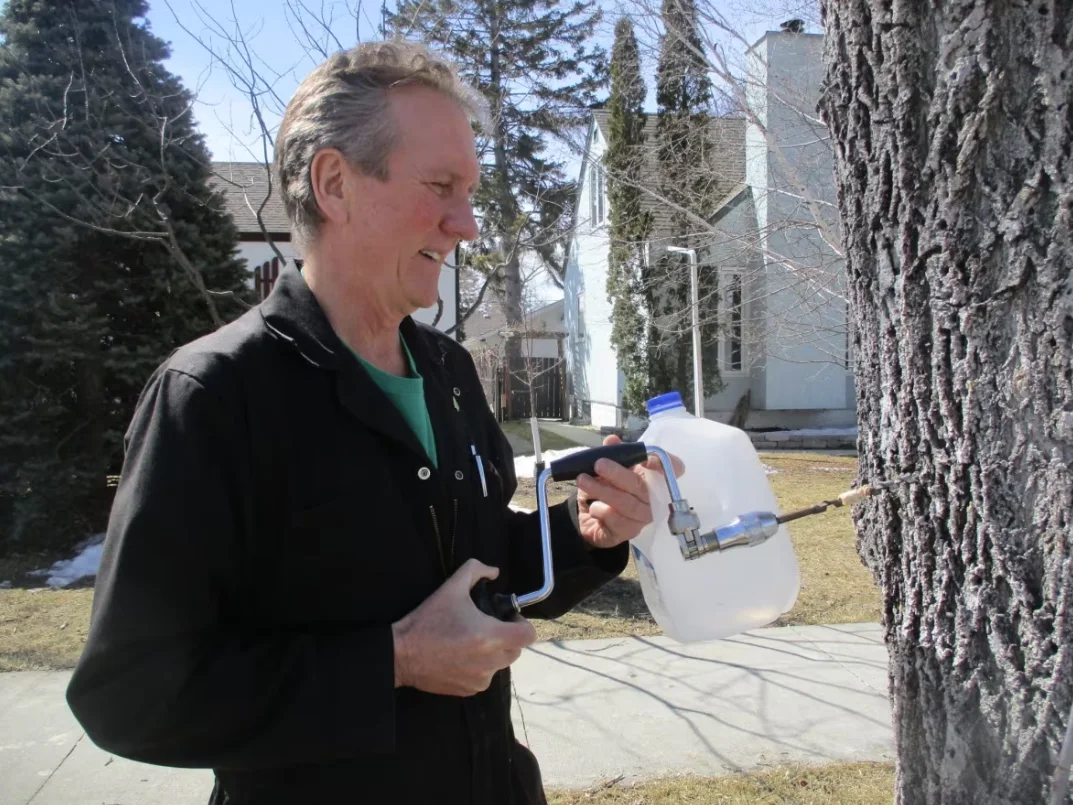
Ken Fosty taps a tree for sap. He expects the sap will continue to flow into the first week of May — if the weather co-operates. (Submitted by Ken Fosty)
Bob Gass says this year has actually been fairly normal at his maple syrup operation, which is in McCreary — a community just over 100 kilometres northeast of Brandon that's host to the annual Manitoba Maple Syrup Festival, which is running this weekend.
The trees take two or three days to thaw when daytime temperatures are above freezing, and then start to run sap for syrup, he said.
"It's supposed to snow maybe a little in the next day or two. That might actually help quite a bit, because that's moisture," Gass said earlier this week.
"If it's near freezing, it'll stick to the trees and the bark of the trees will soak it in just through osmosis, so that's always helpful."
Last year his harvest went into early May, but producers never know what to expect, Gass said. They typically get about three weeks, and occasionally will see four or five weeks of harvest.
"I don't see it being five [this year], but there's a good possibility it could go to four," said Gass.
MUST WATCH: Maple Syrup: Is it actually good for you?
Staying optimistic
While it has been a rough start to the season, Barnes says he is still hopeful. If the weather evens out with the freeze-thaw cycle the trees need, the harvest could be on par with previous years.
This time of year, Barnes would typically be working 10-hour days rendering the sap into syrup — a process that involves using 40 litres of evaporated sap to create one litre of syrup.
He usually harvests around 150 to 200 litres of syrup — the equivalent of about 700 to 800 bottles. Barnes says it's to soon to say if he will collect that amount this year.
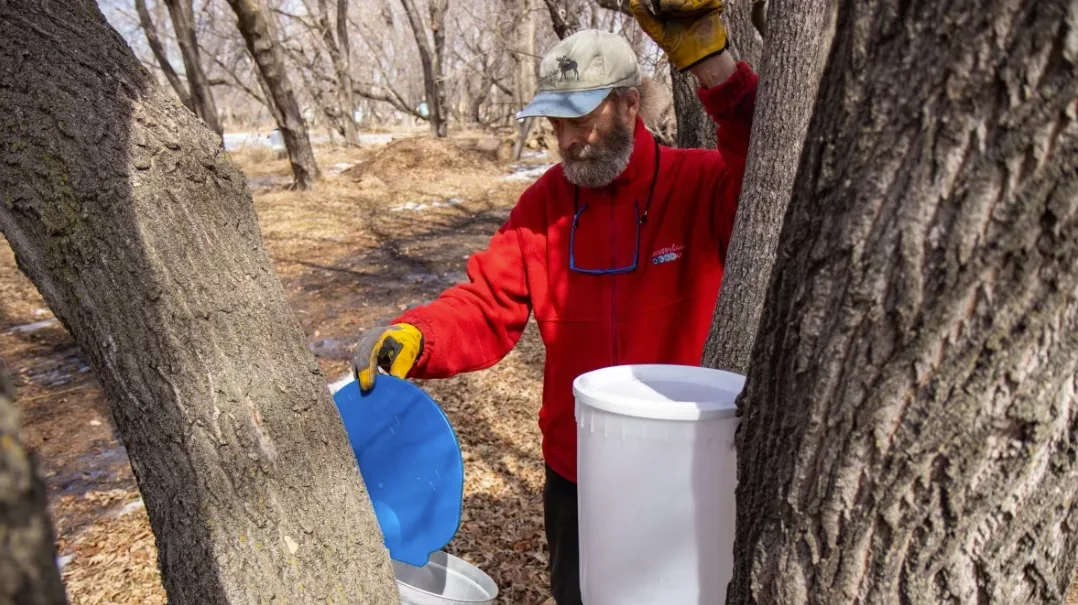
Barnes usually harvests around 150 to 200 litres of syrup, but says it's too soon to know whether will collect that amount this year. (Chelsea Kemp/CBC)
Gass taps around 1,500 trees, and though each year varies, he typically harvests 500 to 700 litres of syrup, which he sells in stores under the name Manitoba Maple Syrup and will also be selling at this weekend's Maple Syrup Festival.
Despite starting tapping a little later, he expects to harvest a similar amount this year.
"Some years are better than others," Gass said. "If we have a cool week or a warm week, it falls back to seasonal norms."
Thumbnail image courtesy of Chelsea Kemp/CBC.
This article, written by Chelsea Kemp, was originally published for CBC News.