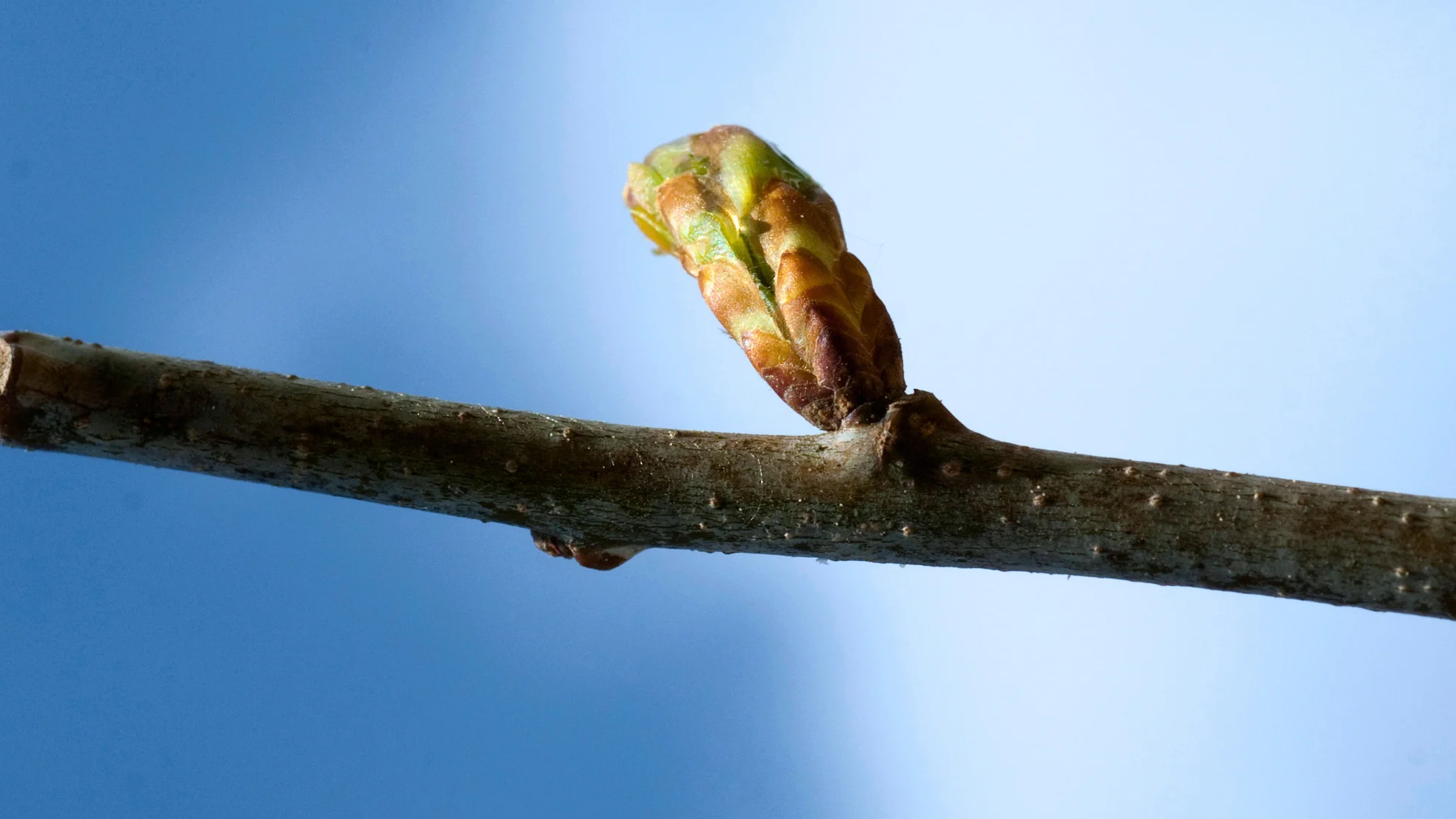
Is spring running late? Some oak trees may be holding back for a reason

Researchers believe the delay is an adaptation, not a physiological response.
It has been an unusually cool spring for many parts of Canada. You can feel it in the air, and you can see it in the trees: That’s because many plants rely on temperature cues to start growing leaves, and prolonged cold periods can delay the debut of spring’s much-anticipated greenery.
But there may be another reason trees are reluctant to leaf, new research from Germany’s University of Würzburg.
The paper, published May 1 in the journal Nature Ecology & Evolution, suggests that some oak trees may hide out to avoid attacks from hungry, hungry caterpillars.
A tiny threat with big impacts for fresh leaves
In nature, timing is everything — and that’s especially true in spring, when the world is waking up from dormancy. Many insects hatch when leaves are young, vulnerable, and full of nutrients. Delaying leaf emergence by three days has an enormous impact on caterpillars. When they hatch, the food they need remains locked away inside closed buds, reducing leaf and tree damage by 55 per cent — making the tactic more effective than expensive chemical defenses.
"This discovery fundamentally changes our previous understanding of the onset of spring in the forest," Dr. Soumen Mallick, a postdoc at the University of Würzburg's Biocentre and lead author of the study, says in a statement.
Speaking with NewScientist, Mallick says the delay may also be due to constraints from resource depletion the year prior, but because the observations were recorded across several tree populations and were strongest in areas where delays reduced leaf consumption, he believes it isn’t a physiological response, but rather, an adaptation.
Insight from satellite data
For their study, the team analyzed 2,400 square kilometres in Northern Bavaria using Sentinel-1 radar satellites, technology that can capture accurate ecological data in all weather conditions.
Between 2017 and 2021, they collected 137,500 observations, highlighting places where trees were stripped bare during a 2019 gypsy moth outbreak, and monitoring how those trees responded the following year.
Researchers say the findings may help explain why some forests turn green later than expected.
This could also impact conservation efforts, as many of our current leading models focus on environmental and climate factors, while overlooking plant and insect interactions.
“This point that plants respond to much more than climate change is very important,” James Cahill at the University of Alberta in Canada told NewScientist.
WATCH: How to properly prune your trees for optimal health
Header image: File photo via Canva Pro