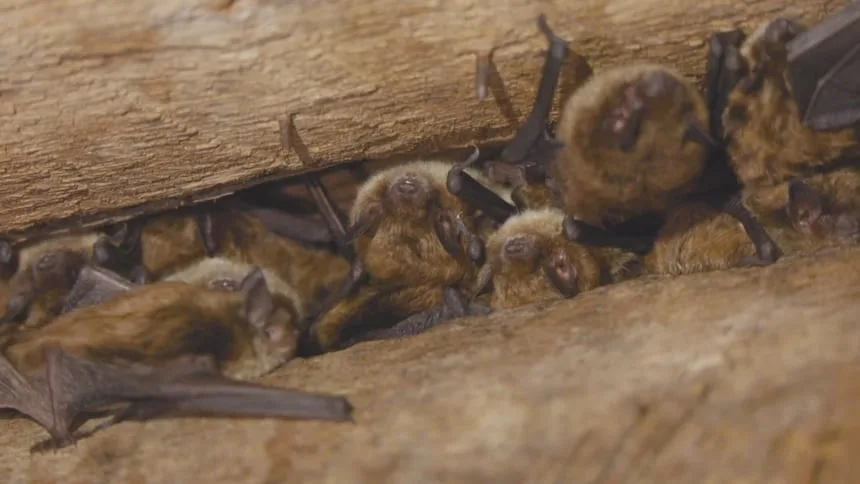
N.B.'s devastated bat world offers cause for a bit of optimism

Karen Vanderwolf has spent her summer criss-crossing New Brunswick, hunting for bat poop.
She's been looking in spaces no one has bothered to check before: under bridges.
"I've put about 5,000 miles on my car," said the biologist, a post-doctoral researcher at McMaster University and a research associate with the New Brunswick Museum.
READ MORE: AI is revolutionizing weather forecasting — but it won’t solve the weather
As of early August, Vanderwolf had ventured under 311 New Brunswick bridges in the hunt for bat droppings, or guano.
It's a habitat many biologists hadn't realized bats were using, she said.
"There is some research from the U.S. that shows bat use of bridges, there's not too much data for Canada," Vanderwolf said, referring to an unpublished study done in the western United States.
"They found about 50 per cent of bridges over water have bats."
In Canada so far, 22 per cent of the bridges Vanderwolf has checked have traces of guano.
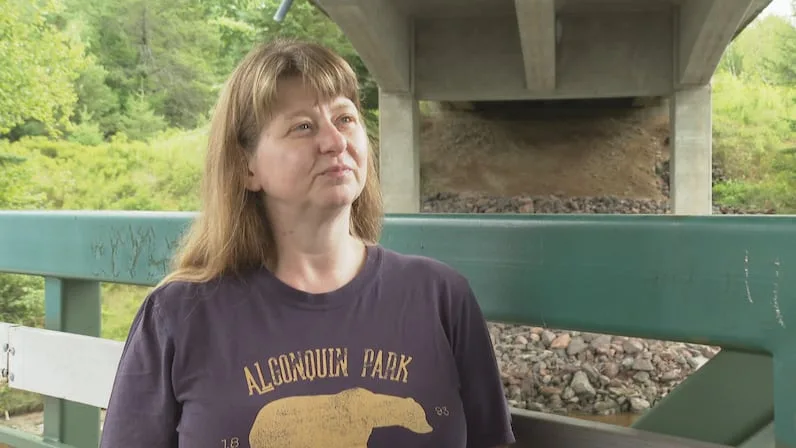
Karen Vanderwolf has spent much of her summer under New Brunswick bridges searching for bat guano. (Shane Fowler/CBC News)
"I wasn't expecting that, because we're in a very different situation here in the east, but I wasn't expecting that quite that high," she said.
It's an especially high number when you consider that about 99 per cent of bats were wiped out over the last decade by white-nose syndrome.
The fungus known as pseudogymnoascus destructans was responsible for waking bats up while they hibernated in caves over winter. Entire colonies woke up and died either by freezing or by starving to death.
Caves that once hosted thousands of bats now sit empty.
The imagery of those mass die-offs still haunts Vanderwolf.
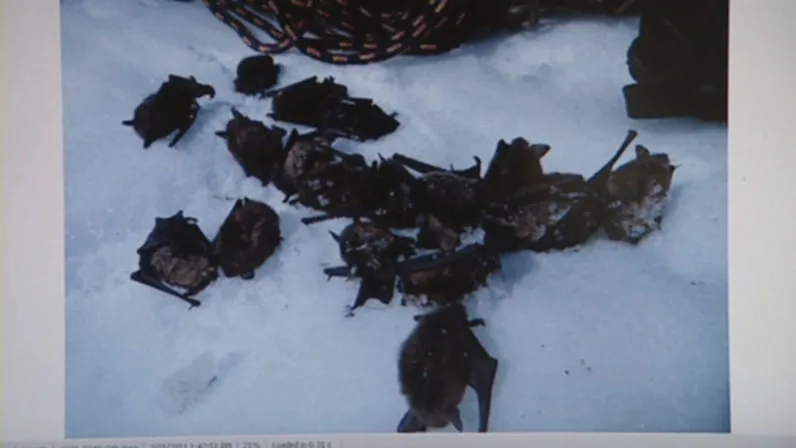
Bats with white-nose syndrome would wake up from hibernation in their caves and starve or freeze to death. (CBC News)
"You go into a cave, you see all these thousands of dead bats," Vanderwolf said. "That was very depressing. Huge mortality in those initial years."
While she's been searching for signs of bats under bridges in the summer, she has continued to survey hibernating colonies in the winter.
And that's where she's finally finding good news.
"Our previous survey was in 2022," she said. "We saw about 270 bats, where we used to see thousands.
"But we repeated our surveys just this past April, and we found 470 bats. So, the population has increased a little."
It's surprising news, according to biologists, including Don McAlpine, the former curator of zoology at the New Brunswick Museum.
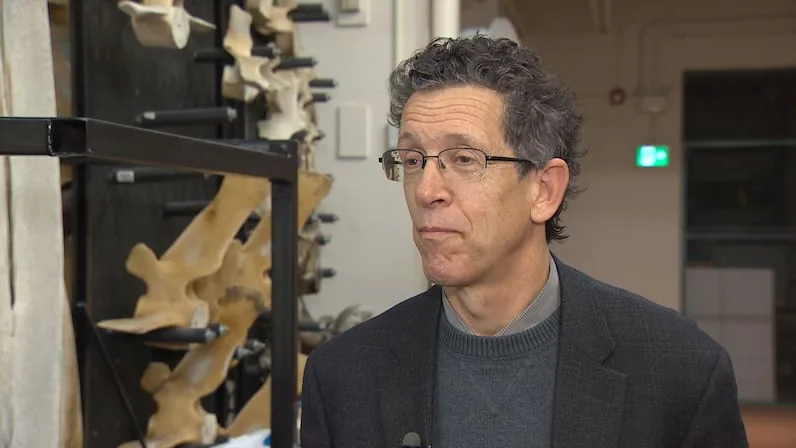
Donald McAlpine, the former curator of zoology and head of the natural history department at the New Brunswick Museum, has spent years studying the province's bat populations. (Brian Chisholm/CBC)
"I think actually the recovery is occurring a little more quickly than I might have expected," said McAlpine, who studied the decline and witnessed the massive bat die-off first hand.
"We have one site that we're visiting where we're seeing 250 to 300 bats during the winter months."
He called the bump in numbers "pretty minor" and the recovery process "early days" but still encouraging.
The species affected by white-nose syndrome include little brown bats, tricolored bats and northern long-eared bats.
McAlpine said little brown bats are making the strongest comeback of the three so far.
Tricolored bats disappeared in 2013, but a few were found again in 2024, he said. Northern long-eared bats haven't been seen since white-nose syndrome hit, and McAlpine said it could mean the species didn't survive.
"That was one species hit particularly hard by white-nose, and that modelling suggested actually could become extinct," he said. "We haven't seen that one at all."
Genetic resilience
Every surviving member of those three species has been exposed to white-nose syndrome, according to McAlpine and Vanderwolf.
Both biologists said those individuals have a resistance to its deadly effects. They expect that bats born in the aftermath will share that resistance.
B.C. WEATHER: Southern B.C. to experience ‘haze’ as wildfire smoke moves north
"We're hoping it's a genetic thing that they can pass on to their pups year after year," Vanderwolf said.
"In the initial days of white-nose syndrome here in the province, we would see many bats, pretty much all of them with the fungus very visible on their face. As the name suggests, you see it right on their noses, their wings. It's all on all the exposed skin."
"These days it's very rare to see that and it's nowhere near the really luxuriant growth that we used to see. It's just a few spots or something like that."
Slow recovery
This is why finding new bat habitats is so important, according to Vanderwolf. As the affected species start to see the smallest signs of recovery, she's encouraged by the finding of so much guano in those unexpected places under bridges.
While more research is needed, she suspects bats are using the undersides of bridges as places to rest during their nighttime hunting.
"They're not feeding for the entire night, like eight hours straight or whatever the darkness lasts," Vanderwolf said. "They will take sort of breaks, sort of have a little snooze, evacuate the bowels."
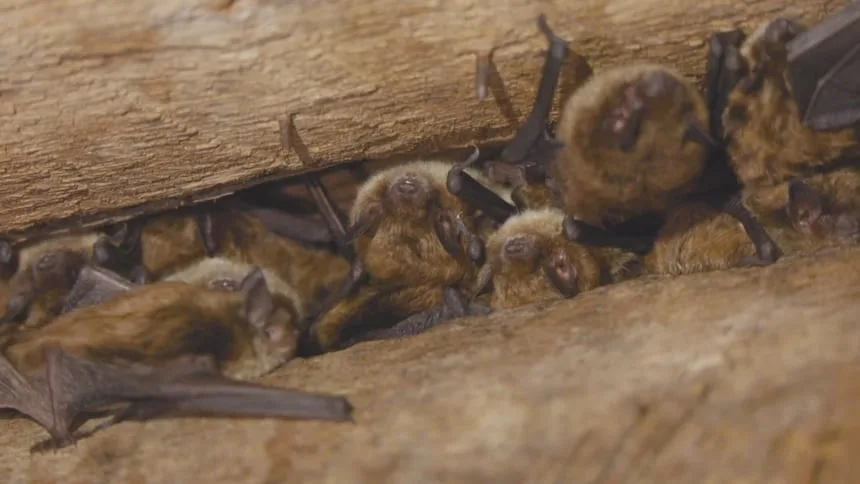
Little brown bats, tricolored bats, and northern long-eared bats were all species decimated by white-nose syndrome in New Brunswick over the last decade. (CBC News)
She's working with the Department of Transportation to identify the best bridges to check for the endangered species and speaks highly about how helpful they've been.
She doesn't expect she'll be able to visit the more than 2,000 bridges in the province in a single summer.
But she's relaying which bridges appear to be most important for bats in the hope that someday New Brunswick's bat population will make a complete recovery.
"I'm optimistic," she said. "I think it will. It might take hundreds of years, probably not in my lifetime, but I think it will come back eventually."
This article, written by Shane Fowler, was originally published to CBC News