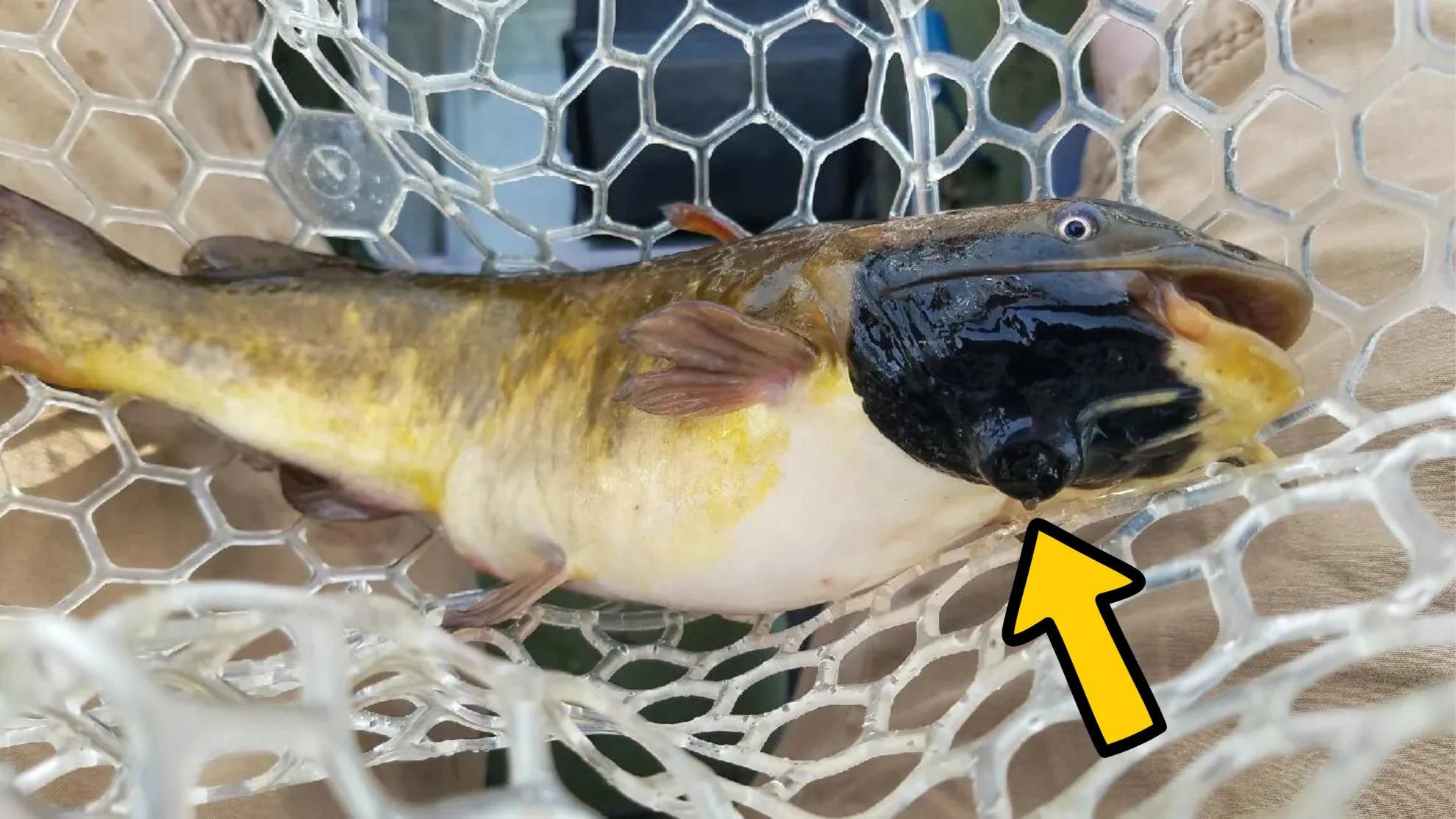
First transmissible cancer found in freshwater fish in Canada-U.S. lake

The cancer poses no known health risk to humans.
A team of researchers from Vermont has identified what they say is the first-ever transmissible cancer in a freshwater fish species.
The disease presents as raised black skin lesions on brown bullhead catfish in Lake Memphremagog, a lake that shares a border with Quebec and Vermont.
The findings were published Wednesday in the journal Nature.
No known threat to humans
The researchers say the fish in Lake Memphremagog, which provides drinking water to more than 175,000 people, pose no health threat to humans.
"The cancer cells cannot infect or survive in another species, and the fish are safe to handle and study," the authors say in a statement.
That said, researchers advise against eating infected fish. About 30 per cent of the lake's brown bullhead population is believed to have the disease.
Black lesions first reported in 2012
Starting in 2012, anglers and biologists began reporting an increase in raised black skin lesions on brown bullhead catfish in Lake Memphremagog.
By 2014, researchers found the lesions in roughly a third of the fish they sampled.
After a virus was ruled out, experts suspected an environmental contaminant because brown bullhead are considered an indicator species for water and environmental quality.
Instead, further testing revealed melanoma, a form of skin cancer.
"This was surprising," Julie Dragon, a scientist at the University of Vermont and co-leader of the new study, said in a statement.
"...We wanted to know how a bottom-dwelling fish was getting a cancer we associate with exposure to too much sunlight."
Whole-genome sequencing revealed the tumour cells were more closely related to one another than to the fish carrying them — the genetic signature of a transmissible cancer, in which the cancer cells themselves spread from animal to animal.
The researchers also searched for viruses and other microorganisms that might explain the outbreak but found no evidence that another pathogen was responsible, “leaving the possibility that the transmitting agent may be the cancer cells themself,” the authors write in the study.
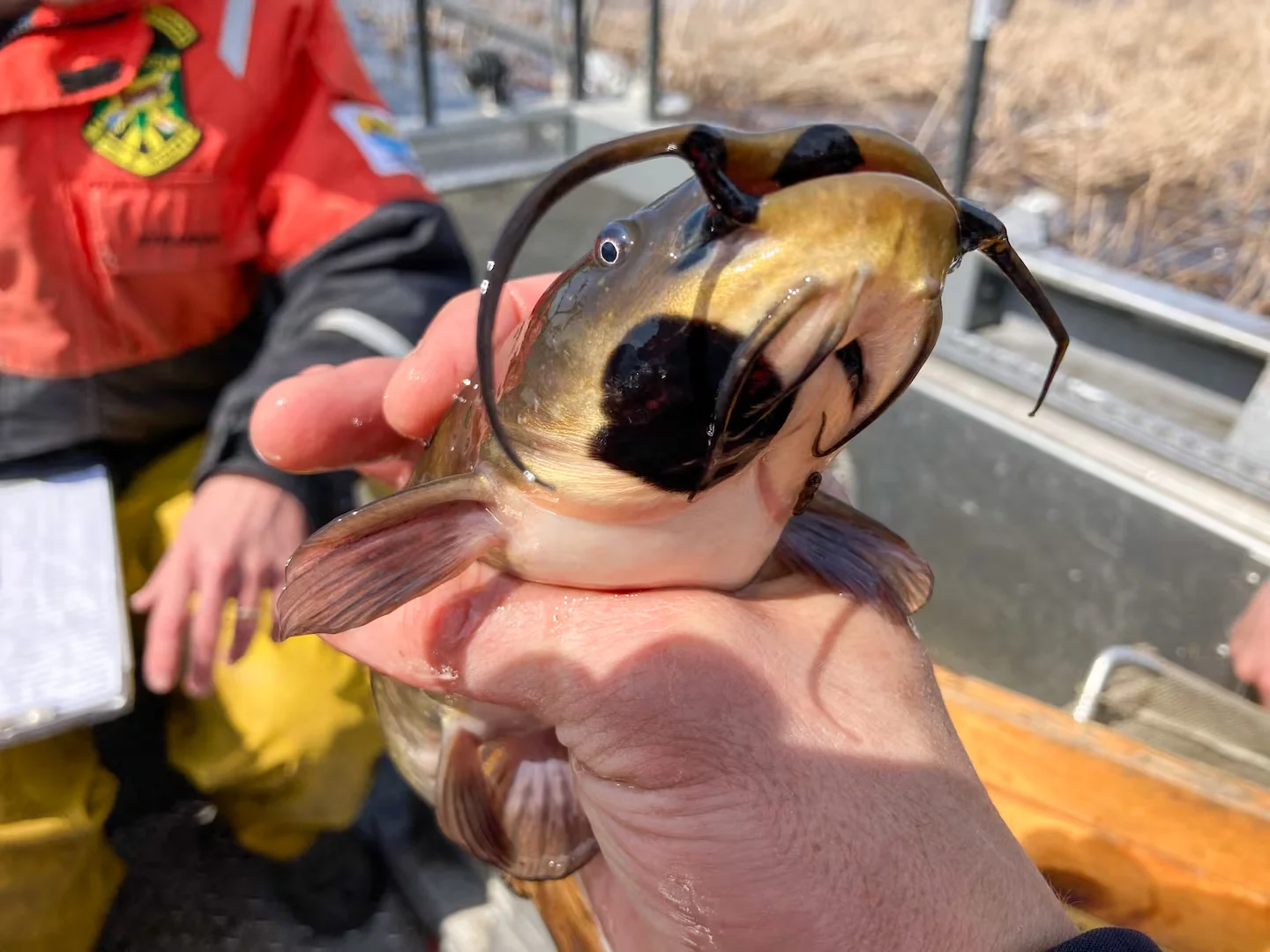
File photo of a catfish with a black skin lesion. (Vermont Fish & Wildlife)
An extremely rare disease
The researchers say this is only the fourth known type of naturally occurring transmissible cancer in the animal kingdom, and the first ever identified in a fish or freshwater species.
"It seems to only happen in larger fish that are of spawning age," Mark Henderson, a fish biologist and study co-leader in UVM's Rubenstein School of Environment and Natural Resources, said in a statement.
"Maybe some part of spawning behaviour leads to the spreading of the cancer between animals."
How does it spread?
Researchers believe spawning behaviour may provide the close physical contact needed for cancer cells to spread between fish.
Because brown bullhead are scaleless, bottom-dwelling fish, the cancer cells may also persist in lake sediment and infect other fish through their skin, mouth or gills.
The study also suggests hormonal changes to the immune system during spawning, or exposure to pollutants, could make fish more vulnerable to infection.
Could arsenic play a role?
The cause of the cancer remains unknown, but researchers found elevated levels of arsenic, which is a known carcinogen, within the cancer cells.
The geographic distribution of the disease also appears to overlap with areas of naturally occurring arsenic concentrations in soils across parts of Vermont, Maine, and neighbouring regions.
But researchers have not established that arsenic causes the cancer, only that it may play a role.
Some environmental advocates have questioned whether the nearby Coventry Landfill could be contributing contaminants to the lake, but the study's authors say their investigation found no evidence to support that.
"The cancer is found evenly throughout the ... lake, in reproductively isolated populations of the fish. It's not clustered in the lake's South Bay, near the landfill, as would be expected if the landfill were the culprit," the authors write.
"Additionally, the team's water quality tests in Lake Memphremagog show the same low levels of pollutants as many other nearby waterbodies and lakes, including Lake Champlain, which isn't known to have any transmissible melanoma."
Fish appear to be living with the disease
Unlike a transmissible facial tumour that devastated Tasmanian devil populations, infected brown bullhead appear to survive for years with their tumours.
Researchers say it remains unclear what long-term impact the disease could have on the overall fish population.
Search area expands
The discovery has prompted researchers to begin sampling additional waterways in Vermont, New Hampshire, Maine and New Brunswick.
The study also found genetic evidence suggesting the cancer lineage may have originated outside Lake Memphremagog, although researchers say more work is needed to determine where it first emerged.
There are historical reports of similar black tumours in brown bullhead dating back more than a century, raising the possibility that this cancer — or a related transmissible cancer — has existed far longer than anyone realized.
"Our contention is that maybe it's not as rare as everyone thinks. We're just not seeing it," Dragon said in a statement.
"In the case of transmissible cancers, it may be that we don't see many simply because we aren't looking for them."
While researchers are still working to determine where the cancer originated and how widely it has spread, they say the discovery could provide important information into how cancers evolve, evade immune systems and persist in wild animal populations.
"By studying how cancers survive and spread outside their original host, we can learn a great deal about what keeps cancers contained — and what happens when those boundaries break down," Dragon said.
"These fish provide an opportunity to look at the evolution of cancer."
Header image: Vermont Fish & Wildlife.