
Record-high diesel prices hit Alberta farmers hard during this fall's harvest

Kody Traxel says it's costing his farm "pretty well double" to run a harvester this year due to rising diesel prices.
Traxel's family farm, Traxel Ag Ventures, runs a 2,000-calf custom feed operation and a commercial herd of between 500 and 1,000 cows in the Seven Persons area, southwest of Medicine Hat, Alta.
The agricultural operation also has about 800 acres of irrigated land, planting corn and some hay to feed the livestock.
Traxel says he's been paying an average of $2.18 per litre of diesel while harvesting and estimates bringing in this year's high-yield corn crop — completed two weeks ago — cost "upwards of $100,000" in fuel.
CHECK OUT: 5 astronomical events happening after we're gone
And this year, Traxel said the growing business's diesel costs will probably be double that figure as the farm uses more fuel and puts more hours on equipment.
"The fuel price going up, it hit us pretty hard now, filling our tank and filling our equipment," said Traxel.
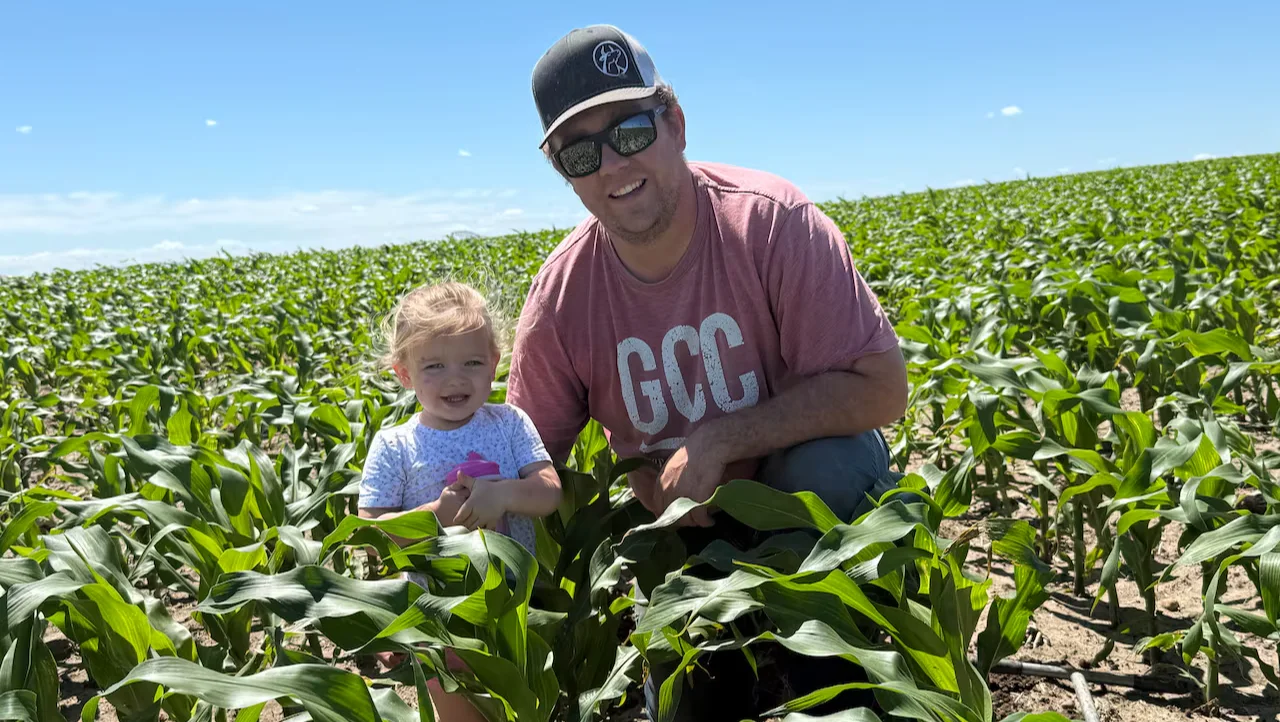
Kody Traxel and his daughter Kassi in his farm's corn crop in June. (Submitted by Kody Traxel)
Farm Credit Canada (FCC) senior economist Graeme Crosbie said diesel prices reached a record high this fall as farmers were harvesting.
"They're adding an extra expense at a time when for the average producer in the Prairies, margins have already been tight for a couple of years," said Crosbie.
DON'T MISS: How the weather could be influencing your music taste
In September, the federal government announced it would be extending the fuel excise tax holiday on diesel until Jan. 31, 2027.
Then Oct. 1, the Alberta government paused the provincial tax on diesel for three months.
Still, Traxel's farm has seen a fuel surcharge applied "on everything" the operation is bringing in, he said, though he doesn't blame trucking companies for doing so. For example, a "massive" fuel surcharge was placed on a recent load of gravel brought in for maintaining the farm's roads and the feedlot, he said.
"It's getting pretty out of hand when the trucking for these products like gravel or feed is exceeding the price of what they're actually hauling. It's pretty crazy," said Traxel.
Producers' margins were already tight
While farmers might be able to find some small on-farm efficiencies, the combines have got to roll and diesel is going to be used, said Crosbie.
In an online piece last week, a group of FCC economists, including Crosbie, calculated that rising diesel prices would cost farmers in Saskatchewan an extra $37 to $49 per hectare. Crosbie believes the number would be similar in Alberta and Manitoba.
Depending on the crop and location, the entire cost of putting a crop in the ground can be $182 to $243 a hectare, an additional cost that might seem like "small potatoes," said Crosbie.
SEE ALSO: 104-year-old tortoise is recovering after a successful surgery in Halifax
"But on a [2,000-hectare] farm, you're looking at $70,000 to $100,000 in extra fuel expenses alone, which is significant, and producers are going to feel that pain."
'Nobody's getting rich'
Traxel doesn't know if he's making any more money now than a decade ago.
"Nobody's getting rich —that's for sure," he said. "Any time you feel like you're getting ahead, it's another expense of fuel or equipment or something hitting us."
Traxel says it's concerning that diesel prices remain high.
He hasn't passed along the rising fuel costs to his clients this feeding season, but says he will have to next year if the price of diesel remains high.
"I gave them a quote and I'm going to honour (it)," said Traxel.
Impact on food prices unclear
It's uncertain whether producers' surging diesel costs will affect food prices, wrote the FCC economists.
They explored times in the past 25 years when there have been significant diesel price increases and the impact they had on the rate of food inflation six to 12 months later. It usually takes that long for producers' increasing costs to begin affecting retail food prices, said Crosbie.
READ: Permanent Daylight Saving Time means major changes in Canada
"There's been times when diesel prices have jumped by double digits in a very short period of time and the impact on food inflation wasn't significant, and there's been times when it has been," he said.
Producers' fuel costs is just one of many factors — which include the Canadian dollar's strength — impacting food prices, said Crosbie.
"When the (Canadian) dollar has risen in value against the American dollar, that makes food relatively cheaper," he said.
"And for a country that depends on importing food for fresh produce in particular and especially in the winter months here in Canada, that has a big impact on the rate of food inflation."
This article, originally published by CBC News on October 30, 2026, was written by Stephen Tipper.