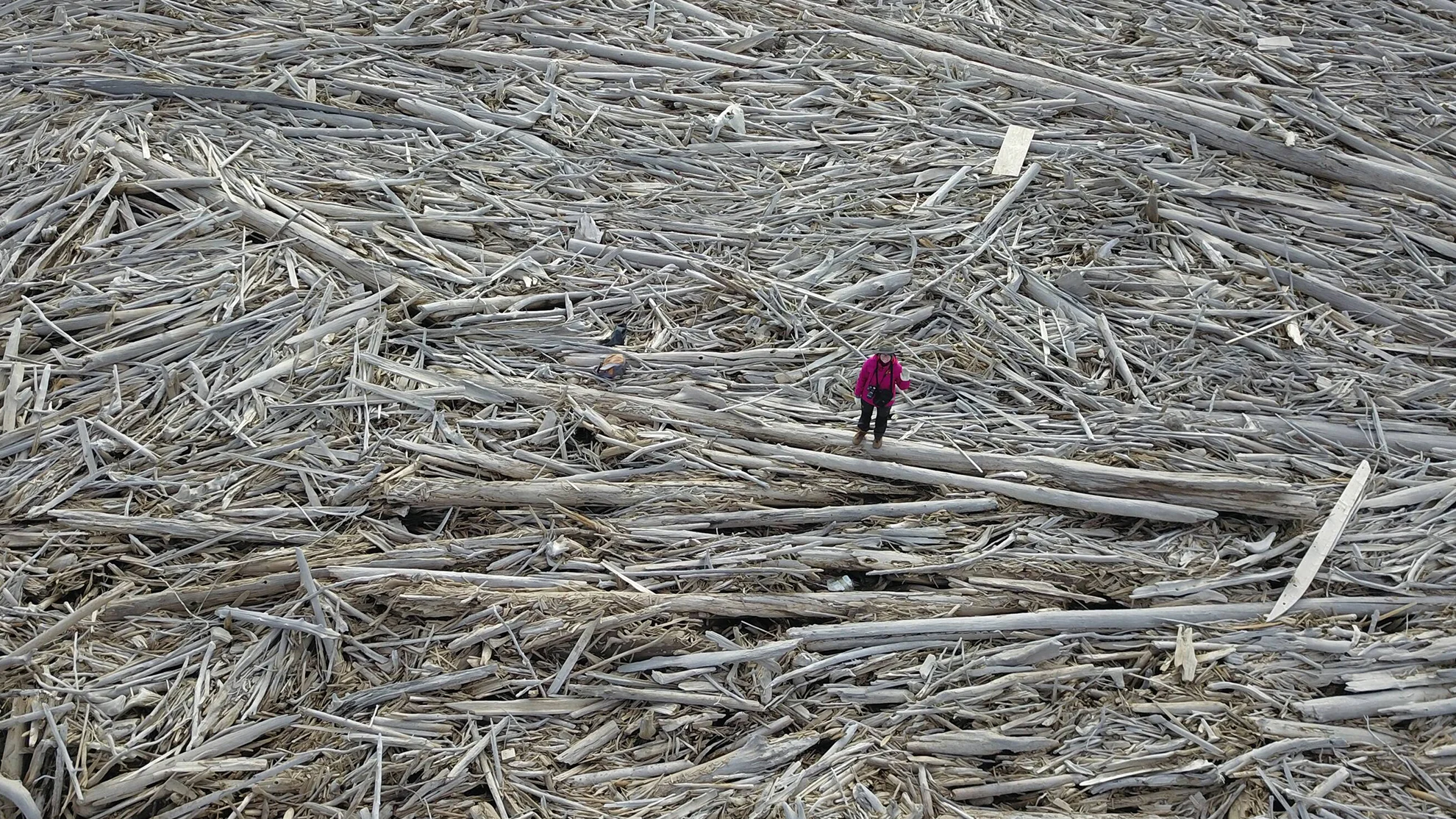
World's biggest cumulative logjam mapped in N.W.T. stores tons of carbon

You might not think of the Arctic as a place with a lot of trees, but a recent study says the Mackenzie River Delta in the N.W.T. is home to the world's biggest known cumulative logjam — and it stores a huge amount of carbon.
"Everywhere you go, there's driftwood," said Roy Cockney Sr., an elder living in Tuktoyaktuk, N.W.T., which is above both the Arctic Circle and the treeline. Cockney said the wood gives people in his community a source of heating fuel year round, and it's sometimes used to build cabins too.
"It's something that we like, when it piles up it's good for us," he said.
READ MORE: Temperatures in 2023 could be record breaking with rapidly developing El Niño
When Alicia Sendrowski, a research engineer out of Michigan Tech Research Institute came to Tuktoyaktuk to study logjams, Cockney showed her team a spot along the coast with lots of driftwood pushed up against the shore.
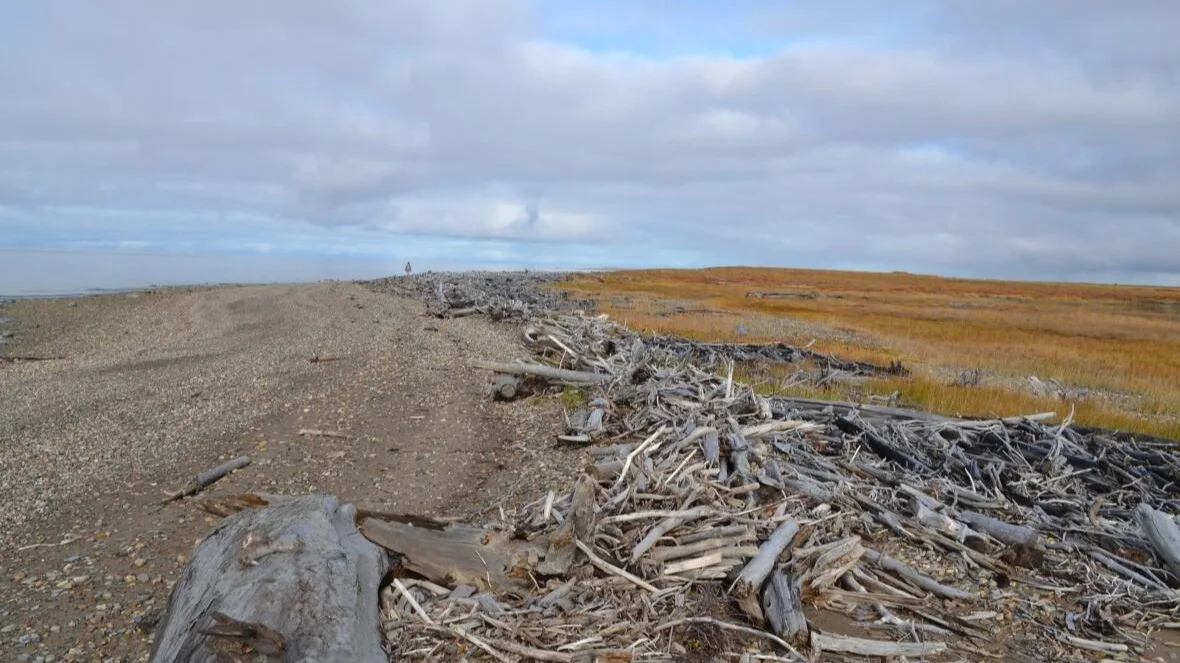
Roy Cockney Sr., an elder in Tuktoyaktuk, took Sendrowski and her research team to this spot. He told them that the large piece of wood in the foreground hadn't been there the year before, offering Sendrowski's team insight into how quickly the wood can move from place to place. (Alicia Sendrowski)
"There was this really huge log there, like a giant tree, and he could tell us 'Oh, that tree wasn't here last year,'" said Sendrowski, who was working out of Colorado State University when she did the fieldwork. That local knowledge was "really important," she said, because it showed her how strong the river current could be and how quickly the logs could travel.
How big is the logjam, and how much carbon does it store?
With the help of satellite imagery, Sendrowski and her team studied 13,000 square kilometres of the Mackenzie River Delta, which lies above the Arctic Circle.
They found more than 400,000 caches of wood. Added up, this cumulative logjam would span a 51-square-kilometre area — roughly a third the size of Yellowknife.
Sendrowski calculated all that wood stores 3.4 million tons of carbon — which she said was equivalent to a year's worth of emissions from 2.5 million cars.
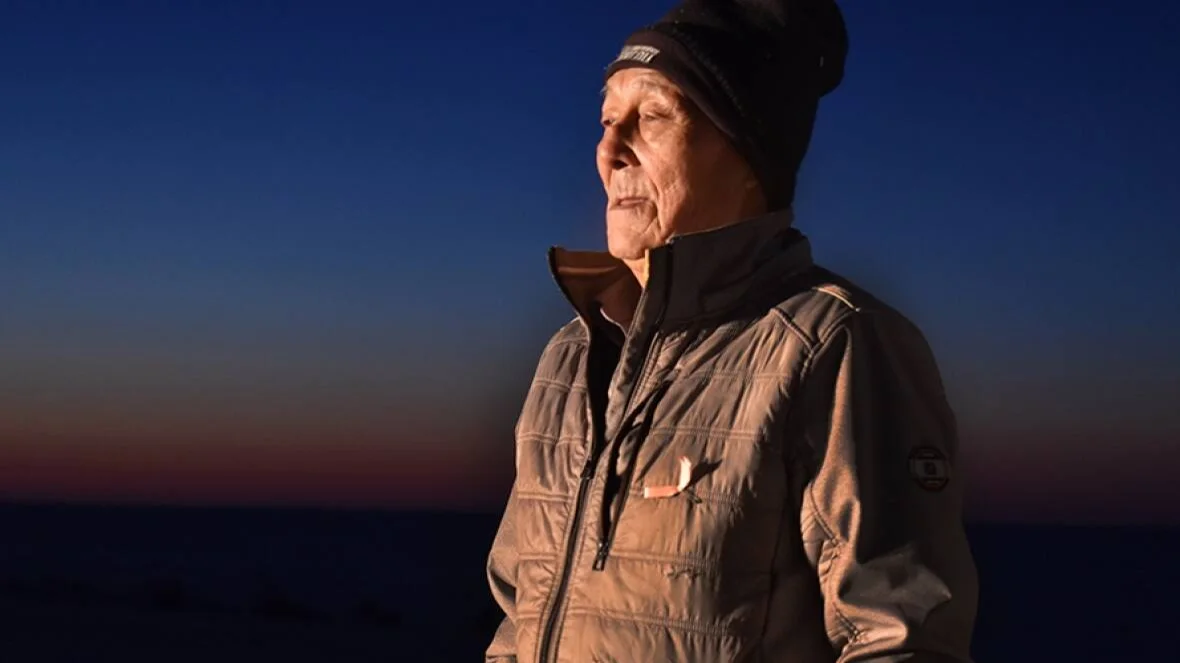
Roy Cockney Sr. in Tuktoyaktuk, N.W.T., in December of 2019. He's observed driftwood all over the place in his community, and says people use it as a heating fuel and sometimes to build cabins. (Eriel Lugt/TukTV)
This calculation is important, said Sendrowski, because little is known about how much carbon is stored in wood deposits around the Arctic, and because climate change influences how much carbon makes its way back into the atmosphere.
WATCH BELOW: After devastating floods, a B.C. community still searches for answers
Where does the wood come from?
Most of the logs jammed up in the Mackenzie River Delta are coming from the Liard River, said Sendrowski. But her work found logs from along the Mackenzie River itself, and the Peel and Arctic Red rivers too.
So how do trees end up in the river?
"A tree falls in the forest and snow melt happens and it gets pushed into a river and it gets transported in the river," Sendrowski explained.
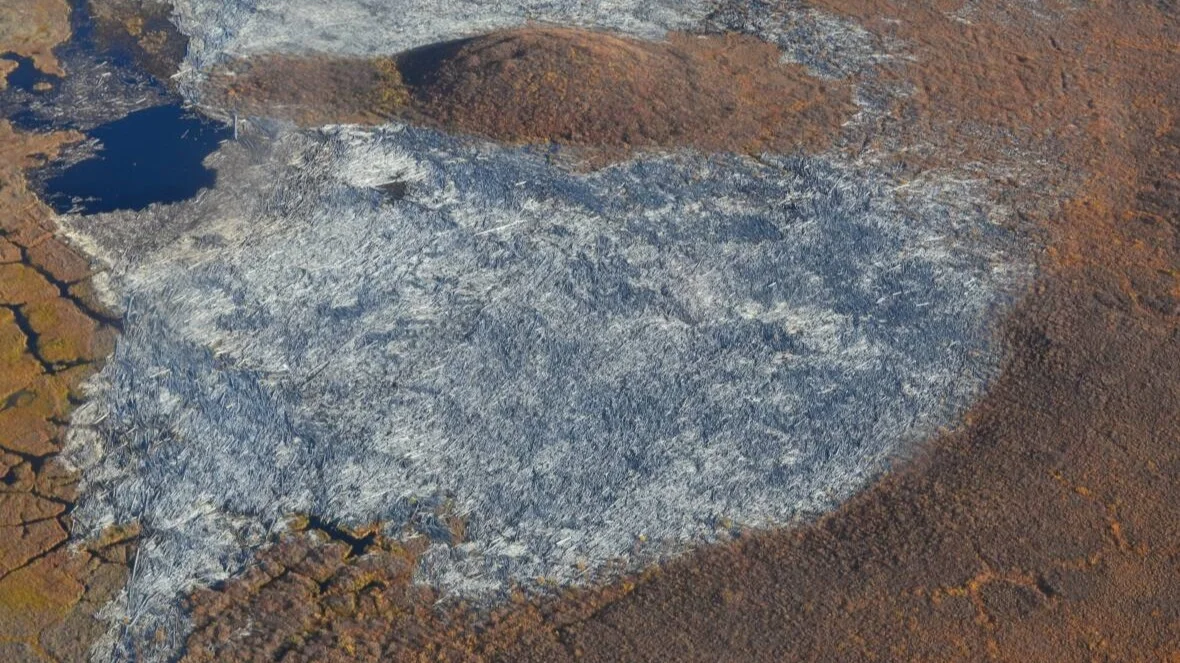
Sendrowski says this is the largest single logjam they found in the Mackenzie River Delta, found near the coast. (Alicia Sendrowski)
Water in the Mackenzie River Delta flows north toward the Beaufort Sea. Sendrowski's report — published this month in the journal Geophysical Research Letters — says the Mackenzie River is "famous" for spitting wood into the Arctic ocean.
But before those logs reach the ocean, they might get stuck somewhere along the way.
Most of the logs Sendrowski's team sampled began growing around or after 1950, but some were much older, suggesting they'd been trapped in the delta for centuries. The study says one sample from the Peel River dated back more than a thousand years ago.
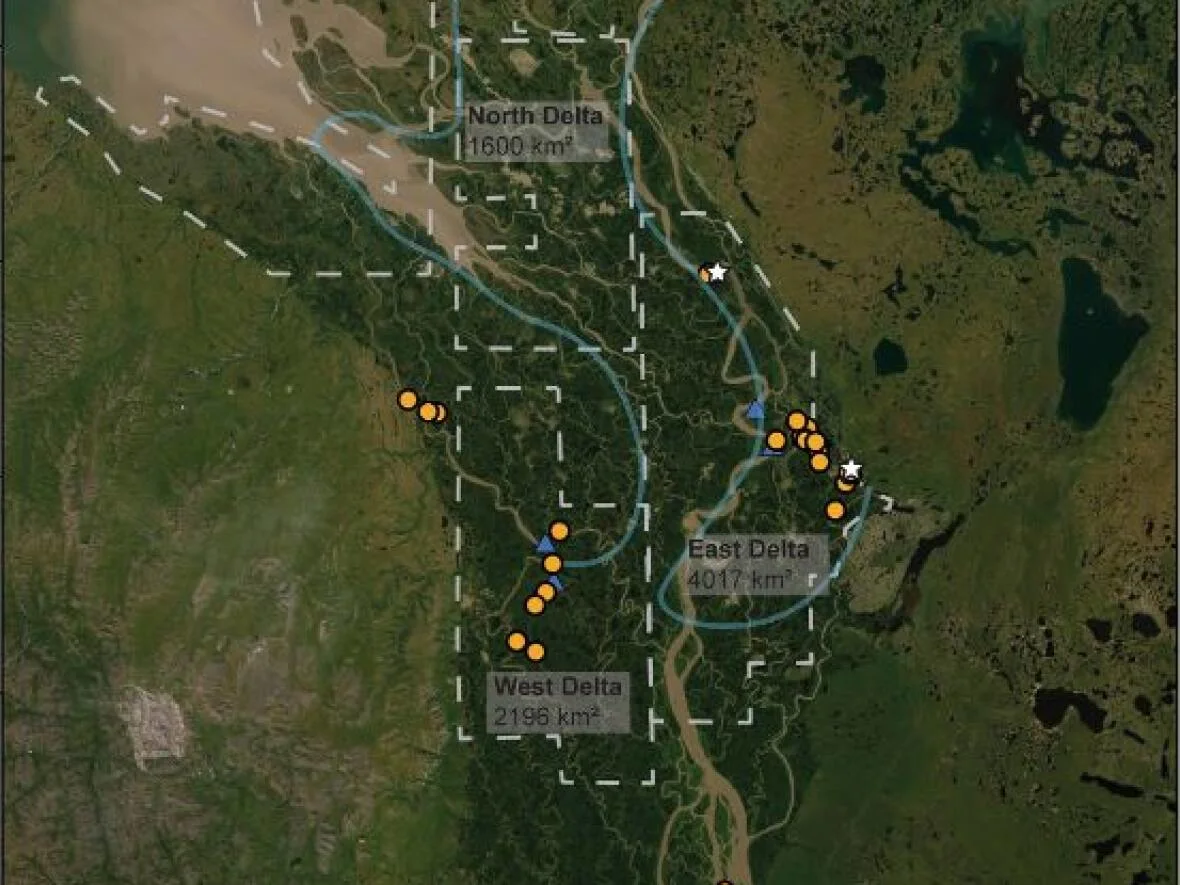
This map shows what parts of the Mackenzie River Delta Sendrowski and her team studied, and how. (Geophysical Research Letters)
"You can tell that some of them are very old," said Cockney, of the driftwood he's seen in big piles around Tuktoyaktuk. But he's also observed younger driftwood building up, especially after there's been flooding further south in the N.W.T.
Why does this matter?
Some scientists say the Arctic is warming four times faster than the rest of the world.
The Mackenzie River Delta is an area that's going to undergo a lot of change, said Sendrowski, which can influence how the carbon from these trees cycles back into the atmosphere.
Climate change may break the logs down more quickly, speeding up the carbon's release, she said. It can also change where trees are coming from and how they reach rivers.
"Precipitation patterns, if those are altered, if you're now going to have more precipitation in the area, that could lead to more rapid degradation of trees you know, falling and entering the river," she said.
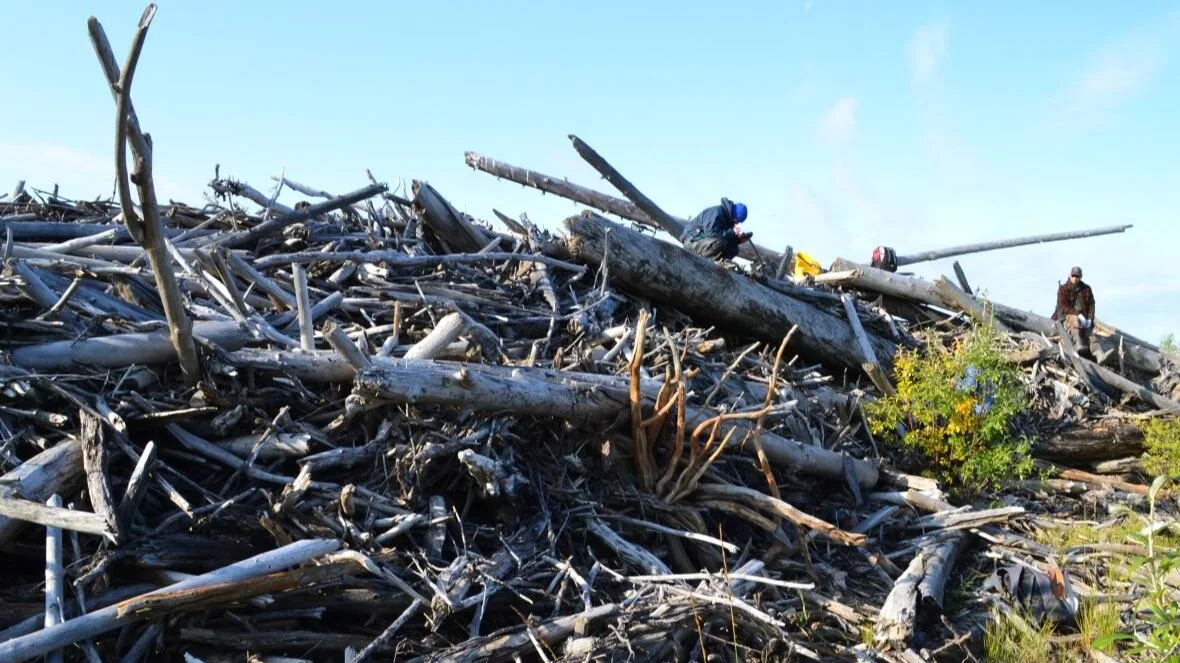
A three-metre-tall logjam found in the central part of the Mackenzie River Delta. (Alicia Sendrowski)
What are the limitations of this research?
Sendrowski's work only scratches the surface.
She and her team travelled to the N.W.T. communities of Aklavik, Tsiigehtchic, and Inuvik to study logjams as well, but they only mapped what was visible. Wood that was hidden below living vegetation or buried under ground wasn't accounted for.
She says it's possible the delta's driftwood stores twice as much carbon than what she calculated. There are also at least a dozen deltas bigger than 500 square kilometres around the North.
Sendrowski says all these deposits of wood could add up to a significant pool of carbon, and it's one we know little about.
This story, written by Liny Lamberink, was originally published by CBC News.
Thumbnail image: Alicia Sendrowski, a research engineer with Michigan Tech Research Institute, stands on a logjam in the Mackenzie River Delta. Woody deposits like this cover a 51-square-kilometre part of the delta, and store 3.4 million tons of carbon, according to her research. (Natalie Kramer)
