Hydropower can accelerate net-zero, report says, but Indigenous concerns remain

Hydroelectric power can work hand-in-hand with other renewables, the International Energy Agency says, but in Canada, the impact on the environment and Indigenous people has been mixed.
In the drive to net-zero, the biggest buzz always seems to be around wind and solar — hydroelectric power, the first true largescale clean energy source, just doesn’t seem to capture the public imagination the same way.
That waning interest seems to be mirrored by governments and investors. While wind and solar push deeper into record-breaking territory amid the continuing decline in installation costs, hydropower is expected to grow by a mere 17 per cent over the course of the current decade — a quarter less than the previous.
But that disinterest is a mistake, according to the International Energy Agency, whose recent special report on hydropower says it needs to be a critical part of the energy transition, complementing wind and solar while making up for their drawbacks.
“Hydropower is the forgotten giant of clean electricity, and it needs to be put squarely back on the energy and climate agenda if countries are serious about meeting their net zero goals,” IEA Executive Director Fatih Birol said in a release from the agency. “It brings valuable scale and flexibility to help electricity systems adjust quickly to shifts in demand and to compensate for fluctuations in supply from other sources.”
Notwithstanding the rise of wind and solar, hydropower globally outweighs both in terms of generation, supplying one sixth of electricity worldwide. It makes up at least half of the generation in 35 countries, including 28 emerging nations with a combined population of more than 800 million people.
But the IEA says new hydropower projects struggle with long lead times, high upfront costs, difficulties with permits and environmental impact assessments, and local opposition, all of which have turned off investors — something the IEA says governments need to take active steps to fix.
“These measures include providing long-term visibility on revenues to ensure hydropower projects are economically viable and sufficiently attractive to investors, while still ensuring robust sustainability standards,” the IEA said.
WATCH BELOW: CANADIANS USE MORE ENERGY THAN PEOPLE IN ALL BUT SIX OTHER COUNTRIES
CANADA, AN OLD HAND AT HYDRO, STILL HAS ROOM TO GROW
Canada’s grid is famously dominated by zero-emission sources, and hydropower towers over them all.
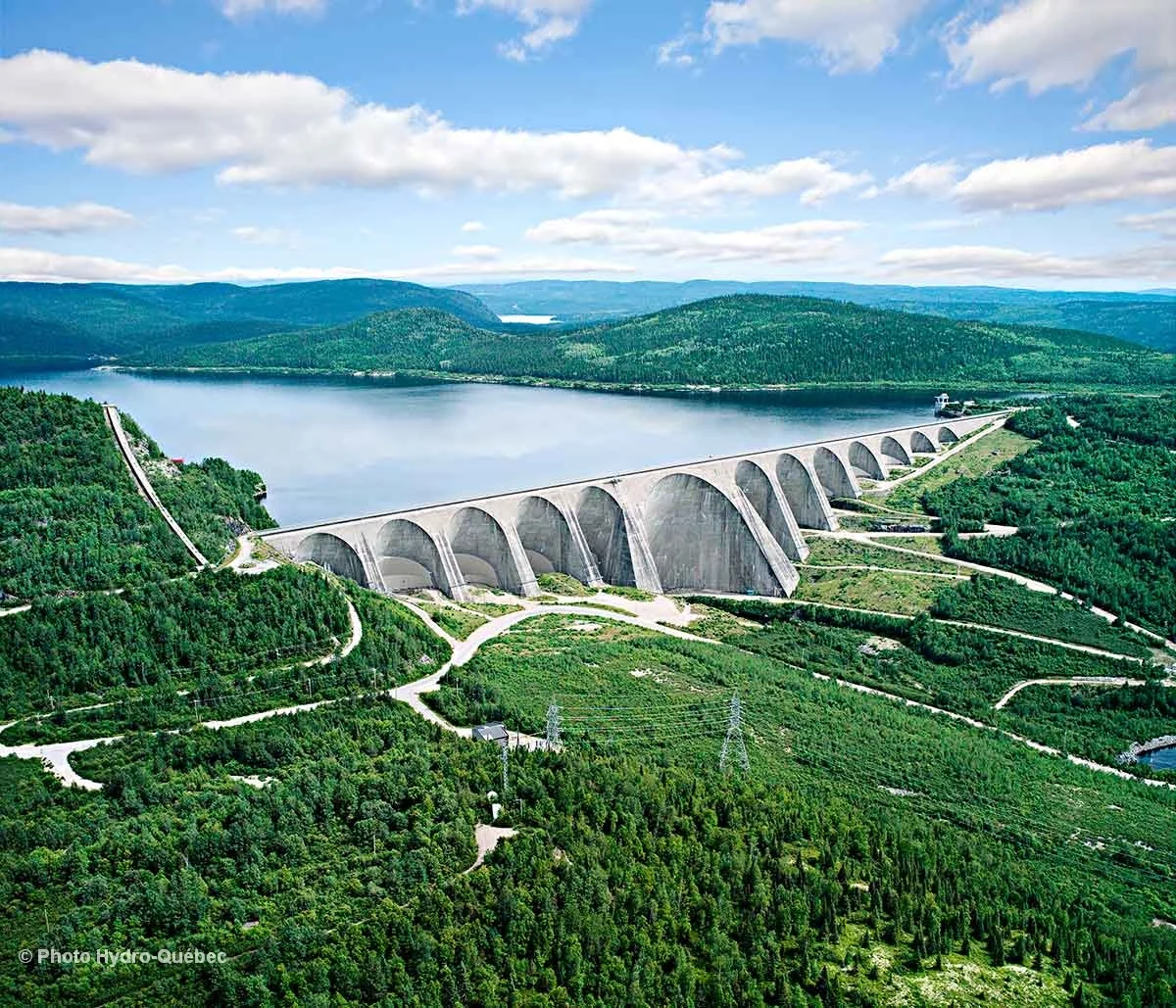
A full 60 per cent of our power is hydroelectric, four times more than distant-second nuclear. The country as a whole is so steeped in hydropower that Canadians refer to their home electricity as “hydro,” even in parts of the country where it makes up negligible parts of the grid. One of Canada’s most recognizable features seen from space, nicknamed the “Eye of Quebec,” is the ring-shaped Manicouagan Reservoir formed by that province’s Daniel Johnson Dam. Worldwide, Canada ranks fourth in hydropower generation.
Even so, with its abundant rivers and lakes, Canada’s hydroelectric potential is still not maxed out, according to industry group WaterPower Canada, which says generation capacity is set to grow 10 per cent over the coming decade. Around half of that will come from new projects — some of which have proven controversial — such as Muskrat Falls in Labrador, La Romaine in Quebec, Keeyask in Manitoba, and B.C.’s Site C project. The rest will come from refurbishment and expansion of existing sites, and new projects using “pumped storage hydro,” which makes use of sites such as quarries and abandoned mines.
Though wind and solar make up a small part of Canada’s energy mix, they are gradually growing, and most jurisdictions, including the federal government, have announced plans to move toward net-zero.
With installation costs for those energy sources falling each year, WaterPower Canada interim president Patrick Bateman told The Weather Network in an email that Canada’s hydro resources can be a “reliable and resilient backbone” for the nascent wind and solar sectors as the country’s last fossil fuel plants are retired.
“Wind and solar power output varies according to weather conditions, and consumer electricity demand constantly fluctuates. By adjusting the quantity of water flowing into hydropower turbines, producers can rapidly ramp up or down as needed to flexibly balance supply with demand,” Bateman said, adding: “Without a resource such as hydropower representing a significant proportion of generation capacity, the grid would not be stable and peak loads could not always be met.”
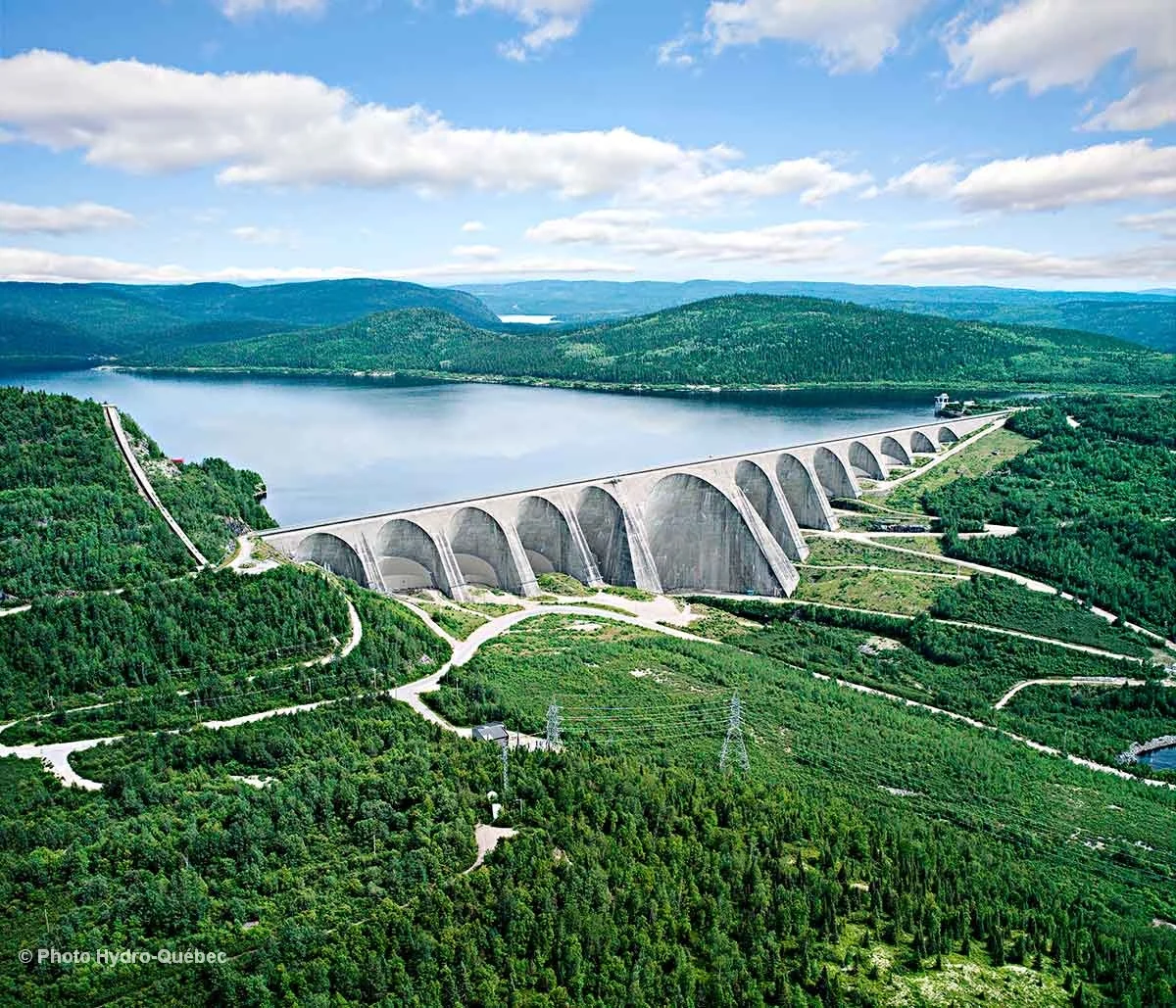
Hydroelectricity makes up more than half of Canada's energy generation. Image: Daniel Johnson Dam (Hydro Quebec)
ENVIRONMENTAL, INDIGENOUS CONCERNS
However, though hydroelectric power is zero-emission, it has an on-the-ground environmental footprint far beyond that of solar and wind.
Reservoir-based hydropower requires the flooding of large areas of land at times, submerging and ultimately destroying local ecosystems beneath the dam’s waters. There are downstream impacts to fish and wildlife as well: the Union of Concerned Scientists says reservoir water tends to be cooler, less oxygenated, and more stagnant than river water, leading to downstream problems when it is released.
Jessica Penney, an Inuk from Nunatsiavut in Labrador who is a doctoral researcher at the University of Glasgow, adds that, due to decomposition of submerged trees and other biomass, flooding can also result in increased levels of methylmercury, a naturally-occurring neurotoxin.
“Methylmercury can make its way into fish and other marine animals, and with long-term dietary exposure can have negative impacts on human health including neurocognitive delays in children and on cardiovascular health in adults,” Penney informed The Weather Network. “This is a concern for Inuit living near the Muskrat Falls hydroelectric project in Labrador.”
Penney says that, historically, in Labrador at least, governments have disregarded Indigenous rights and concerns when developing hydroelectric projects, such as in the 1960s and 1970s, when Innu in the region were displaced during the construction of the Churchill Falls project. More recently, she said, the Muskrat Falls project on the Lake Melville estuary similarly disregards Indigenous concerns, with environmental impacts not seriously studied.
“The known impacts and histories of how hydro projects have been implemented in Canada mean there absolutely must be a change in the development process. Future hydro developments must be rooted in meaningful consultation with affected Indigenous communities and prioritize the need for free, prior, and informed consent,” she said.
Elsewhere in Canada, some Indigenous communities have taken control of renewable energy projects themselves, with so far encouraging results.
Chief Patrick Michell of the Kanaka Bar Band in B.C. told The Weather Network that his community has had great success with “run-of-river” hydropower, which relies on using natural stream flows and natural elevation differences to spin turbines, rather than flooded reservoirs.
Michell explained that the Kanakas have observed no adverse environmental impacts during the process, from feasibility studies in 1990 down to the present day, since operations began in 2014. He told The Weather Network that his band has a “close and mutually beneficial” relationship with independent power producers, with B.C. buying the power produced at Kanaka under a 2006 purchase agreement.
As for the future, his advice for the province, and B.C. Hydro, is to welcome more smaller-scale renewables projects, not just for hydro but also for solar and wind.
“It’s simple, don’t put all your eggs in one basket,” he said.
Follow Daniel Martins on Twitter @DFLCMartins
