July heat a 'hallmark' of Northern Hemisphere summer; month ranks among warmest

The global climate in July was marked by record land and sea surface temperatures, accompanied by extreme heat, drought, wildfires and floods, according to a recent NOAA report.
Summer 2026 across many parts of the globe has been earmarked by extreme heat, intense wildfires, drought and damaging storms.
While July is, climatology speaking, the warmest month of the year, last month was more notable than usual. It is now tied with July 2024 as the hottest July on record, according to a recent U.S. National Oceanic and Atmospheric Administration (NOAA) global climate report.
SEE ALSO: More global temperature records likely as planet continues to heat up
NOAA said the global, surface temperature last month was 1.18 C above the 20th-century average--standing with 2024 as the warmest July since worldwide record-keeping began in 1850.
The heat, drought and wildfires have been the "hallmarks" of the Northern Hemisphere summer for many countries, the World Meteorological Organization (WMO) said. Meanwhile, other parts of the world have been hit by soaking rains and flooding, which have caused loss of life.
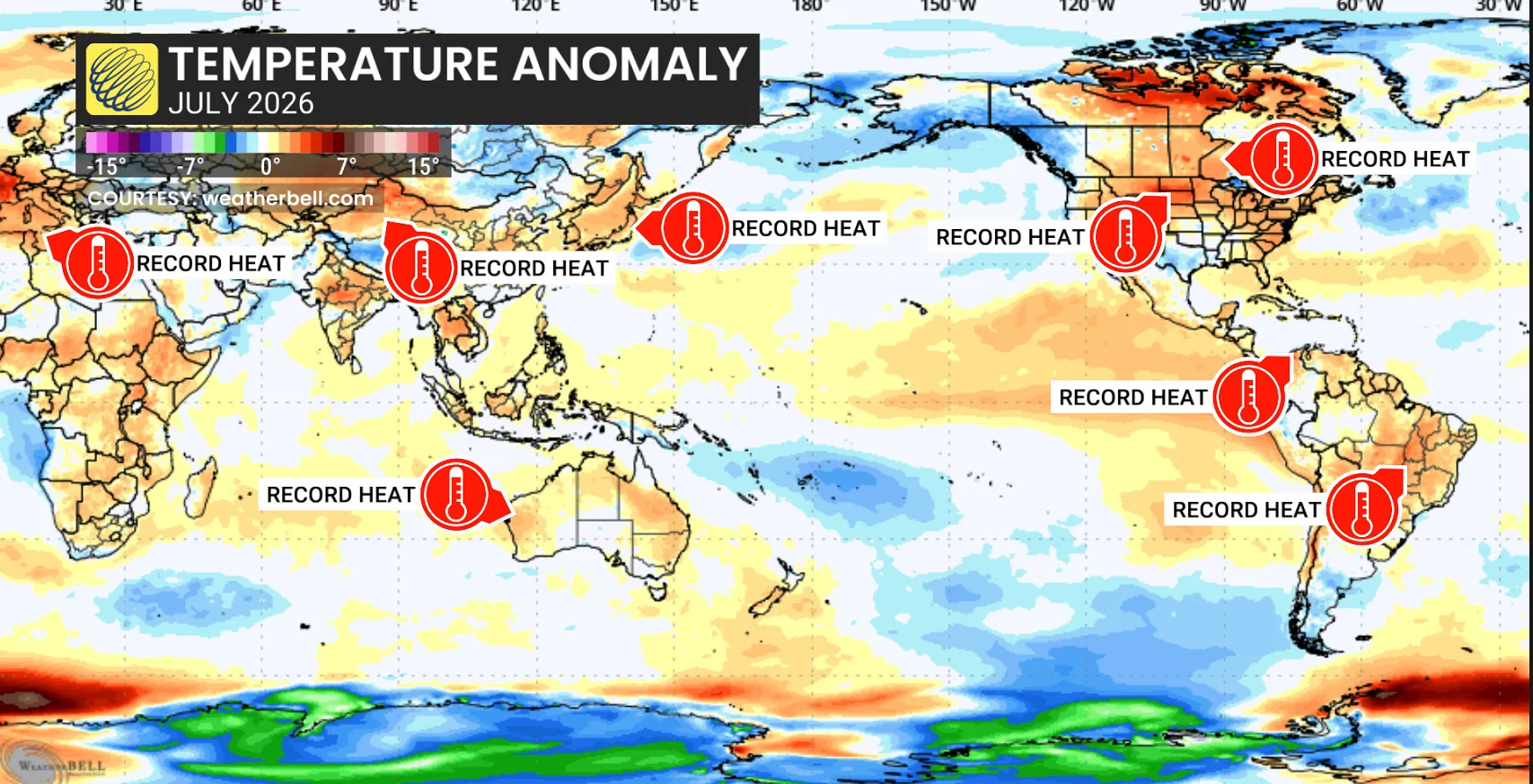
Regionally speaking, July 2026 was the warmest on record for North America, Africa and Asia, according to the NOAA report.
“What we have seen over the last few months is the combined effect of long-term warming with a persistent pattern of alternating high- and low-pressure systems stretching across the Northern Hemisphere,” said John Kennedy, head of climate information at WMO, in a news release.
“The high-pressure areas are more typically associated with high temperature and dry conditions, and the low-pressure areas are [associated with] cooler and wetter.”
July 2026 and 2024 'more likely than not' the warmest months on record
Meanwhile, the Copernicus Climate Change Service (CS3), run by the European Centre for Medium-Range Weather Forecasts (ECMWF), said it was the second-warmest July on record, with a median, surface air temperature that was 1.47 C hotter than the estimated, pre-industrial baseline (1850-1900 average).
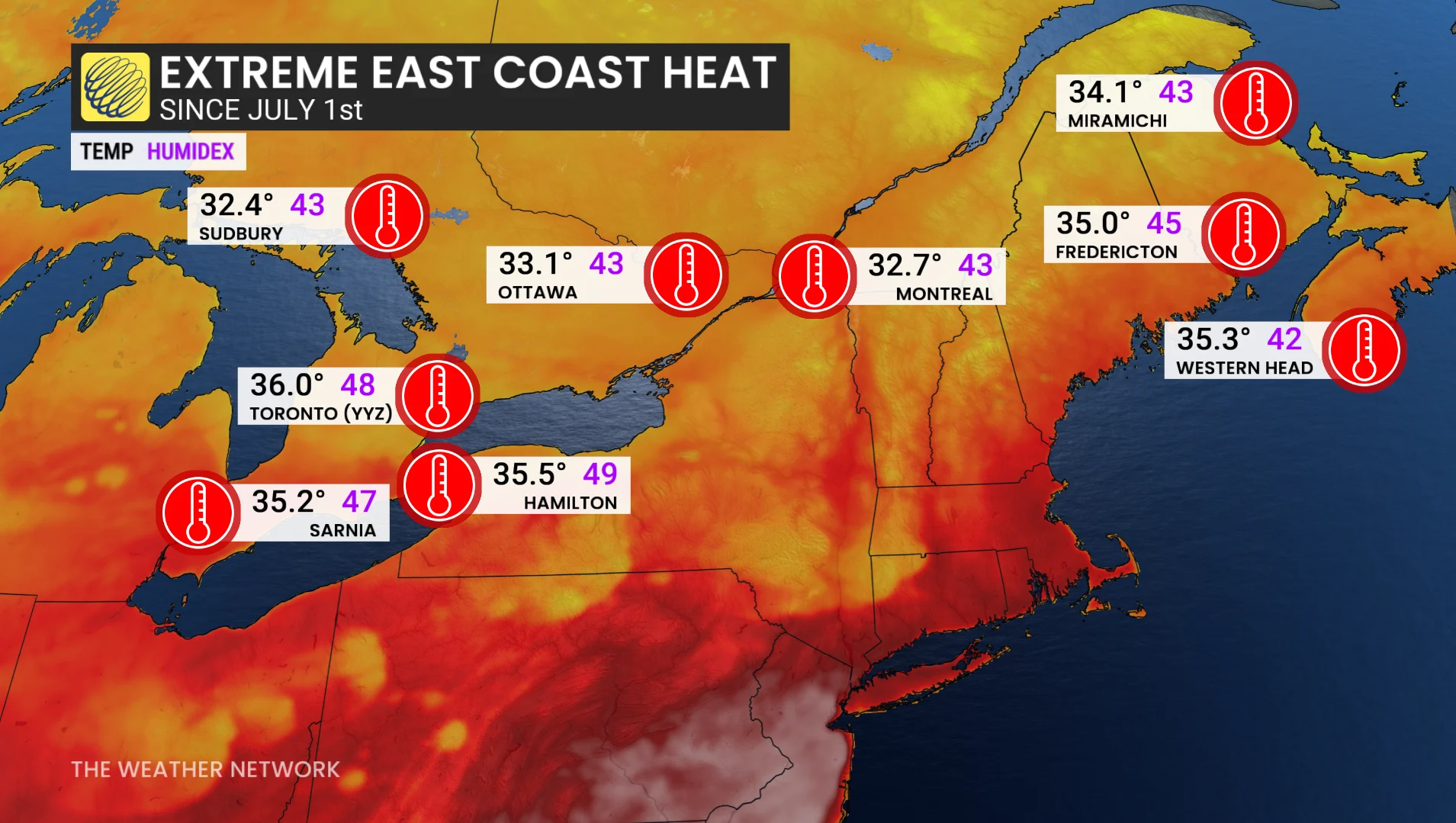
Because last month is tied with July 2024 as the warmest on record, those months are "more likely than not" the hottest on record for the globe since 1850, NOAA said.
According to NOAA, the top 10 warmest Julys on record have all occurred since 2016, with the past four years (2023–26) taking the first four spots. Only three Julys--2023, 2024, and 2026--have recorded temperature departures surpassing the 1.0 C threshold.
The previous month also marked the 55th consecutive July with above-average temperatures, the NOAA report said. The last below-average July temperature occurred in 1971 (-0.04 C).
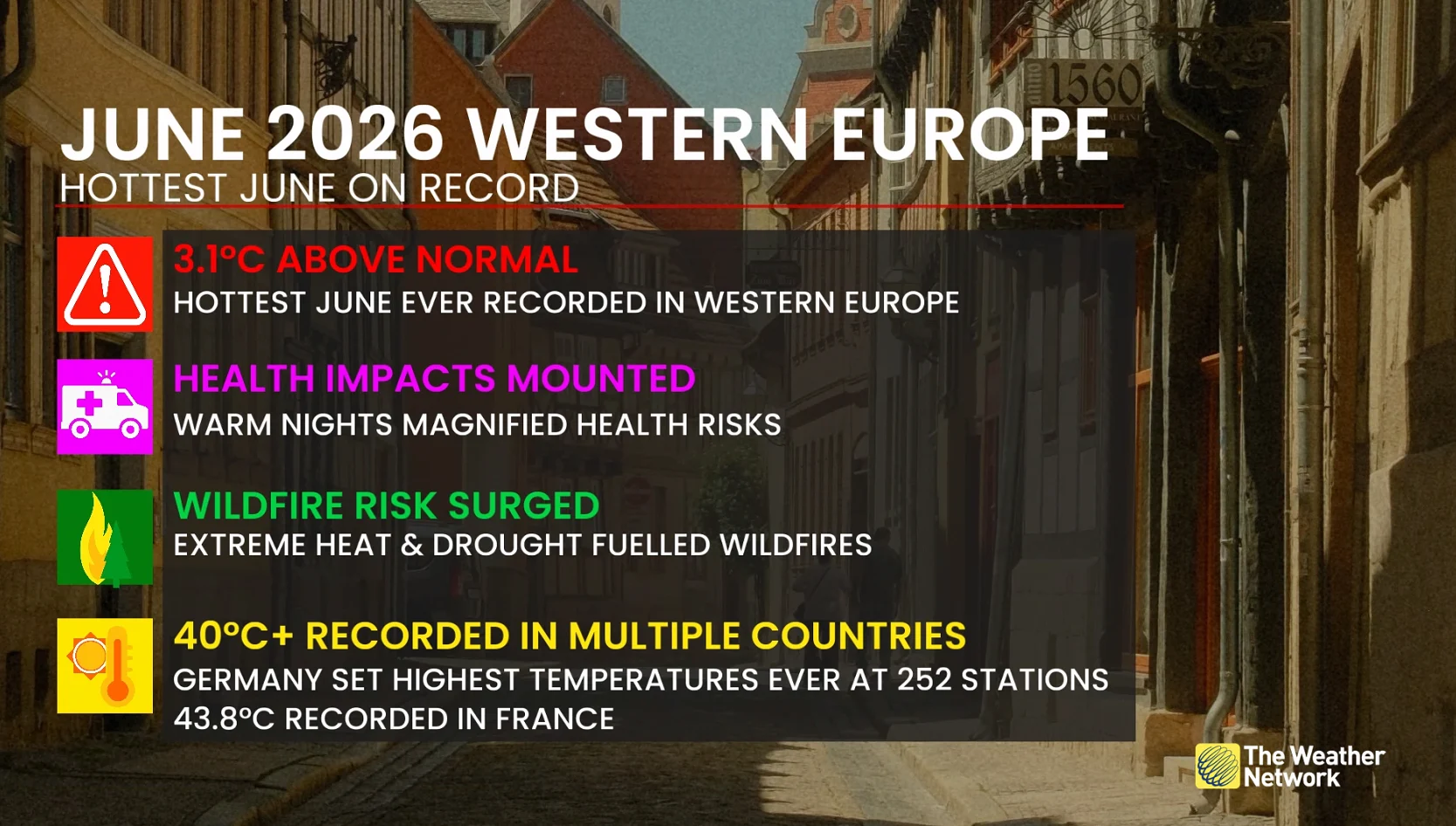
Among the numerous, specific events highlighted in the NOAA document is western Europe's hottest June-July on record, with a heat trend still ongoing in August. In fact, some countries are seeing their fourth heat wave since May.
The agricultural and environmental impacts from the heat wave and drought have been nothing short of devastating, with significant effects also felt on river levels, transport and energy--in addition to resulting in destructive wildfires.
As well, both NOAA and CS3 said global sea surface temperatures were the highest ever documented in July.
