Conference hears 'vampiric overconsumption' is draining the world's water supply
Calls to address unsustainable use, global heating open highly-anticipated water security conference.
NEW YORK - The United Nations used its first conference on water security in almost half a century on Wednesday to exhort governments to better manage one of humanity's shared resources.
A quarter of the world's population relies on unsafe drinking water while half lacks basic sanitation, said officials at the United Nations Water Conference. Meanwhile, nearly three quarters of recent disasters have been related to water.
"We are draining humanity's lifeblood through vampiric overconsumption and unsustainable use, and evaporating it through global heating," said U.N. Secretary-General Antonio Guterres.
Ensuring access to clean drinking water and sanitation is part of the 17-point to-do list the U.N. has set for sustainable development, alongside ending hunger and poverty, achieving gender equality, and taking action on climate change.
RELATED: This climate risk could cost Canada's economy $139B
The three-day conference that began Wednesday in New York is not intended to produce the kind of binding accord that emerged from climate meetings in Paris in 2015, or a framework like the one set for nature protection in Montreal in 2022.
Instead, the aim is for a "Water Action Agenda" that will contain voluntary commitments and create "political momentum."
"We’ve broken the water cycle, destroyed ecosystems, and contaminated groundwater. Nearly three out of four natural disasters are linked to water," Guterres said in a press release. "One in four people lives without safely managed water services or clean drinking water. And over 1.7 billion people lack basic sanitation. Half a billion practice open defecation. And millions of women and girls spend hours every day fetching water."
WATCH BELOW: Hear more from the first U.N. water conference in a generation
RELATED: Small California town wonders if restored floodplain prevented disaster
He sees four key areas to accelerate results:
Closing the water management gap. Governments must develop and implement plans that ensure equitable water access for all people while conserving this precious resource.
Massively investing in water and sanitation systems. The proposed Sustainable Development Goals (SDG) Stimulus and reforms to the global financial architecture could increase investment in sustainable development.
Focusing on resilience. It will be much harder to tackle the emergency with infrastructure from another age.
Addressing climate change. The U.N. says climate action and a sustainable water future are two sides of the same coin.
Drought seen across Europe and in the American west shows how the human-caused climate crisis threatens water access in communities that have taken water for granted in the past.
RELATED: Why weeks of rain in California will not end historic drought
The conference also heard that the United States plans to invest $49 billion in water and sanitation, at home and around the world.
U.S. Ambassador to the U.N. Linda Thomas-Greenfield said this money would "help create jobs, prevent conflicts, safeguard public health, reduce the risk of famine and hunger, and enable us to respond to climate change and natural disasters." She gave no timeline for the investments or details on how much money would be spent and where.
RELATED: U.S. states struggle to share dwindling waters of Colorado River
Hundreds of action plans were sent to the U.N. before the conference started, but the World Resources Institute research group said that while "some commitments offer inspiration, more of them miss the mark," variously lacking funding or performance targets, or neglecting to address climate change.
WRI singled out two projects for praise: one to spend $21.2 million through 2029 on "climate-smart" agriculture and wetland restoration in the desertifying Niger River basin, and another from 1,729 companies that calculate they can make water-related investments worth $436 billion.
Scientists, economists and policy experts grouped together by the government of the Netherlands in the Global Commission on the Economics of Water recommended phasing out some $700 billion in agricultural and water subsidies, and facilitating partnerships between development finance institutions and private investors to improve water systems.
WATCH BELOW: Large parts of western U.S. experience historic drought in 2021
Reporting by Isla Binnie; editing by Mark Potter, Bill Berkrot, and Diane Craft.
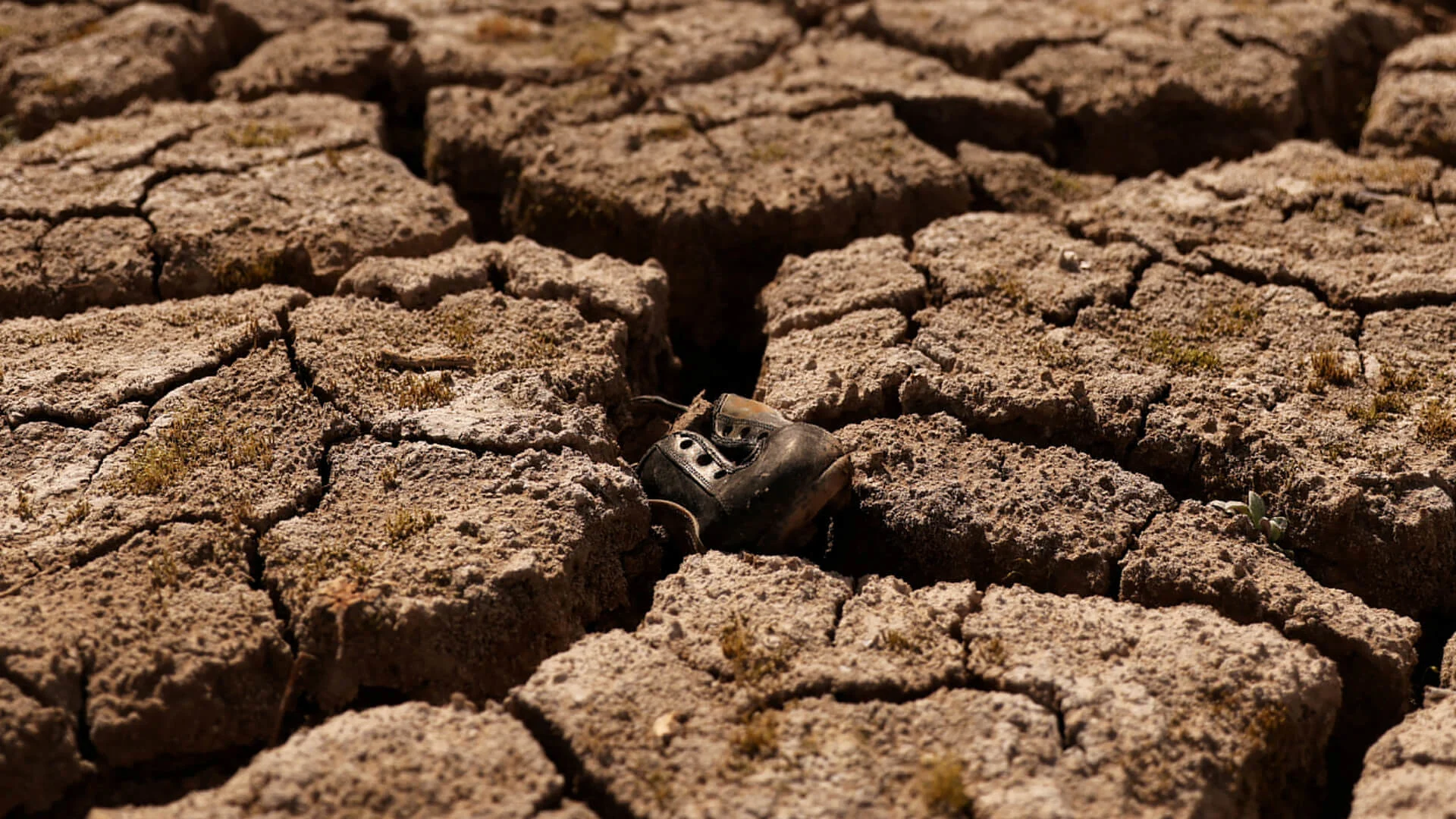
Thumbnail image: A football shoe is pictured on the cracked ground of the Baells reservoir as drinking water supplies have plunged to their lowest level since 1990 due to extreme drought in Catalonia, in the Spanish village of Cersc, in the region Bergueda on March 14, 2023. (Nacho Doce/REUTERS)
