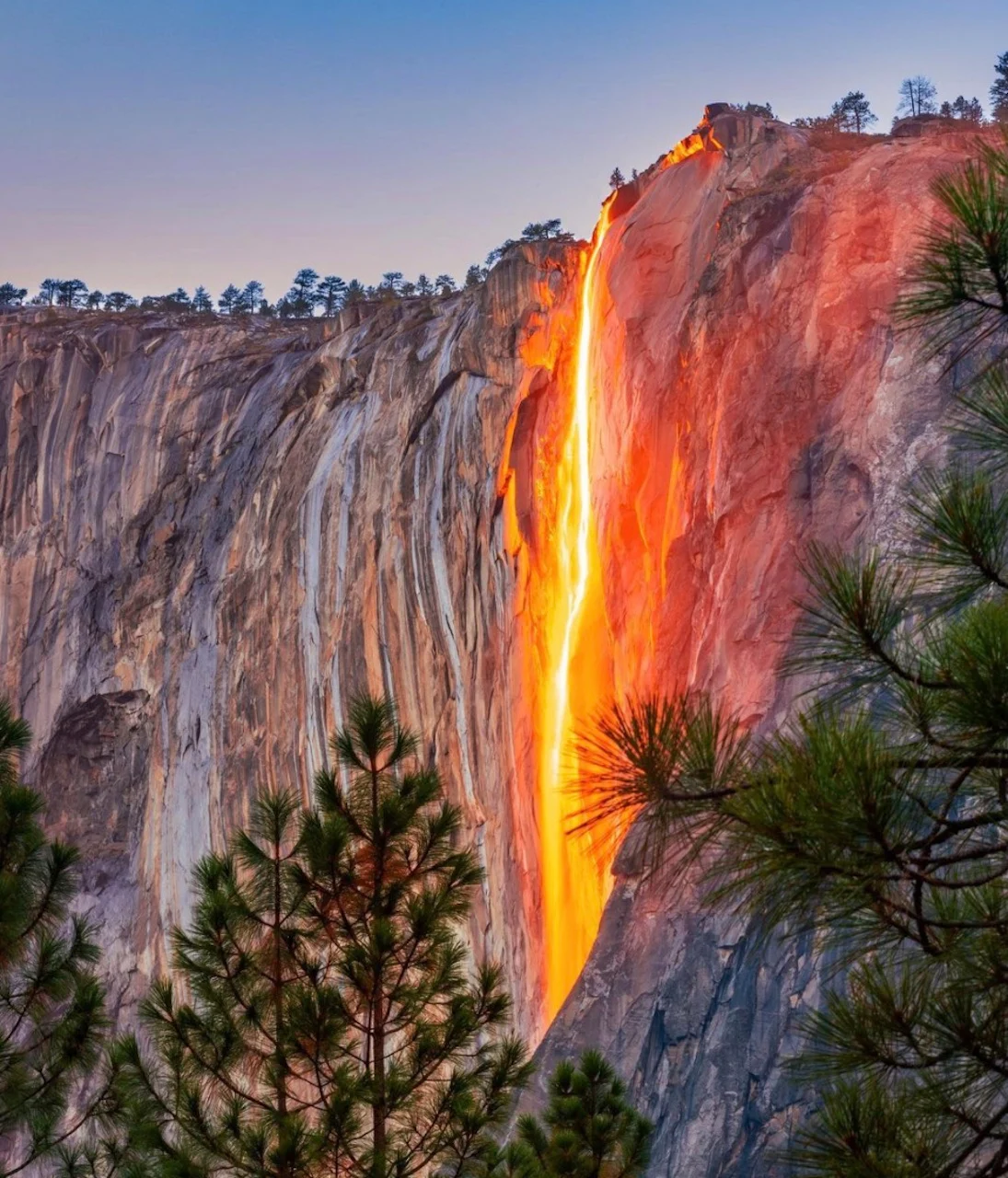
Recent deluge in California rekindles Yosemite's noted 'firefall'

What's particularly interesting about last month's firefall is that it is normally an annual occurrence in February, and isn't a common sight in the autumn since Horsetail Fall doesn't typically flow at this time of the year.
Looks can be deceiving and such is the case every year when a "firefall" lights up a part of Yosemite National park.
The recent brief appearance of an orange glowing stream of water down Horsetail Fall, situated on the El Capitan rock formation at Yosemite, may have looked like molten lava at a first look but it was far from it. The natural wonder providing the optical illusion is known as a "firefall."
It is a yearly picturesque attraction for visitors to attend the renowned national park in California.
SEE ALSO: The firefalls are coming, but won't last long
What's particularly interesting about last month's firefall is that it is normally an annual occurrence in February, starting around mid-month, and isn't a common sight in the autumn since Horsetail Fall doesn't typically flow at this time of the year.
The firefall occurs as the setting sun lines up with Yosemite's falls, calling attention to the falls with realistic shades of golden yellow and orange, giving off the appearance of falling lava.
So what caused it to appear at the end of October? California's recent bout of severe storms that pushed through the area.
In a Facebook post, park officials said the Yosemite Valley received more than 6 inches (152 mm) of rain in a 36-hour period, while a few feet of snow fell at higher elevations. The heavy downpours also caused water to whiz over the 2,425-foot (739.14 metres) Yosemite Falls.

Edgar Le, hailing from Rochester, N.Y., told CNN it was "extraordinary" to witness the firefall recently while hiking near the Yosemite Lodge.
"Like looking at a stream of lava purging down from the top of the El Capitan," said Le. "Seeing the firefall is more than a miracle to me as a landscape photographer."
The natural wonder will usually persist for a few weeks, but trying to catch the firefalls can be tricky. It's only present for about 10 minutes each day, and only if the weather co-operates.
The falls tend to run dry in the winter, so in order for a firefall to occur, temperatures need to be warm enough to initiate snowmelt at the top of the mountain.
Thumbnail courtesy of Edgar Le, taken at Yosemite National Park on Oct. 26, 2021.
Follow Nathan Howes on Twitter.