
'Low' Red River flood risk this year, but farmers might be worried

The spring melt is a double-edged sword: Too much, and flood risk rises. Too little, and farmers may struggle.
With March in full swing, early indicators on the province's rivers bode well for the spring flood season – though the same factors lessening that risk will likely have farmers nervous.
Manitoba's Hydrologic Forecast Centre says the risk of major spring flooding is low across the rivers in the central and southern parts of the province, including the Red and Assiniboine.
"Due to below normal soil moisture at freeze-up in southern and central Manitoba basins and below normal to well below normal winter precipitation until mid-February in these basins, the risk of major spring flooding is low for all southern and central Manitoba basins," the centre said in a late-February report.
Since that report, the province hasn't been completely devoid of snow, but the latest shot was too far north to make much of a difference in the flood outlook.
Manitoba's parched fall and winter conditions have largely been the norm across the entire Prairie region, with almost all parts of it below the seasonal average for the past three months.
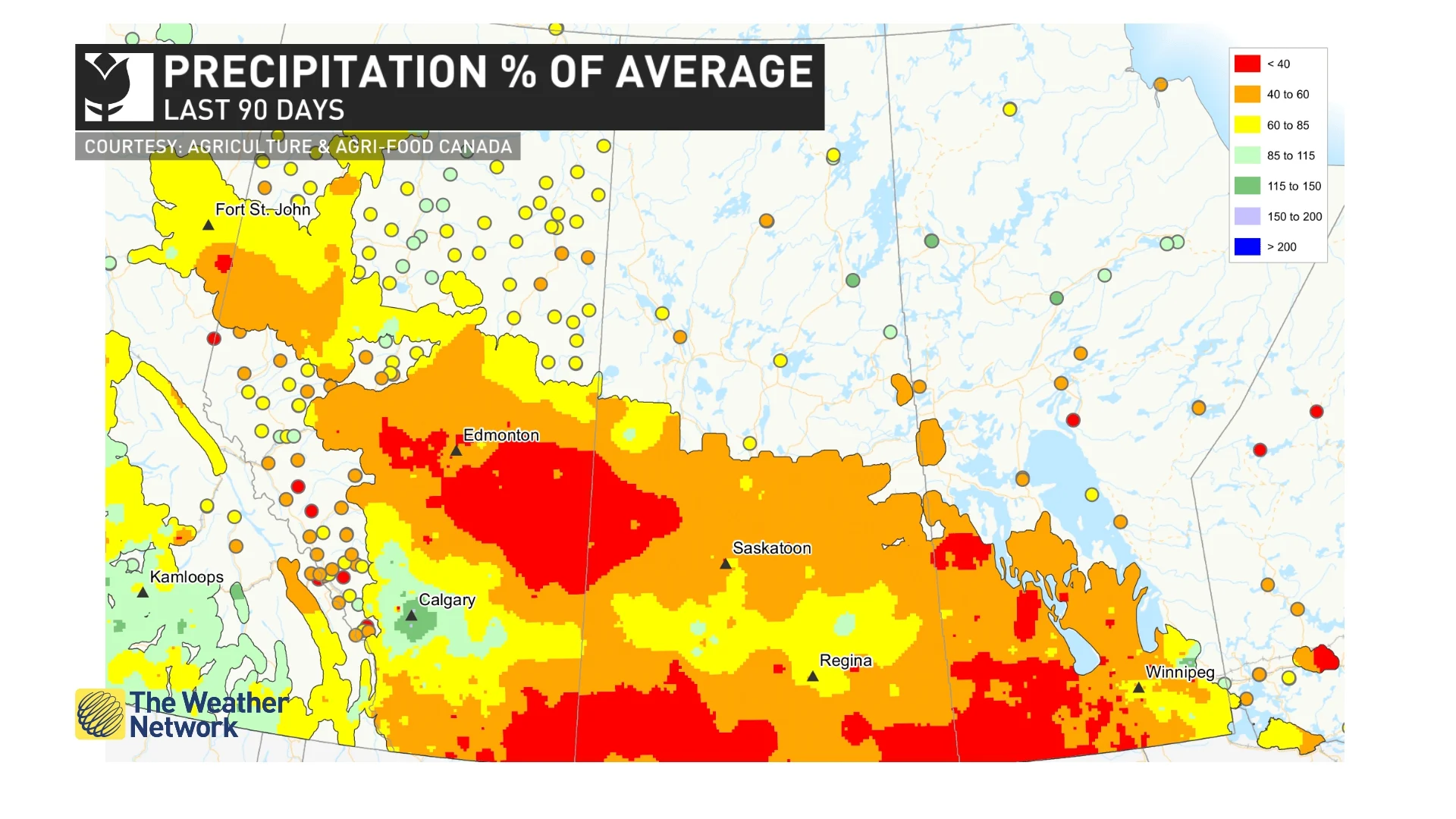
The centre isn't writing off the 2021 flood season altogether, however, and says the eventual runoff will depend on the weather from now until the spring melt.
"The runoff potential is significantly affected by the amount of additional snow and spring rains, frost depth at the time of runoff, and timing and rate of spring thaw," the centre says. "A late thaw and spring rainstorms could result in a rapid snow melt that increases overland flooding and flows on tributary streams and larger rivers."
If those drier conditions continue, property owners may breathe easy, but farmers will be fervently hoping for a consistently rainy spring. Southern Manitoba has been below-seasonal since before the winter, and over the past year, it's been the driest part of the Prairies.
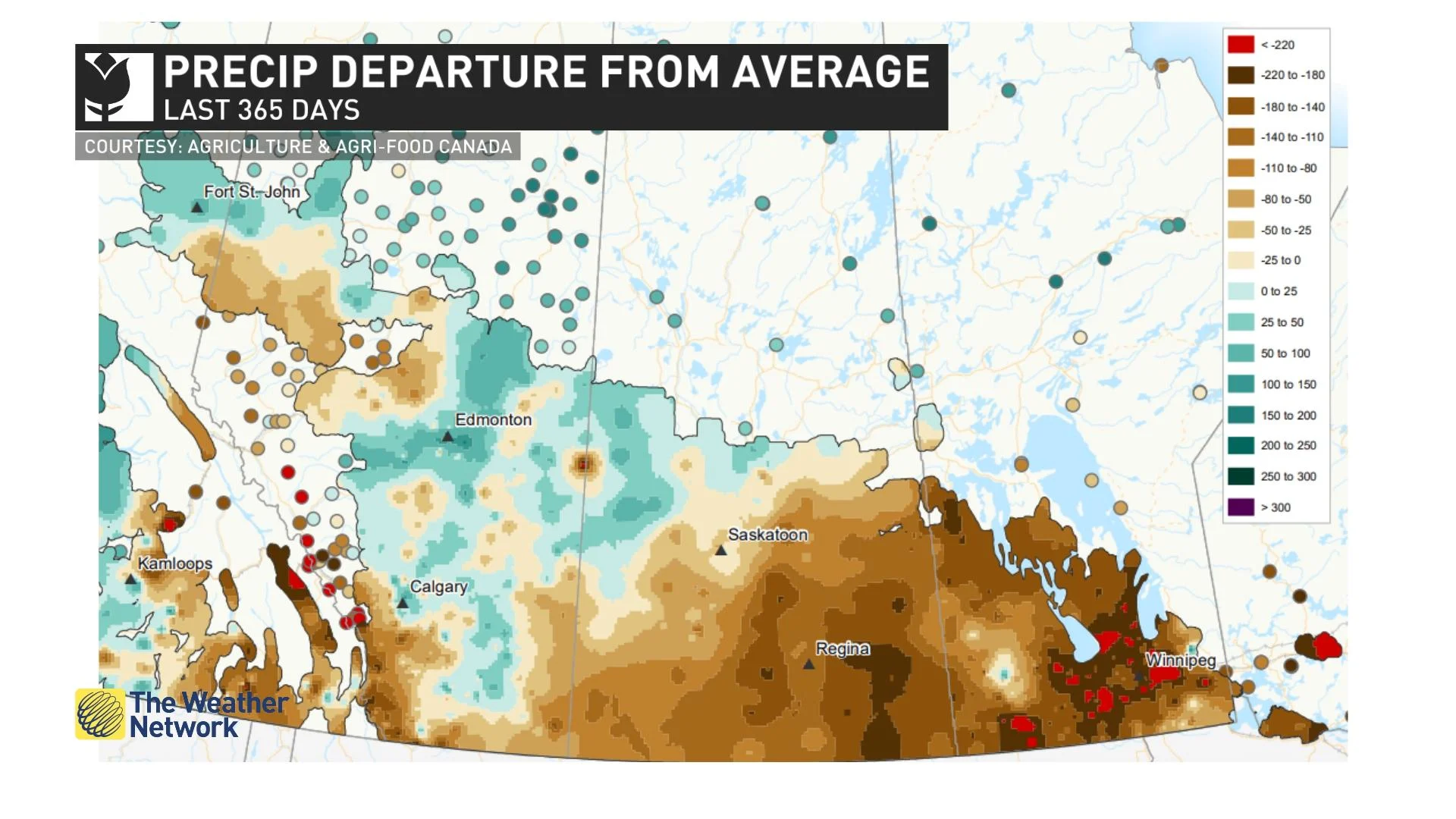
That's bad news for growers, which not only rely on spring snowmelt to soak into the soil and fill reservoirs, but consistent moisture from spring and summer storms.
The consistency is important: though extreme rainfall events are possible even in arid conditions, on their own they normally aren't enough to reverse a drought, as the rainfall is normally too voluminous to be properly absorbed by fields and reservoirs.
One example: Brandon, Man., experienced an astounding 155 mm of rain in a 10-hour period in June last year, but still ended up in a drought condition for the year, as most of the deluge was lost as runoff.