
Why early-season tornadoes keep hitting near the Great Lakes

The first half of March has seen several deadly tornadoes around the Great Lakes region, much farther north than usual for this time of year
Chunks of ice ripped off a frozen lake. Hail larger than grapefruits. Eight fatalities and hundreds of homes destroyed.
This year’s severe weather season is off to an unusual start, with a number of violent tornadoes occurring farther north than you’d expect for this early in the year.
DON’T MISS: How this violent, deadly tornado hit a wintry landscape
Destructive twisters kick off meteorological spring
Experts with the U.S. National Weather Service have confirmed at least 166 tornadoes across the country since the start of the year, running a little ahead of the typical pace by the middle of March. Canada hasn't experienced any confirmed tornadoes so far this year.
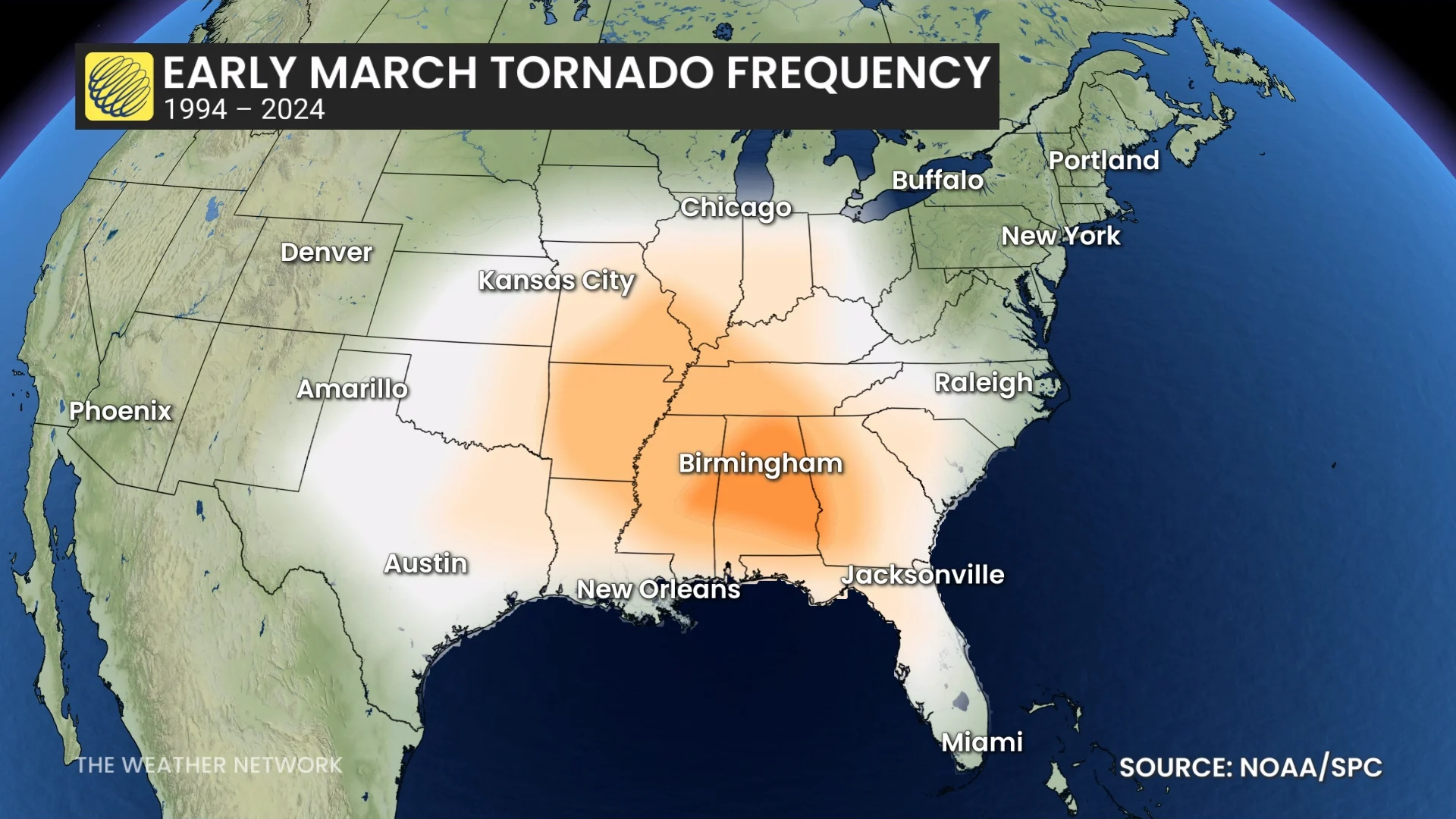
We would normally expect to see the bulk of early-season tornado activity unfold over the Deep South, with routine tornado touchdowns across states like Alabama and Mississippi.
But an unusually large number of strong tornadoes have occurred well north of where you’d expect for this time of year.

An EF-3 tornado in Union City, Michigan, killed three people when it destroyed homes and vehicles near the banks of an ice-covered lake. The tornado touched down about 200 km from the Ontario border.
Several days later, another powerful supercell thunderstorm south of Chicago produced a long-track EF-3 tornado. The tornado, which killed three people, coincided with huge hailstones that may have set records in the region.
Why have tornadoes occurred so far north this year?
It’s unusual, but not unprecedented, to see strong March tornadoes across the Great Lakes region. This year’s increased activity resulted from the confluence of a few key ingredients.
RELATED: New U.S. severe storm forecasts will benefit Canadian travellers
We’ve seen an active storm track a little farther north than usual, part of the same pattern that’s brought well above-seasonal temperatures to both the U.S. and southern Ontario.
Surges of instability from the south, along with a northward shift in favourable storm dynamics, have contributed to the number of powerful tornadoes we’ve seen from Illinois to Michigan.
It’s unlikely this recent pattern will have a long-term effect on this year’s severe weather season on either side of the border.
When it comes to specific tornado forecasting, it's hard to tell more than a week in advance when the ingredients may come together just right for tornadic storms.
Seasonal tornado activity around the Great Lakes region tends to peak between the middle of May and the middle of August.