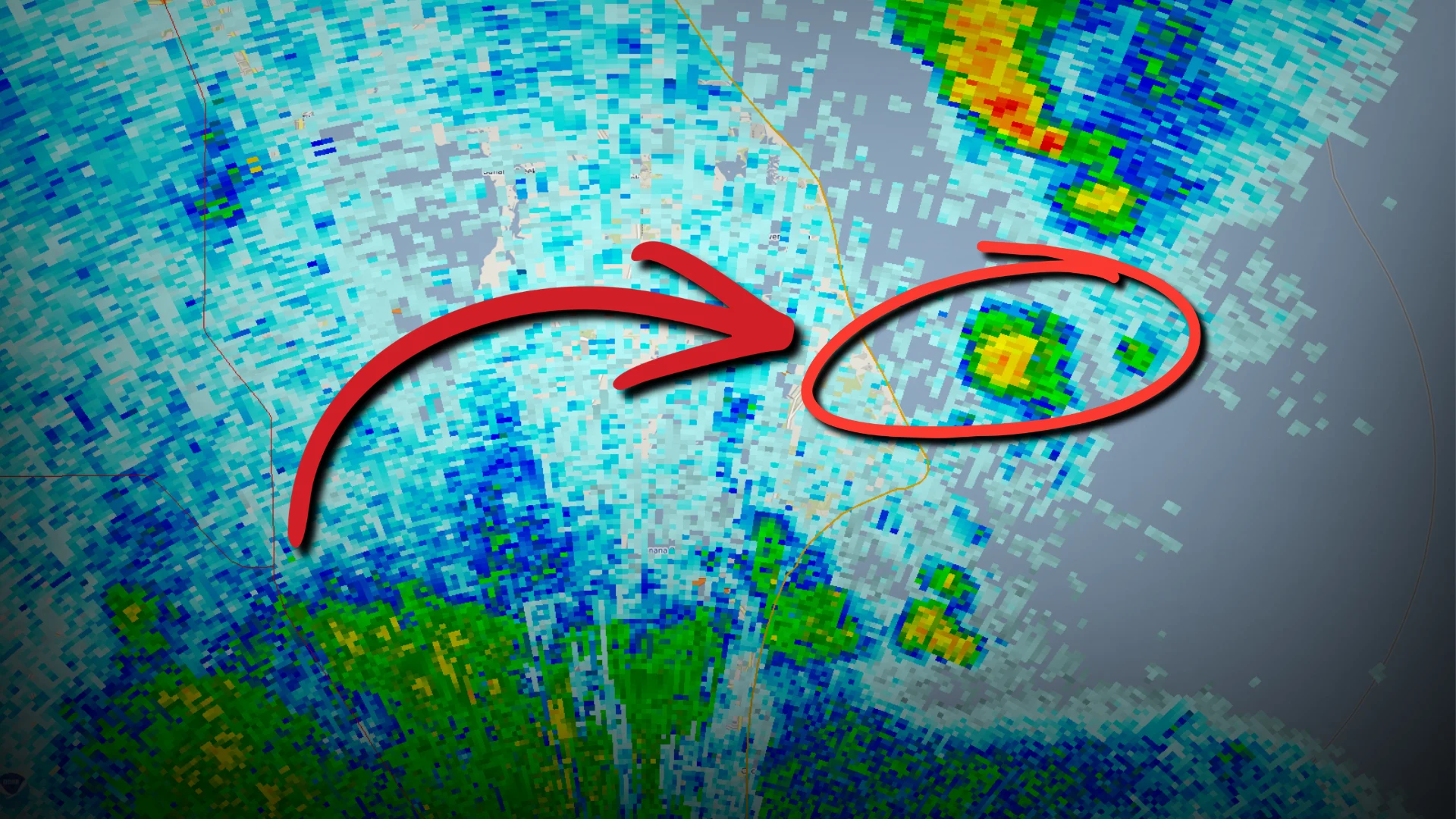
Weather radar detects powerful Florida rocket explosion

A rocket exploded on the pad at Florida’s Cape Canaveral on Thursday night, sending a thick cloud of smoke and debris into the air
Rain isn’t the only thing weather radars can detect.
A powerful explosion rocked the Florida coast on Thursday night after a large rocket blew up on the pad at Cape Canaveral, and the entire ordeal was visible on nearby weather radar imagery.
DON'T MISS: How Doppler radar revolutionized weather and saves lives
The accident occurred as engineers were reportedly fuelling Blue Origin’s New Glenn rocket on the pad to run a test firing of its engines.
The explosion caused extensive damage to the launch pad and surrounding infrastructure, though no injuries were reported.
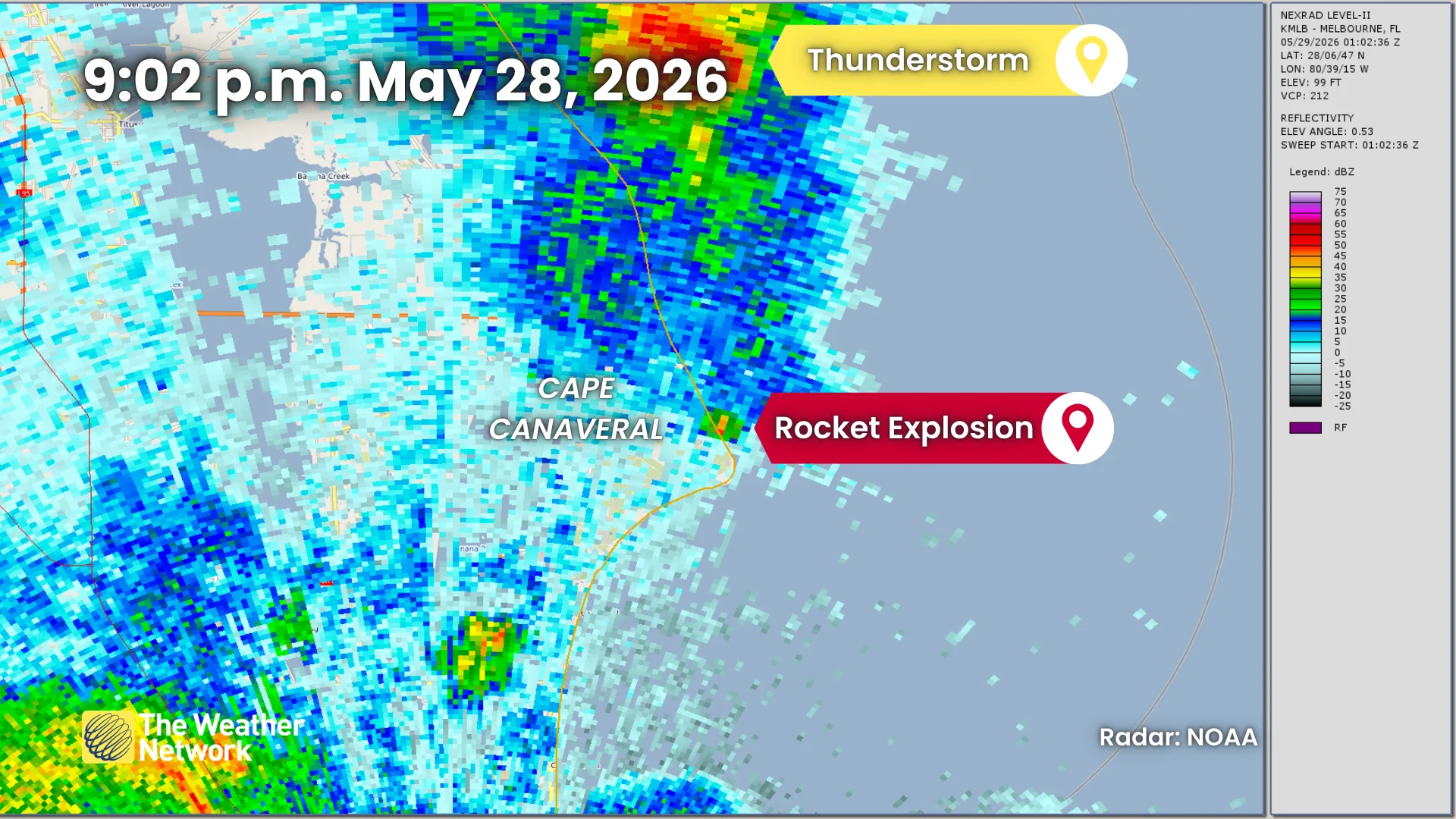
A NOAA weather radar site just south of Cape Canaveral captured the aftermath of the explosion as smoke and debris rose into the atmosphere.
Numerous showers and thunderstorms covered central Florida at the time. A strong patch of reflectivity showed up on the radar just after the explosion at 9:00 p.m. local time.
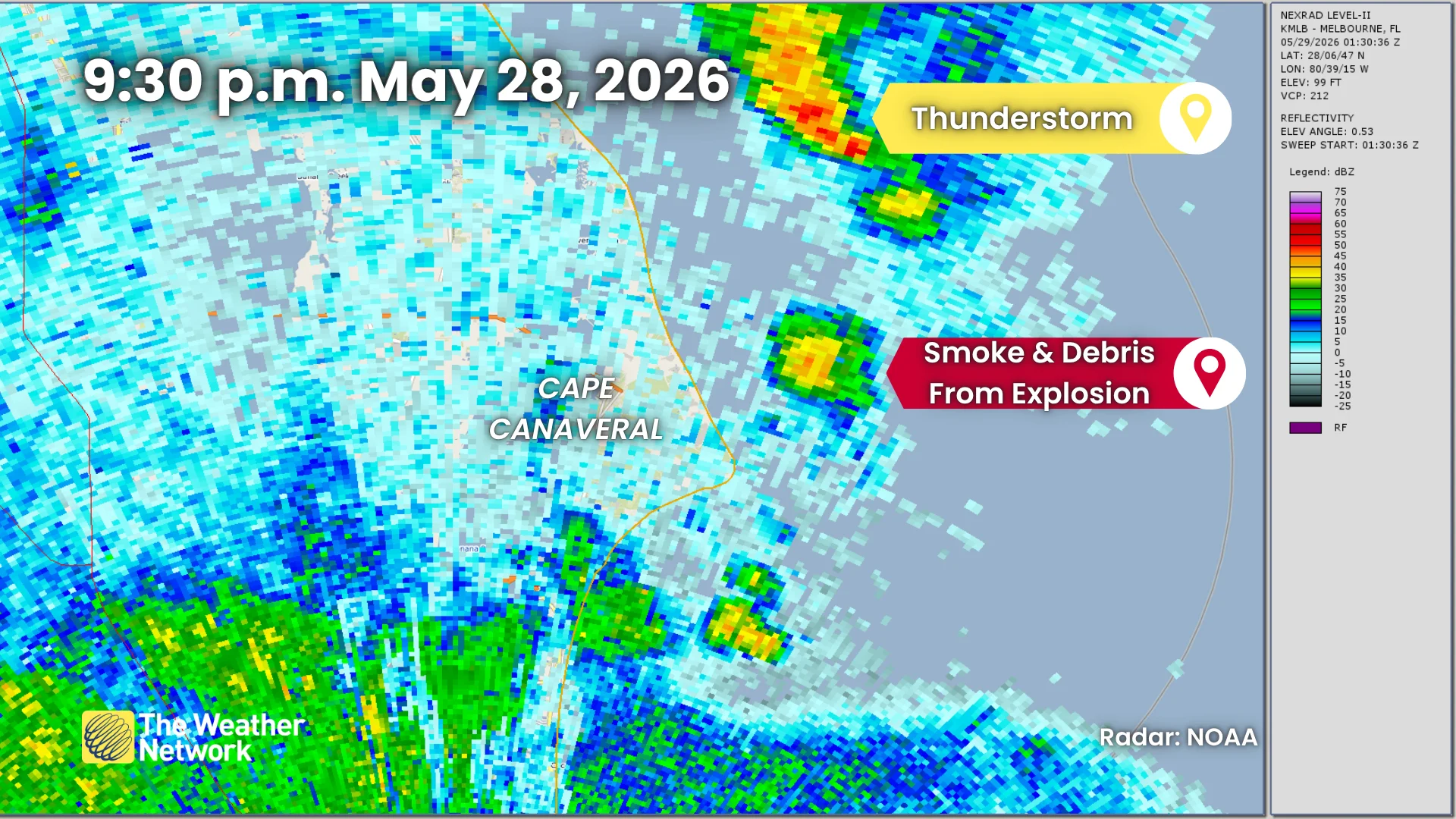
The patch grew bigger with each successive sweep of the radar, and by 9:30 p.m. the sizable smoke cloud was nearly as large as the nearby showers.
Smoke particles and tiny debris drifting through the air are large enough to reflect the radar beam back to the dish, registering on imagery as if it were precipitation.
It’s common to see dense columns of smoke show up on weather radar during intense wildfires and large structural fires.
This is the same principle that allows us to see tornado debris within a thunderstorm, and even heavy traffic on a highway during rush hour.