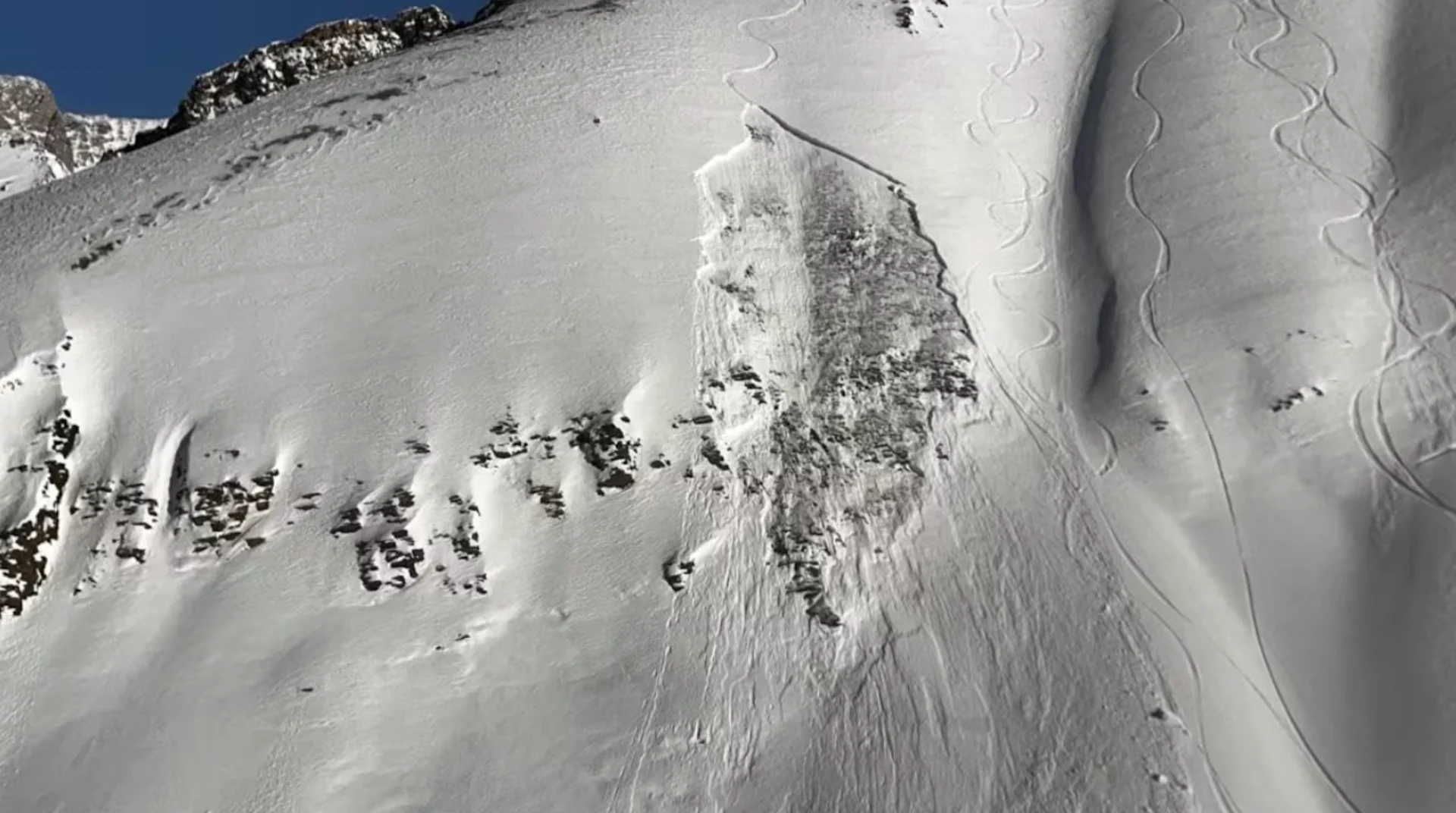
'Very fortunate' skier escapes injury in avalanche near Lake Louise ski area

A backcountry skier was caught in an avalanche, buried to their waist in snow and swept down the slope they were on near Lake Louise on Tuesday.
They were not injured in the incident.
In an online post, Parks Canada said staff responded to an avalanche on the backcountry run known as the “Vortex,” located outside the Lake Louise Ski Area boundary in Banff National Park.
The incident was captured on video (see video above) and shared publicly by Parks Canada to warn other mountain users.
SEE ALSO: What is a sluff? These common slides spell danger in the mountains
According to Parks Canada, the skier triggered a size 2 avalanche while descending a slope at about 2,450 metres elevation. Avalanche Canada states on its website that a size 2 avalanche is big enough to 'bury, injure or kill a person'.
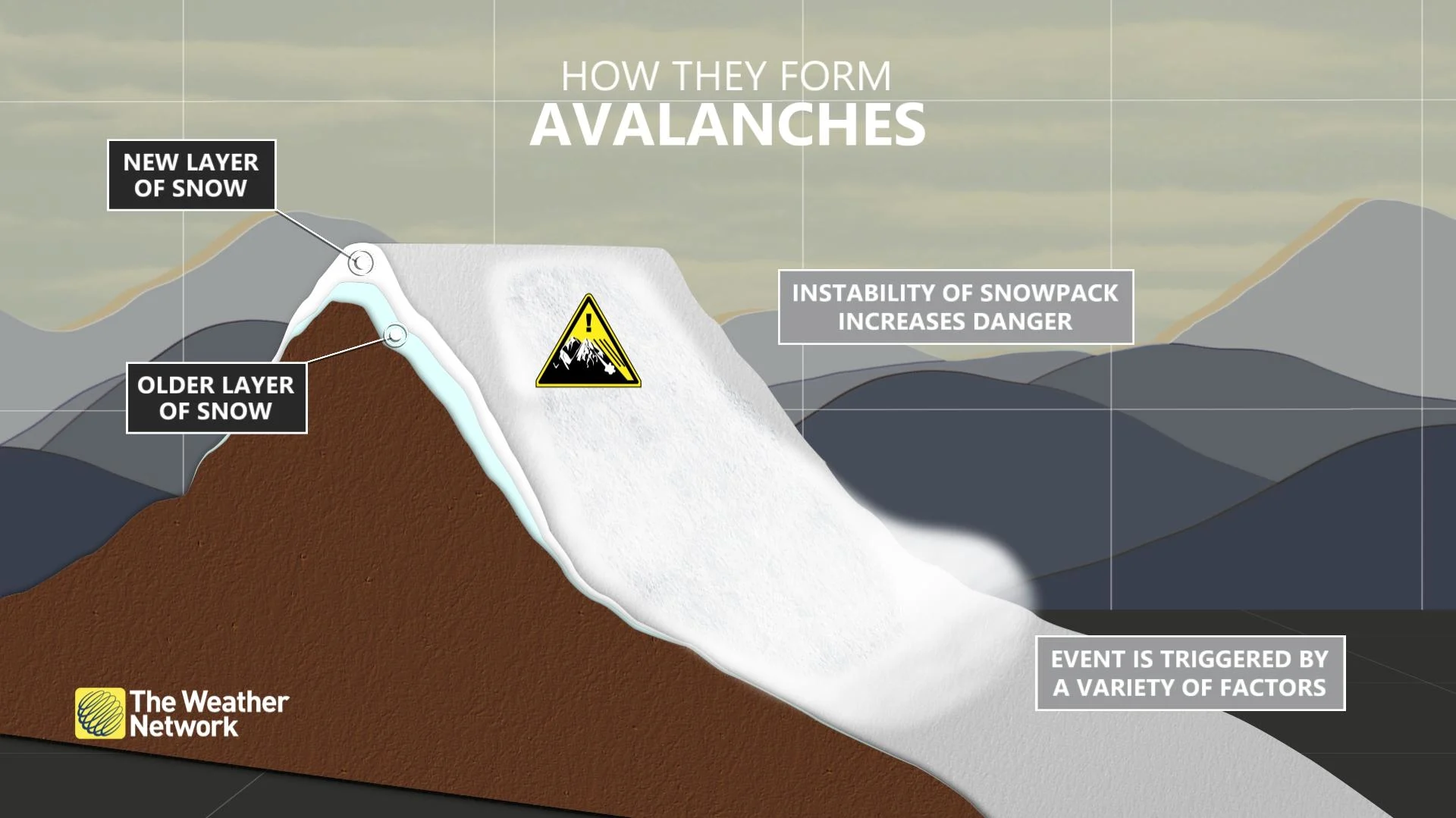
The avalanche was classified as a “deep persistent slab.”
Avalanche Canada forecaster Tyson Rettie said this means a dense and heavy layer of snow is sitting on top of a weak layer of snow near the ground. When that weak layer collapses, much more of the snow can move all at once, making avalanches larger and more destructive.
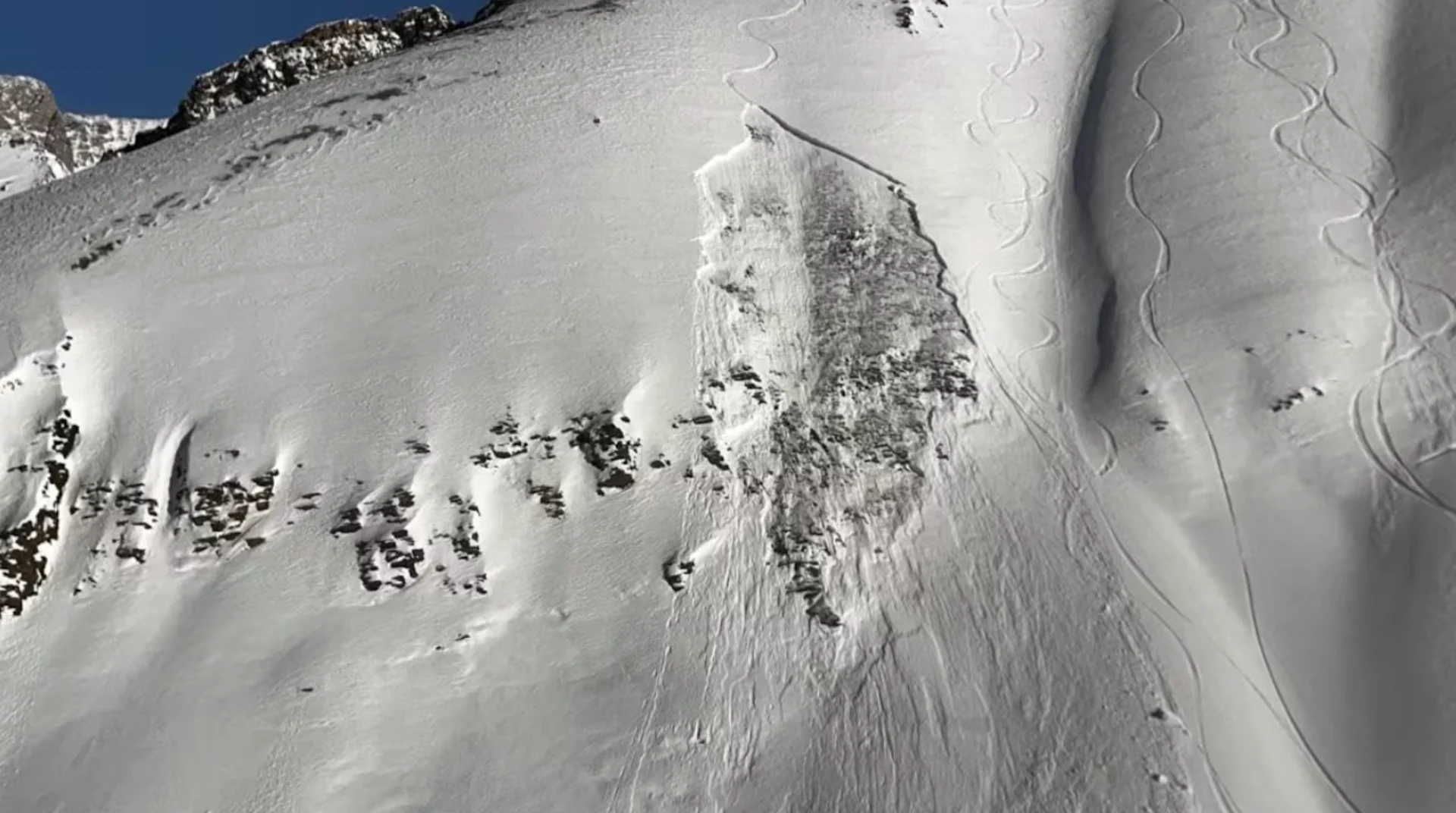
Ski tracks end suddenly at a bare patch on the mountain, marking where the avalanche began during Tuesday’s incident on the Vortex trail. (Shared by Parks Canada)
In other avalanche conditions, the weak layer may be closer to the surface, meaning less snow is involved when the snow starts sliding.
Barry Blanchard, a guide with the Yamnuska Mountain School in Canmore, told CBC News he watched the video and noticed that bare rock was left in the wake of the avalanche.
"You couldn’t have made a bigger avalanche there. It took the whole snowpack,” he said.
He also said he noticed there were rocks around the skier as they went down the mountain.
"They're very fortunate that they didn't have any traumatic injury from hitting rocks," he said.
Another piece of luck that the skier had, he said, was that the snow only went up to their waist-level.
"The other thing that will take human life, probably half of people perish from asphyxiation, when they are totally in the avalanche," he says.
Parks Canada said that the skiers in this incident were “experienced, well-equipped, descended one at a time, and had a safe regroup location.”
Rettie said deep persistent slabs are hard to forecast and difficult for skiers to recognize in the field, even if they are trained and experienced, because the weak layer is buried deep in the snowpack and doesn’t always produce warning signs before a large avalanche occurs.
“So there's uncertainty with deep persistent slab problems. And there's no amount of training professionally or recreationally that turns that uncertainty to zero,” he said.
In other types of avalanches, experienced skiers can hear or see if there are potential issues, like the snow cracking or making hollow noises as they ski over. There are no warning signs with persistent slabs.
"The first bit of feedback that you get that a problem exists could be a large avalanche," he said.
While avalanche danger is currently rated moderate in the alpine areas in Kananaskis Country and the Banff region, he said that rating is largely driven by the risk of triggering these deep slab avalanches.
Rettie said it's too early in the season to be able to say whether the deep persistent slab danger will continue throughout the entire ski season in the Bow Valley.
But for now, backcountry skiers should be aware of the danger.
Parks Canada said it's particularly dangerous in areas where snow depth changes quickly, such as near rocky outcrops or thin patches.
Rettie said people traveling in avalanche terrain should always carry essential rescue gear, a transceiver, probe and shovel, and check the daily avalanche forecast before heading out.
“Accidents can happen and you need to be prepared,” he said.
WATCH BELOW: This avalanche safety course is essential if entering the backcountry
This article, written by Michelle McCann, was originally published for CBC News.